Simple Steps to Perfect Acorn Squash
- Ticket
- № 3471
- Served
- Read
- 20 min
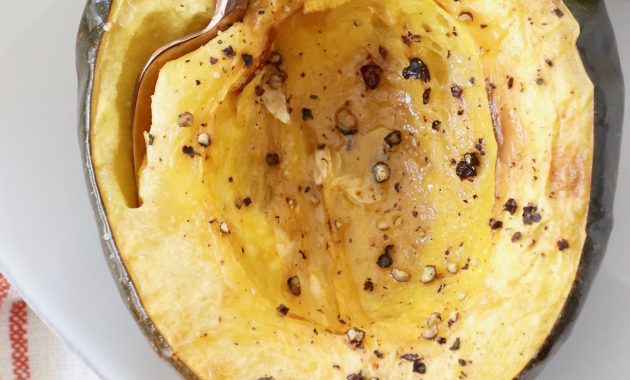
Discover the simple secrets to cooking acorn squash perfectly every time! This comprehensive guide provides step-by-step instructions for roasting in the oven, crisping in an air fryer, or quickly preparing it in the microwave. Acorn squash is incredibly versatile – ideal for stuffing with your favorite roasted vegetables, blending into creamy soups, or simply seasoning and serving as a delightful side dish. Embrace this flavorful autumn and winter staple with ease!
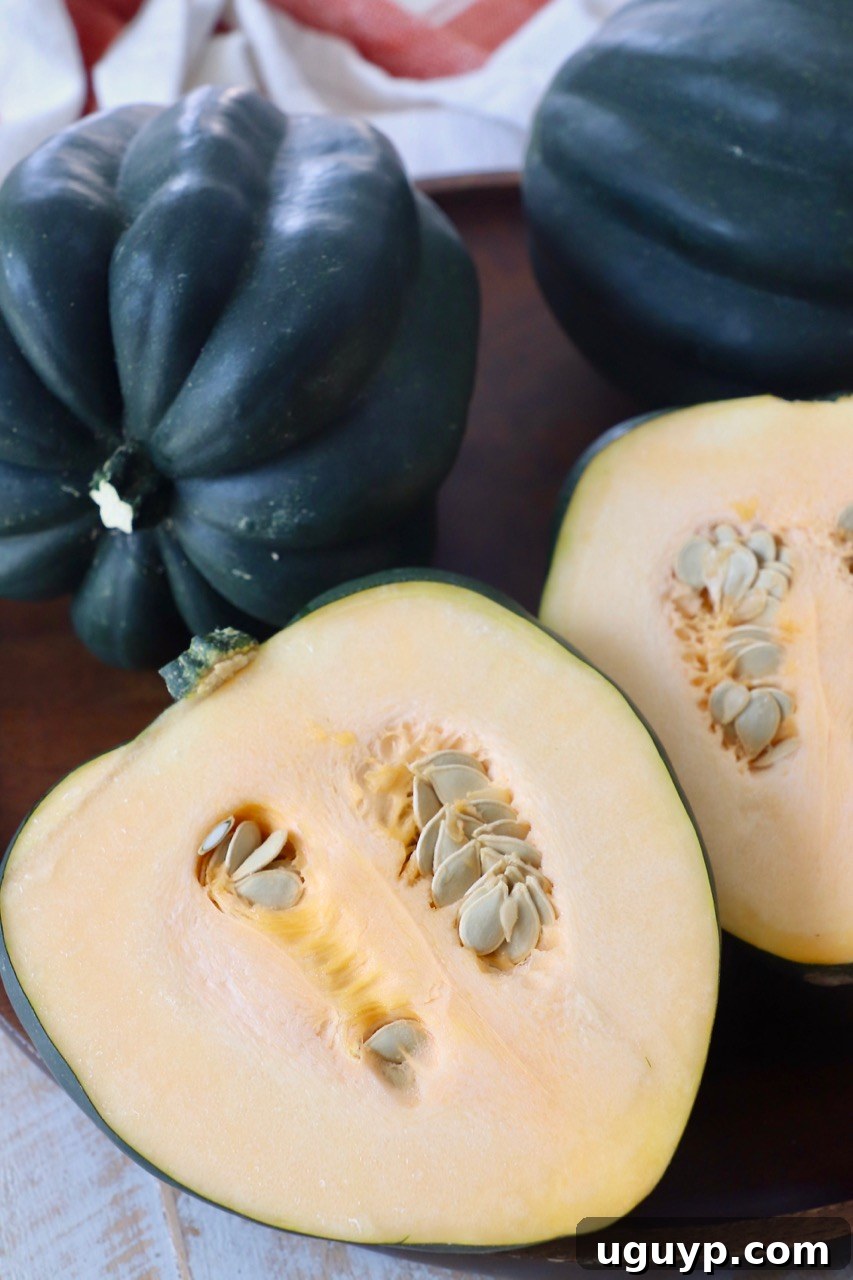
Table of Contents
- Introduction to Acorn Squash
- Selecting and Preparing Acorn Squash
- How to Cook Acorn Squash in an Air Fryer
- How to Cook Acorn Squash in the Microwave
- How to Roast Acorn Squash in the Oven
- Comparing Cooking Methods: Which is Best?
- Expert Tips for Perfect Acorn Squash
- Nutritional Benefits of Acorn Squash
- Storing and Freezing Cooked Acorn Squash
- Delicious Seasoning Ideas for Acorn Squash
- Creative Recipes to Make with Acorn Squash
- Essential Tools for Cooking Acorn Squash
- More Kitchen Tutorials to Explore
- Acorn Squash Recipe Card
Introduction to Acorn Squash: A Versatile Winter Delight
With its distinctive ridged skin and sweet, nutty flavor, acorn squash is a true highlight of fall and winter cuisine. This charming, small-to-medium-sized gourd, aptly named for its acorn-like shape, is a member of the winter squash family, closely related to pumpkins, butternut squash, and zucchini. Its unique blend of savory and sweet notes makes it an incredibly versatile ingredient, perfect for a wide array of dishes.
Whether you’re looking for a quick and healthy side dish, a hearty main course, or a comforting soup, acorn squash delivers. It’s remarkably easy to prepare using various methods including the microwave, oven, or air fryer, making it accessible even for busy weeknights. The tender flesh readily absorbs flavors, allowing you to dress it up with a myriad of seasonings and toppings, blend it into creamy soups, add it to salads, or incorporate it into casseroles. One of its most popular preparations involves stuffing the halves with grains, vegetables, or roasted meats, turning it into a beautiful and satisfying meal. No matter how you choose to serve it, acorn squash promises a delicious and nutritious experience that will quickly become a favorite!
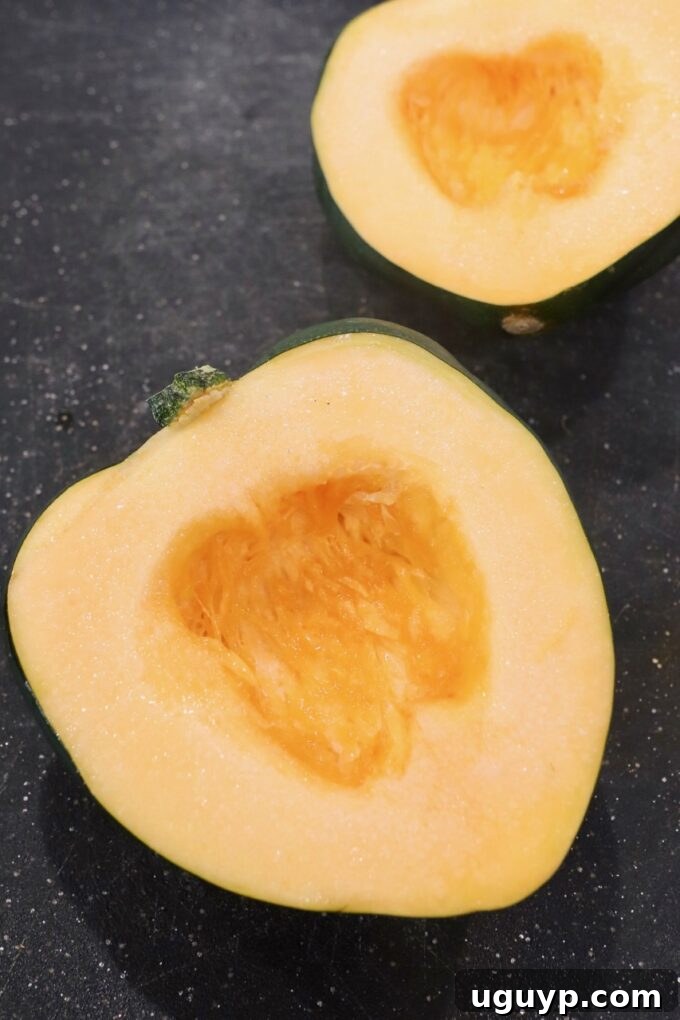
Selecting and Preparing Acorn Squash for Cooking
Choosing the right acorn squash is the first step to a delicious meal. Look for squash that feels heavy for its size, with firm, smooth skin and no soft spots. A dull, dark green color is usually a good indicator of ripeness. A healthy stem is also a good sign.
Once you’ve selected your perfect squash, preparing it is straightforward. The following steps are generally applicable for oven roasting and air frying. If you plan to use the microwave, you’ll start with the squash whole, as detailed in its specific section.
All cooking methods discussed here were tested using an average size acorn squash, typically weighing between 1 ½ to 2 pounds. If your squash is notably smaller or larger, remember to adjust the cooking times accordingly to ensure it cooks through without becoming overdone.
- Wash and Stabilize: Begin by thoroughly washing the exterior of your acorn squash under cool running water. For easier and safer cutting, you might want to slice a small bit off the very bottom of the squash to create a flat base, allowing it to sit steadily on your cutting board.
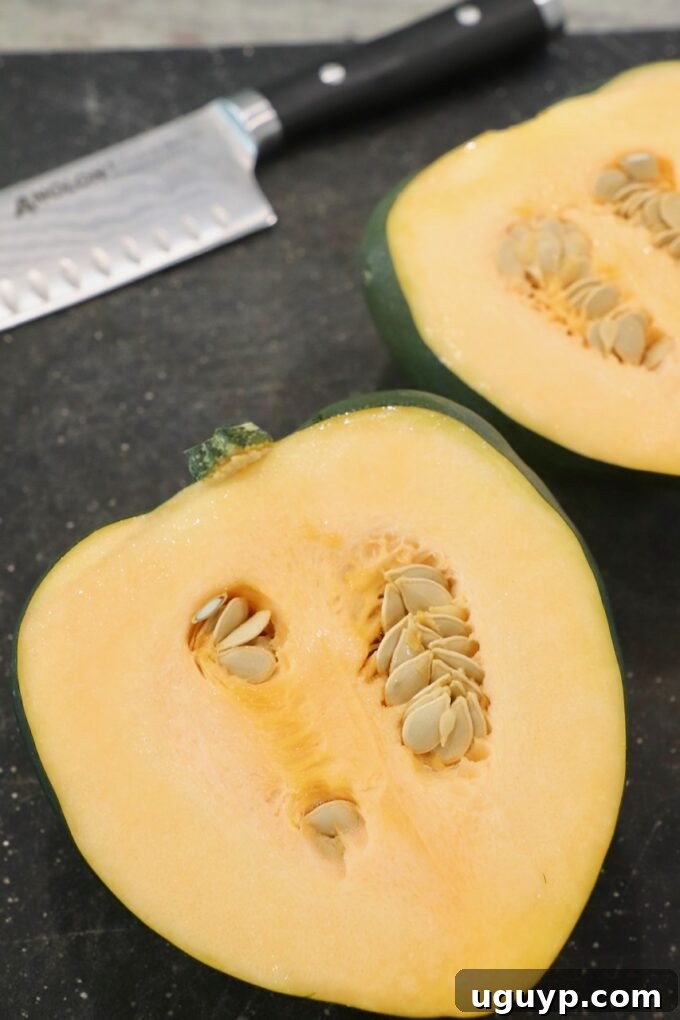
- Carefully Cut in Half: Place the squash on a sturdy cutting board. Using a sharp chef’s knife, carefully cut the acorn squash in half from stem to root. While acorn squash skin is thinner than some other winter varieties like spaghetti squash, it still requires a firm, controlled hand to cut safely. If you struggle with the stem, see our pro tips below for an easy trick.
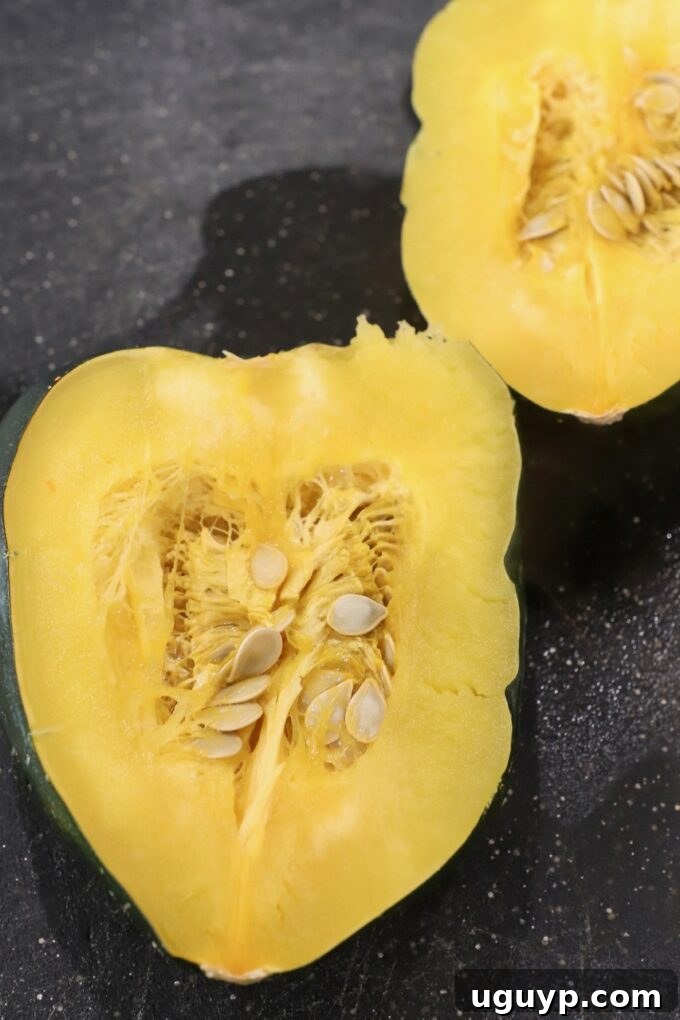
- Remove the Seeds: Once halved, use a sturdy spoon or a fork to scoop out the stringy pulp and seeds from the hollow center of each half. Don’t discard the seeds immediately! Acorn squash seeds can be roasted just like pumpkin seeds for a crunchy, healthy snack.
- Seasoning the Flesh: For most preparations, brush the vibrant orange flesh of the squash with a light coating of olive oil. This helps to tenderize the squash and promotes a beautiful caramelization during cooking. Follow with a generous sprinkle of salt. At this stage, you can also add other desired seasonings to enhance the flavor, which we’ll explore in detail further down.
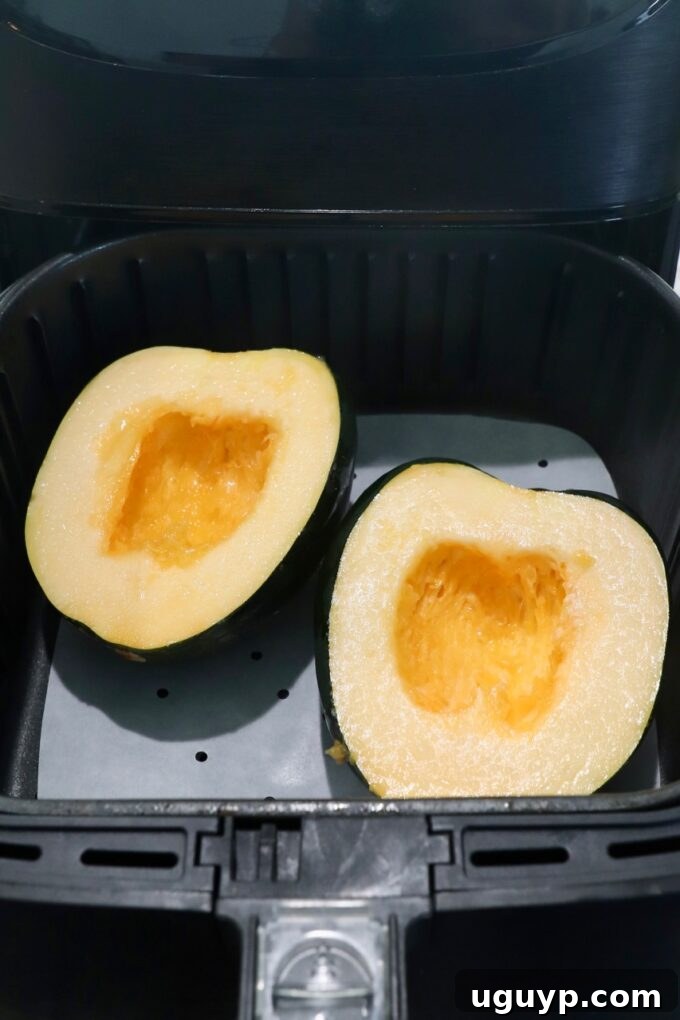
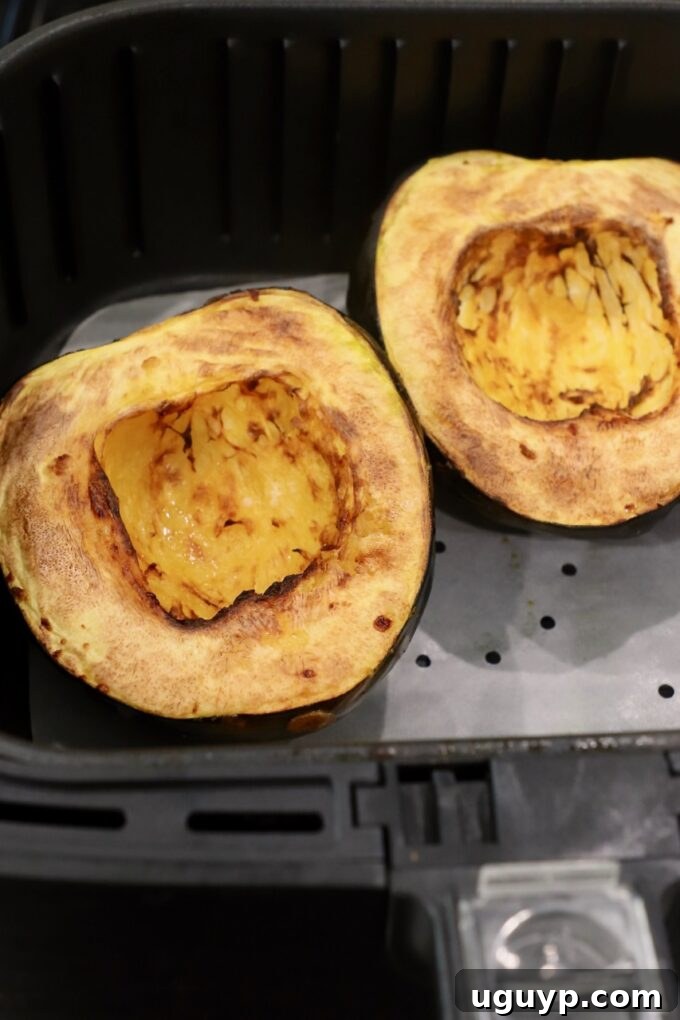
How to Cook Acorn Squash in an Air Fryer
The air fryer is a fantastic tool for achieving perfectly tender acorn squash with delightfully crispy edges in a fraction of the time compared to traditional oven roasting. It’s an excellent choice when you’re cooking for one or two people and want a quick, delicious result.
Instructions:
- Pre-Preparation: Follow the initial steps outlined in the “Preparing Acorn Squash for Cooking” section: wash, cut the squash in half, remove the seeds, and brush the flesh with olive oil and season with salt.
- Load the Air Fryer: Place the prepared acorn squash halves, cut-side up, into the air fryer basket. Ensure there’s enough space for air to circulate around them. If cooking multiple halves, you might need to do so in batches depending on the size of your air fryer. Consider using an air fryer parchment paper liner for easier cleanup.
- Air Fry to Perfection: Cook at 400°F (200°C) for approximately 20-25 minutes. The exact time may vary based on the size of your squash and the specific model of your air fryer.
- Check for Doneness: The squash is done when the flesh is fork-tender and the edges have a slightly caramelized, golden-brown appearance. If it’s not tender enough after 20 minutes, continue cooking in 3-5 minute increments until it reaches your desired texture.
- Serve: Carefully remove the hot squash from the air fryer using tongs. It’s now ready to be enjoyed as a side dish or used in your favorite acorn squash recipe.
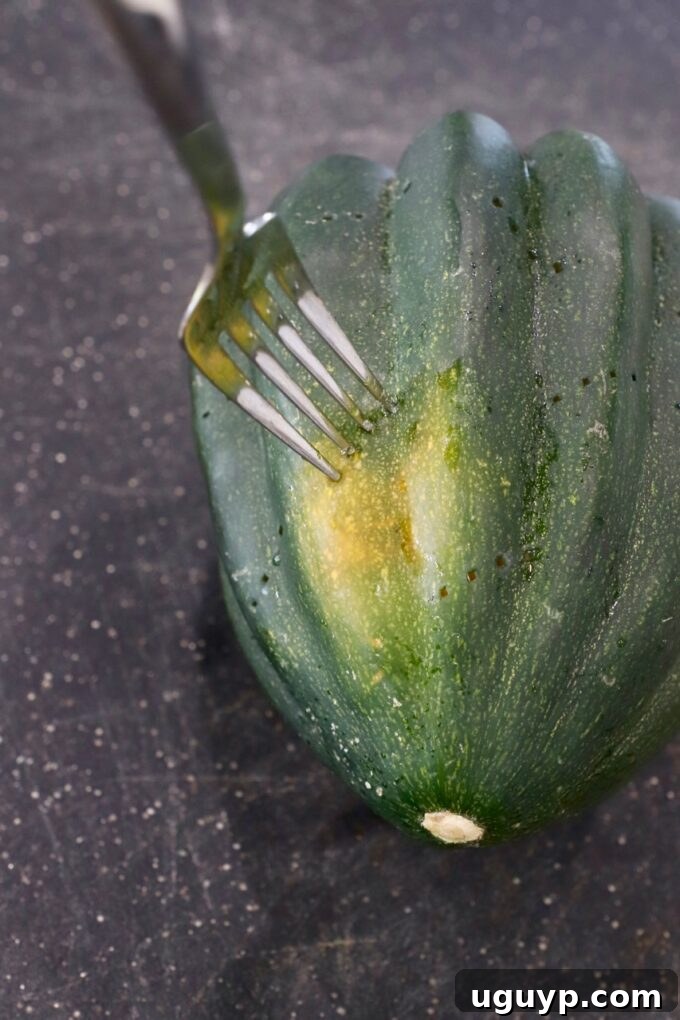
How to Cook Acorn Squash in the Microwave: The Fastest Method
When time is of the essence, the microwave is your best friend for cooking acorn squash. This method yields a wonderfully soft and tender squash in just minutes, making it perfect for last-minute meal additions or for preparing squash for purees and soups. Unlike oven or air fryer methods, you’ll start with the squash whole for microwave cooking.
Instructions:
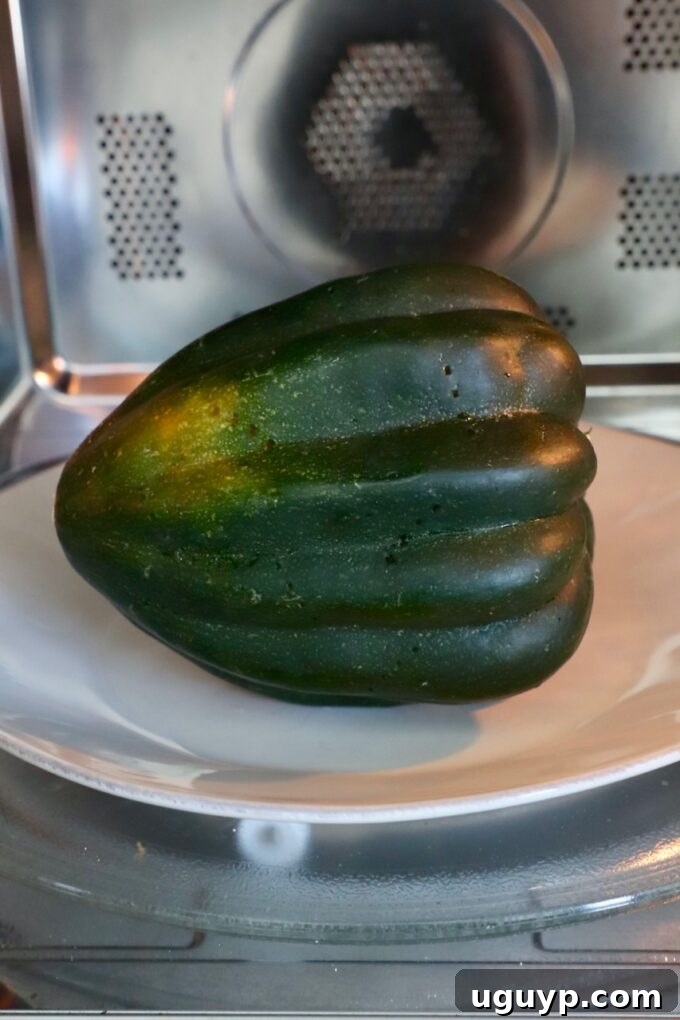
- Puncture the Skin: Place the whole acorn squash on a microwave-safe plate. Using a fork, carefully poke several holes all over the squash. This crucial step allows steam to escape during cooking, preventing the squash from bursting in the microwave.
- First Microwave Cycle: Microwave the squash on high power for 4 minutes.
- Flip and Continue: After the first cycle, use oven mitts or tongs to carefully flip the squash over on the plate. The squash will be hot!
- Second Microwave Cycle: Return the squash to the microwave and cook on high for an additional 4 minutes. For larger squash, you may need an extra 2-4 minutes until it’s fully tender.
- Test for Doneness: The squash is ready when you can easily insert a fork into its skin and flesh. If it still feels firm, continue microwaving in 1-2 minute intervals until tender.
- Prepare and Serve: Carefully remove the cooked squash from the microwave. Allow it to cool for a few minutes until it’s safe to handle. Then, slice it in half from stem to root, scoop out the seeds, and season it to your liking. It’s now ready to eat or incorporate into your favorite recipes.
How to Roast Acorn Squash in the Oven: Classic & Flavorful
Roasting acorn squash in the oven is arguably the most traditional and beloved method. It brings out the squash’s natural sweetness, creating a deliciously tender texture with beautifully caramelized edges. This method is ideal for cooking multiple squash halves at once and is perfect for a crowd or meal prepping.
Instructions:
- Preheat Oven: Begin by preheating your oven to 400°F (200°C). Prepare a baking sheet by lining it with foil or parchment paper for easy cleanup.
- Prepare the Squash: Follow the preparation instructions outlined earlier: wash, cut the squash in half lengthwise, and scoop out all the seeds and fibrous strands.
- Season Generously: Brush the cut sides of each acorn squash half with olive oil. This step is key for moisture and promoting that desirable browning. Season generously with salt and pepper, or your preferred spices (see our seasoning ideas section below for inspiration!). You can also add a pat of butter and a drizzle of maple syrup or brown sugar into the hollow for extra sweetness.
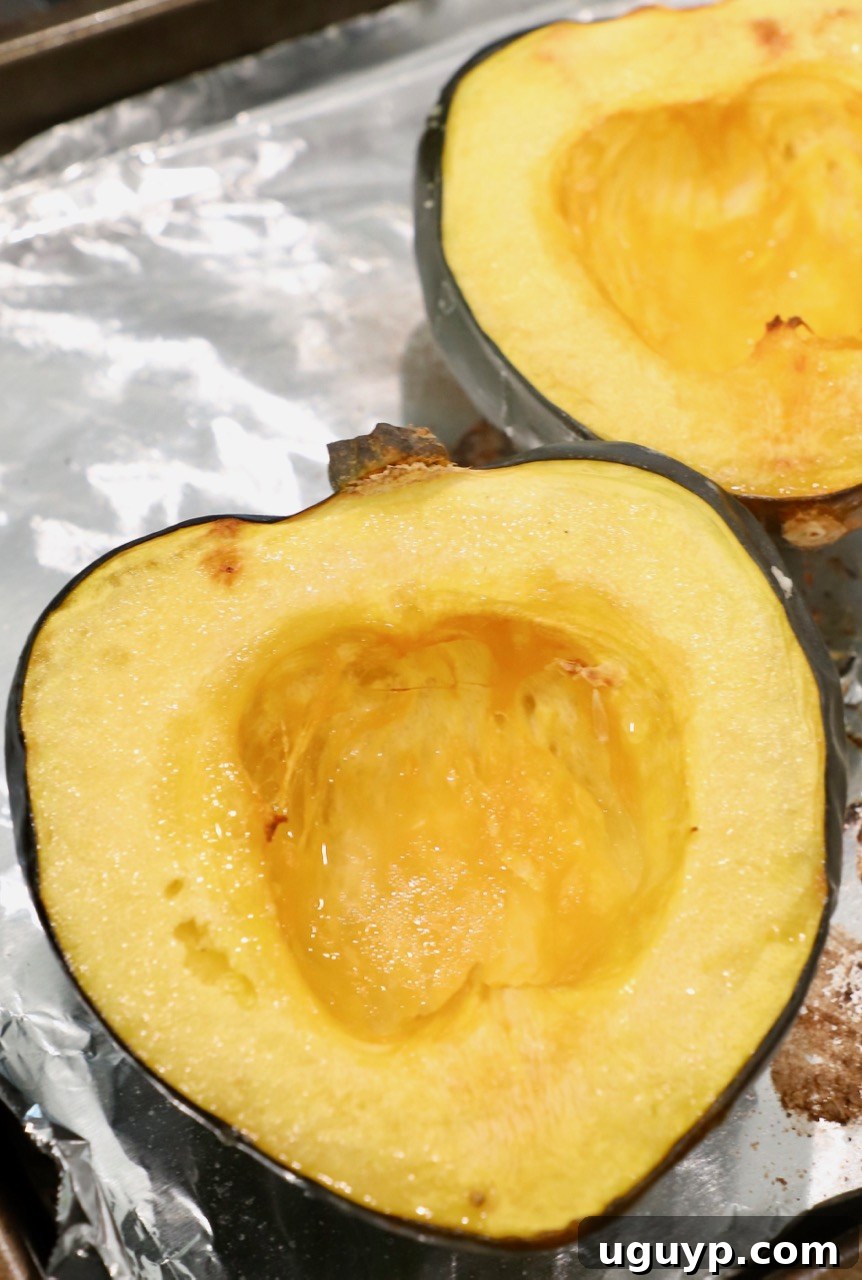
- Roast until Tender: Place the seasoned acorn squash halves cut-side up on the prepared baking sheet. Roast in the preheated oven for 35-45 minutes. The exact cooking time will depend on the size of your squash and your oven’s calibration.
- Check for Doneness: The squash is ready when its flesh is easily pierced with a fork, indicating it’s tender throughout. The surface should also appear slightly golden and caramelized.
- Serve: Carefully remove the hot squash from the oven. Allow it to cool slightly before serving. You can scoop out the flesh directly, or serve the halves as individual bowls for stuffing.
Comparing Cooking Methods: Which is Best for Acorn Squash?
Each cooking method offers unique advantages, making one preferable over another depending on your priorities for speed, texture, and convenience. Let’s break down the best way to cook acorn squash for different needs:
- Fastest Method: The Microwave
If you’re in a hurry, the microwave is hands-down the fastest way to cook acorn squash. A whole squash can be tenderized in as little as 8-10 minutes. This method is perfect for quick meal prep, when you need cooked squash for a puree, or if you simply don’t have time for a longer cooking process. The trade-off is that it won’t develop the caramelized flavors or crispy texture that roasting provides.
- Best Texture: A Tie Between Air Fryer and Oven
For achieving that desirable tender interior with a slightly crispy, golden, and caramelized surface, both the air fryer and the oven excel. The texture of acorn squash cooked in either of these appliances is remarkably similar. Roasting or air frying brings out the natural sugars, creating a depth of flavor that steaming or microwaving simply can’t match. If texture is your top priority, you won’t be disappointed with either of these methods.
- Best Overall (Considering Efficiency and Quantity):
- For a Single Squash or Small Batch: The Air Fryer
If you’re only cooking one or two acorn squash halves, the air fryer is often the best choice. It preheats much faster than a conventional oven and cooks the squash in almost half the time, delivering nearly identical taste and texture to oven-roasted squash. It’s energy-efficient and ideal for smaller portions.
- For Multiple Squash or Large Servings: The Oven
When you’re preparing acorn squash for a family meal, entertaining guests, or meal prepping several portions, the oven is the superior option. Its larger capacity allows you to cook multiple squash halves simultaneously without overcrowding, ensuring consistent results. While it takes longer, the hands-off cooking time allows you to focus on other aspects of your meal.
- For a Single Squash or Small Batch: The Air Fryer
Ultimately, the “best” way to cook acorn squash depends on your specific needs for a particular meal. Each method offers a convenient path to enjoying this delicious winter vegetable.
Expert Tips for Perfect Acorn Squash
Even though cooking acorn squash is relatively simple, these expert tips can elevate your results and make the process even smoother:
- How to Tell When It’s Done: The easiest way to know if your acorn squash is perfectly cooked is by checking its tenderness. You should be able to easily insert a fork into the thickest part of the flesh without much resistance. You want it tender, but not mushy, as overcooked squash can become watery. If you’ve cooked halves, testing the flesh directly is straightforward.
- Preventing Watery Acorn Squash: Overcooking is the primary culprit behind watery and mushy squash. Keep an eye on the cooking time and test for doneness regularly. Additionally, salting the squash flesh before roasting or air frying helps to draw out some excess moisture, contributing to a firmer, more flavorful result. Don’t be shy with the salt!
- To Peel or Not to Peel: Good news! You absolutely do not need to peel acorn squash before cooking. The skin is thin and becomes soft enough after cooking that you can easily scoop the tender flesh out with a spoon. If for some reason you prefer to remove the skin, it’s much easier to do so after the squash has cooked and cooled slightly. You can use a knife or even heat-proof gloves if it’s still warm.
- Deseeding Made Easy: A sturdy dinner fork works wonderfully for scraping out the stringy pulp and seeds from the squash halves. If you have one, a grapefruit spoon (with its serrated edge) is an even more efficient tool for this task, making quick work of seed removal.
- Cutting Trick for Stubborn Squash: If you’re finding it difficult to cut the raw acorn squash in half, especially if the stem is tough, try this trick: Use a sharp chef’s knife to carefully slice off the very top (stem end) of the acorn squash. Once the top is removed, place the squash on your cutting board, cut-side down. This flat, stable base provides significantly more stability and leverage, allowing you to push the knife through the squash with greater ease and safety when cutting it lengthwise. Always cut away from yourself!
- Embrace the Seeds: Don’t throw away those seeds! Just like pumpkin seeds, acorn squash seeds can be rinsed, tossed with a little olive oil and salt, and roasted in the oven until crispy for a delicious and nutritious snack.
Nutritional Benefits of Acorn Squash
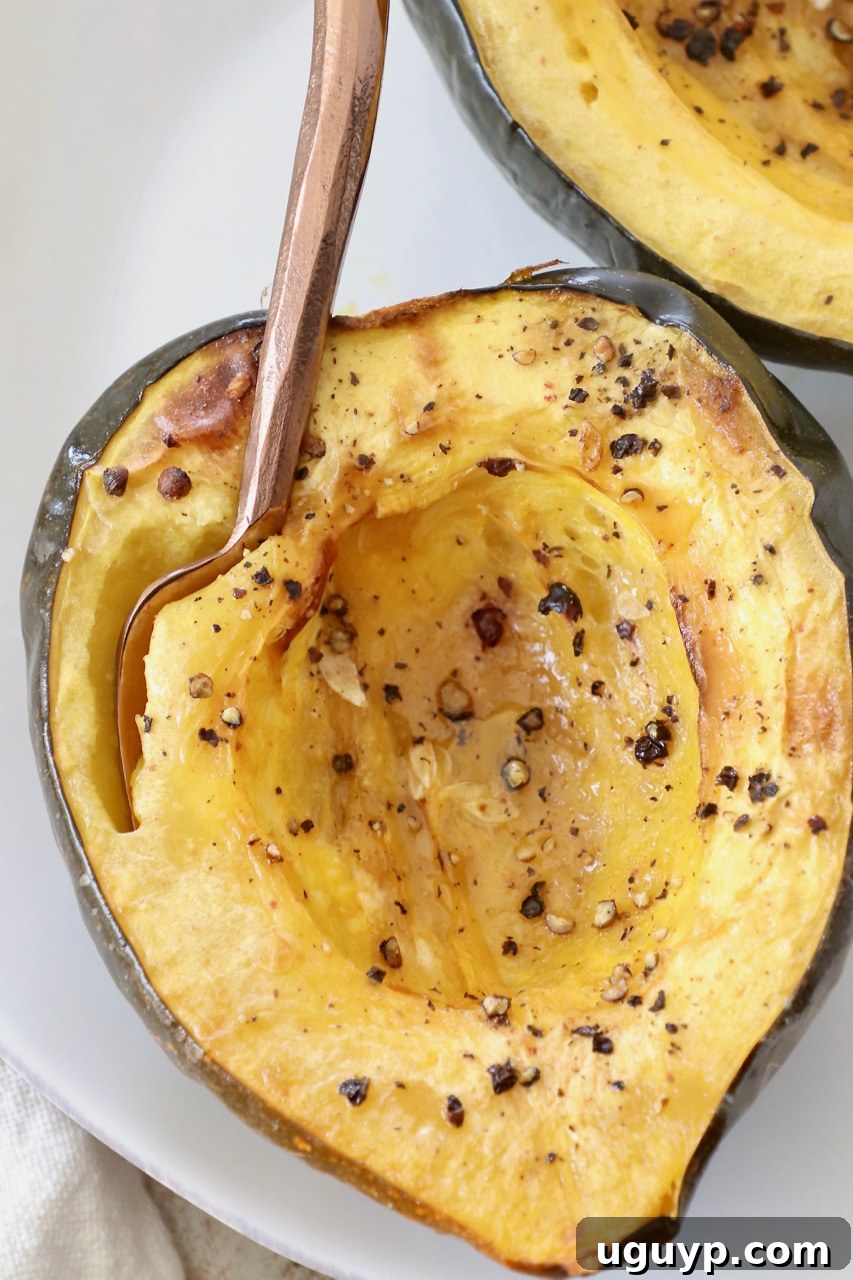
Beyond its delicious taste and versatility, acorn squash is a nutritional powerhouse that makes a healthy addition to any diet. It’s low in calories but rich in essential vitamins, minerals, and dietary fiber.
- Rich in Fiber: Acorn squash is an excellent source of dietary fiber, which is crucial for digestive health, helps regulate blood sugar levels, and promotes a feeling of fullness, aiding in weight management.
- Packed with Vitamins: It’s particularly high in Vitamin C, an antioxidant that supports immune function and skin health, and Vitamin A (in the form of beta-carotene), which is vital for vision and immune health.
- Mineral Content: This humble squash also provides a good amount of important minerals, including potassium (essential for blood pressure regulation), magnesium (involved in over 300 bodily reactions), and manganese (a cofactor for many enzymes).
- Antioxidant Properties: The vibrant orange flesh is indicative of its high beta-carotene content, a powerful antioxidant that helps protect your cells from damage caused by free radicals.
- Heart Healthy: The combination of fiber, potassium, and antioxidants makes acorn squash a heart-healthy choice, contributing to overall cardiovascular well-being.
Incorporating acorn squash into your meals is an easy and delicious way to boost your nutrient intake and enjoy the health benefits of this wonderful winter vegetable.
Storing and Freezing Cooked Acorn Squash
Cooked acorn squash is fantastic for leftovers or for meal prepping. Proper storage ensures you can enjoy its deliciousness days or even months later.
Refrigeration:
Once the squash is cooked and has cooled completely to room temperature, you can store its flesh (scooped out from the skin) or whole halves in the refrigerator. Place it in an airtight container to maintain freshness and prevent it from absorbing other odors from the fridge. Cooked acorn squash will last for up to 7 days when properly refrigerated.
Freezing:
For longer-term storage, cooked acorn squash freezes beautifully for up to 8 months. This is particularly convenient if you’ve cooked a large batch or want to have pureed squash readily available for soups or baking.
- Cool Completely: Ensure the cooked squash is entirely cool before proceeding.
- Scoop and Mash (Optional): Scoop the flesh out of the skin. You can leave it in chunks or mash it, depending on its intended future use.
- Prepare for Freezing: For best results and to prevent freezer burn, vacuum-sealing the squash is ideal. If you don’t have a vacuum sealer, place the squash in freezer-safe zip-top bags. Squeeze out as much air as possible before sealing the bag. You can also freeze individual portions in muffin tins and then transfer the frozen pucks to a bag.
- Label and Date: Always label your frozen squash with the date it was prepared to keep track of its freshness.
When ready to use, simply thaw the frozen squash in the refrigerator overnight or gently reheat from frozen in the microwave or on the stovetop.
Delicious Seasoning Ideas for Acorn Squash
While a simple sprinkle of salt and pepper is always a delicious choice, acorn squash is a blank canvas that welcomes a variety of flavors. Its natural sweetness pairs wonderfully with both savory and sweet seasonings. Here are some ideas to inspire your next acorn squash creation:
- Sweet & Spicy:
- Brown sugar + cinnamon (a classic combination for a dessert-like side)
- Maple syrup + a pinch of cayenne pepper (sweet with a subtle kick)
- Pumpkin pie spice (perfect for fall flavors)
- Earthy & Warm:
- Paprika + cayenne pepper (for a smoky, warm flavor)
- Cumin + smoked paprika (creates a deeper, savory profile)
- Curry powder (for an exotic, aromatic touch)
- Rosemary + thyme + garlic powder (classic herb blend)
- Sage + thyme (traditional autumnal herbs that complement squash beautifully)
- Savory & Robust:
- Garlic powder + onion powder (enhances the natural savory notes)
- Italian seasoning (a versatile blend for a Mediterranean twist)
- Chili seasoning (for a Tex-Mex inspired flavor, especially good if stuffing with beans or corn)
- Buttery & Rich:
- A simple pat of butter and a grind of fresh black pepper
- Nutmeg and a touch of brown butter
Don’t be afraid to experiment! A little goes a long way in transforming the humble acorn squash into a truly memorable dish. Consider fresh herbs like parsley or cilantro as a garnish after cooking for an extra burst of flavor and color.
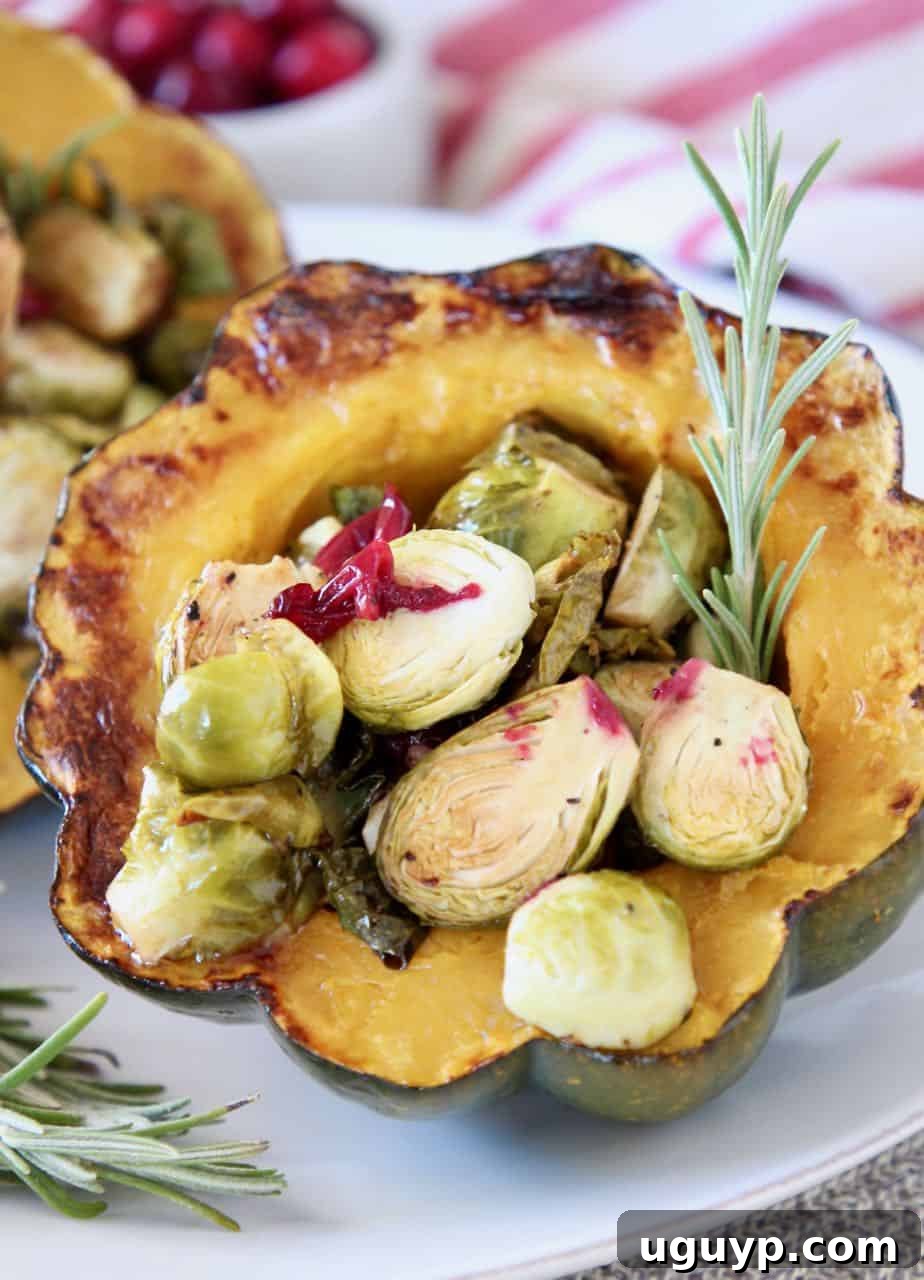
Creative Recipes to Make with Acorn Squash
One of the best qualities of winter squash, including acorn squash, is their interchangeability in recipes. The tender, subtly sweet flesh of cooked acorn squash can be substituted for butternut squash or other similar varieties in many dishes, opening up a world of culinary possibilities. Here are some delicious and creative ways to utilize your perfectly cooked acorn squash:
- Stuffed Acorn Squash: This is a classic and visually appealing way to serve acorn squash. Use the hollowed-out halves as edible bowls!
- Stuffed Acorn Squash with Brussels Sprouts (pictured above): A festive and flavorful combination of roasted sprouts and cranberries.
- Stuff the inside with wild rice, quinoa, dark greens, savory sausage, crumbled bacon, or a mix of roasted vegetables for a light yet satisfying meal.
- Creamy Soups: The tender flesh of acorn squash purees beautifully into rich and comforting soups.
- Acorn Squash Soup: A simple, elegant soup that highlights the squash’s natural sweetness.
- Chai Spiced Butternut Squash Soup: Substitute acorn squash for a warming, aromatic blend of spices.
- Hearty Casseroles & Savory Bakes:
- Butternut Squash Sausage Strudel: Acorn squash would be a delightful, slightly sweeter alternative.
- Butternut Squash Mac and Cheese: Add a creamy, veggie-packed twist to a comfort food classic.
- Roasted Squash Casserole with Maple Nut Praline: A decadent side dish perfect for holidays.
- Salads & Bowls: Add cubes or slices of roasted acorn squash to your favorite salads for added texture, sweetness, and nutrition.
- Roasted Butternut Squash Spinach Kale Salad: Acorn squash works perfectly here for a vibrant and filling salad.
- Mexican Roasted Squash Bowl: Pair with Mexican-inspired flavors like black beans, corn, and avocado.
- Pasta Dishes: Incorporate pureed or diced squash into pasta sauces.
- Butternut Squash Pasta Sauce: A creamy and flavorful sauce for any type of noodle.
- Brown Butter Acorn Squash Pasta: A sophisticated and comforting dish.
- Simple Toppings & Garnishes:
- Dress it up simply with additional ingredients like toasted pecans, walnuts, crumbled feta or goat cheese, or a drizzle of balsamic glaze.
- For a richer profile, add crispy bacon bits or sautéed sausage directly into the squash cavity after cooking.
With its adaptable flavor and texture, acorn squash truly shines in both sweet and savory applications, making it a star ingredient for countless recipes.
Essential Tools for Cooking Acorn Squash
Having the right tools on hand can make the process of preparing and cooking acorn squash much more efficient and enjoyable. Here’s a list of kitchen essentials that will come in handy for this recipe and many others:
- Baking Sheet: Essential for oven roasting, providing ample space for the squash and easy cleanup if lined.
- Tongs or Oven Mitt: Crucial for safely handling hot squash, whether flipping in the microwave or removing from the oven/air fryer.
- Air Fryer: If you plan on using this quick and efficient method, a good quality air fryer is a must. Consider parchment paper liners for even easier cleanup.
- Chef’s Knife: A sharp, sturdy chef’s knife is indispensable for safely and efficiently cutting the squash in half.
- Cutting Board: A stable, non-slip cutting board is vital for safe squash preparation.
- Spoon or Fork: For scooping out seeds and fibrous strands from the squash cavity. A grapefruit spoon can also be very effective.
- Pastry Brush: Useful for evenly applying olive oil and seasonings to the squash flesh.
- Airtight Containers: For storing any delicious leftovers or meal-prepped squash.
With these basic kitchen tools, you’ll be well-equipped to prepare perfect acorn squash using any of your preferred cooking methods!
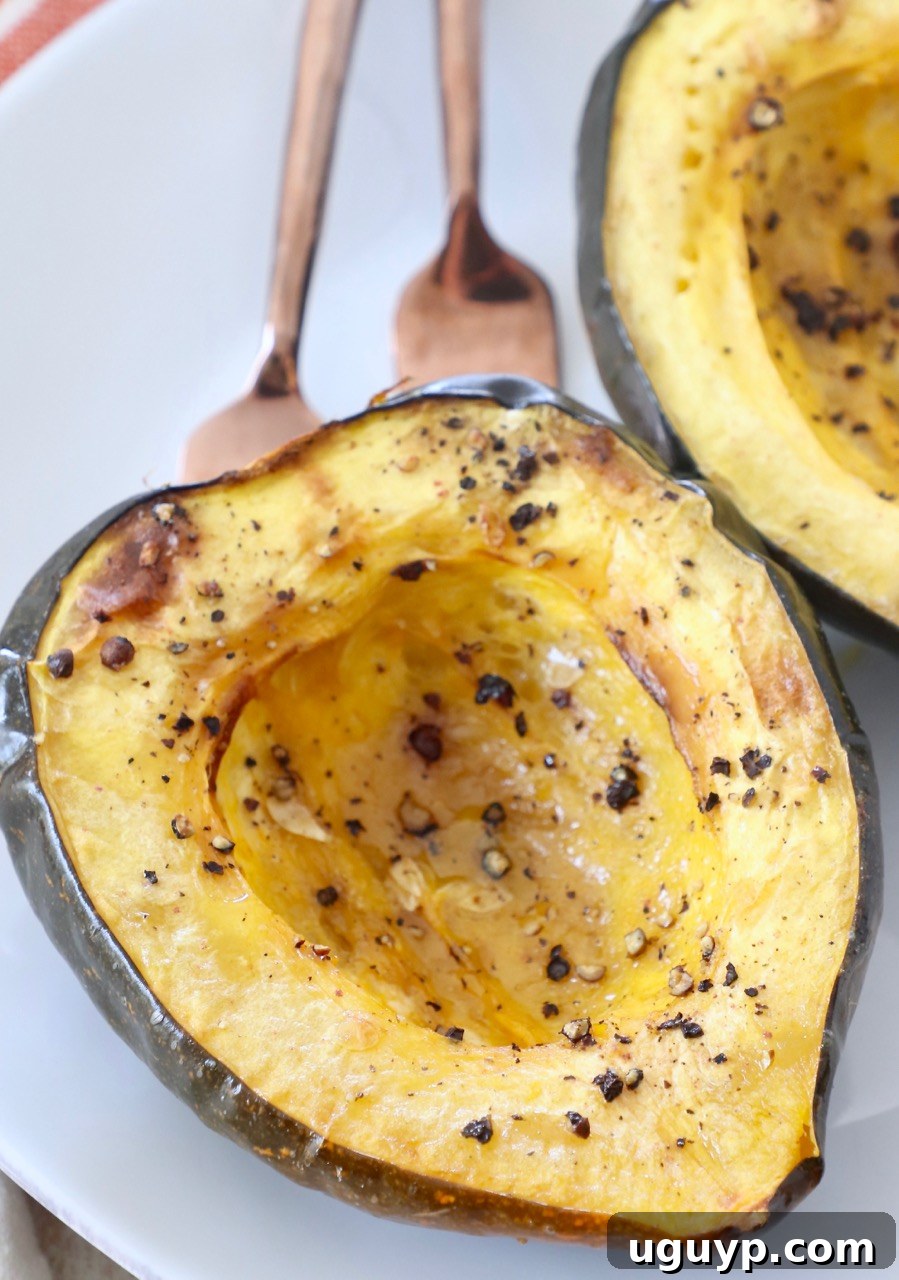
More Kitchen Tutorials to Explore
Mastering the art of cooking delicious and healthy meals often starts with understanding basic kitchen techniques. If you enjoyed learning how to cook acorn squash, you might find these other quick and easy cooking how-to guides incredibly helpful for expanding your culinary skills:
- How To Caramelize Onions: Transform ordinary onions into sweet, golden treasures perfect for burgers, dips, and French onion soup.
- How To Cook Bacon In The Oven: Learn the mess-free method for perfectly crispy bacon every time.
- 3 Ways – How To Cook Sweet Potatoes: Discover multiple methods to prepare this nutritious and versatile root vegetable.
- How To Cook Spaghetti Squash: Master the art of turning this unique squash into a healthy pasta alternative.
- How To Hard Boil Eggs: Achieve perfectly cooked hard-boiled eggs for salads, snacks, and more, every single time.
These tutorials are designed to build your confidence in the kitchen and make everyday cooking simpler and more delicious!

Print Recipe
Pin Recipe
5 stars (3 ratings)
Rate this Recipe
How To Cook Acorn Squash
Learn how to cook acorn squash with this easy step-by-step guide! Acorn squash can be roasted in the oven, in an air fryer or cooked quickly in the microwave. It’s delicious stuffed with other roasted veggies, pureed into soup or simply seasoned and served as a side dish.
Cook Time: 20 mins
Total Time: 25 mins
Cuisine: American
Video
A video tutorial for cooking acorn squash is available.
Ingredients
- 1 acorn squash (1 ½ – 2 pounds)
- 1 teaspoon olive oil
- ½ teaspoon salt
Instructions
Oven Method
- Preheat the oven to 400°F (200°C). Line a baking sheet with foil or parchment paper.
- Cut the squash in half from stem to root.
- Use a fork or spoon to scrape out the seeds and fibrous strands from the middle of the squash.
- Brush ½ teaspoon olive oil on the inside flesh of each half of acorn squash and season each half with ¼ teaspoon salt. Add any other desired seasonings.
- Place the squash, flesh side up, on the prepared foil-lined baking sheet.
- Bake at 400°F (200°C) for 35-45 minutes, or until the flesh is fork-tender and slightly caramelized.
Microwave Method
- Leave the acorn squash whole. Use a fork to poke several holes all over the squash to allow steam to escape as it cooks.
- Place the squash on a microwave-safe plate. Microwave on high power for 4 minutes.
- Using tongs or an oven mitt, carefully flip the squash over on the plate.
- Microwave for an additional 4 minutes. Check for doneness; if not tender, continue microwaving in 1-2 minute increments.
- Remove from the microwave. Allow to cool slightly, then cut the acorn squash in half from stem to root, use a fork to remove the seeds, and serve the squash seasoned to your preference.
Air Fryer Method
- Cut the acorn squash in half from stem to root.
- Use a fork or spoon to scrape out all of the seeds and fibrous strands from both sides of the squash. Discard the seeds or roast them separately.
- Brush ½ teaspoon olive oil on the inside flesh of each half of acorn squash and season each half with ¼ teaspoon salt. Add any other desired seasonings.
- Place the prepared squash halves cut-side up in an air fryer basket. Do not overcrowd; cook in batches if necessary.
- Cook at 400°F (200°C) for 20-25 minutes, or until the flesh is fork-tender and the edges are slightly golden.
Notes
- Each of these methods was tested using an average size squash, 1 ½ – 2 pounds in size. If the squash you have is smaller or larger, you may have to adjust the cooking times either up or down.
- You’ll know when the squash is done when you can easily insert a fork in the flesh. You want it tender, yet not mushy. If the squash is already cut in half, you can easily test if it is done by sticking a fork in the flesh of the squash. If it’s fork-tender, it’s cooked and ready to eat.
- To avoid watery acorn squash, do not overcook it. Overcooked squash will become watery and mushy. Salting the squash before roasting it also helps to pull out some of the moisture to avoid watery squash.
- You do not need to peel acorn squash before cooking, as the flesh will easily scoop out of the squash once it’s cooked. You can also easily peel the skin from the squash, once it’s cooled to the touch, or by using heat-proof gloves if preferred.
- Once the squash is cooked and the flesh is removed from the skin, you can store it in the refrigerator or freezer. Seal it in an airtight container. Refrigerate for up to 7 days or freeze for up to 8 months.
Nutrition Facts
Carbohydrates: 95g (32%)
Protein: 7g (14%)
Fat: 5g (8%)
Saturated Fat: 1g (5%)
Polyunsaturated Fat: 1g
Monounsaturated Fat: 3g
Sodium: 1190mg (50%)
Potassium: 3148mg (90%)
Fiber: 14g (56%)
Vitamin A: 3329mg (67%)
Vitamin C: 100mg (121%)
Calcium: 300mg (30%)
Iron: 6mg (33%)
Did you make this recipe?
Tag @WhitneyBond on Instagram and hashtag it #WBRecipes!