The Art of Beef Wellington
- Ticket
- № 2867
- Served
- Read
- 21 min
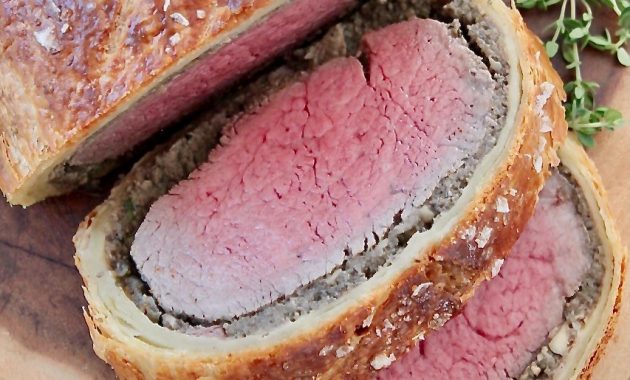
Delving into the world of gourmet cooking often introduces culinary masterpieces that seem daunting, yet promise an unforgettable dining experience. Among these, the **Beef Wellington** stands supreme. This iconic dish is a celebration of flavors and textures, starring a succulent beef tenderloin generously coated with rich mushroom duxelles, delicately wrapped in savory prosciutto, and encased in a golden, flaky puff pastry crust. The harmonious layers create a symphony on the palate, while its exquisite presentation ensures it remains a showstopping centerpiece for any special occasion.
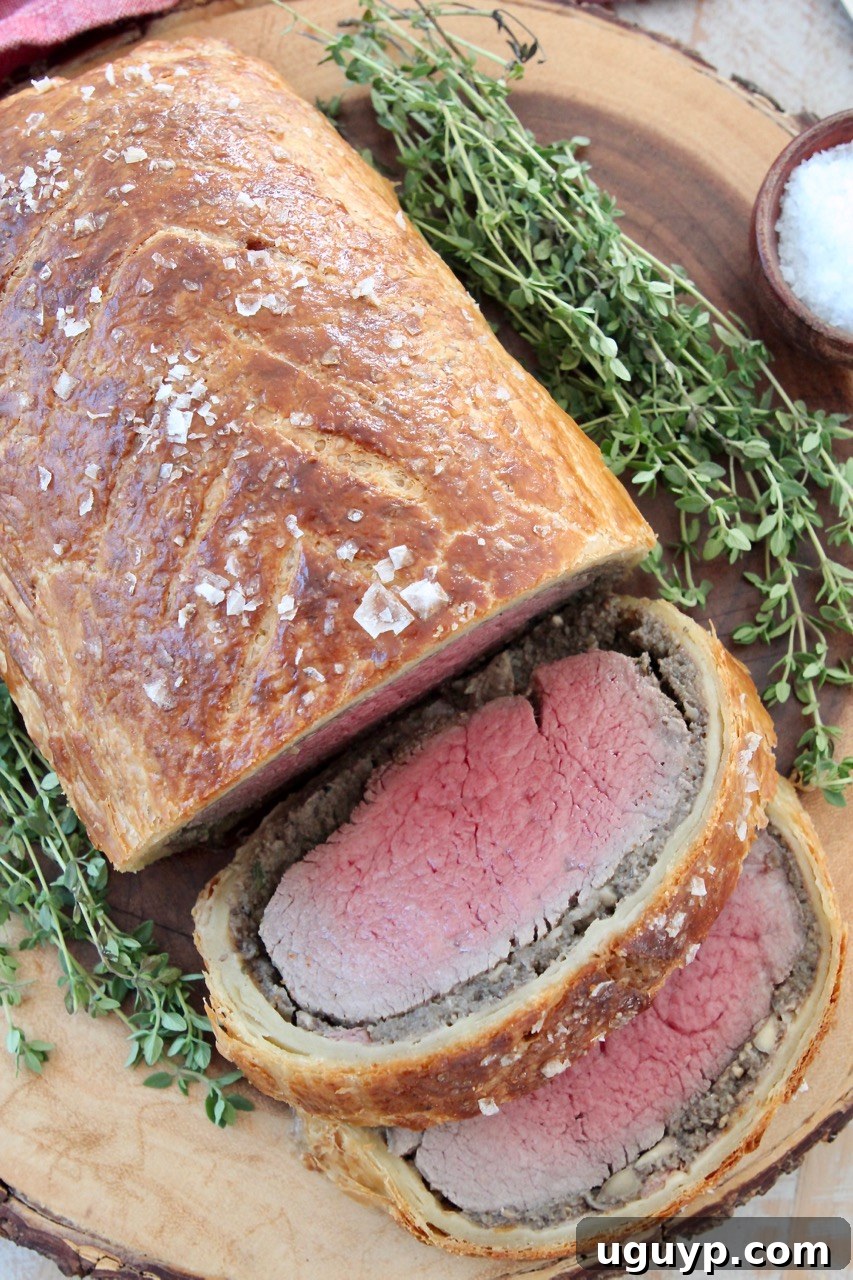
This comprehensive guide is proudly brought to you with support from our friends at the California Beef Council, championing quality beef recipes for home cooks everywhere.
Table of Contents
- The Legacy of Beef Wellington
- Why Make Beef Wellington at Home?
- Essential Ingredients for Beef Wellington Perfection
- Choosing the Right Beef Tenderloin
- Duxelles: The Heart of the Flavor
- Prosciutto and Puff Pastry Layers
- Mastering Beef Wellington: Step-by-Step Guide
- Step 1: Preparing the Beef Tenderloin
- Step 2: Crafting the Flavorful Duxelles
- Step 3: Wrapping the Tenderloin in Prosciutto
- Step 4: Encasing in Golden Puff Pastry
- Step 5: Baking to Perfection and Resting
- Keys to Your Beef Wellington Success
- Perfect Pairings: What to Serve with Beef Wellington
- Explore More Delicious Beef Recipes
- Full Recipe Card
The Legacy of Beef Wellington
The Beef Wellington is more than just a dish; it’s a culinary icon, often associated with grandeur and festive celebrations. While its exact origins are debated, many believe it was named after Arthur Wellesley, the first Duke of Wellington, following his victory at the Battle of Waterloo. Regardless of its historical roots, the dish has evolved into a symbol of gourmet cooking, cherished for its intricate preparation and unparalleled taste. It’s a testament to the art of layering flavors and textures, creating a dining experience that is both rich and utterly satisfying.
Why Make Beef Wellington at Home?
Often perceived as a dish reserved for fine dining restaurants, making Beef Wellington at home is a truly rewarding endeavor. It’s a “wow-the-crowd” kind of recipe, a spectacular centerpiece for any holiday meal, anniversary, or special gathering. While it might seem complex at first glance, the process is actually more about careful timing and attention to detail than advanced culinary skills. Many of the steps involve periods of chilling, offering you the perfect opportunity to relax, perhaps with a glass of wine, while the magic slowly unfolds in your refrigerator. In this comprehensive guide, we’ll demystify the entire process, ensuring your homemade Beef Wellington is perfect from your very first attempt. This recipe is an investment in both time and quality ingredients, and we are committed to providing you with every key to success, guiding you through each detail with clarity and confidence.
Prepare to create what might just be the most luxurious recipe you’ll ever master. Beef Wellington bursts with savory, salty, and umami flavors, all centered around a prized, exceptionally tender cut of meat: the beef tenderloin. Imagine flaky, buttery puff pastry encasing incredibly tender, juicy beef, all wrapped in a savory mushroom duxelles and salty, aromatic prosciutto. It’s an irresistible combination, delivering an impressive dish that’s truly mouth-watering and unforgettable.
Essential Ingredients for Beef Wellington Perfection
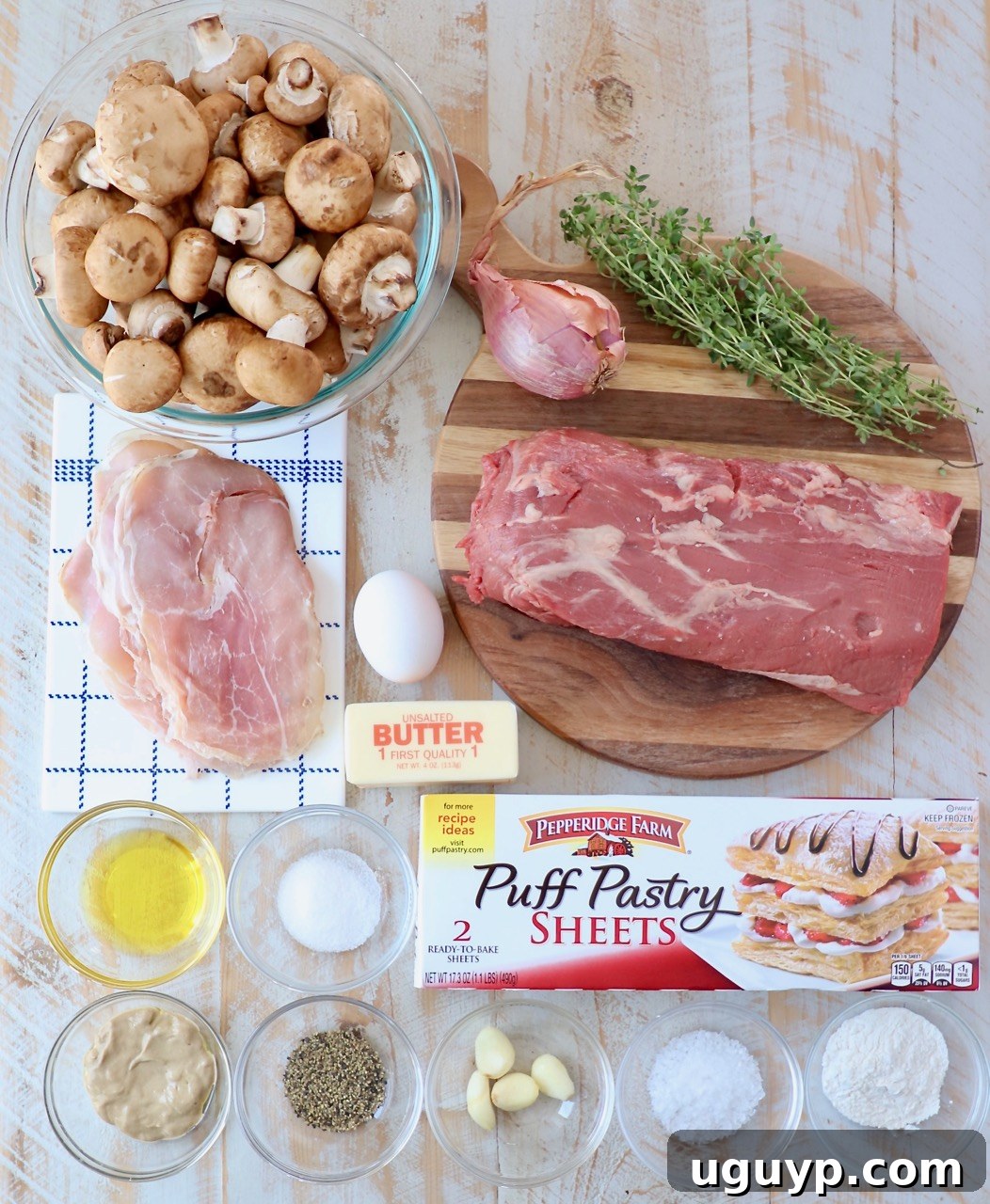
A truly exceptional Beef Wellington relies on five core components: a prime beef tenderloin, pungent Dijon mustard, rich mushroom duxelles, delicate prosciutto, and flaky puff pastry. While the adventurous home chef might consider making their own puff pastry, for this already intricate recipe, we highly recommend using high-quality frozen puff pastry dough from your local grocery store to save time without compromising on flavor or texture. Each ingredient plays a crucial role in the symphony of flavors that define this classic dish, making substitutions generally ill-advised if you aim for authentic results.
Choosing the Right Beef Tenderloin
- Center-cut beef tenderloin: For this recipe, aim for a 2-3 pound center-cut beef tenderloin. This specific cut is preferred because it boasts a consistent diameter from end to end, ensuring even cooking. A larger or an end-cut tenderloin might lead to uneven cooking, with thinner sections overcooking while thicker parts remain underdone. Always choose a tenderloin that is already trimmed of excess fat and silver skin for ease of preparation.
- Kosher salt & Ground black pepper: Essential for seasoning the beef tenderloin, bringing out its natural flavors and forming a delicious crust during searing.
- Olive oil: Used for searing the beef, providing a rich, golden-brown exterior that locks in the juices.
- Dijon mustard: This acts as a crucial binding layer between the seared beef and the duxelles, adding a subtle tang and enhancing the overall savory profile. Its sharp, pungent flavor beautifully complements the richness of the beef.
Duxelles: The Heart of the Flavor
- Baby bella mushrooms (crimini mushrooms): These are highly recommended over white button mushrooms due to their earthier, meatier flavor profile. This intensity makes them an ideal partner for beef, contributing depth to the duxelles.
- Shallots: Offering a sweet, delicate onion flavor with a hint of sharpness, shallots are superior to regular onions for their nuanced taste that won’t overpower the other ingredients. While onions can be substituted, be aware they will impart a more pungent and less sweet flavor.
- Garlic cloves: A cornerstone of savory cooking, fresh garlic adds an aromatic punch to the duxelles, elevating its complexity.
- Fresh thyme sprigs: Thyme contributes an earthy, slightly floral note that pairs wonderfully with mushrooms and beef, providing a fresh counterpoint to the rich ingredients.
- Unsalted butter: Essential for sautéing the duxelles mixture, adding richness and helping the flavors meld together harmoniously.
Prosciutto and Puff Pastry Layers
- Thin slices prosciutto: Found in the deli section of most major grocery stores, prosciutto adds a salty, savory, and slightly sweet dimension. Choose thinly sliced prosciutto that is sturdy enough to wrap around the tenderloin without tearing easily. Prosciutto di Parma, renowned for its curing process and delicate flavor, is highly recommended for an authentic and superior taste experience. If you’re going all out for a Beef Wellington, selecting premium prosciutto is a worthwhile indulgence.
- All-purpose flour: A small amount is needed for dusting your work surface, preventing the puff pastry from sticking as you roll it out.
- Frozen puff pastry dough: This convenient ingredient is a game-changer for homemade Beef Wellington. Look for a package containing two sheets in the freezer section. It’s crucial to allow the dough to thaw at room temperature for at least 30 minutes before use. While homemade puff pastry offers a unique touch, high-quality store-bought varieties perform exceptionally well and significantly reduce preparation time.
- Large egg (beaten): Used as an egg wash, it creates a beautiful, golden-brown, and glossy crust on the puff pastry, enhancing both its appearance and texture.
- Sea salt flakes (finishing salt): Sprinkled over the puff pastry before baking, these flakes add a delicate crunch and a burst of salty flavor, providing a professional and attractive finish to your Beef Wellington. These can often be found near other specialty salts or purchased online.
For precise ingredient quantities, detailed cooking temperatures, and a full, printable recipe guide, please refer to the recipe card located at the bottom of this post.
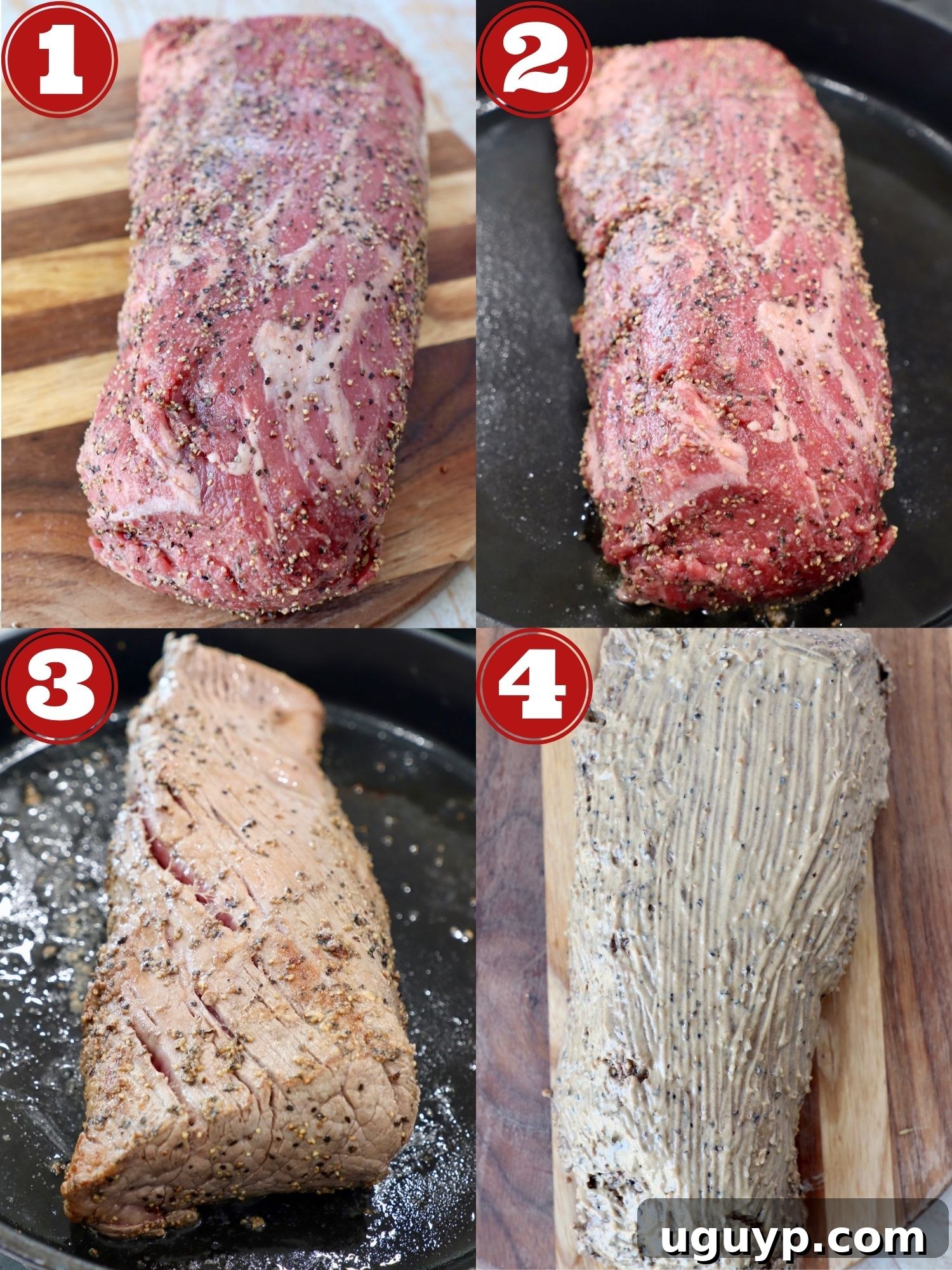
Mastering Beef Wellington: Step-by-Step Guide
Step 1: Preparing the Beef Tenderloin
The foundation of a perfect Beef Wellington is a well-prepared beef tenderloin. Searing the meat correctly is crucial for developing a rich, flavorful crust and locking in its natural juices.
- Begin by generously seasoning the entire beef tenderloin with kosher salt and freshly ground black pepper. Ensure all sides and ends are evenly coated.
- Heat a heavy-bottomed skillet, preferably cast iron, over high heat. Add olive oil to coat the bottom of the pan. Allow the skillet to get very hot until the oil just begins to shimmer and smoke slightly.
- Carefully place the seasoned tenderloin into the hot skillet. Sear it vigorously on all sides, including the ends, until a deep golden-brown crust forms. This usually takes about 2 minutes per side, totaling approximately 12 minutes for a 2-3 pound tenderloin. The goal is a beautiful caramelization, not to cook the meat through.
- Once seared, transfer the tenderloin to a clean cutting board and let it cool for 5-10 minutes. This resting period allows the exterior to cool slightly and prevents the mustard from cooking.
- Using a pastry brush, generously coat all sides of the cooled tenderloin with Dijon mustard. This layer not only adds flavor but also helps the duxelles adhere to the beef.
- Place the mustard-coated tenderloin in the refrigerator to chill thoroughly. Cooling the beef is essential for making it easier to handle in subsequent wrapping steps and helps ensure the puff pastry doesn’t get soggy prematurely during baking.
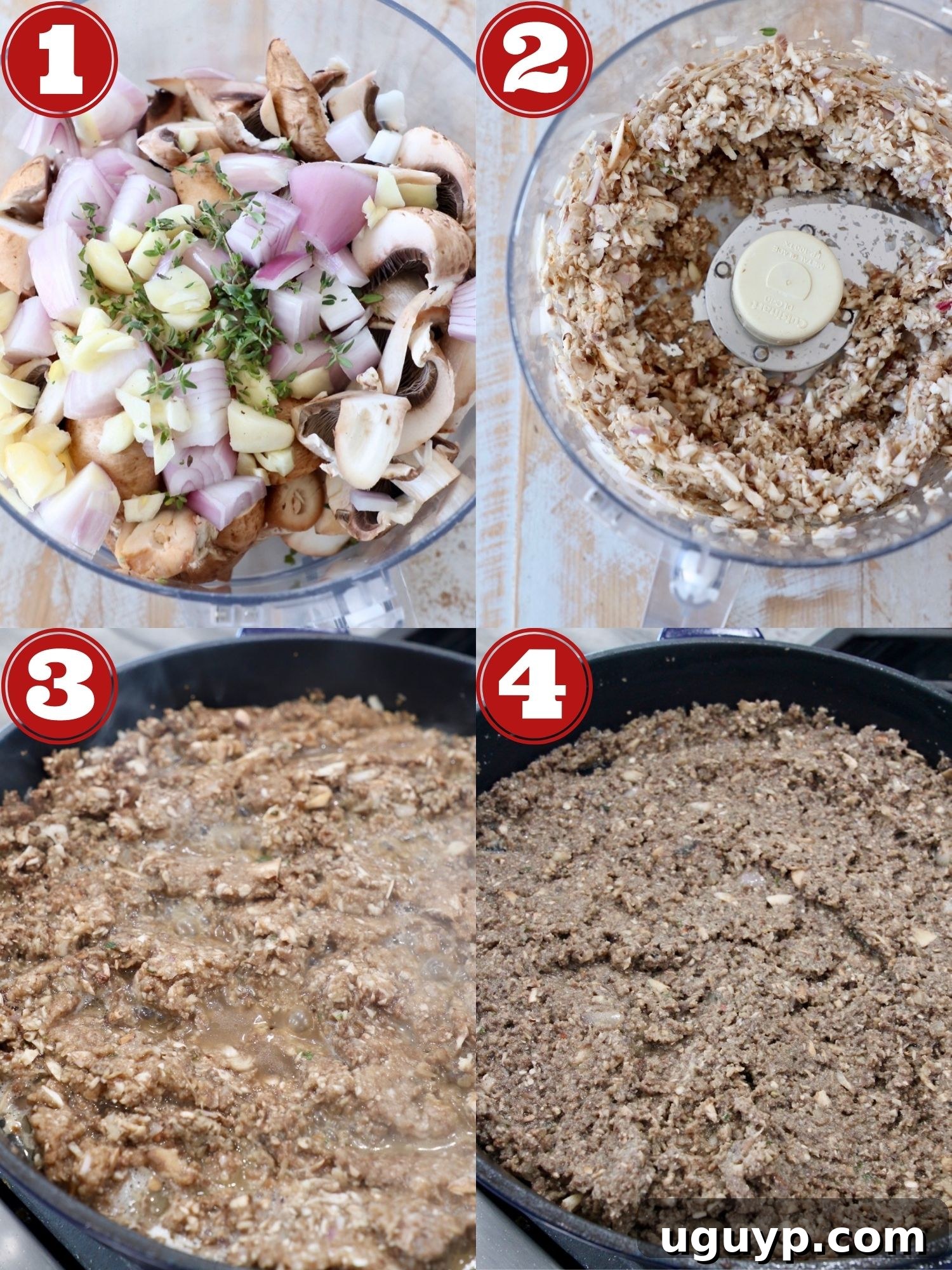
Step 2: Crafting the Flavorful Duxelles
Duxelles (pronounced “dook-sel”) is a classic French preparation of finely chopped mushrooms, shallots, garlic, and herbs, gently cooked in butter until reduced to a rich, concentrated paste. It’s a key flavor component in Beef Wellington, often used as a stuffing or sauce. The critical step here is to ensure all moisture is cooked out, preventing a soggy puff pastry.
- Combine roughly chopped baby bella mushrooms, shallots, garlic, and fresh thyme leaves in a food processor. Depending on the size of your food processor, you may need to process this mixture in 2-3 batches to avoid overcrowding.
- Pulse the ingredients until they are very finely chopped, creating a crumbly texture. Be careful not to over-process to the point of a wet paste; you want fine pieces, not a puree.
- Melt unsalted butter in a large skillet over medium-high heat. Once the butter is fully melted and shimmering, add the finely chopped duxelles mixture from the food processor to the skillet.
- Season the mixture with salt. This helps draw out the moisture from the vegetables, which is crucial for preventing a soggy crust. You’ll notice liquid pooling at the top of the mixture initially.
- Allow the duxelles to simmer on the stove for at least 25-30 minutes, or even longer, until all the liquid has evaporated, and you are left with a thick, concentrated paste. Stir only occasionally during this process to facilitate evaporation. The texture should be almost dry, intensely flavorful, and resemble the consistency pictured above.
- Once the duxelles has achieved the desired paste-like consistency, remove it from the heat. Transfer the hot duxelles from the skillet to a clean bowl. Placing it in a separate bowl rather than cooling it in the hot skillet will significantly speed up the chilling process.
- Place the bowl of duxelles in the refrigerator to cool for at least 30 minutes, or until it reaches room temperature or below. This cooling step is paramount for the integrity of your Beef Wellington.
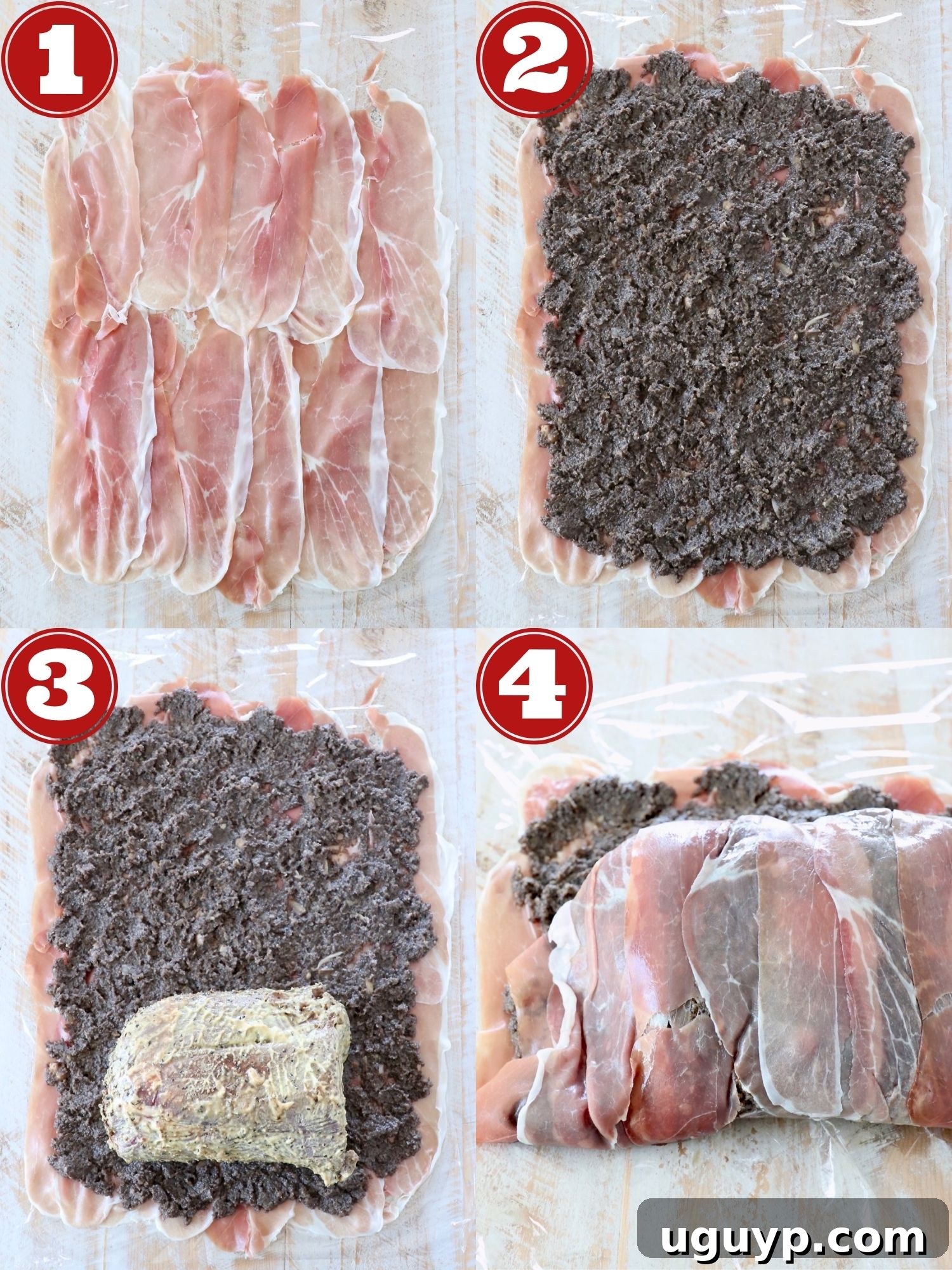
Step 3: Wrapping the Tenderloin in Prosciutto
With the beef tenderloin chilled and the duxelles cooled, it’s time to assemble the initial layers of your Beef Wellington. The prosciutto serves as a barrier, protecting the puff pastry from the moisture of the duxelles, while also adding its distinct salty flavor.
- On a clean work surface, lay down two overlapping pieces of plastic wrap. Arrange them so they create a surface roughly twice the length and width of your beef tenderloin. This extended plastic wrap will be your essential tool for tightly rolling the layers.
- Arrange the thin slices of prosciutto in two slightly overlapping rows in the middle of the plastic wrap. The goal is to create a rectangular mat of prosciutto large enough to fully encase the tenderloin.
- Carefully spread the cooled duxelles mixture in an even layer over the prosciutto. Leave about a 1-inch border around the edges of the prosciutto. This margin allows for some spreading of the duxelles as you roll, preventing it from oozing out.
- Place the chilled, mustard-coated beef tenderloin at one end of the duxelles-topped prosciutto, positioning it near the bottom edge of your prosciutto mat.
- Using the plastic wrap as a guide and aid, tightly roll the beef tenderloin, along with the duxelles and prosciutto, into a compact log. As you roll, gently tuck in the ends of the prosciutto to ensure a neat, sealed package. The tighter the roll, the better the final presentation and structural integrity of your Beef Wellington.
- Once the tenderloin is fully wrapped in the prosciutto and duxelles, securely wrap the entire log in the plastic wrap, twisting the ends to create a firm, cylinder shape.
- Refrigerate the wrapped tenderloin for an additional 10 minutes. This brief chilling period helps the layers set and maintain their shape, making it easier to wrap in puff pastry.
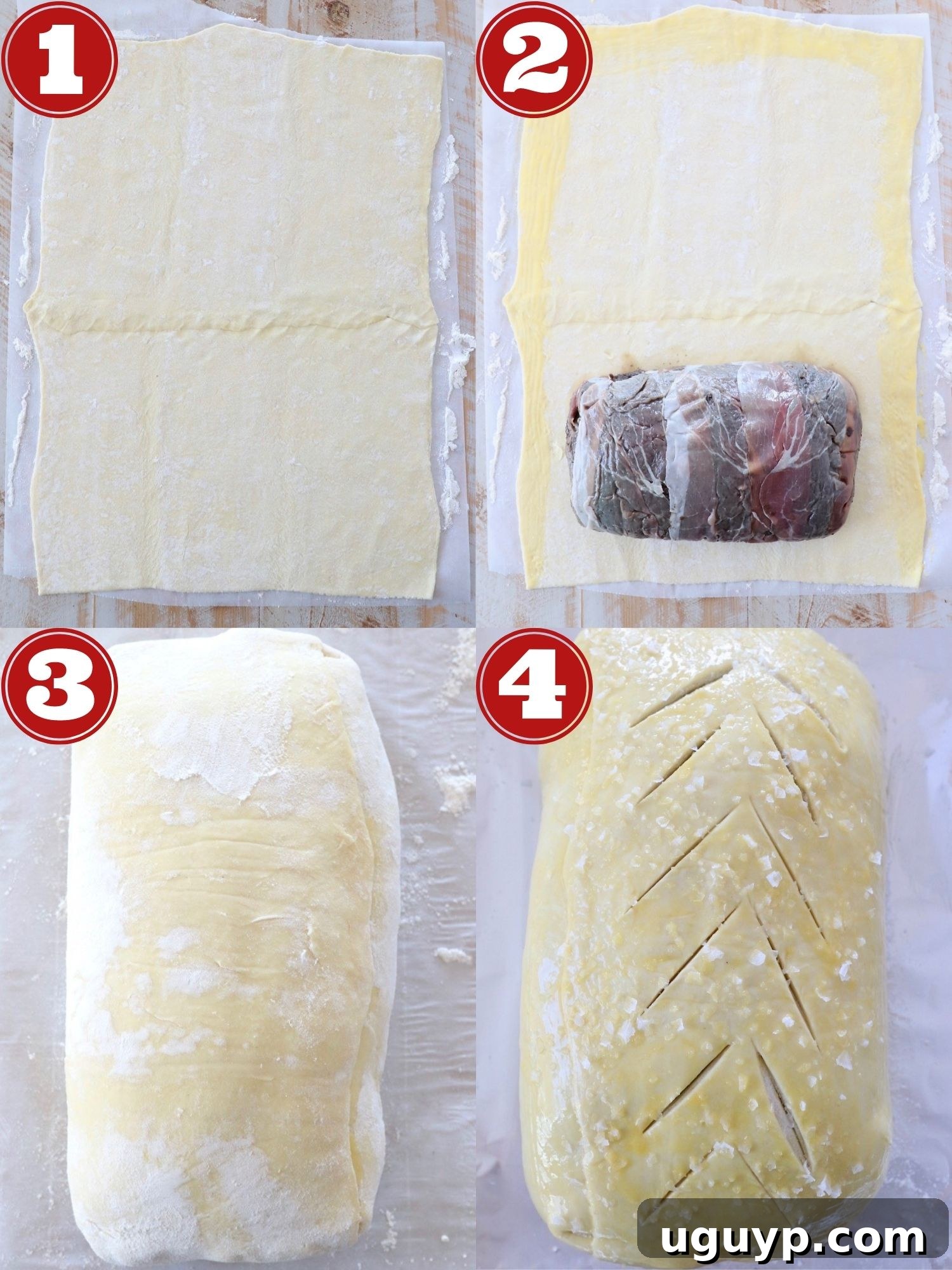
Step 4: Encasing in Golden Puff Pastry
The final layer, the puff pastry, is what gives Beef Wellington its signature golden, flaky crust. Working with thawed pastry and a well-chilled tenderloin ensures a crisp exterior and a beautifully cooked interior.
- Preheat your oven to 425°F (220°C). Prepare a baking sheet by lining it with parchment paper or non-stick foil.
- Lightly flour a clean work surface. Unroll the thawed puff pastry dough onto the floured surface. If using two sheets, overlap them slightly in the middle and press the seam gently to seal. Use a rolling pin to roll the dough into a rectangular shape, ensuring it’s about 4 inches wider than the length of your beef tenderloin. The pastry should be thin but still manageable.
- Carefully unwrap the prosciutto-encased tenderloin from the plastic wrap. Position it about 2 inches from the bottom edge of the puff pastry dough, centered horizontally, leaving about 2 inches of pastry on both sides.
- In a small bowl, whisk one large egg until well combined to create an egg wash. Brush this egg wash along the top and down the sides of the puff pastry, where the edges will meet. Reserve any remaining egg wash in the refrigerator for the final step.
- Tightly roll the puff pastry dough over the tenderloin, starting from the bottom edge. Ensure the pastry hugs the beef snugly to prevent air pockets. Once rolled, tuck in the side edges of the puff pastry and use a fork to crimp and seal all seams firmly. This creates a secure package and a decorative edge.
- Wrap the entire Beef Wellington tightly in a fresh layer of plastic wrap. Place it back into the refrigerator for a final chill of at least 30 minutes. This firming-up period is critical for the pastry to hold its shape during baking and prevents it from shrinking too much.
Step 5: Baking to Perfection and Resting
The culmination of your efforts comes in the oven, where the puff pastry transforms into a golden shell and the beef cooks to a perfect medium-rare. Precise timing and temperature are paramount for success.
- Once chilled, remove the plastic wrap from the Beef Wellington. Place it seam-side down on your prepared baking sheet.
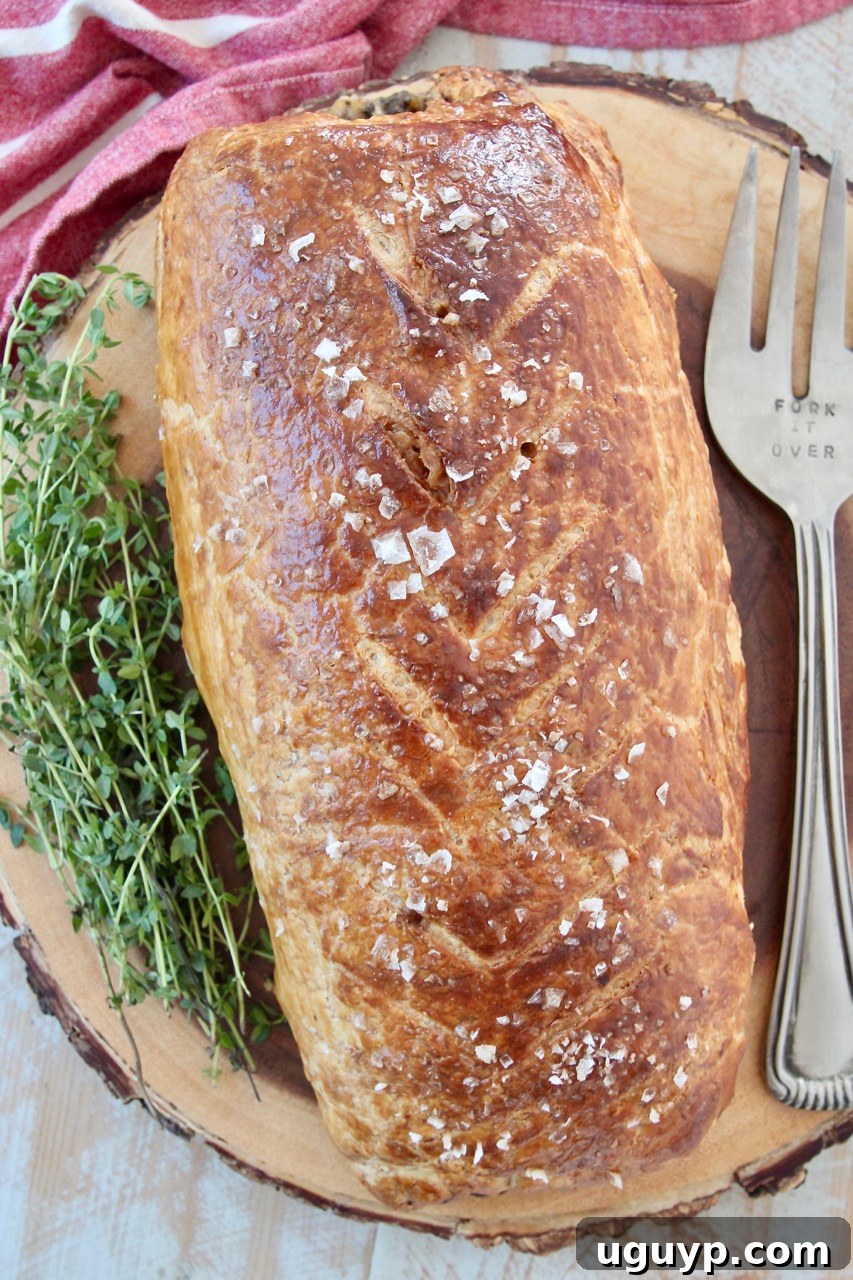
- Retrieve the reserved whisked egg from the refrigerator. Brush the top and all sides of the puff pastry generously with the egg wash. This will give it that beautiful, glossy, golden finish.
- Using a sharp paring knife, gently score the top of the pastry. You can create a simple cross-hatch pattern or diagonal lines as shown in the picture above for a decorative touch. Be careful not to cut too deep, only through the top layer of pastry.
- Sprinkle sea salt flakes evenly over the top of the Beef Wellington for enhanced flavor and texture.
- Transfer the baking sheet to the preheated 425°F (220°C) oven. Bake for approximately 40-45 minutes. The pastry should be puffed, flaky, and golden brown. For medium-rare doneness, the internal temperature of the beef tenderloin should register 125°F (52°C) when measured with an instant-read thermometer inserted into the thickest part of the meat. Remember, the temperature will rise by 5-10 degrees as it rests. Adjust baking time for desired doneness (e.g., 130-135°F for medium).
- Once baked, remove the Beef Wellington from the oven and transfer it to a cutting board. It is crucial to let the meat rest for at least 10-15 minutes before slicing and serving. Resting allows the juices to redistribute throughout the meat, ensuring a tender, moist, and flavorful experience. Slicing too early will result in juices running out, leading to dry meat.
Keys to Your Beef Wellington Success
To ensure your homemade Beef Wellington is nothing short of culinary perfection on your very first try, pay close attention to these five critical steps. These are the golden rules for a beautifully cooked and presented dish, guaranteeing that your time and effort are richly rewarded:
- Eliminate Excess Liquid from the Duxelles: This is arguably the most crucial step. The mushroom duxelles mixture must be cooked down until all moisture has completely evaporated and it forms a thick paste. If any liquid remains, it will leach into the puff pastry during baking, resulting in a soggy, unappetizing crust. Be patient and cook the duxelles until it’s visibly dry and concentrated.
- Select a Center-Cut Beef Tenderloin: The quality and cut of your beef tenderloin significantly impact the final outcome. A center-cut tenderloin offers a uniform diameter, which is essential for even cooking. If you use a tenderloin with one end significantly thinner than the other, the thinner section will inevitably overcook before the thicker part reaches your desired doneness, leading to an inconsistent texture and potentially a lopsided presentation.
- Properly Thaw the Puff Pastry Dough: Never attempt to work with frozen puff pastry. It will be stiff, brittle, and impossible to roll out thinly or without cracking. Always remove the puff pastry dough from the freezer and its packaging at least 30-45 minutes before you plan to use it. It should be pliable and easy to handle, allowing you to roll it smoothly into the required rectangle without resistance.
- Adhere Strictly to Chilling Times: The various chilling stages in this recipe are not optional; they are fundamental for the structural integrity and aesthetic appeal of your Beef Wellington. These resting periods allow the beef, duxelles, and pastry layers to firm up and meld together, preventing them from losing shape or falling apart during the cooking process. Rushing or skipping these chilling times will compromise the final result, risking a misshapen or poorly cooked dish.
- Roll All Layers Tightly: When wrapping the beef tenderloin first in prosciutto and then in puff pastry, it is vital to roll each layer as tightly as possible. A tight roll ensures that the layers remain pressed together, eliminating any gaps between the beef, duxelles, prosciutto, and pastry. If the layers are loosely wrapped, unsightly gaps will appear when you slice the Wellington, which can not only detract from the visual presentation but also affect the overall texture and culinary experience of each delicious bite.
Perfect Pairings: What to Serve with Beef Wellington
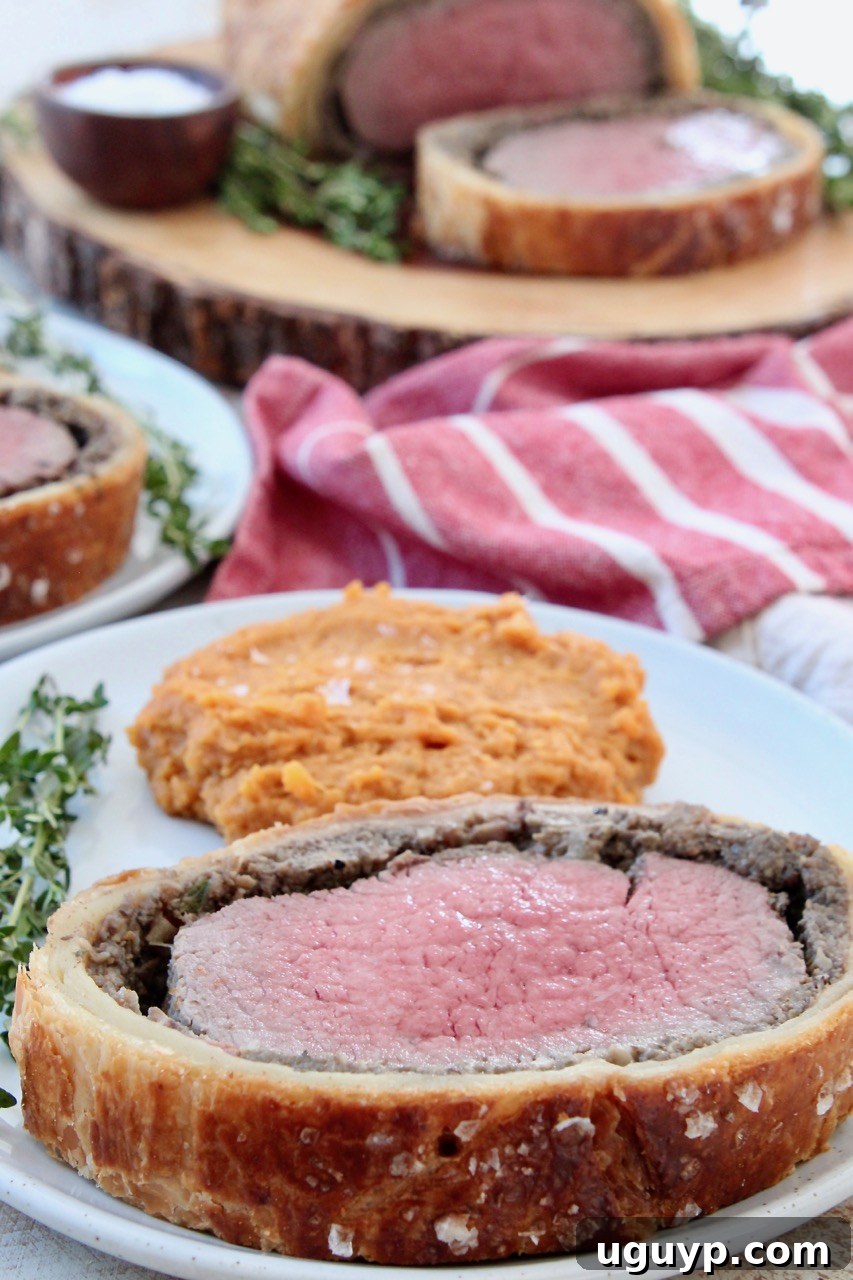
Beef Wellington, with its rich flavors and luxurious textures, deserves side dishes that complement without overpowering. Creamy mashed potatoes are a classic accompaniment, providing a comforting contrast to the savory beef and flaky pastry. A vibrant vegetable side dish also adds freshness and balances the meal. Below are some highly acclaimed side dishes that perfectly enhance the Beef Wellington experience:
- Mashed Sweet Potatoes: (pictured above) Their natural sweetness and creamy texture offer a delightful counterpoint to the savory notes of the Wellington.
- Instant Pot Mashed Potatoes: For a quick and easy, yet incredibly smooth and fluffy classic mashed potato, this recipe is a lifesaver.
- Rosemary Blue Cheese Mashed Potatoes: Elevate your potato game with the aromatic earthiness of rosemary and the pungent tang of blue cheese for a truly gourmet pairing.
- Au Gratin Potatoes: Layers of thinly sliced potatoes baked in a rich, creamy sauce and topped with melted cheese provide a decadent and satisfying side.
- Green Beans with Bacon: The crisp-tender texture of green beans combined with smoky bacon offers a simple yet irresistible vegetable complement.
- Bacon Maple Brussels Sprouts: Roasted to perfection with the sweetness of maple and the savory crunch of bacon, these Brussels sprouts add a sophisticated touch.
- Roasted Garlic Broccolini: Simple, elegant, and packed with flavor from roasted garlic and Parmesan, broccolini provides a fresh, slightly bitter contrast.
- Roasted Carrots: Sweet and tender, roasted carrots bring a vibrant color and natural sweetness that beautifully complements the richness of the Beef Wellington.
Explore More Delicious Beef Recipes
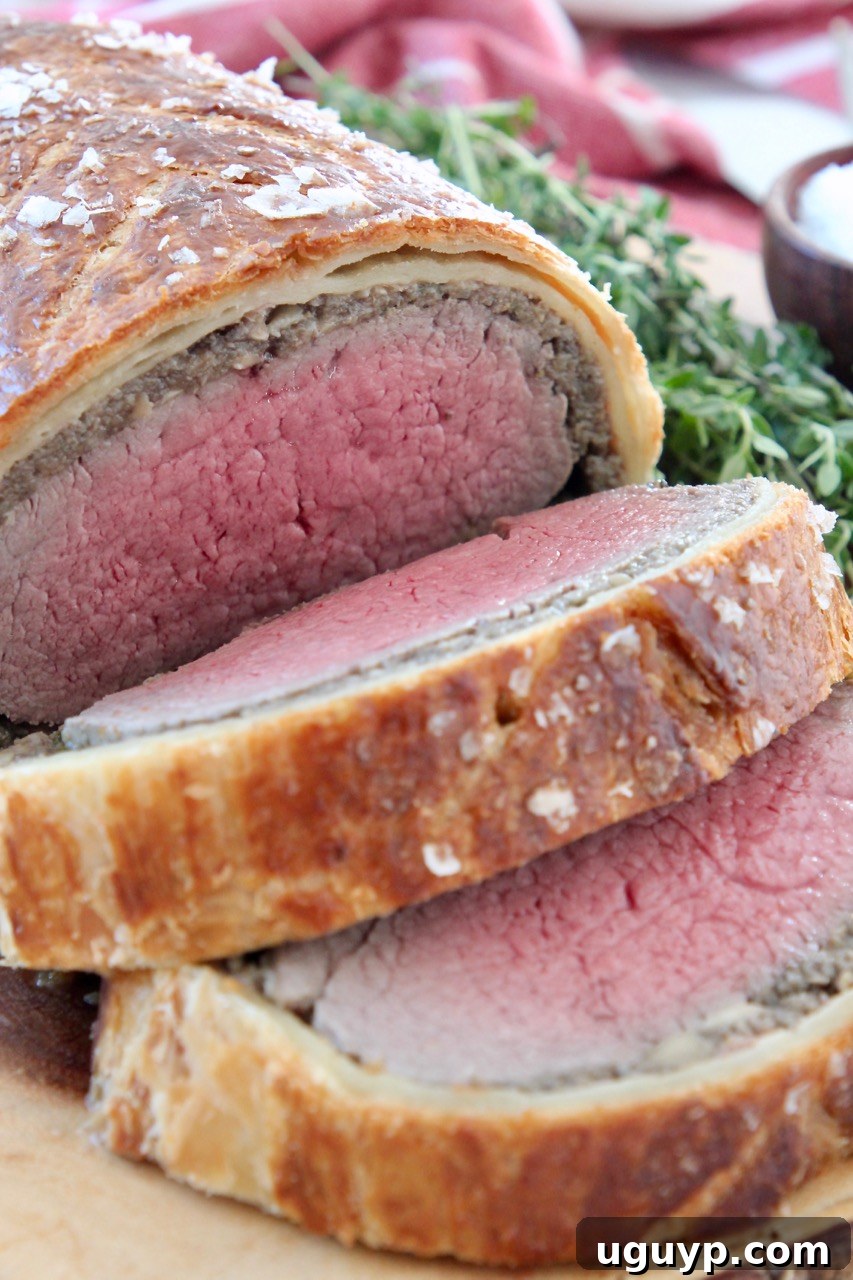
If you’ve enjoyed mastering this classic Beef Wellington and are eager to explore more impressive beef recipes, you’re in luck! There’s a wide array of delicious and hearty options to satisfy your culinary cravings. Consider trying our Meatball Wellington, a fun and simpler twist on this beloved dish that still delivers on flavor and presentation. For an even broader selection of beef recipes, nutritional insights, and valuable resources, be sure to visit CalBeef.org.

Print Recipe
Pin Recipe
Beef Wellington
6
people
1 hour
30 minutes
45 minutes
1 hour
10 minutes
3 hours
25 minutes
Whitney Bond
Main Course
English
Ingredients
-
2
pound
center-cut beef tenderloin,
trimmed -
3
teaspoons
kosher salt,
divided -
2
teaspoons
ground black pepper -
1
tablespoon
olive oil -
2
tablespoons
dijon mustard -
1 1/2
pounds
baby bella mushrooms,
roughly chopped -
1
shallot,
roughly chopped -
4
garlic cloves,
roughly chopped -
2
thyme sprigs,
leaves removed -
2
tablespoons
unsalted butter -
12
thin slices prosciutto -
1
tablespoon
all-purpose flour,
for dusting -
17.3
ounce
package frozen puff pastry,
thawed -
1
large egg,
beaten -
1
teaspoon
sea salt flakes,
for sprinkling on top
Instructions
Beef Tenderloin Preparation
-
Season the beef tenderloin generously with 2 teaspoons of kosher salt and 2 teaspoons of ground black pepper on all sides.
-
Coat the bottom of a cast iron or heavy skillet with the olive oil. Heat the skillet over high heat until it’s very hot and the oil shimmers.
-
Carefully add the seasoned tenderloin to the hot skillet.
-
Sear the tenderloin until thoroughly browned on all sides, including the ends. This should take approximately 2 minutes per side, for a total of about 12 minutes, creating a deep crust.
-
Remove the tenderloin from the skillet and transfer it to a cutting board.
-
Allow it to cool for 5-10 minutes, then use a pastry brush to apply Dijon mustard evenly on all sides of the tenderloin, including the ends.
-
Place the mustard-coated tenderloin in the refrigerator to cool completely.
Duxelles Preparation
-
While the tenderloin cools, begin preparing the duxelles.
-
Add the roughly chopped mushrooms, shallots, garlic, and thyme leaves to a food processor. Process in batches if necessary.
-
Pulse the vegetables and herbs until they are very finely chopped, but avoid creating a wet paste.
-
Melt butter in a large skillet over medium-high heat.
-
Once the butter has melted, add the duxelles mixture from the food processor to the skillet.
-
Season with 1 teaspoon of salt to help draw out liquid from the vegetables.
-
Let the mixture simmer on the stove for at least 25-30 minutes, or until all liquid has cooked off and a thick paste remains.
-
Stir the mixture only occasionally during the simmering period to aid evaporation.
-
Once the duxelles has transformed into a paste, remove it from the stove and transfer it from the skillet to a clean bowl.
-
Place the bowl of duxelles in the refrigerator to cool for at least 30 minutes, ensuring it is at room temperature or below.
Beef Wellington Assembly
-
Once the duxelles mixture is chilled, begin assembling the Beef Wellington.
-
Lay two overlapping pieces of plastic wrap on a work surface, creating a sheet twice the length and width of the tenderloin.
-
Arrange the slices of prosciutto in two slightly overlapping rows in the center of the plastic wrap.
-
Spread the cooled duxelles in an even layer over the prosciutto, leaving about a 1-inch border around the edges.
-
Place the chilled tenderloin at the bottom edge of the duxelles-topped prosciutto.
-
Using the plastic wrap to assist, tightly roll the meat, duxelles, and prosciutto into a compact log.
-
As you roll, tuck in the ends of the prosciutto to create a neat package.
-
Once fully wrapped, secure the entire log in the plastic wrap and refrigerate for 10 minutes to help it maintain its shape.
-
Preheat the oven to 425°F (220°C).
-
Lightly flour your work surface, then unroll the thawed puff pastry dough onto it.
-
If using two sheets, overlap them slightly in the middle and gently press to seal the seam. Use a rolling pin to roll the dough into a rectangle about 4 inches wider than the beef tenderloin’s length.
-
Remove the prosciutto-wrapped tenderloin from its plastic wrap. Place it about 2 inches from the bottom edge of the puff pastry dough, centered horizontally, leaving about 2 inches of pastry on both sides.
-
Whisk an egg in a small bowl, then brush this egg wash along the top and down the sides of the puff pastry where the dough will overlap. Keep any leftover egg wash in the refrigerator for later.
-
Tightly roll the puff pastry dough over the tenderloin. Tuck the sides of the puff pastry down and use a fork to seal all seams of the dough firmly.
-
Wrap the assembled Beef Wellington tightly with plastic wrap and place it in the refrigerator for 30 minutes to chill.
-
Remove the plastic wrap and place the Beef Wellington seam-side down on a non-stick baking sheet (or one lined with parchment paper or non-stick foil).
-
Brush the remaining whisked egg over the top and all sides of the Beef Wellington for a golden crust.
-
Use a paring knife to score the top of the puff pastry with two rows of diagonal lines for a decorative finish.
-
Sprinkle sea salt flakes over the Beef Wellington.
-
Place in the preheated oven and bake for 40-45 minutes, or until the pastry is golden brown and the center of the beef tenderloin registers 125°F (52°C) for medium-rare. The internal temperature will continue to rise as it rests.
-
Let the meat rest for at least 10-15 minutes before transferring it to a cutting board to slice and serve. This resting period is crucial for juicy, tender beef.
Notes
- To reheat Beef Wellington: The goal is to warm the beef without overcooking it, while keeping the puff pastry crisp. Avoid using a microwave, as it will make the pastry soggy.
- Preheat your oven to 300°F (150°C).
- Place slices of Beef Wellington on a wire rack set over a baking sheet. Loosely cover with foil.
- Bake for 15-20 minutes. Remove the foil and continue baking for another 5 minutes to crisp the pastry.
- Duxelles preparation in advance: The duxelles mixture can be prepared up to two days ahead of time and stored in an airtight container in the refrigerator. This advance preparation significantly streamlines the Beef Wellington assembly on the day you plan to bake it.
- Advance assembly of Beef Wellington: You can assemble the entire Beef Wellington (up to the point of baking) up to 6 hours ahead of time and keep it chilled in the refrigerator. If you wish to prepare it up to 24 hours in advance, assemble the beef tenderloin with the duxelles and prosciutto, wrap it tightly, and chill. Then, about an hour before baking, thaw the puff pastry, wrap the beef log in it, chill for 30 minutes, and then bake.
- Serving size: This recipe is designed to serve 8 people when cut into approximately 1-inch thick slices. For slightly larger, more generous servings (closer to 1.5 inches thick), it will comfortably serve 6 people.
- Wine pairing: Beef Wellington pairs beautifully with a dry, medium-bodied red wine. The richness and umami flavors of the dish are complemented by varietals such as Bordeaux, Pinot Noir, Chianti, or Syrah.
Nutrition Facts
Calories
1037
kcal
(52%)
Carbohydrates
45
g
(15%)
Protein
40
g
(80%)
Fat
78
g
(120%)
Saturated Fat
27
g
(135%)
Polyunsaturated Fat
7
g
Monounsaturated Fat
38
g
Trans Fat
1
g
Cholesterol
154
mg
(51%)
Sodium
2009
mg
(84%)
Potassium
1102
mg
(31%)
Fiber
2
g
(8%)
Sugar
3
g
(3%)
Vitamin A
186
mg
(4%)
Vitamin C
2
mg
(2%)
Calcium
59
mg
(6%)
Iron
7
mg
(39%)
Did you make this recipe?
Tag @WhitneyBond on Instagram and hashtag it #WBRecipes!