Irresistible Gluten-Free Sugar Cookies
- Ticket
- № 4504
- Served
- Read
- 15 min

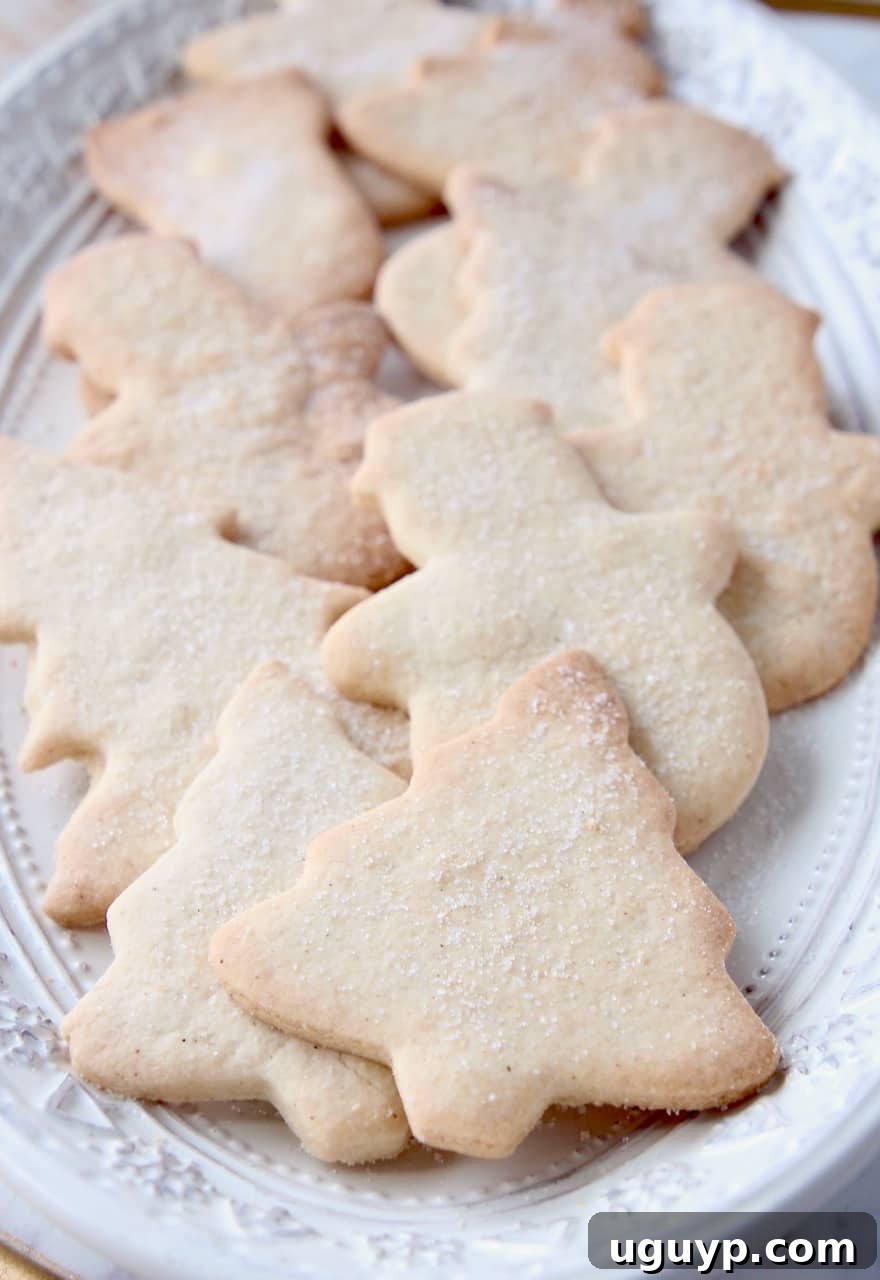
Welcome to the ultimate guide for crafting the most delicious **Gluten-Free Sugar Cookies**! This cherished family recipe has been lovingly passed down through three generations, perfected over decades, and now adapted to be completely gluten-free without sacrificing an ounce of its classic charm. Get ready to bake thin, wonderfully crispy cut-out cookies that are incredibly easy to make and a joy to decorate with our simple, 3-ingredient confectioners’ icing.
While these iconic sugar cookies are often synonymous with festive **Christmas baking**, their delightful taste and versatility make them perfect for any time of the year. Imagine cutting out heart shapes for Valentine’s Day, stars for the 4th of July, spooky figures for Halloween, or simply classic circles for an everyday sweet treat. This recipe promises a timeless favorite that everyone can enjoy, regardless of dietary preferences.

Table of Contents
- The Legacy of Our Sugar Cookies
- Why These Are The Best Gluten-Free Sugar Cookies
- Essential Ingredients for Gluten-Free Sugar Cookies
- Recommended Baking Equipment
- Step-by-Step Instructions for Perfect Cookies
- Crafting the Perfect Confectioners’ Icing
- Icing Notes and Tips
- Expert Tips and Tricks for Success
- Serving and Storing Your Delicious Cookies
- More Beloved Family Recipes
The Legacy of Our Sugar Cookies
For me, nothing evokes the warmth and joy of the holiday season quite like the familiar aroma of my Mom’s famous sugar cookies baking. From the joyful chaos of mixing dough to the careful, often sprinkle-laden, artistry of decorating them around our kitchen table, these cookies are woven into the fabric of my fondest holiday memories. It’s a tradition that has spanned generations, creating edible masterpieces and cherished moments alike.
In 2010, our family faced a new challenge when my brother was diagnosed with a gluten allergy. Rather than abandon our beloved cookie tradition, we embarked on a mission to create a gluten-free version that tasted just as wonderful as the original. After some experimentation, we successfully adapted Mom’s classic recipe, and to this day, no one has ever been able to tell a difference in flavor or texture. They are every bit as sweet, buttery, and delightfully crispy as the original, but now entirely gluten-free!
Why These Are The Best Gluten-Free Sugar Cookies
What makes this recipe stand out in the crowded world of sugar cookies? It’s the perfect balance of simplicity and tradition. Unlike some recipes that yield thick, soft cookies, our family recipe results in a thin, crisp cookie that holds its shape beautifully when cut. This makes them ideal for intricate cookie cutters and provides a satisfying crunch with every bite. The dough is incredibly easy to work with, minimizing frustration, especially when working with gluten-free flours, which can sometimes be tricky. The simple three-ingredient icing ensures that even novice decorators can create stunning, delicious results, making the whole baking experience enjoyable from start to finish. Plus, the joy of continuing a multi-generational tradition, now inclusive of all family members, adds an immeasurable layer of specialness to every batch.
Essential Ingredients for Gluten-Free Sugar Cookies
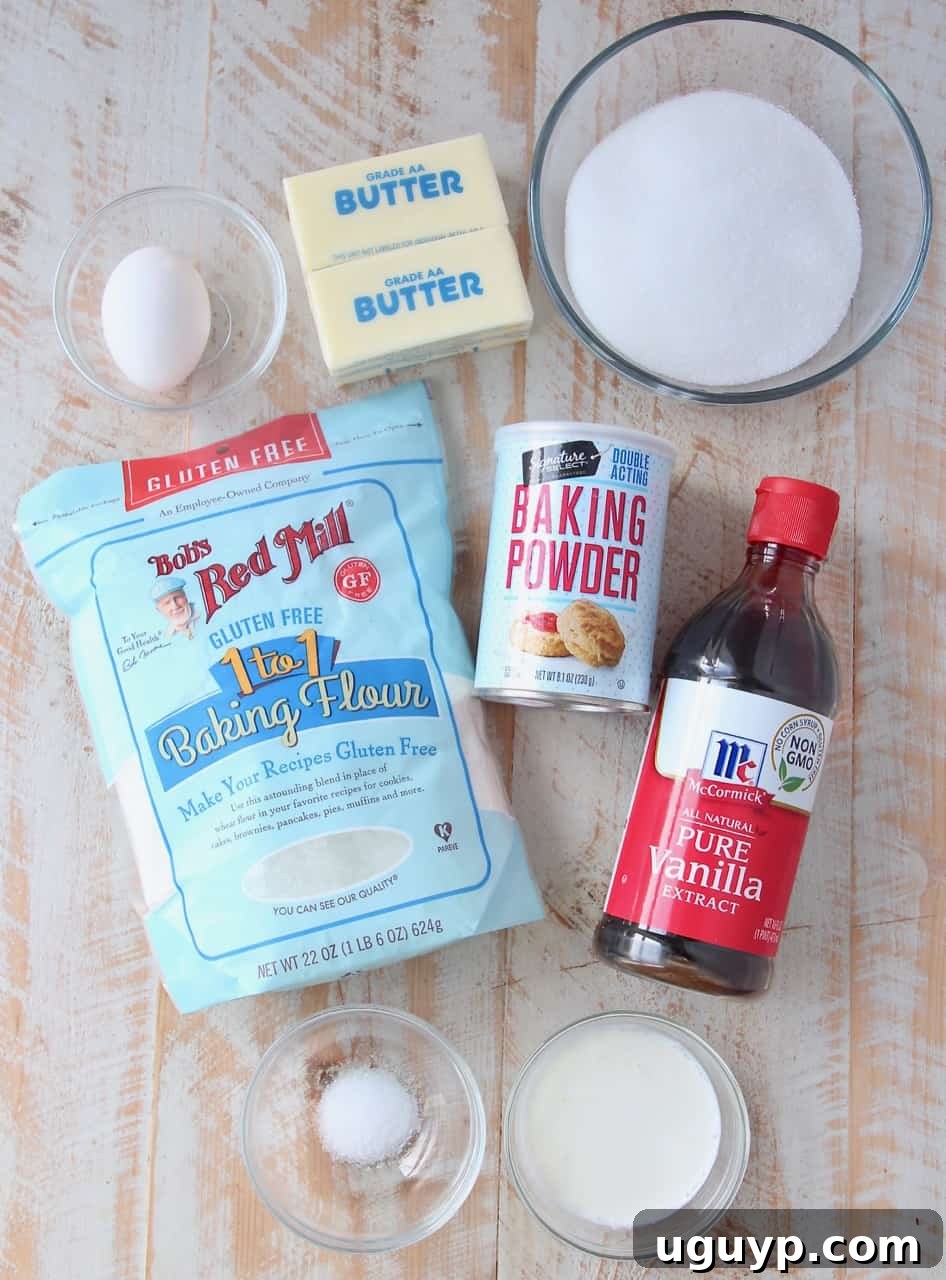
Crafting these delectable gluten-free sugar cookies requires a handful of common baking staples. The quality of your ingredients significantly impacts the final outcome, so choose wisely!
- Gluten-Free Flour Blend: This is the cornerstone of our gluten-free adaptation. It is absolutely crucial that your gluten-free flour blend contains xanthan gum. If your chosen brand does not list xanthan gum in its ingredients, you will need to add 1/2 teaspoon of xanthan gum to the recipe. Xanthan gum acts as a binder, mimicking the elasticity of gluten, which is essential for the structure and texture of cut-out cookies. We highly recommend Bob’s Red Mill Gluten-Free 1-to-1 Baking Flour, as it is our consistent go-to and has proven reliable. This blend typically combines rice flour, tapioca flour, sorghum flour, and, importantly, xanthan gum, making it an excellent all-purpose flour substitute for gluten-free baking.
- Baking Powder: Provides the slight lift needed for a delicate, crispy texture without making the cookies cakey.
- Salt: A pinch of salt is vital to balance the sweetness and enhance the overall flavor profile of the cookies.
- Unsalted Butter: Using unsalted butter allows you to control the total salt content in the recipe. Ensure it’s at room temperature for optimal creaming with sugar, which creates a light and airy base for the dough.
- Granulated Sugar: The primary sweetener, contributing to both the flavor and crispness of the cookies.
- Egg: Acts as a binder, adding moisture and richness to the dough, helping the cookies hold their shape.
- Milk: Adds extra moisture and helps achieve the desired dough consistency. Any type of dairy or non-dairy milk works here.
- Vanilla Extract: Essential for that classic, comforting sugar cookie flavor. Use good quality pure vanilla extract for the best taste.
Recommended Baking Equipment
Having the right tools can make your gluten-free sugar cookie baking experience smooth and enjoyable. Here’s what you’ll need:
- Stand Mixer with Paddle Attachment or Electric Hand Mixer: Essential for creaming butter and sugar and mixing the dough evenly.
- Large and Medium Mixing Bowls: For combining wet and dry ingredients separately.
- Measuring Cups and Spoons: For accurate ingredient measurements.
- Parchment Paper: Crucial for rolling out the dough without sticking and for lining baking sheets.
- Rolling Pin: To achieve a uniform dough thickness.
- Cookie Cutters: Unleash your creativity with various shapes!
- Baking Sheets or Baking Stone: For baking the cookies.
- Wire Cooling Rack: To cool cookies completely, preventing sogginess.
- Rubber Spatula: For mixing icing and scraping bowls.
- Flour Sifter or Fine Mesh Strainer: For sifting confectioners’ sugar.
Step-by-Step Instructions for Perfect Cookies
Follow these detailed steps to create your own batch of thin, crispy, and delicious gluten-free sugar cookies:
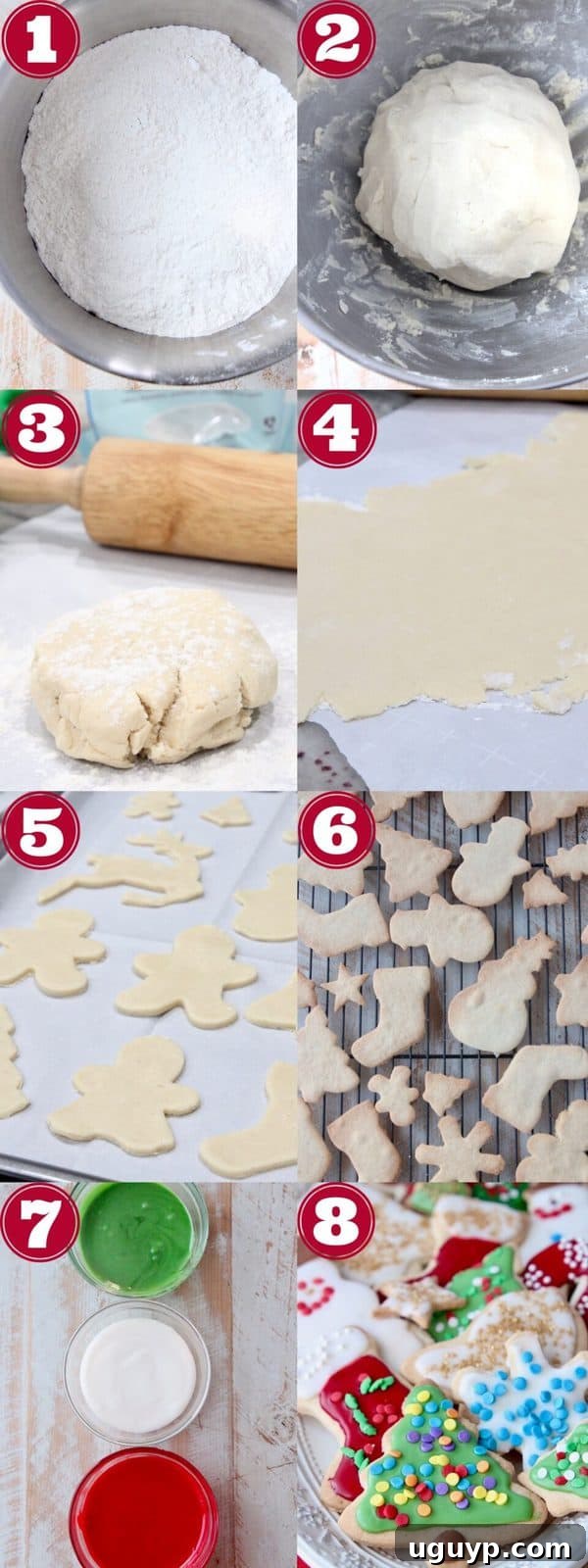
- Prepare Dry Ingredients: In a medium mixing bowl, whisk together the gluten-free flour blend, baking powder, and salt until well combined. Set this aside.
- Cream Butter and Sugar: In a large mixing bowl, or the bowl of a stand mixer fitted with the paddle attachment, add the softened room-temperature unsalted butter and granulated sugar. Cream them together on medium speed for about 2 minutes. The mixture should become light, fluffy, and pale in color. This step incorporates air, contributing to the cookie’s delicate texture.
- Add Wet Ingredients: To the creamed butter and sugar, add the egg, milk, and vanilla extract. Continue mixing on medium-low speed until all the ingredients are just combined. Avoid overmixing at this stage.
- Combine Wet and Dry: Gradually add the reserved flour mixture to the wet ingredients in the large bowl. Mix on low speed until the dry ingredients are just incorporated and a cohesive dough forms. Again, be careful not to overmix, as this can lead to tough cookies.
- Chill the Dough: Gather the dough into a ball, wrap it tightly in plastic wrap, and refrigerate for at least 15 minutes. Chilling the dough is a crucial step that helps prevent the cookies from spreading too much during baking, ensuring they hold their cut-out shapes beautifully.
- Prepare for Rolling: While the dough chills, preheat your oven to 400°F (200°C). Prepare your baking sheets by lining them with parchment paper. Dust your work surface and a sheet of parchment paper generously with extra gluten-free flour.
- Roll Out the Dough: Take about 1/4 of the chilled dough and place it on the floured parchment paper. Lightly dust the top of the dough with more gluten-free flour. Place another sheet of parchment paper over the dough. Using a rolling pin, roll the dough evenly to an approximate thickness of 1/8 inch. Rolling between parchment paper prevents sticking and makes the process much easier.
- Cut Out Shapes: Using your favorite cookie cutters, cut the rolled dough into various shapes. Carefully transfer the cut-out cookies to the prepared parchment-lined baking sheets, leaving about 1 inch between each cookie. Re-roll any dough scraps until all dough is used.
- Bake to Perfection: Place the baking sheets in the preheated oven and bake for 5-8 minutes. Baking times can vary depending on your oven and whether you’re using a baking sheet or a baking stone (a baking stone may take slightly longer, around 8 minutes). Keep a close eye on them; the cookies are done when the edges are lightly golden brown. These thin cookies bake quickly!
- Cool Completely: As soon as the cookies come out of the oven, carefully remove them from the hot baking sheet using a spatula and transfer them to a wire cooling rack. Allow them to cool completely before dusting with granulated sugar or icing. This prevents them from becoming soft or sticky.
- Repeat: Continue steps 7-10 until all of the cookie dough has been rolled, cut, and baked.
- Decorate: Once all cookies are baked and cooled, you can either lightly dust them with extra granulated sugar for a simple finish or prepare the confectioners’ icing using the recipe below for a more decorative approach. Get creative with your decorations! As my niece always says, “the more sprinkles, the better!”
Crafting the Perfect Confectioners’ Icing
This simple, yet delicious, 3-ingredient icing is the perfect complement to our gluten-free sugar cookies. It’s easy to make, smooth, and sets beautifully.
- Prepare the Sugar: Add 4 cups of sifted confectioners’ sugar (also widely known as powdered sugar) to a large mixing bowl. Sifting is important here to remove any lumps and ensure a super smooth icing.
- Add Liquids: Pour in 2 teaspoons of vanilla extract and 1/4 cup of milk.
- Mix Until Smooth: Using a rubber spatula, vigorously mix the ingredients until the icing is completely smooth, creamy, and free of any lumps. It should be spreadable but not too runny.
- Coloring (Optional): If you desire colored icing for festive decorations, divide the white icing into 3-4 separate bowls. Add 2-3 drops of your desired food coloring to each bowl and stir until the color is evenly distributed. For a natural chocolate or brown icing, you can also mix in a teaspoon or two of unsweetened cocoa powder.

Icing Notes and Tips
- Adjusting Thickness: If your icing appears too thick and difficult to spread on the cookies, add more milk, but do so very gradually, about 1 teaspoon at a time, mixing well after each addition until you reach the desired consistency.
- Adjusting Runniness: Conversely, if your icing becomes too runny and doesn’t hold its shape or drips off the cookies, add more powdered sugar, a 1/4 cup at a time, mixing thoroughly until it thickens up.
- How to Sift Powdered Sugar: Sifting confectioners’ sugar is a key step for lump-free icing. You can use a dedicated flour sifter or a simple fine mesh strainer. Just place the strainer over your mixing bowl, add the sugar, and gently tap or press it through.
- Precise Measurement: The recipe calls for “sifted confectioners’ sugar.” This means you should sift the powdered sugar into a separate bowl first, and *then* measure out the required 4 cups for the most accurate results. This ensures you’re adding the correct amount of sugar, as unsifted powdered sugar can be more compacted.

Expert Tips and Tricks for Success
Achieve consistently perfect gluten-free sugar cookies with these insider tips and tricks:
- Making the Dough in Advance: For ultimate convenience, the sugar cookie dough can be prepared up to 3 days ahead of time. Store it securely wrapped in plastic wrap in the refrigerator. If the dough has been chilled for longer than an hour, remember to remove it from the refrigerator at least 15 minutes before you plan to roll it out. This allows it to soften slightly, making it much easier to work with. Otherwise, it will be too firm and quite challenging to roll.
- Dough Thickness is Key: Don’t be alarmed by the instruction to roll the dough to just 1/8 inch thickness! This is not a typo. Our family’s signature gluten-free sugar cookies are designed to be thin and delightfully crispy. Rolling the dough thin is fundamental to achieving this desired texture.
- Understanding Baking Times: Due to their thin nature, these cookies bake very quickly. When using a traditional baking sheet lined with parchment paper, you can expect them to be done in about 5 minutes. If you’re baking on a baking stone, the process might take slightly longer, around 8 minutes. It’s crucial to keep a close eye on them during the final 1-2 minutes of baking. As soon as you notice the edges beginning to turn a light golden brown, it’s time to take them out to prevent over-baking.
- Effortless Cookie Cutting: I always recommend keeping a butter knife and a few toothpicks handy when cutting out cookie dough. Toothpicks are perfect for gently nudging out smaller, more delicate pieces from intricate cookie cutters, like the antlers of a reindeer or thin legs. A butter knife is invaluable if the dough starts to stick to the parchment paper; simply slide it gently under the dough to lift and transfer the cut-out shapes onto your baking sheet with ease.
- Generous Flour for Work Surface and Dough: Gluten-free dough can sometimes be stickier than traditional wheat flour dough. To prevent frustration and ensure smooth rolling and cutting, be sure to have plenty of extra gluten-free flour on hand. Continuously dust your work surface, the rolling pin, and the dough itself as you roll. This liberal flouring is essential for preventing sticking and making the entire process much more manageable. For context, between preparing the dough and dusting the surfaces, I often use almost an entire 22-ounce bag of gluten-free flour for one batch.
- Quick Tip! If you find yourself running low on gluten-free flour while rolling out the dough, a fantastic substitute for dusting your work surface is cornstarch. It works wonders to prevent sticking!

Serving and Storing Your Delicious Cookies
Once your gluten-free sugar cookies are baked and decorated, they’re ready to be enjoyed! They make perfect gifts, party favors, or simply a sweet treat for your family. For best flavor and texture, serve them at room temperature. If you have un-iced cookies, store them in an airtight container at room temperature for up to 5-7 days. Iced cookies should also be stored in an airtight container at room temperature, but it’s best to place a piece of parchment paper between layers if stacking to prevent sticking. They typically stay fresh for 3-5 days. For longer storage, both un-iced cookies and dough can be frozen. Wrap un-iced cookies tightly in plastic wrap and then foil, and store in a freezer-safe bag for up to 2-3 months. Thaw at room temperature before decorating or serving. Dough can be wrapped tightly and frozen for up to 3 months; thaw overnight in the refrigerator before rolling and baking.
More Beloved Family Recipes
Our family kitchen is a treasure trove of delicious recipes, passed down through generations. Don’t miss these other famous dishes and treats from my Grandma, Mom, and Dad!
- Dad’s Famous Red Sangria
- Mom’s Cherry Pie
- Dad’s Famous Captain Crunch Fried Chicken
- Meme’s Cherry Coke Jello Salad
- Dad’s BBQ Baked Beans
- Mom’s Famous Strawberry Pie
And from our dear family friend, Barb, you absolutely must try her famous Peanut Brittle recipe. It’s also naturally gluten-free and makes a perfect, crunchy treat for the holiday season!

Gluten-Free Sugar Cookies
Make the BEST Gluten-Free Sugar Cookies with my Mom’s famous recipe! These thin and crispy cut-out sugar cookies are easy to make and simple to decorate with a 3-ingredient confectioners’ icing!
Rating: 4.25 stars (based on 4 ratings)
Servings: 72 cookies
Prep Time: 1 hr
Cook Time: 8 mins
Total Time: 1 hr 8 mins
Author: Whitney Bond
Course: Dessert
Cuisine: American
Ingredients
Gluten-Free Sugar Cookies
- 3 cups gluten-free flour, + more for dusting the work surface (see notes below)
- 1 ½ teaspoons baking powder
- ½ teaspoon salt
- 1 cup unsalted butter, room temperature
- 1 cup granulated sugar
- 1 egg
- 3 tablespoons milk
- 2 teaspoons vanilla extract
Confectioners Icing
- 4 cups sifted confectioners’ sugar, also known as powdered sugar
- 2 teaspoons vanilla extract
- ¼ cup milk
- Food coloring, optional
Instructions
Gluten-Free Sugar Cookies
- Preheat the oven to 400°F (200°C).
- In a medium mixing bowl, combine the flour, baking powder, and salt. Set aside.
- In a large mixing bowl, or the bowl of a stand mixer, add the butter and sugar.
- Use the stand mixer, or an electric hand mixer, to cream the butter and sugar together on medium speed for 2 minutes.
- Add the egg, milk, and vanilla extract, continue mixing until the ingredients are combined.
- Add the flour mixture and continue mixing until well combined.
- Form the dough into a ball and place in the refrigerator to chill for 15 minutes.
- Dust a sheet of parchment paper with gluten-free flour.
- Place 1/4 of the dough on the parchment paper and dust the dough with gluten-free flour.
- Cover the dough with another sheet of parchment paper and use a rolling pin to roll the dough to 1/8 inch thickness.
- Use cookie cutters to cut the dough into shapes. Place the cookies on a parchment-lined baking sheet, or baking stone.
- Place in the oven and bake for 5-8 minutes, or until the edges are lightly browned. (See note on baking times below.)
- Remove the cookies from the baking sheet as soon as they come out of the oven and allow them to cool completely on a wire baking rack.
- Repeat steps 9-13 until all of the cookie dough has been baked into cookies.
- Once the cookies are baked, either lightly dust them with granulated sugar or ice them.
Confectioners Icing
- Add the sifted confectioners’ sugar to a large mixing bowl.
- Add the vanilla extract and milk.
- Use a rubber spatula to mix the icing until it’s smooth and creamy.
- If you’d like to make colored icing, divide the icing into 3-4 bowls and add 2-3 drops of food coloring to make different colors. You can also add cocoa to make chocolate/brown icing.
Notes
Gluten-Free Sugar Cookies Notes:
- Gluten-Free Flour: The gluten-free flour must contain xanthan gum. If it does not, you will need to add 1/2 teaspoon xanthan gum to the recipe. I highly recommend Bob’s Red Mill 1-to-1 Baking Flour. It’s the only flour we use to make these cookies every year. It contains a blend of flours and xanthan gum.
- Making the dough in advance: The sugar cookie dough can be made up to 3 days in advance and stored in the refrigerator in an airtight container. If stored in the refrigerator for more than one hour, remove the dough from the refrigerator at least 15 minutes before rolling out the dough. Otherwise, it will be too firm and very hard to roll out.
- Dough Thickness: Yes, it does say to roll the dough to 1/8 inch thickness in the recipe! These are a thin, crispy gluten-free sugar cookie, thus they should be rolled out thin before baking!
- Baking Times: When baking on a traditional baking sheet with parchment paper, these cookies baked in about 5 minutes. When baking on a baking stone, it took about 8 minutes. Because these cookies are so thin, they do bake fast. I recommend keeping an eye on them for the last 1-2 minutes of the baking process. As soon as the edges start to brown, it’s time to remove them from the oven.
- Cutting out the cookie dough: I always like to keep a butter knife and toothpicks handy when I’m cutting out the dough. The toothpicks help to poke out any smaller pieces in a cookie cutter, such as the reindeer antlers or legs. The butter knife helps if the dough starts to stick to the parchment paper. Simply slide the knife gently under the dough and lift it off and onto the baking sheet.
- Flouring the dough and work surface: Be sure you have plenty of extra gluten-free flour to continue flouring the dough and work surface as you roll it out. This will prevent sticking and make rolling the dough and cutting out the cookies much easier. For reference, between preparing the cookie dough and flouring the surfaces, I used almost an entire 22-ounce bag of gluten-free flour.
- Quick tip! If you run out of gluten-free flour when rolling out the cookie dough, you can dust the work surface with cornstarch.
Confectioners Icing Notes:
- If the icing becomes too thick and hard to spread on the cookies, add more milk, but only about 1 teaspoon at a time.
- If the icing becomes too runny, add more powdered sugar, 1/4 cup at a time.
- To sift the powdered sugar, you can use a flour sifter, or a fine mesh strainer.
- Since the measurement in the recipe is for sifted confectioners sugar, you’ll want to sift the sugar into a separate bowl, then measure it out for precise measurements.
Nutrition Facts
Carbohydrates 13 g (4%)
Protein 1 g (2%)
Fat 3 g (5%)
Saturated Fat 2 g (10%)
Cholesterol 9 mg (3%)
Sodium 18 mg (1%)
Potassium 12 mg
Fiber 1 g (4%)
Sugar 10 g (11%)
Vitamin A 84 mg (2%)
Calcium 10 mg (1%)
Iron 1 mg (6%)