Mastering Homemade Bacon
- Ticket
- № 6053
- Served
- Read
- 17 min
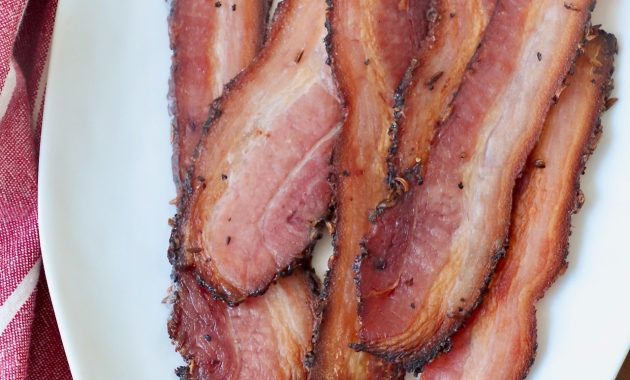
Homemade Bacon: Your Ultimate Guide to Curing and Smoking “Bacon Gold”
Embark on a culinary adventure and learn how to make bacon at home with this comprehensive, step-by-step guide. Discover the rewarding process of curing and smoking your own bacon, transforming a simple pork belly into what we lovingly call “bacon gold.” This recipe promises an unparalleled flavor and texture experience, delivering the absolute best bacon you’ve ever tasted – succulent, smoky, and utterly melt-in-your-mouth delicious.
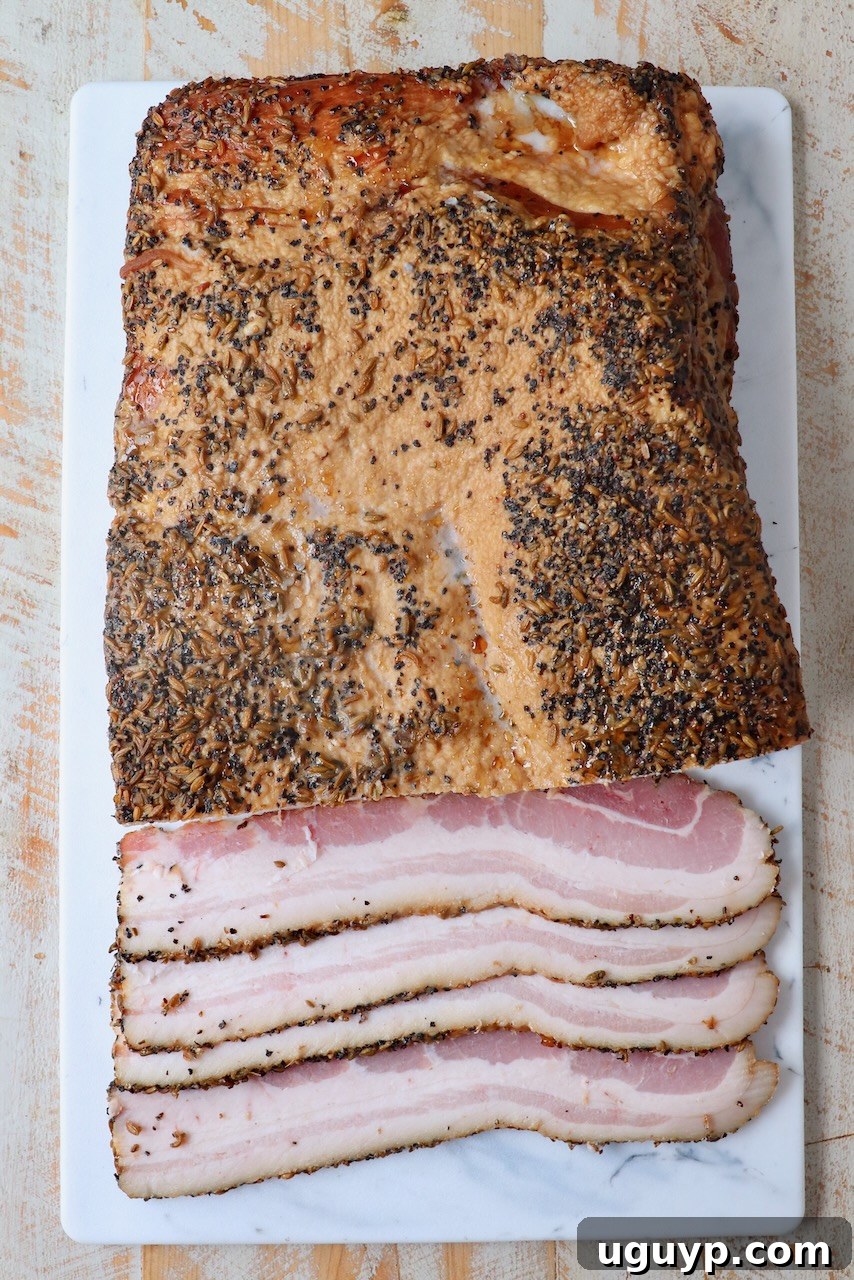
“I made the fennel version and I love it! I’ve made bacon several times before and this is the best it has ever come out. The ice cube trick is brilliant. I’m going to make the maple today; I have a few more belly slabs left from my pigs. I will probably stick with these recipes!”
– Katie, a satisfied home bacon maker
Table of Contents
- The Joy of Homemade Bacon
- Essential Ingredients for Perfect Bacon
- Step-by-Step Instructions
- Prepare the Curing Mixes
- Cure the Pork Belly
- Form the Pellicle
- Smoke the Bacon
- Rest and Refrigerate
- Store or Cook Your Homemade Bacon
- Expert Recipe Tips for Success
- Comprehensive Storage Instructions
- Delicious Ways to Serve Homemade Bacon
- Recommended Tools for Bacon Making
- More Smoker Recipes to Explore
- Homemade Bacon Recipe Card
The Joy of Homemade Bacon: A Culinary Revelation
The journey to crafting your own bacon at home began in 2019, driven by a simple yet profound desire for better breakfast. After extensive research, experimentation, and countless tests over several years, we are thrilled to share our meticulously tested and perfected homemade bacon recipe with you. While making your own bacon requires a bit of foresight and patience, the unparalleled results are absolutely worth every moment. Prepare yourself for the finest bacon experience of your life – a truly transformative taste that will leave you wondering why you ever settled for store-bought.
This isn’t just bacon; it’s an artisanal creation that literally melts in your mouth, resembling pure, savory liquid gold. The depth of flavor, the perfect balance of sweet and smoky, and the incredibly tender texture are simply unmatched. We typically source a 9-pound pork belly for this recipe, dividing it to explore two distinct and equally delightful flavor profiles: a classic maple bacon and an unexpectedly delicious toasted fennel bacon. While the maple offers a familiar comfort, the toasted fennel variety is guaranteed to surprise and delight your palate, elevating everything from a simple breakfast plate to the absolute best BLT sandwich you’ve ever had. Imagine the crisp texture and aromatic notes—a game-changer for any meal.
One of the many benefits of making bacon at home is the ability to customize flavors and ensure the highest quality ingredients. Plus, it’s incredibly economical in the long run. The finished bacon can be stored whole or conveniently sliced into portions and frozen for up to a year. We make this recipe 3-4 times annually, ensuring a consistent supply of our beloved “bacon gold” always ready in the freezer. We wholeheartedly recommend you do the same, so you’re never without this extraordinary treat!
Essential Ingredients for Perfect Bacon
Crafting exceptional homemade bacon starts with understanding the role of each ingredient. Below, we detail the best choices for this recipe, alongside practical substitution options. For precise measurements, please refer to the comprehensive recipe card at the bottom of this page.
-
Core Curing Ingredients:
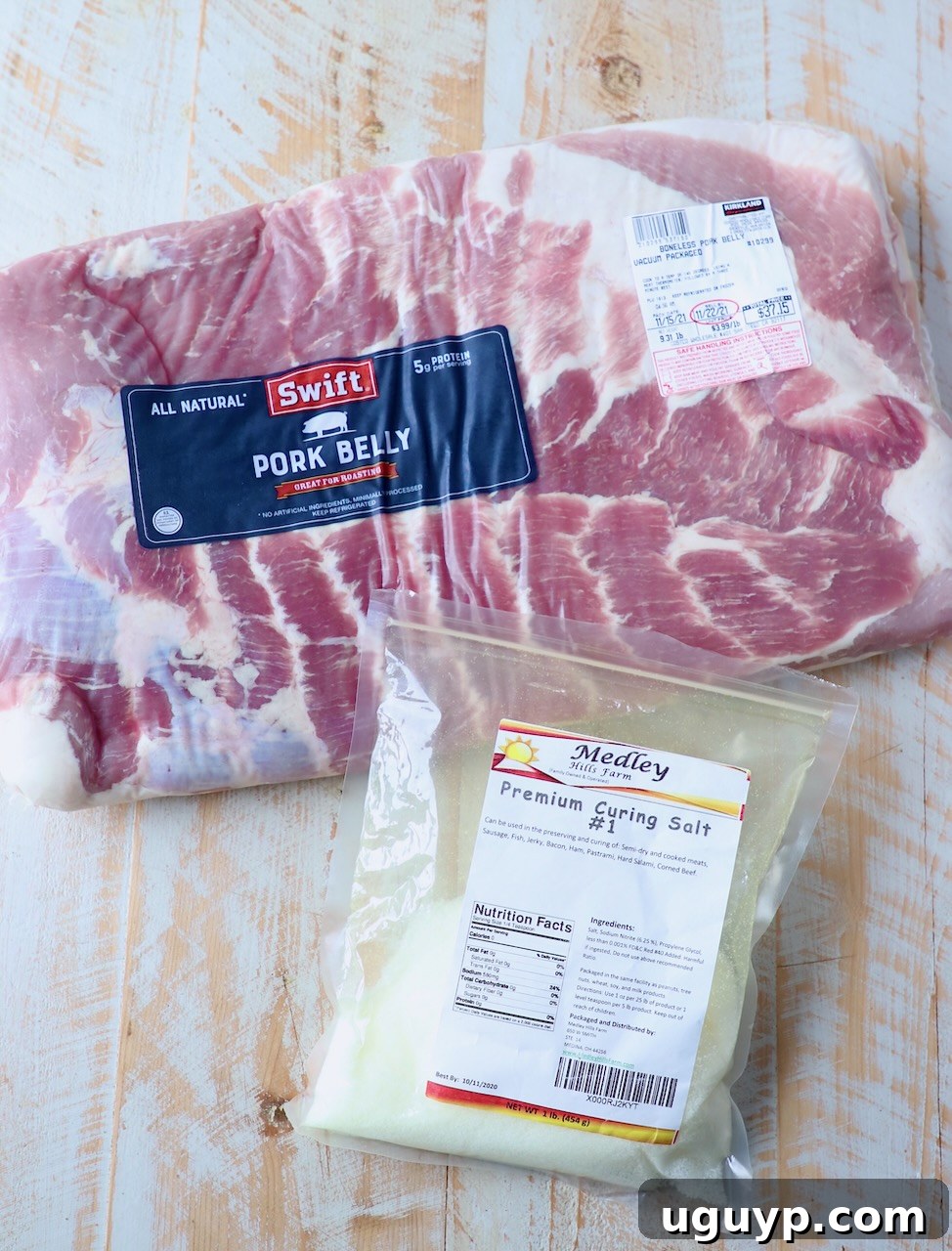
- Pork Belly: The foundation of your bacon! We typically purchase an 8-10 pound pork belly from Costco due to their consistent quality and size. If Costco isn’t an option, speak with the butcher at your local grocery store; they can often cut a custom size for you. Other warehouse stores like Sam’s Club or Smart & Final are also great sources. Look for a slab with a good balance of meat and fat for the best texture and flavor.
- Premium Curing Salt #1 (Prague Powder #1 / Pink Curing Salt): This is a crucial ingredient for food safety and flavor development in cured meats. It contains sodium nitrite, which prevents bacterial growth, gives bacon its characteristic pink color, and contributes to its distinct cured taste. Always order this online or find it at specialty meat and butcher shops. Do NOT confuse it with regular table salt or other types of curing salts (like Prague Powder #2) as they have different uses and concentrations.
-
For Irresistible Maple Bacon:
- Maple Syrup: Insist on genuine, pure maple syrup. Artificial pancake syrup or imitation maple syrup will not deliver the authentic, rich flavor we’re aiming for. The real stuff provides a complex sweetness that perfectly complements the smoky pork.
- Brown Sugar: Adds a touch more sweetness and moisture, enhancing the maple flavor and aiding in the curing process.
- Kosher Salt: Provides essential seasoning and contributes to the overall curing.
- Ground Black Pepper: Offers a subtle warmth and aromatic spice, balancing the sweetness.
-
For Aromatic Fennel Bacon:
- Fennel Seeds: These aromatic seeds are the star of this unique flavor profile. You’ll find them in the spice aisle of any major grocery store. Toasting them first unlocks their full, fragrant potential.
- Brown Sugar: Similar to the maple version, it balances the flavors and aids curing.
- Kosher Salt and Ground Black Pepper: Essential for seasoning and flavor depth.
Step-by-Step Instructions for Homemade Bacon
Follow these detailed steps carefully to achieve perfect homemade bacon. For a complete list of ingredient quantities, please refer to the recipe card below.
Phase 1: Prepare the Curing Mixes
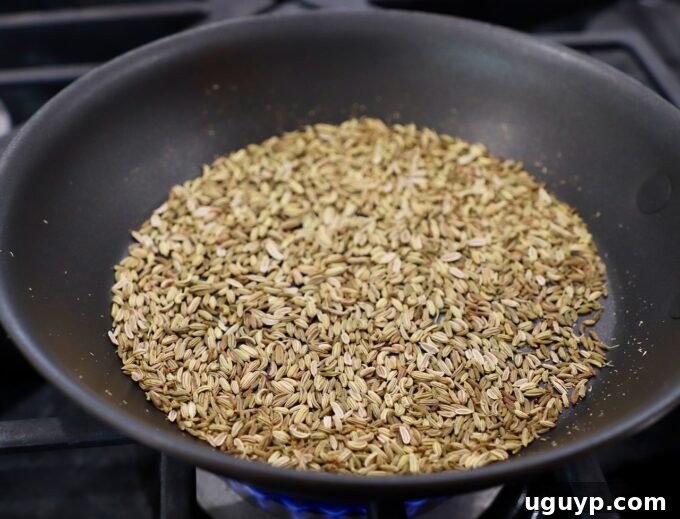
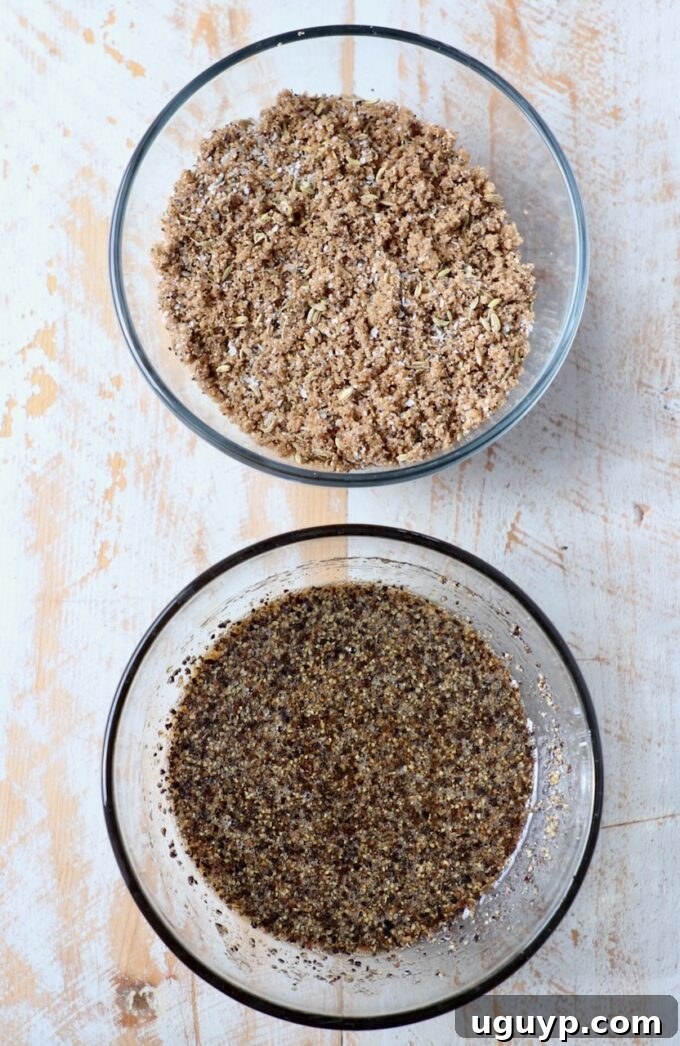
- For the Fennel Bacon Cure: Begin by dry-toasting the fennel seeds. Place them in a small, dry skillet over medium-high heat. Continuously toss the seeds for 5-7 minutes until they become lightly toasted, release a rich, fragrant aroma, and deepen slightly in color. Immediately remove them from the heat and transfer to a small bowl. Combine with brown sugar, kosher salt, ground black pepper, and curing salt (Prague powder #1).
- For the Maple Bacon Cure: In a separate small bowl, combine the maple syrup, brown sugar, kosher salt, ground black pepper, and curing salt (Prague powder #1). Mix thoroughly until all ingredients are well incorporated.
Phase 2: Cure the Pork Belly (10 Days)
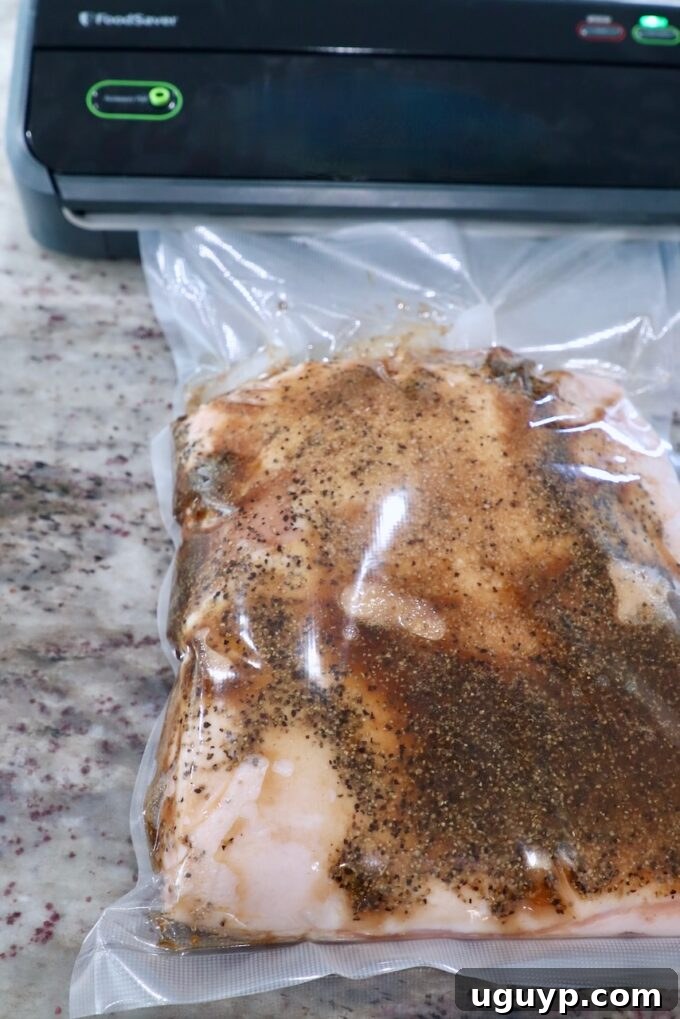
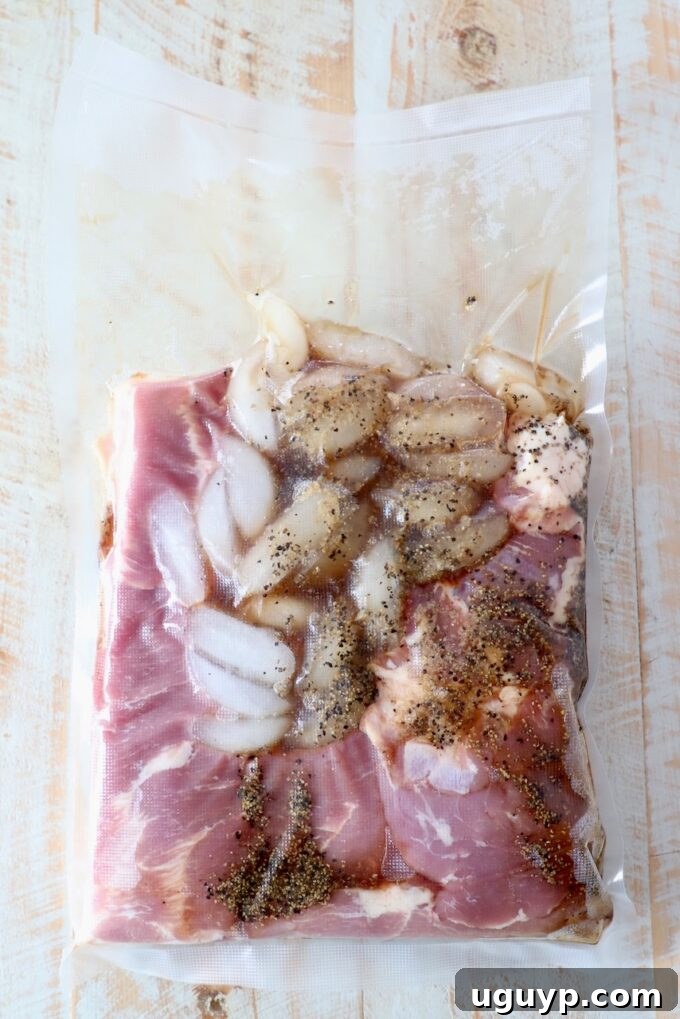
- Season and Seal the Pork Belly: Take your two pork belly halves (or two separate pork bellies) and place each into its own vacuum sealer bag. Add the maple seasoning to one bag and the toasted fennel seasoning to the other. Now, here’s our secret tip: add approximately 20 ice cubes to each bag. As they melt in the refrigerator, they’ll become water, creating the necessary liquid environment for the cure without making vacuum sealing messy. If you are using a large plastic zipper bag instead of a vacuum sealer, you can simply add the appropriate amount of water directly.
- Vacuum Seal and Refrigerate: Use a vacuum sealer to remove all air from the bags and seal them tightly. If you’re using zipper bags, press out as much air as possible before sealing. Place the sealed bags of seasoned pork belly in the refrigerator, fat side down. Each day for the next 10 days, remember to flip the bags, alternating between fat side up and fat side down. This ensures even distribution of the curing mixture. We also recommend gently massaging the pork belly through the bag each day when you flip it to help the flavors penetrate.
Phase 3: Form the Pellicle (24 Hours)
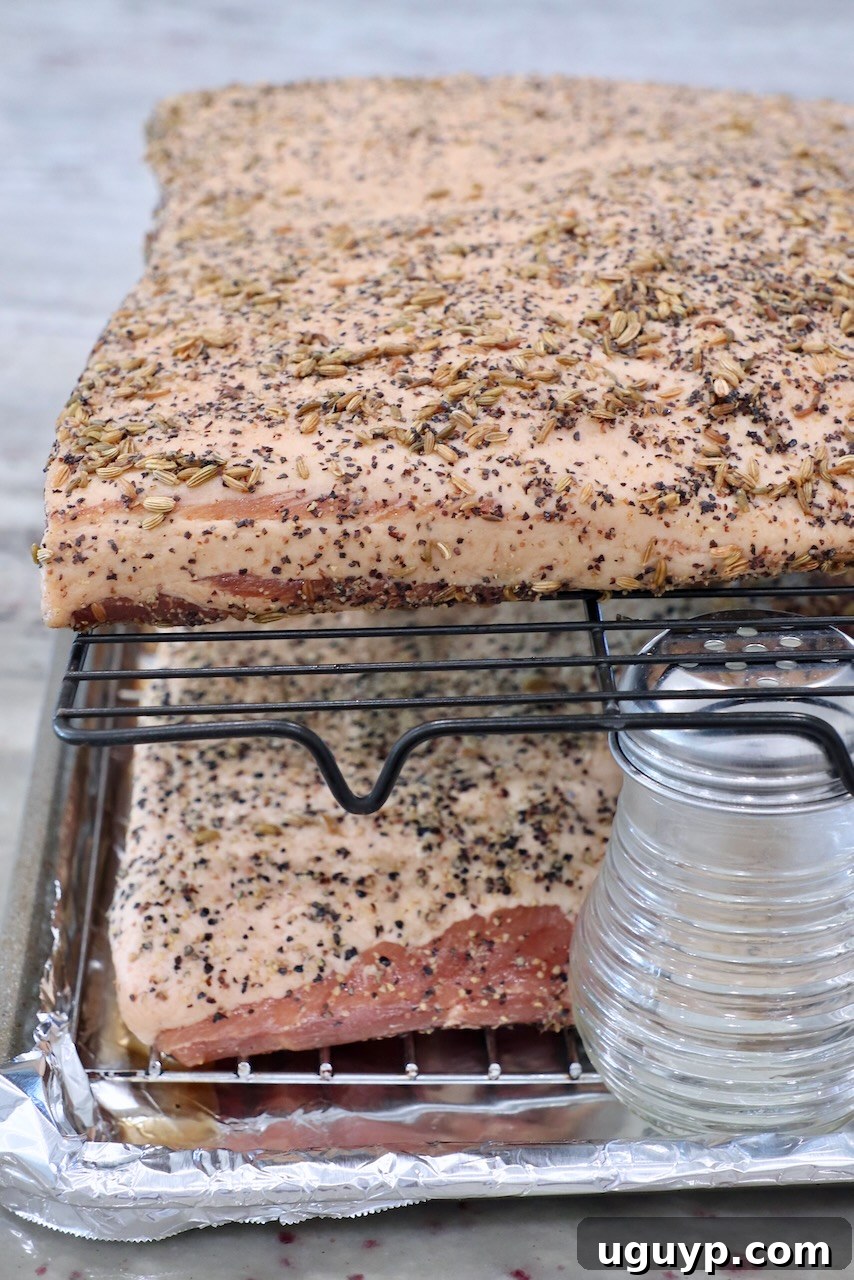
- Remove from Bags and Dry: After 10 days of curing, remove each pork belly from its bag. Pat them thoroughly dry with paper towels. We do not recommend rinsing, as this would wash away all the delicious seasonings that have adhered to the surface. A good pat dry is sufficient.
- Develop the Pellicle: Place each pork belly on a wire rack set over a foil-lined baking sheet. Leave them uncovered in the refrigerator for 24 hours. This critical step allows a “pellicle” to form – a slightly tacky, dry surface that will help the smoke adhere better, resulting in superior flavor and color. If fridge space is limited, you can carefully stack the wire racks using small jars or risers in between, ensuring airflow around both pieces without them touching.
Phase 4: Smoke the Bacon
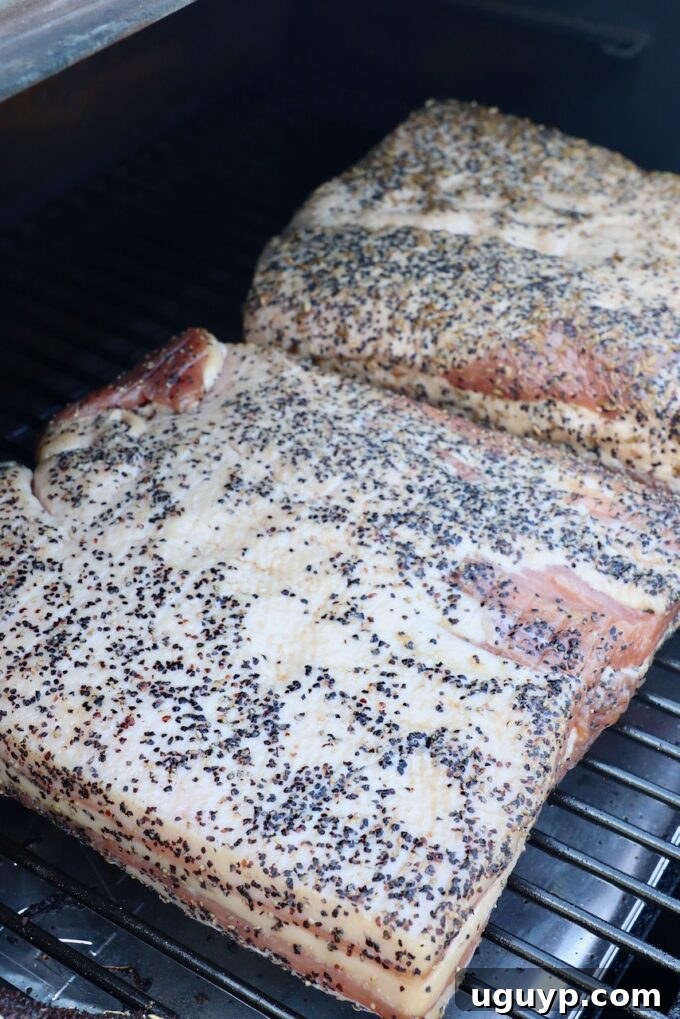
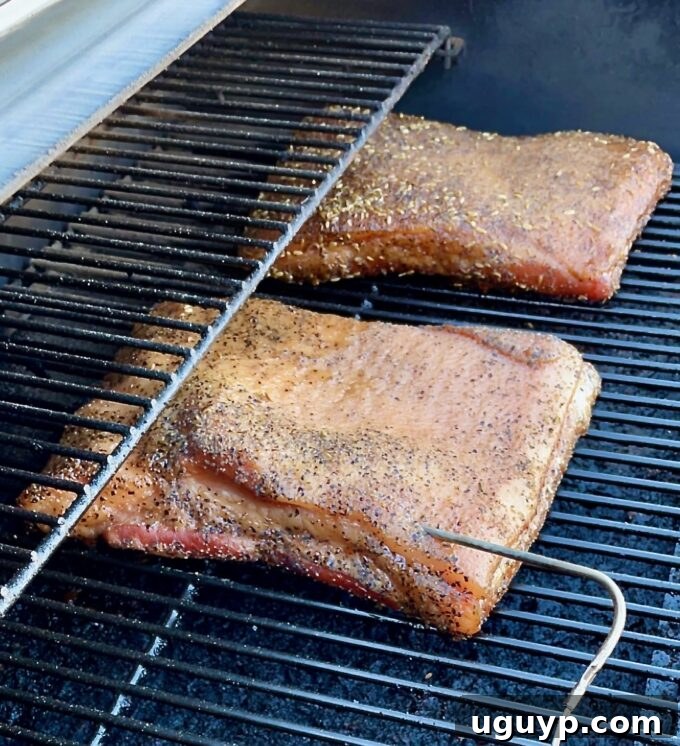
- Smoke to Perfection: Preheat your smoker to a consistent 225°F (107°C). Place the pork belly directly on the grates, fat-side up. Insert a reliable temperature probe into the thickest part of the pork belly, ensuring it doesn’t touch bone or fat pockets, or use an instant-read meat thermometer to check periodically. Smoke until the internal temperature reaches precisely 150°F (65°C). Remember, smoking is more about achieving the correct internal temperature than a fixed time, but this typically takes around 2 hours, depending on the thickness of your pork belly and smoker consistency.
Phase 5: Rest and Refrigerate
- Rest the Smoked Pork Belly: Once the internal temperature reaches 150°F (65°C), promptly remove the pork belly from the smoker. Transfer it to a clean cutting board and allow it to rest at room temperature for 30 minutes. This resting period allows the juices to redistribute, ensuring a more tender and flavorful final product.
- Chill Thoroughly: After resting, wrap each smoked pork belly tightly in aluminum foil. Place the wrapped bacon in the refrigerator for at least 4 hours, or preferably overnight, before slicing, storing, or cooking. Chilling makes the bacon much easier to slice evenly and ensures it’s fully set.
Phase 6: Store or Cook Your Homemade Bacon
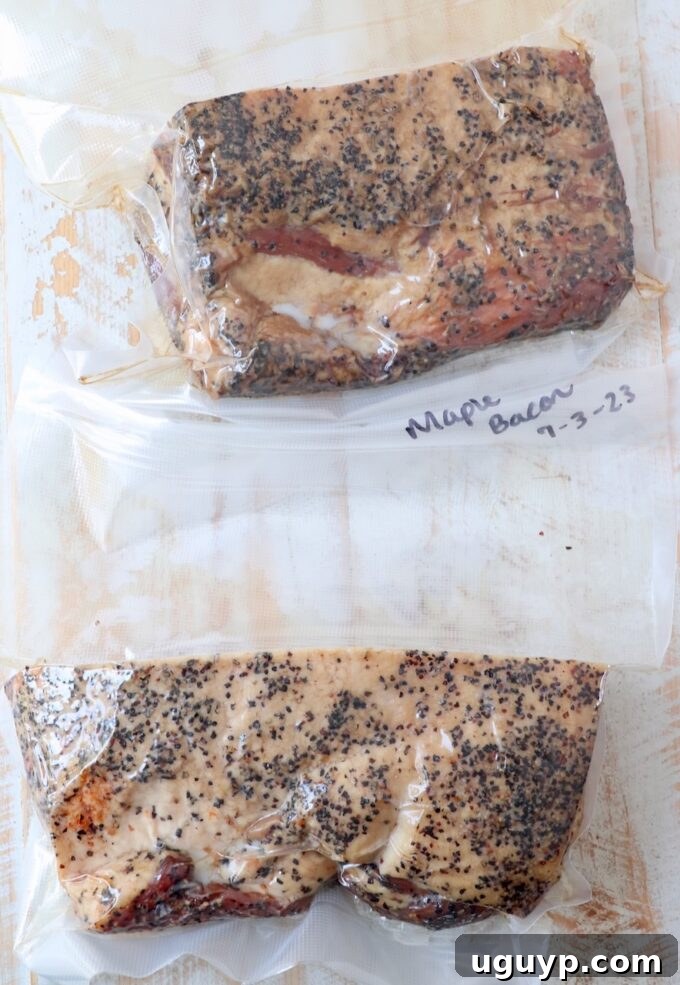
- Storing for Later Use: For convenient storage and defrosting, we recommend slicing the bacon into 1-2 pound blocks. Vacuum seal these slabs, or place them into heavy-duty, freezer-safe plastic bags. Always clearly label each package with the date and flavor (maple or fennel). This uncooked, frozen bacon will maintain its quality for up to 1 year.
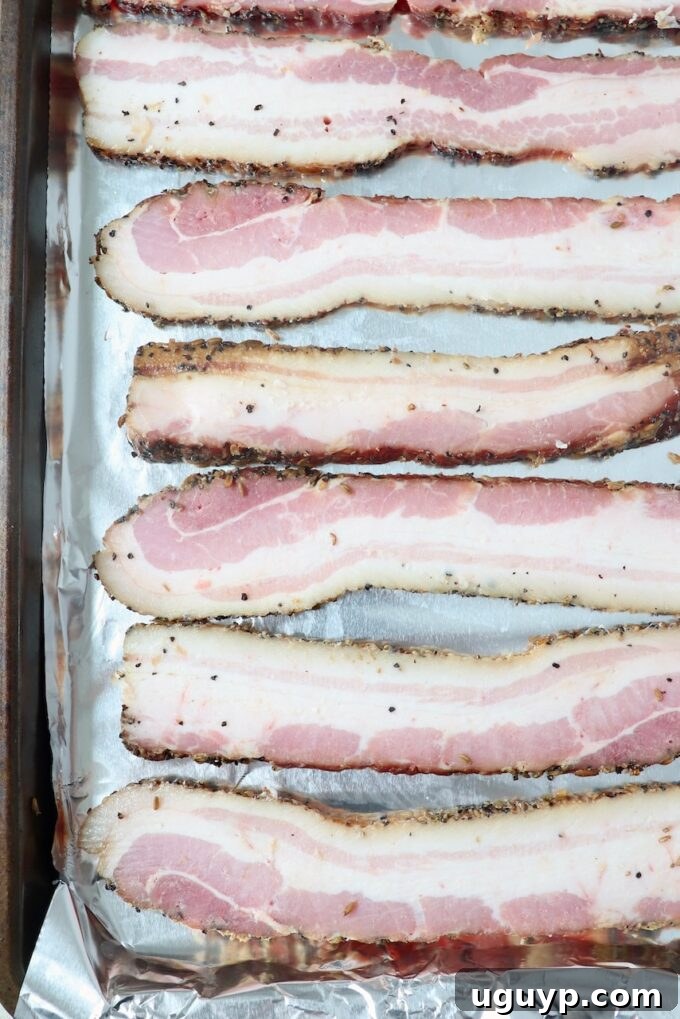
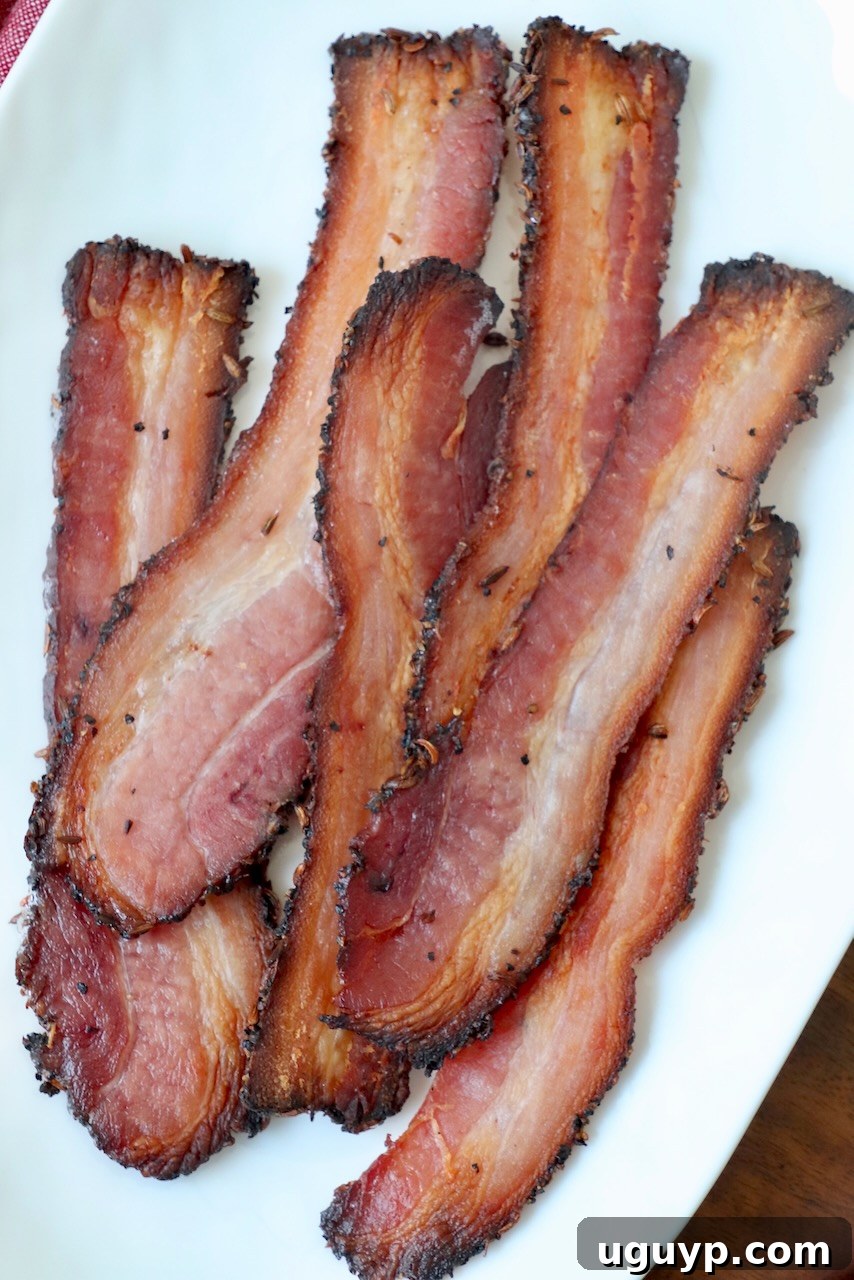
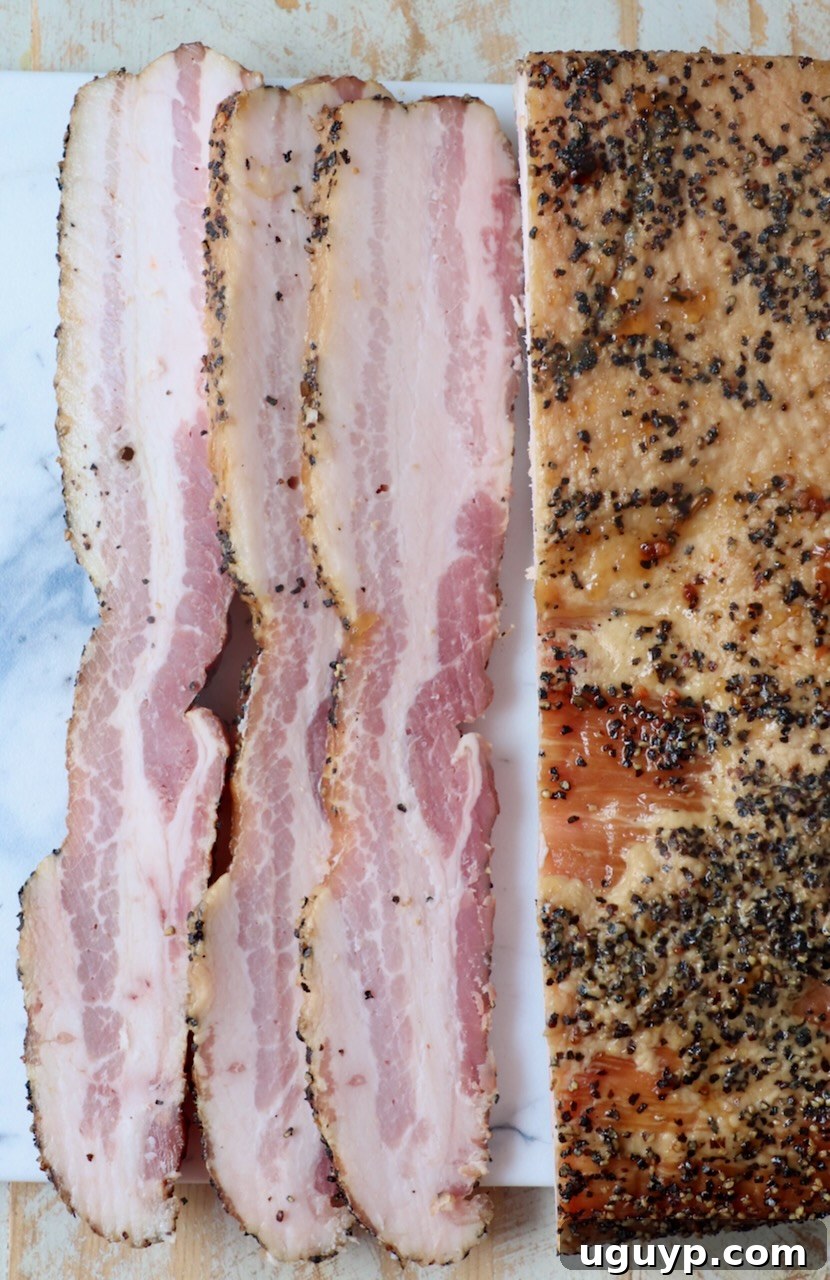
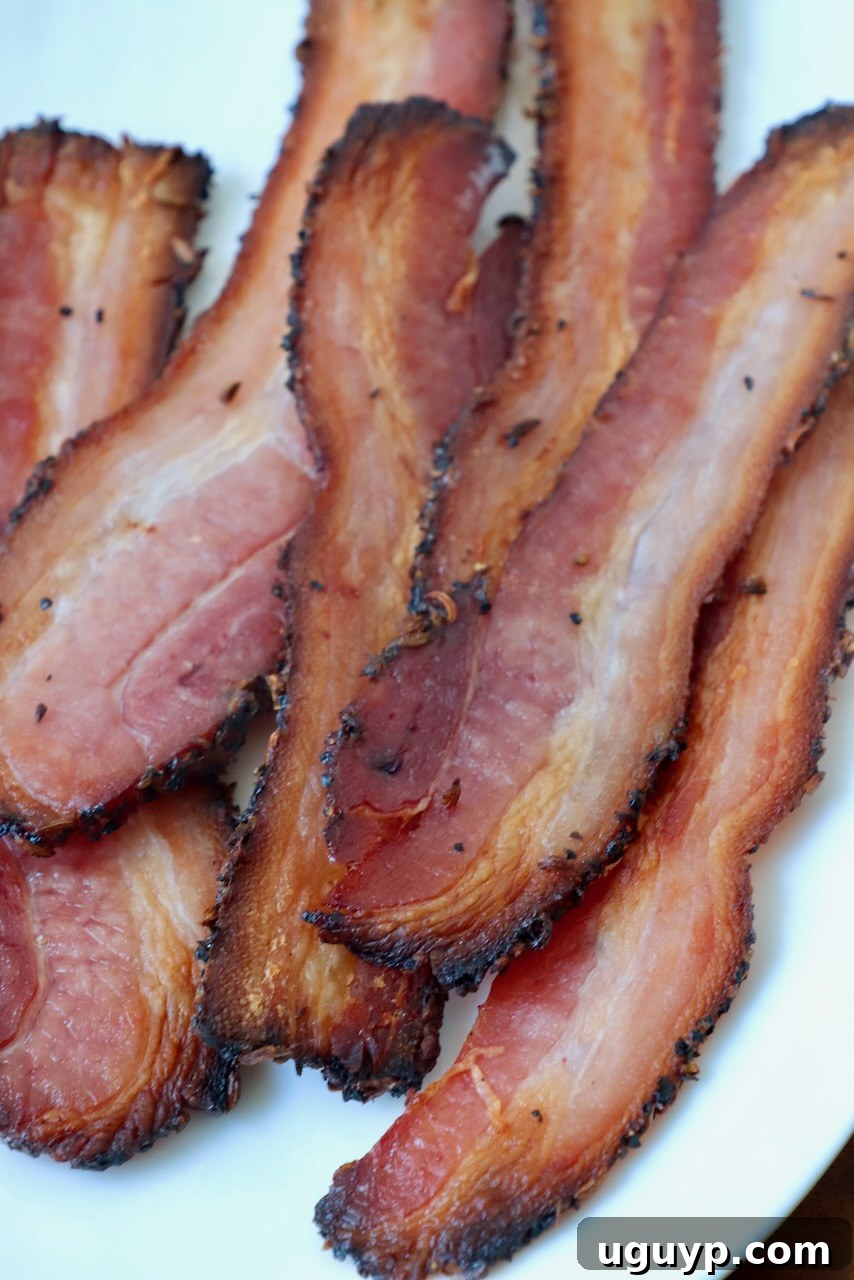
- Cooking Your “Bacon Gold”: When you’re ready to indulge, slice the bacon to your preferred thickness – whether you like it generously thick-cut or delicately thin. For this exceptional homemade bacon, we find that a thick-cut slice cooked at a slightly lower temperature than commercial bacon yields the best results. This method allows the luxurious fat to render perfectly, creating a crisp exterior without overcooking the lean meat. For oven baking, arrange slices in a single layer on an aluminum foil-lined baking sheet and bake at 350°F (175°C) for 15-20 minutes. Keep a close eye on it after 15 minutes, as oven temperatures can vary, and slice thickness affects cooking time. Burning this precious “bacon gold” would truly be a tragedy! Alternatively, you can fry the slices in a large frying pan over medium-high heat for 5-6 minutes per side, or until your desired level of crispness is achieved.
Expert Recipe Tips for Success
- The Ice Cube Advantage: This ingenious tip, courtesy of my husband, simplifies vacuum-sealing the pork belly significantly. Adding ice cubes instead of liquid ensures a clean seal. Roughly 20 standard ice cubes equate to about 1 cup of water, providing the ideal moisture for the cure without disrupting the sealing process.
- Consistent Flipping is Key: Don’t overlook the daily flipping of the pork belly bags for 10 days. This practice is crucial for an even cure, allowing the seasonings to penetrate all surfaces of the meat uniformly, resulting in a perfectly balanced flavor throughout your bacon.
- Temperature Over Time for Smoking: When smoking, always prioritize reaching the correct internal temperature over adhering strictly to a time estimate. For optimal results, use a reliable meat probe or a wireless meat thermometer like the MEATER, which allows you to monitor the internal temperature without opening the smoker lid. If you’re using an instant-read thermometer, start checking the pork belly’s internal temperature after 1 hour, then every 15-20 minutes, until it reaches 150°F (65°C) in the thickest part. The total smoking time can vary from 1 to 3 hours based on the size of the pork belly, ambient temperature, and how often the smoker is opened.
- Selecting Your Smoking Wood: For an exquisite flavor profile, we highly recommend using apple pellets or wood for smoking your bacon. Applewood smoked bacon is a classic for a reason – its mild, sweet, and fruity notes beautifully complement the richness of pork. Other excellent choices that pair well include maple, peach, or cherry wood/pellets, each offering a unique nuance to your homemade bacon.
Comprehensive Storage Instructions
- Refrigerated Uncooked Bacon: Whole or sliced homemade bacon can be safely stored in an airtight container or vacuum-sealed in the refrigerator for up to 2 weeks. Beyond this period, we strongly advise transferring it to the freezer for longer preservation.
- Refrigerated Cooked Bacon: While best enjoyed fresh and hot from the oven or skillet, any leftover cooked homemade bacon should be stored in an airtight container in the refrigerator. It will remain delicious for up to 5 days.
- Freezing Uncooked Bacon: For extended storage, uncooked homemade bacon, whether whole or sliced into portions, can be kept in a freezer-safe bag or vacuum-sealed for up to one year. We do not recommend freezing bacon after it has been cooked, as this can negatively impact its texture and flavor upon reheating.
Delicious Ways to Serve Homemade Bacon
This bacon is so incredibly delicious, it’s hard not to eat it straight off the baking sheet, hovering over the kitchen island, the moment it emerges from the oven. (Of course, I meant after transferring it to a plate and sitting down like a civilized adult. Wink, wink.)
Seriously though, this homemade bacon elevates any meal. It’s a magnificent addition to a hearty breakfast plate alongside fluffy scrambled eggs or elegant omelettes, perfectly toasted bread or light and airy pancakes, and a refreshing Bloody Mary. Beyond breakfast, consider serving it as part of a custom Bagel Bar, or incorporate it into any of these other mouthwatering bacon-centric recipes:
- For Dinner:
- Pasta Boscaiola
- Bacon Wrapped Meatloaf
- Bacon Wrapped Pork Loin
- As a Side Dish or Appetizer:
- Chipotle Bacon Guacamole
- Maple Bacon Brussels Sprouts
- Green Beans with Bacon and Blue Cheese
- Bacon Jam
- For Breakfast or Brunch:
- Spinach Frittata with Bacon
- For Lunch Ideas:
- Bacon Tomato Avocado Grilled Cheese
- Blue Cheese Salad
- BBQ Bacon Burgers
Recommended Tools for Bacon Making
Having the right tools can make all the difference in your homemade bacon journey. Here’s what we recommend to ensure a smooth and successful process:
- Vacuum Sealer: An indispensable tool for curing. We personally use this FoodSaver vacuum sealer almost weekly for storing a variety of meats, both raw and cooked, in the freezer. It ensures a tight seal, which is crucial for effective curing.
- Vacuum Sealer Bags/Rolls: To accommodate large pieces of pork belly, you’ll need either extra-large pre-made bags or, ideally, vacuum sealer rolls. Rolls allow you to customize the bag size, providing a perfect fit for any pork belly cut. These are our top recommendation for this recipe.
- Smoker: A quality smoker is essential for infusing that irresistible smoky flavor. The Traeger Pro Series Grill is what we use at home and highly recommend for achieving consistent, delicious results.
- Wood Pellets or Chunks: The type of wood significantly influences the bacon’s flavor profile. For this recipe, we suggest Traeger Apple Pellets for their mild, fruity aroma that beautifully complements pork. Other excellent choices include maple, peach, or cherry wood.
- Meat Thermometer: Accurate temperature monitoring is vital for food safety and perfect results. Our Traeger smoker comes with integrated probes. If your smoker lacks this feature, a wireless meat thermometer is an invaluable investment, allowing you to track internal temperature without constantly opening the smoker lid and losing heat.
- Heavy-Duty Aluminum Foil: Perfect for wrapping the smoked bacon during its crucial resting and chilling phase.
- Wire Racks and Baking Sheets: Essential for air-drying the pork belly to form the pellicle, ensuring even airflow.
- Sharp Knife or Electric Knife: For clean, even slicing of your finished bacon, a very sharp chef’s knife or an electric carving knife will make the task much easier.
More Smoker Recipes to Explore
Already have your smoker out for making homemade bacon? Maximize your time and explore these other popular and incredibly delicious recipes that utilize your smoker!

Homemade Bacon
Learn how to make bacon at home with this step-by-step guide for how to cure and smoke homemade bacon. Following this simple recipe will give you the absolute best bacon you’ve ever had in your life.
Servings: 9 pounds bacon
Prep Time: 12 days
Cook Time: 15 minutes
Total Time: 12 days 15 minutes
Author: Whitney Bond
Course: Appetizer, Breakfast, Brunch, Side Dish
Cuisine: American
Diet: Gluten Free
Ingredients
- 9 pound pork belly, sliced in half to make two different flavors
Maple Bacon Cure (for 4.5 pounds pork belly)
- ⅜ cup maple syrup
- 4 ½ tablespoons brown sugar
- 2 ¼ tablespoons salt (kosher salt recommended)
- 2 ¼ tablespoons ground black pepper
- ¾ teaspoon Prague powder #1 (curing salt)
- 1 ⅛ cup water (or 24 ice cubes if vacuum-sealing)
Fennel Bacon Cure (for 4.5 pounds pork belly)
- 3 tablespoons fennel seeds
- 9 tablespoons brown sugar
- 2 ¼ tablespoons salt (kosher salt recommended)
- 2 ¼ tablespoons ground black pepper
- ¾ teaspoon Prague powder #1 (curing salt)
- 1 ⅛ cup water (or 24 ice cubes if vacuum-sealing)
Instructions
To cure maple bacon:
- Combine maple syrup, brown sugar, salt, black pepper and curing salt (Prague powder #1) in a small bowl.
- Add a 4.5 pound pork belly to a vacuum sealer bag, or large plastic zipper bag.
- Add the maple syrup mixture from the bowl to the bag.
- If using a vacuum sealer bag, add 24 ice cubes to facilitate sealing. If using a large zipper bag, simply add 1 ⅛ cups water.
- Use a vacuum sealer to remove all air from the bag and seal it shut. If you don’t have a vacuum sealer, push all air out of a large plastic zipper bag before sealing.
- Place the maple seasoned pork belly in the refrigerator, fat side down. Each day for 10 days, flip the bag, so the fat side is up one day and down the next.
To cure fennel bacon:
- Add the fennel seeds to a small dry skillet on the stove over medium-high heat.
- Continually toss the seeds in the skillet for 5-7 minutes, or until they become lightly toasted and smell fragrant.
- Remove them from the heat and add them to a small bowl with brown sugar, salt, black pepper and curing salt (Prague powder #1).
- If using a vacuum sealer bag, add 24 ice cubes to facilitate sealing. If using a large zipper bag, simply add 1 ⅛ cups water.
- Use a vacuum sealer to remove all air from the bag and seal it shut. If you don’t have a vacuum sealer, push all air out of a large plastic zipper bag before sealing.
- Place the fennel seasoned pork belly in the refrigerator, fat side down. Each day for 10 days, flip the bag, so the fat side is up one day and down the next.
To form a pellicle on the pork belly:
- Remove both pieces of seasoned pork belly from the bags and pat them dry thoroughly with paper towels. Do not rinse, as this will remove the seasoning.
- Place each pork belly on a wire rack on top of a foil-lined baking sheet, and into the fridge for 24 hours to form a pellicle.
To smoke the pork belly:
- Preheat a wood or pellet smoker to 225°F (107°C).
- Place the pork belly on the smoker with the fat side facing up.
- Smoke the pork belly until the internal temperature reaches 150°F (65°C) in the thickest part.
- Smoking time can vary from 1-3 hours depending on size, smoker consistency, and how often the lid is opened. Use a wireless thermometer or meat probe to monitor internal temperature continuously. If using an instant-read thermometer, begin checking after 1 hour, then every 15-20 minutes, until 150°F is reached.
- Remove the pork belly from the smoker and let it rest on a cutting board for 30 minutes at room temperature.
To refrigerate, freeze or cook the bacon:
- After the pork belly has rested, wrap it tightly in foil and place it in the refrigerator for at least 4 hours before storing or cooking.
- Uncooked bacon can be stored in the refrigerator, whole or sliced, for up to 2 weeks.
- To freeze bacon, cut it into 1-2 pound blocks for easier defrosting.
- Vacuum seal the 1-2 pound slabs, or place them in freezer-safe zipper bags. Label with date and flavor. Freeze for up to 1 year.
- To cook, slice the bacon to your desired thickness using a sharp knife or electric knife.
- Place slices on a foil-lined baking sheet and bake in a 350°F (175°C) preheated oven for 15-20 minutes. Watch closely after 15 minutes, as cooking time varies with oven temperatures and slice thickness.
Notes
- The nutritional information provided is for 1 pound of bacon. For thick-sliced bacon, this typically equals about 10-12 slices. For thinner-sliced bacon, one pound will yield 16-20 slices.
- The recipe instructions are designed for making both maple and fennel bacon from a 9-pound pork belly (split in half). If you wish to make only one flavor, simply double the ingredients for that specific cure.
- Cooked homemade bacon should always be stored in an airtight container in the refrigerator for up to 5 days.
Nutrition Facts (per 1 pound of bacon)
Calories: 2469 kcal (123%)
Carbohydrates: 30g (10%)
Protein: 43g (86%)
Fat: 241g (371%)
Saturated Fat: 88g (440%)
Polyunsaturated Fat: 26g
Monounsaturated Fat: 112g
Cholesterol: 327mg (109%)
Sodium: 4033mg (168%)
Potassium: 968mg (28%)
Fiber: 2g (8%)
Sugar: 26g (29%)
Vitamin A: 64mg (1%)
Vitamin C: 2mg (2%)
Calcium: 94mg (9%)
Iron: 3mg (17%)
Did you make this recipe?
Tag @WhitneyBond on Instagram and hashtag it #WBRecipes!