Mastering Mango Slicing
- Ticket
- № 9041
- Served
- Read
- 13 min
Welcome to the ultimate guide on how to cut a mango! This tropical delight, often referred to as the “king of fruits,” is a vibrant stone fruit celebrated for its luscious sweetness and incredible versatility. Whether you’re a seasoned chef or a home cook looking to explore new flavors, mastering the art of cutting a mango will unlock a world of culinary possibilities. From enjoying it fresh out of hand to incorporating its vibrant cubes into refreshing salsas, vibrant salads, decadent desserts, and invigorating smoothies, the mango is a true kitchen MVP.
This comprehensive, step-by-step tutorial will equip you with all the essential tips and tricks. You’ll learn not just how to expertly slice and dice a mango, but also how to select the perfect, perfectly ripe fruit from the grocery store. We’ll delve into the nuances of assessing ripeness, safely navigating around the large central seed with a sharp knife, and efficiently extracting every juicy morsel of the succulent flesh. Say goodbye to messy, frustrating mango-cutting experiences and hello to perfectly prepared mangoes every time!
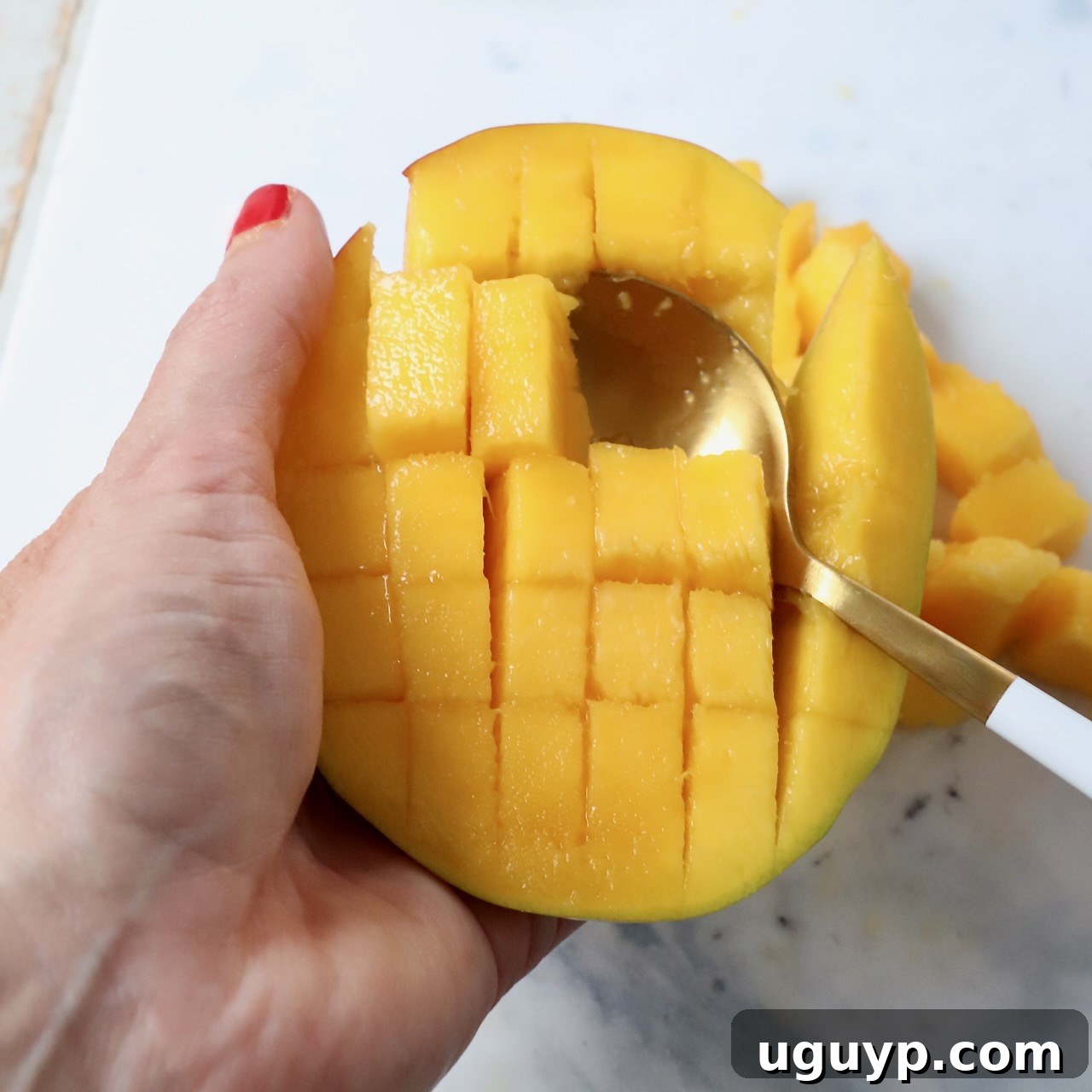
Table of Contents
- How to Select a Perfectly Ripe Mango
- Preparing Your Mango and Tools
- How to Cut a Mango: Step-by-Step Instructions
- Frequently Asked Questions About Mangoes
- The Nutritional Benefits of Mangoes
- Delicious Ways to Use Mangos in Recipes
- Expand Your Kitchen Skills with More Tutorials
During the vibrant peak of mango season, typically spanning the warmer summer months, you’ll find me enthusiastically dicing this sweet tropical fruit to elevate a myriad of dishes. From crowning creamy yogurts and invigorating acai bowls to adding a burst of flavor to fresh salads, savory tacos, and so much more, the mango’s delightful taste is simply irresistible. Its unique blend of sweetness and subtle tang makes it a standout ingredient that can transform an ordinary meal into an extraordinary culinary experience.
The secret to fully enjoying this amazing fruit lies not only in knowing how to prepare it but also in selecting one that’s perfectly ripe. An unripe mango can be tart and firm, while an overripe one might be mushy and difficult to handle. This guide is designed to take the guesswork out of both selection and preparation, ensuring that every mango you encounter is a pleasure to eat.
Let’s begin our journey by unraveling the crucial first step: confidently choosing a ripe mango from the diverse array available at your local grocery store or market. This foundational skill will ensure that your cutting efforts are always rewarded with the best possible flavor and texture.
How to Select a Perfectly Ripe Mango
Picking a ripe mango is an art, much like selecting a perfect avocado, and it primarily relies on your sense of touch. The key is to give the mango a gentle yet firm squeeze. What you’re looking for is a subtle “give” – a slight softness that indicates the flesh inside is tender and juicy. If the mango feels rock-hard and shows no sign of yielding, it’s definitely not ripe yet and will require several days on your countertop to mature.
Conversely, if your gentle squeeze results in a deep indentation or the fruit feels excessively soft and mushy, it’s likely overripe. An overripe mango, while still edible, will be challenging to cut neatly and might have a fermented taste or stringy texture that many find less appealing. The ideal mango will feel firm but not hard, with a tender resilience that promises a sweet, succulent interior.
It’s important to dispel the common misconception that a mango’s color is the sole indicator of its ripeness. While some varieties certainly change color as they mature, relying solely on hue can be misleading. Mango varieties such as Tommy Atkins, Haden, or Ataulfo (honey mango) display different color profiles when ripe. For instance, a Haden mango might show vibrant reds and yellows, while an Ataulfo turns a deep golden yellow, and a Tommy Atkins can still have significant green patches even when perfectly ripe. However, one universal rule holds true: a mango that is entirely green, without any hint of yellow, orange, or red, is almost certainly unripe and will need more time.
Beyond touch and color, your nose can be an excellent tool in the quest for ripeness. Bring the stem end of the mango close to your nose and take a whiff. A perfectly ripe mango will emit a distinctly sweet, fragrant, and sometimes slightly fruity aroma. If there’s no scent, or if it smells sour or alcoholic, it’s either unripe or past its prime. Trust your senses – the combination of a slight give and a sweet fragrance is your best bet for a delightful mango experience.
Preparing Your Mango and Tools
Before you begin the exciting process of cutting your mango, a little preparation goes a long way. First, ensure your mango is thoroughly washed under cool running water. Even though you won’t be eating the skin, cleaning the exterior helps remove any dirt, pesticides, or other residues that could transfer to the edible flesh during cutting. Pat it dry with a clean cloth or paper towel.
Next, gather your tools. You’ll need a clean, stable cutting board – preferably one with a non-slip surface to prevent accidents. The most crucial tool will be a sharp knife. A chef’s knife or a large utility knife with a blade around 6-8 inches is ideal for making clean, precise cuts through the mango’s tough skin and dense flesh. A dull knife is not only inefficient but also significantly increases the risk of slipping and injury. If you have one, a paring knife can also be useful for trimming any remaining flesh from the seed. Finally, a spoon will come in handy for scooping out the diced fruit.
How to Cut a Mango: Step-by-Step Instructions
Cutting a mango is surprisingly simple once you understand the placement of its large, flat, oval-shaped seed. The key is to slice around this central seed, rather than trying to cut through it. Follow these steps for perfectly diced or sliced mango every time:
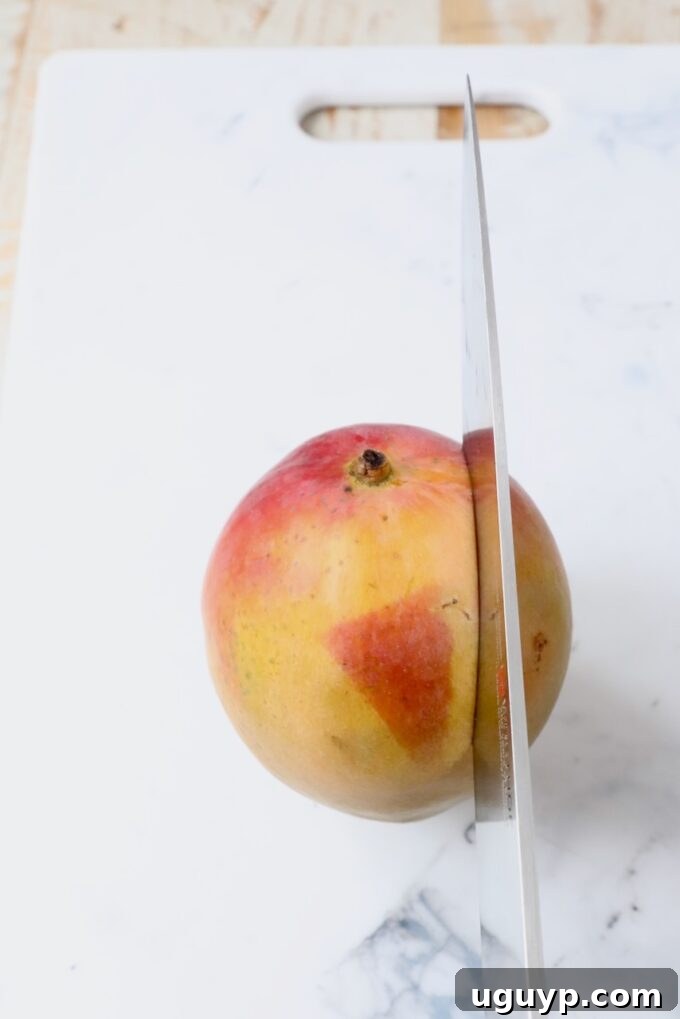
- Position the Mango: Place your ripe mango upright on your cutting board, with the stem end facing towards the top. Visualize the large, flat seed running lengthwise through the center of the mango. Its orientation can vary slightly, but generally, it lies parallel to the mango’s flatter sides.
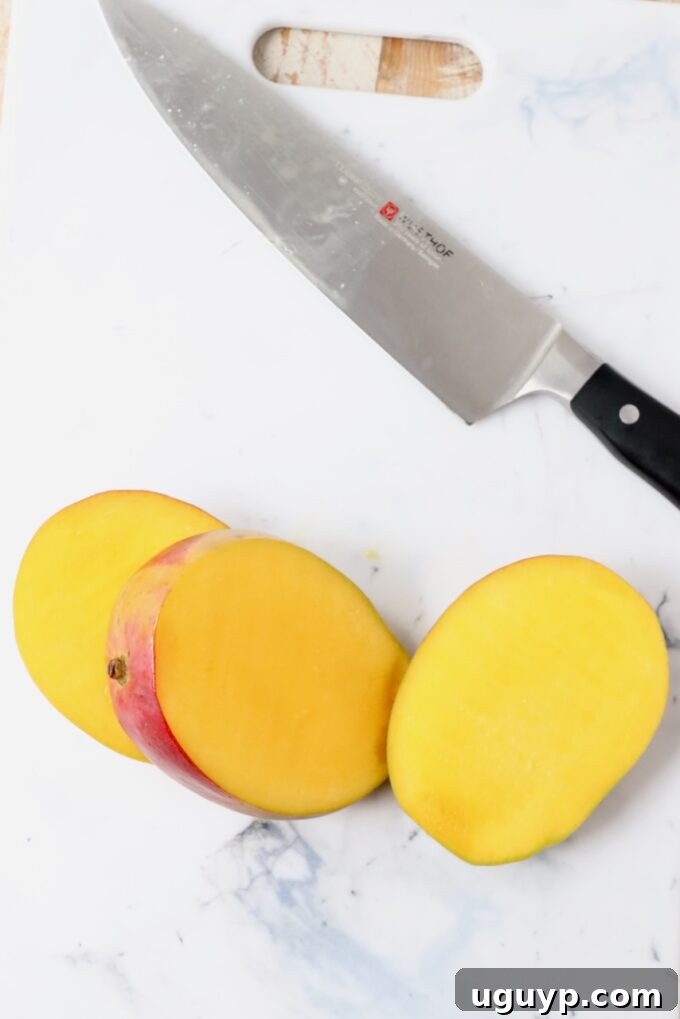
- First Cut (The “Cheek”): Carefully take your sharp knife and make your first cut about 1/2 to 3/4 inch away from the center line, slicing down the side of the mango. You should feel your knife slide easily, avoiding the hard resistance of the seed. This cut will yield one of the “mango cheeks” – a large, seedless piece of flesh.
- Second Cut (The Other “Cheek”): Rotate the mango 180 degrees and repeat the process on the opposite side, making another parallel cut about 1/2 to 3/4 inch from the center. You will now have two substantial mango cheeks.
- Handling the Remaining Middle Section: The middle section of the mango now contains the seed, possibly with some flesh still attached around its edges. You can either discard this section, or, for maximum yield, carefully trim any remaining flesh from around the seed using your knife. Be cautious as the seed can be slippery.
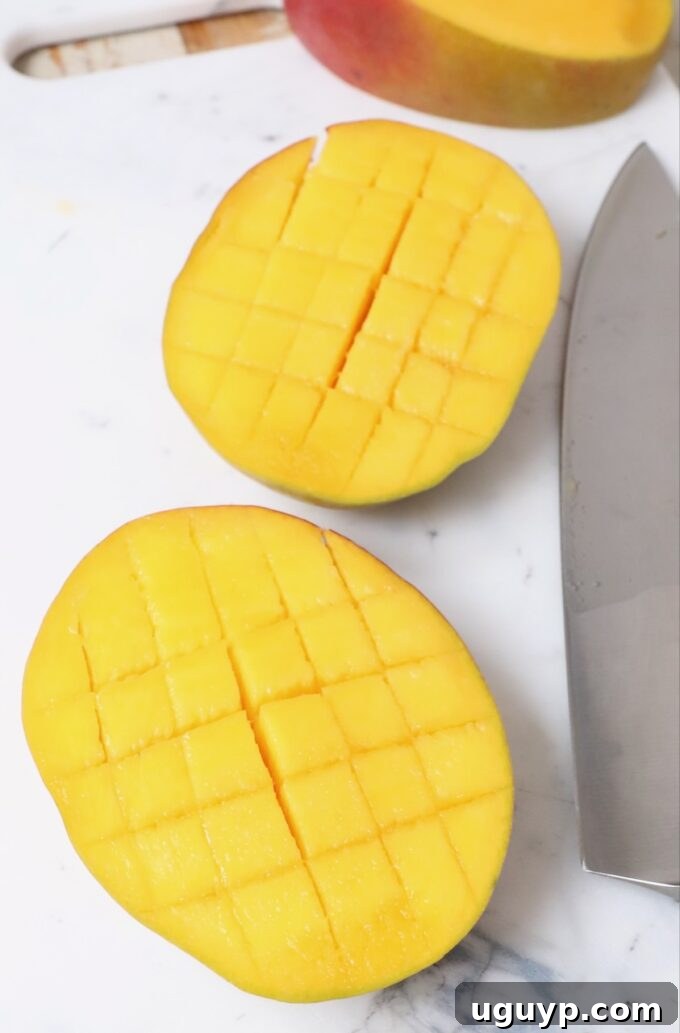
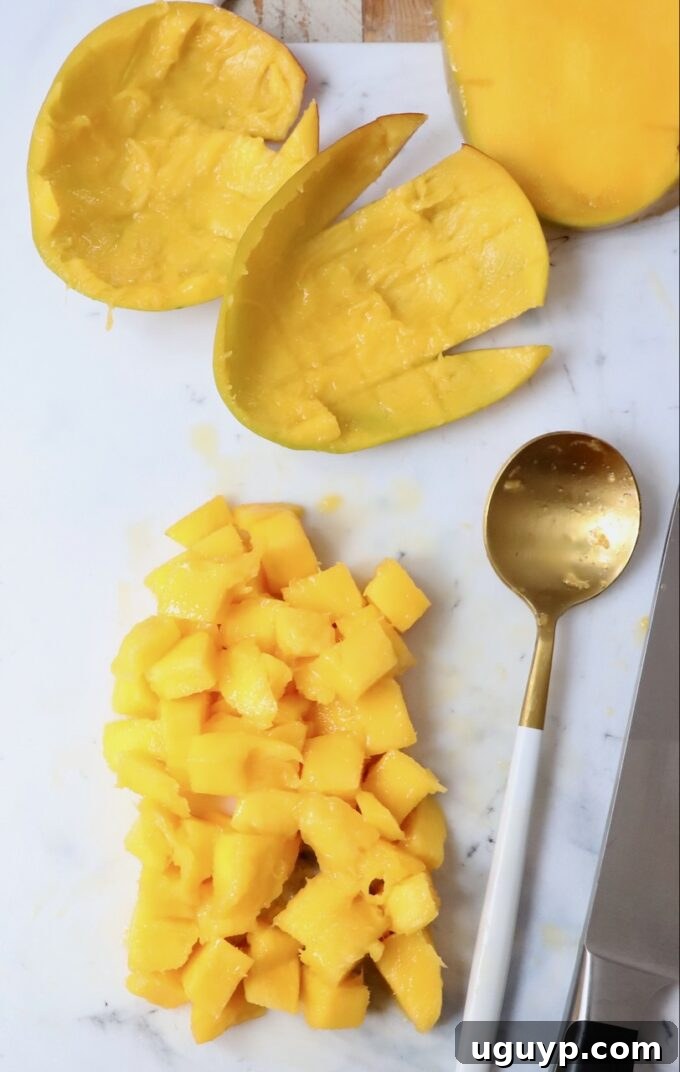
- Scoring the Mango Cheeks (Dicing Method): Take one of the mango cheeks, flesh-side up. Using your knife, gently score the flesh vertically and then horizontally, creating a grid pattern of 1/2-inch cubes (or your desired size). Make sure your cuts go almost all the way through the flesh, but crucially, do not pierce through the skin. The skin acts as a natural bowl, holding the cubes in place.
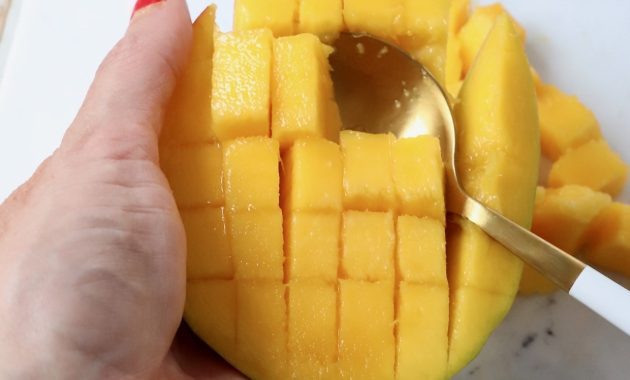
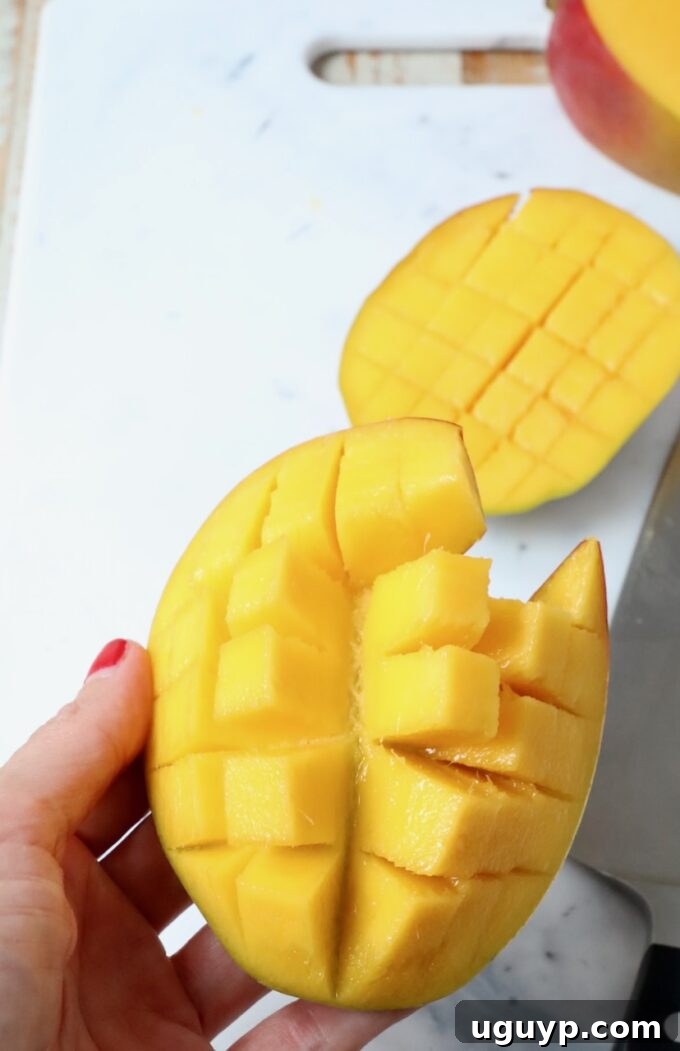
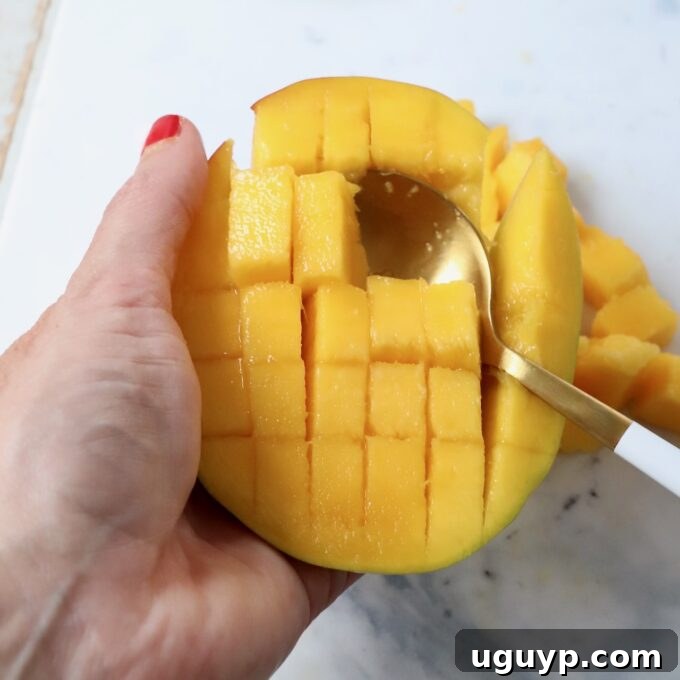
- Invert and Scoop: With the scored cheek in hand, gently push the skin side up, effectively inverting the mango cheek. This will cause the scored cubes of flesh to pop out, resembling a porcupine. Now, simply run a spoon or your knife along the base of the skin to separate the perfectly formed mango cubes. Repeat with the second cheek.
- Final Touches: Discard the mango skin and the seed. You now have beautiful, ready-to-eat mango cubes that can be enjoyed immediately or used in your favorite recipes.
Frequently Asked Questions About Mangoes
- How do you cut a mango into strips instead of cubes? For elegant mango strips, follow steps 1-4 for cutting the mango cheeks. Once you have the two seedless cheeks, instead of creating a grid pattern, simply make long, vertical slices through the flesh, again without cutting through the skin. Then, use a spoon or a small paring knife to carefully scoop or slice the strips away from the skin. These strips are perfect for garnishes, wraps, or fruit platters.
- What about the “mango with a glass” hack? The popular “mango with a glass” method is a creative hack for easily separating the flesh from the skin. It works best with perfectly ripe, somewhat soft mangoes. After you’ve cut the two cheeks from the mango (steps 1-3), take one cheek and firmly slide the thin edge of a sturdy drinking glass between the mango flesh and the skin. Push the glass downward, allowing it to “scoop” the flesh cleanly off the skin. While effective for ripe mangoes, it can be messy and less successful with firmer or unripe fruit.
- Can you eat mango skin? While mango skin is technically edible and rich in some nutrients, it generally has an unpleasant, bitter taste and a tough, fibrous texture that most people find unappetizing. Furthermore, mango skin contains compounds related to urushiol, which is found in poison ivy, and can cause an allergic reaction (contact dermatitis) in sensitive individuals. For these reasons, it’s strongly recommended to discard the skin after removing the mango flesh.
- Should mangoes be refrigerated, and how should they be stored? Unripe mangoes should be stored at room temperature on your kitchen counter to allow them to ripen naturally. Once a mango is ripe and gives slightly to pressure, it should be moved to the refrigerator. Refrigeration slows down the ripening process significantly and will keep the whole, ripe mango fresh for up to 5-7 days. If you’ve already peeled, sliced, or diced your mango, it needs to be stored in an airtight container in the refrigerator to maintain its freshness and prevent oxidation. Consume cut mango within 3-5 days for the best quality and flavor.
- Can you freeze mangoes for later use? Absolutely! Freezing is an excellent way to preserve mangoes, especially when they’re in season and abundant. To freeze, first peel and dice the mangoes into your desired size. Then, spread the mango pieces in a single layer on a baking sheet lined with parchment paper and flash freeze them for 1-2 hours until solid. This prevents them from clumping together. Once frozen, transfer the solid mango pieces to a freezer-safe bag or airtight container, removing as much air as possible. Frozen mangoes can be stored for up to 6 months and are fantastic for making smoothies, frozen cocktails, sorbets, or even adding to baked goods.
The Nutritional Benefits of Mangoes
Beyond their incredible taste, mangoes are a powerhouse of nutrition, offering a host of health benefits that make them a fantastic addition to any diet. This vibrant fruit is low in calories but rich in vitamins, minerals, and antioxidants, contributing to overall well-being. Here’s a closer look at what makes mangoes so good for you:
- Rich in Vitamin C: A single mango provides a significant portion of your daily recommended intake of Vitamin C, a powerful antioxidant essential for immune function, skin health, and collagen production.
- High in Vitamin A: Mangoes are packed with Vitamin A (in the form of beta-carotene), crucial for vision, immune system strength, and healthy skin.
- Good Source of Fiber: The dietary fiber in mangoes supports digestive health, helps regulate blood sugar levels, and contributes to a feeling of fullness, which can aid in weight management.
- Potassium Powerhouse: This essential mineral found in mangoes helps maintain proper fluid balance, nerve signals, and muscle contractions, including those of the heart.
- Antioxidant Rich: Mangoes contain various antioxidants like quercetin, mangiferin, and polyphenols, which help protect cells from damage caused by free radicals, potentially reducing the risk of chronic diseases.
- Folate for Health: Important for cell growth and function, folate in mangoes supports healthy metabolism and is particularly vital during pregnancy.
Incorporating mangoes into your diet is a delicious way to boost your nutrient intake and enjoy a sweet treat guilt-free.
Delicious Ways to Use Mangos in Recipes
Once you’ve mastered the art of picking and perfectly cutting a mango, a world of culinary creativity awaits! This sweet, tropical fruit can be incorporated into countless dishes, bringing a bright and exotic flavor profile. Here are some of our favorite ways to enjoy fresh mango:
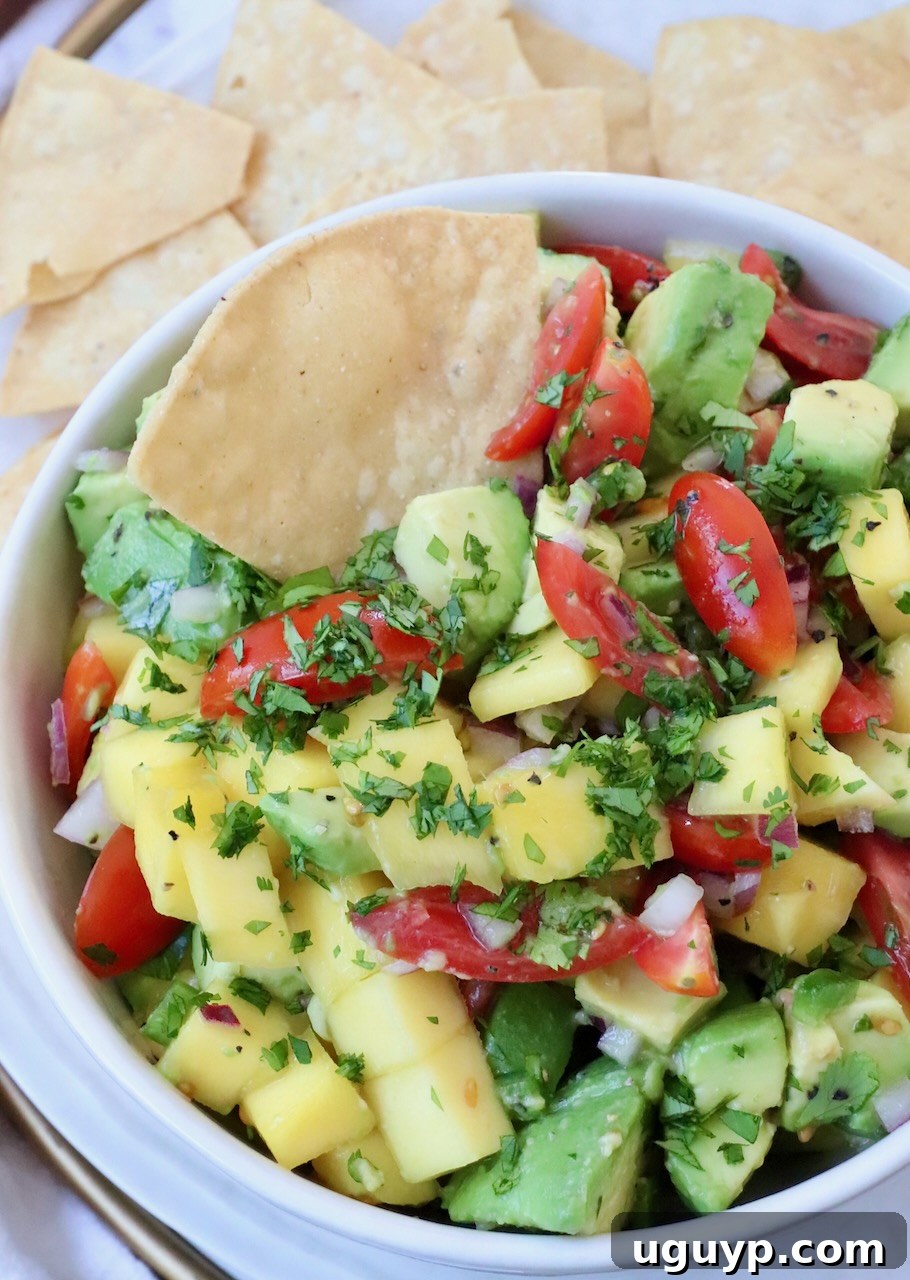
- Tropical Salsas: Without a doubt, one of the most popular and incredibly versatile uses for mango is in a vibrant salsa. Diced mango combines beautifully with ingredients like red onion, cilantro, lime juice, and a touch of jalapeño for a sweet, savory, and spicy condiment. This is my personal favorite way to enjoy mango, and it’s perfect for topping Chipotle Honey Glazed Salmon Tacos, grilled chicken, fish, or simply serving as a refreshing dip with tortilla chips. Try our renowned Mango Avocado Salsa (pictured above) or a classic Mango Salsa.
- Smoothies and Frozen Drinks: For a refreshing treat, blend fresh or frozen mango into your favorite smoothies. Its creamy texture adds body and natural sweetness. It’s also the star ingredient in many tropical frozen drinks, such as a Frozen Mango Margarita or a Spicy Serrano Mango Margarita.
- Salads: Mango adds a burst of color, sweetness, and unique flavor to various salads. It pairs exceptionally well with greens like arugula, proteins such as shrimp or chicken, and other tropical fruits. Explore options like a Shrimp Mango Arugula Salad or a refreshing Pineapple Mango Kale Salad.
- Main Dishes: Don’t limit mango to just appetizers and desserts. It can be a fantastic component in savory main courses. Think Mango Salsa Chicken, a flavorful marinade for pork, or incorporated into stir-fries for a touch of sweetness, such as this Mango Chicken Stir Fry.
- Desserts: While naturally sweet, mango can also be the star of many desserts. From simple fruit tarts to more elaborate cheesecakes or sorbets, its tropical flavor shines through.
- Wraps and Bowls: Add diced mango to lettuce wraps, such as Caribbean Mango Avocado Ahi Lettuce Wraps, or grain bowls for an exotic twist and vibrant sweetness. It also works wonderfully in a Mango Quinoa Salad.
Now that you’re a pro at cutting mangoes, it’s time to experiment and discover all the delicious ways this incredible fruit can brighten your meals!
Expand Your Kitchen Skills with More Tutorials
Ready to become an even more confident and skilled cook? Don’t stop at mangoes! We have a collection of quick and easy kitchen tutorials designed to help you master essential techniques and unlock new recipes. From basic preparations to more advanced methods, these guides will make you a pro in no time.
How To Cut A Mango: Quick Guide
This simple guide ensures you can enjoy fresh, perfectly cut mangoes for any dish!
Servings: 1 mango
Prep Time: 5 mins
Total Time: 5 mins
Author: Whitney Bond
Course: Breakfast, Brunch, Dessert
Cuisine: American
Ingredients
- 1 ripe mango
Instructions
- Start by selecting a ripe mango at the grocery store. It should have a slight give when gently squeezed, but not be mushy.
- Once you have your ripe mango at home, position it upright on a cutting board with the stem facing up.
- The mango’s large, flat seed runs through its middle. You’ll want to slice on each side of this seed, approximately 1 inch in from the edge of the mango.
- After slicing off both seedless “cheeks,” set the middle section (with the seed) aside. For the two mango cheeks, use a sharp knife to score the flesh in a grid pattern (vertical and horizontal cuts), going almost all the way down to the skin, but not through it.
- Pick up a scored mango cheek, then gently push the skin side to invert it, causing the cubes to pop out. Run a spoon or knife between the mango flesh and the skin to remove the cubes.
- Discard the mango skin. If desired, carefully trim any remaining flesh from the central seed, though there will be very little. Otherwise, discard the seed and focus on the beautiful mango cubes you’ve prepared.
Notes
- To cut the mango into strips: Simply slice the mango cheeks vertically instead of making a grid pattern. Then use a spoon or small paring knife to separate the strips from the skin.
- Mango skin is not recommended for consumption: While technically edible, it has an unpleasant taste and can cause allergic reactions in some individuals. Always discard the skin.
- Storage of mangoes: Unripe mangoes ripen at room temperature. Once ripe, move them to the fridge to slow ripening for up to 5 days. Peeled, sliced, or diced mango should be stored in an airtight container in the refrigerator and consumed within 3-5 days.
- Freezing mangoes: Peel and dice the mangoes first. Flash freeze on a baking sheet, then transfer to a freezer-safe bag, removing as much air as possible. Freeze for up to 6 months. Ideal for smoothies and frozen drinks.
Nutrition Facts
Approximate values per 1 mango serving:
- Calories: 124 kcal (6% DV)
- Carbohydrates: 31g (10% DV)
- Protein: 2g (4% DV)
- Fat: 1g (2% DV)
- Sodium: 2mg
- Potassium: 348mg (10% DV)
- Fiber: 3g (12% DV)
- Sugar: 28g (31% DV)
- Vitamin A: 2240mg (45% DV)
- Vitamin C: 75mg (91% DV)
- Calcium: 23mg (2% DV)
- Iron: 0.3mg (2% DV)
Daily Values (DV) are based on a 2,000 calorie diet.
Did you make this recipe?
Tag @WhitneyBond on Instagram and hashtag it #WBRecipes!