Perfect French Crepes Recipe
- Ticket
- № 2330
- Served
- Read
- 18 min
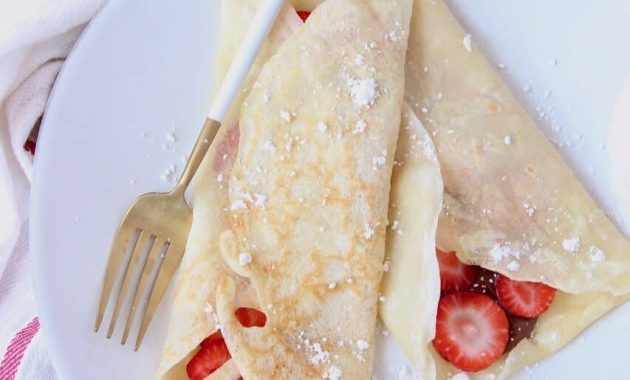
Welcome to the ultimate guide to mastering the art of French crepes! Forget those intimidating notions you might have about making crepes; with a few simple tips and tricks, you’ll be whipping up consistently perfect, delightfully thin crepes every single time. This comprehensive recipe will not only walk you through crafting exquisite crepes right in your own kitchen but also inspire your culinary creativity with an array of 15 incredible crepe filling ideas. Whether your palate craves something wonderfully sweet like classic Nutella and Strawberry, or a satisfying savory option such as Ham and Cheese, these easy-to-follow ideas promise to transform your breakfast, brunch, lunch, or even dessert into a truly French experience. Get ready to impress your family and friends with these versatile and utterly delicious homemade crepes!
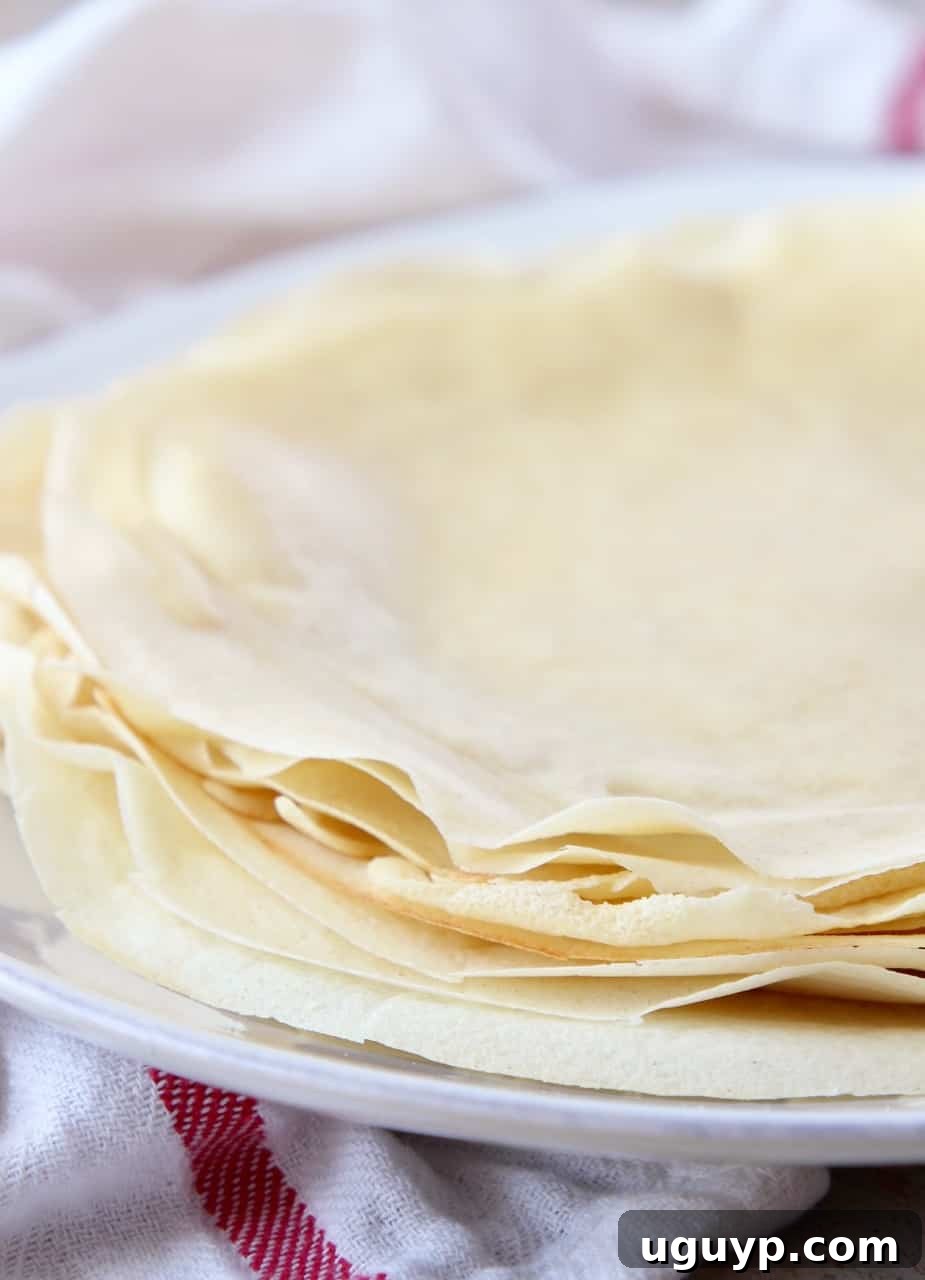
Table of contents
- The Enchantment of French Crepes
- Essential Ingredients for Perfect Crepes
- Step by step instructions for flawless crepes
- Expert tips and tricks for crepe perfection
- Frequently asked questions about crepes
- Unforgettable Crepe Filling Ideas: Sweet and Savory
- More delightful breakfast recipes
The Enchantment of French Crepes
My journey to perfecting crepes began long before my unforgettable trip to France in 2018. In fact, for years, the idea of making these delicate French pancakes at home felt daunting. I’d dabbled a couple of times – once for a Father’s Day brunch back in 2012, and another brief attempt during high school French club. Each time, I was plagued by questions and anxieties: *Would the batter turn out lumpy? Could I really achieve that signature thinness? And how on earth would I manage to flip them without tearing?*
But stepping foot on French soil and experiencing authentic crepes from bustling street vendors to charming café kitchens changed everything. I returned home in 2018, clutching a cherished souvenir crepe pan, and a newfound determination to conquer my crepe fears. After dozens of batches, countless flips, and a dedicated quest for perfection, I am thrilled to share with you all the accumulated wisdom, foolproof techniques, and essential insights for creating truly impeccable French crepes right in your own kitchen.
You might be wondering if that special pan from France is a prerequisite. Absolutely not! While a dedicated crepe pan can be a joy to use, a standard 10-inch nonstick skillet will perform beautifully, yielding equally delicious results. The key is in the technique and the batter, not necessarily the fancy equipment. This recipe is designed to demystify crepe making, making it accessible and enjoyable for everyone, from novice cooks to seasoned bakers. Prepare to transform simple ingredients into a versatile delicacy that will transport your taste buds straight to the streets of Paris.
Essential Ingredients for Perfect Crepes
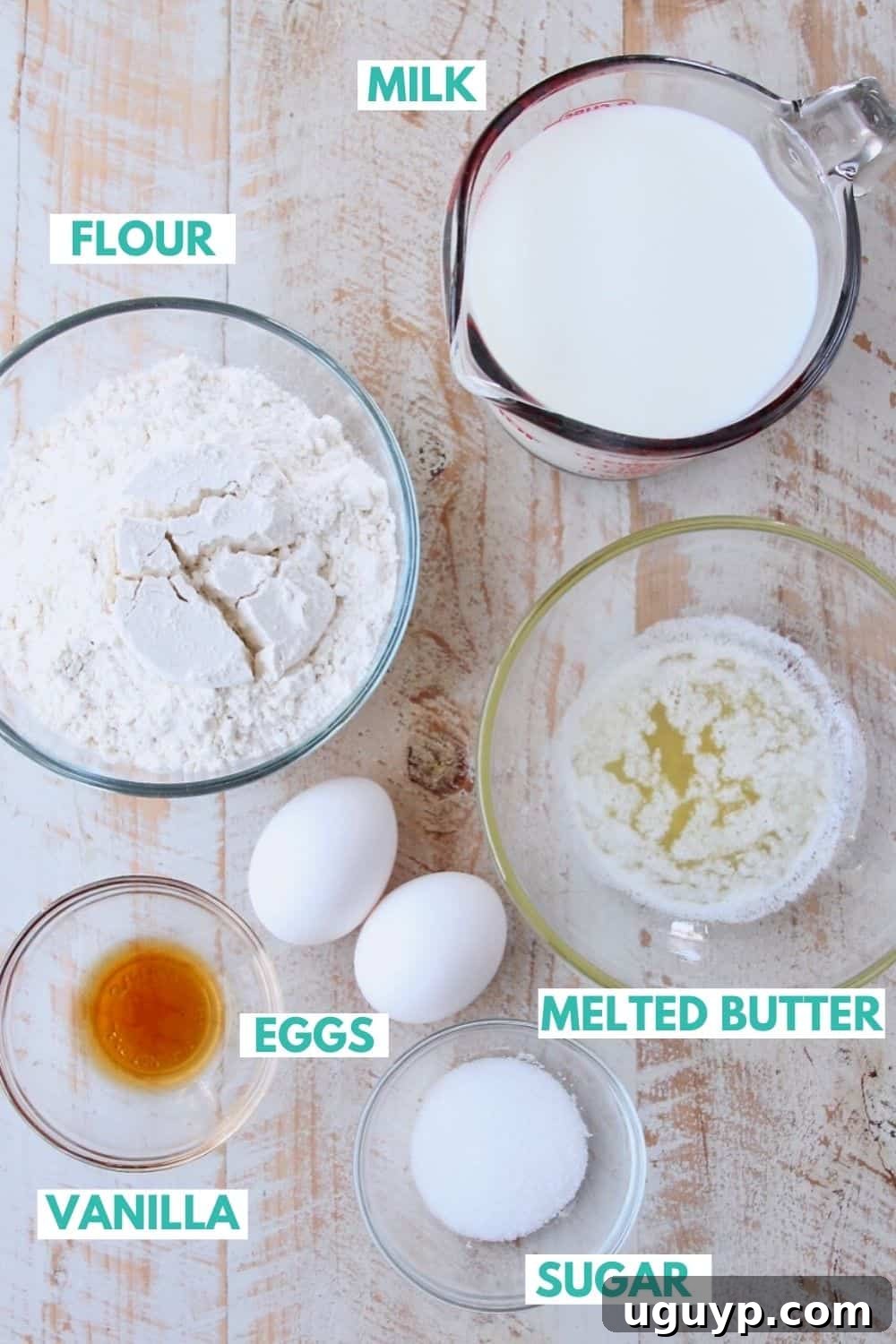
Creating truly perfect French crepes starts with understanding the role each ingredient plays in achieving that delicate texture and rich flavor. While the list is simple, the quality and combination are paramount. Here’s a breakdown of what you’ll need to gather:
- All-Purpose Flour: This forms the foundational structure of your crepes. Using all-purpose flour ensures a light yet sturdy texture that won’t easily tear. Sift it if you prefer an even finer batter, though a good blender will handle any small clumps.
- Granulated Sugar: Just a touch of sugar adds a subtle sweetness to the batter, enhancing the overall flavor profile without making the crepes overtly sweet. This small amount allows the batter to be versatile enough for both sweet and savory fillings.
- 2% Milk: Milk contributes to the liquid consistency and richness of the crepe batter. 2% milk strikes a perfect balance, providing enough fat for flavor and tenderness without making the crepes too heavy. You can experiment with whole milk for a richer taste or even a dairy-free alternative like almond milk for dietary needs, though results may vary slightly.
- Large Eggs: Eggs are crucial for binding the ingredients together, providing structure, and adding richness and a beautiful golden color to your crepes. They also help create that signature elasticity that allows crepes to be so wonderfully thin. Always use fresh, large eggs for the best results.
- Vanilla Extract: A teaspoon of vanilla extract infuses the batter with a warm, inviting aroma and a hint of classic sweetness, making these crepes truly irresistible, especially when paired with sweet fillings.
- Unsalted Butter (Melted): Butter is essential for both flavor and texture. Melting the butter before adding it to the batter ensures it distributes evenly, contributing to a tender interior and a slightly crisp edge. Using unsalted butter allows you to control the overall saltiness of your dish, especially when preparing savory crepes.
- Nonstick Cooking Spray: Absolutely vital for preventing sticking and ensuring easy flipping. You’ll use this between each crepe for consistent, perfect release.
Essential Equipment:
- Crepe Pan or 10-inch Nonstick Skillet: While a traditional crepe pan with its shallow sides and flat bottom is ideal for easy flipping, a good quality 10-inch nonstick skillet works perfectly. Ensure your chosen pan is clean and free of scratches for the best nonstick performance.
- Spatula: A thin, flexible spatula is key for gently lifting and flipping the delicate crepes without tearing them.
- Blender: I highly recommend using a blender, such as my trusty NutriBullet, for achieving the smoothest, lump-free batter. A food processor can also work, or you can whisk by hand, though a blender is the quickest and most efficient method.
Having these simple ingredients and tools ready will set you up for success in making the most delightful French crepes.
Step by step instructions for flawless crepes
Follow these detailed steps to ensure your crepes turn out thin, tender, and perfectly golden brown every single time. Precision and patience are your best friends in this process!
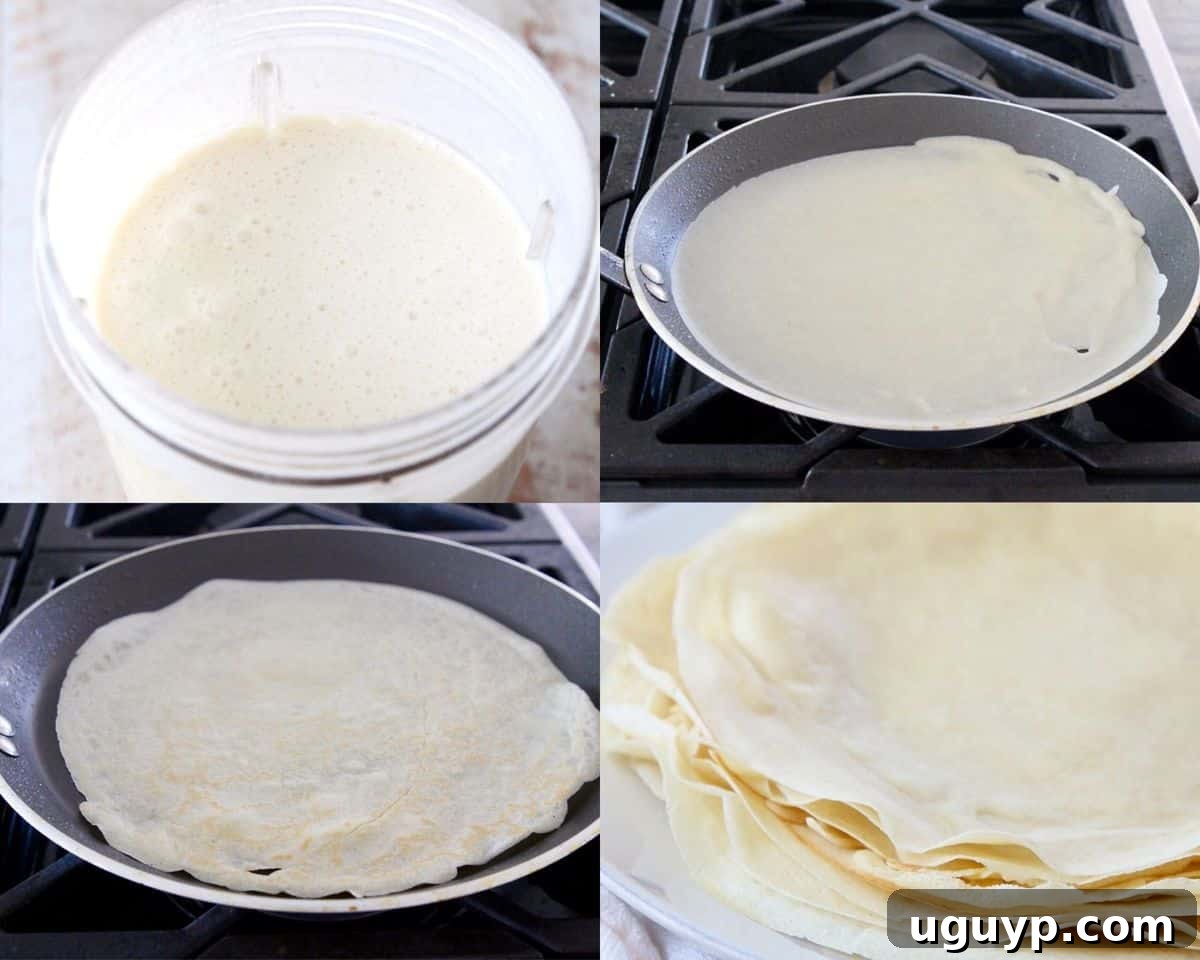
- Prepare the Batter for Optimal Smoothness: Begin by adding all of your liquid and dry ingredients into a high-speed blender. This includes the all-purpose flour, granulated sugar, 2% milk, large eggs, vanilla extract, and melted unsalted butter. Secure the lid tightly.
- Achieve a Lump-Free Consistency: Pulse the blender for approximately 10-15 seconds. The goal here is to thoroughly combine all the ingredients until the batter is completely smooth, with absolutely no lumps visible. Blending ensures a silky-smooth batter, which is critical for making delicate, thin crepes.
- Refrigerate the Batter for Best Results: Once blended, transfer the crepe batter to a bowl or a pitcher, cover it, and place it in the refrigerator for at least one hour. This resting period is crucial; it allows the flour to fully hydrate and any air bubbles created during blending to subside. A rested batter yields more pliable crepes that are less prone to tearing during cooking. If time allows, you can even refrigerate it overnight for an even better texture.
- Preheat Your Pan Properly: Place your chosen crepe pan or 10-inch nonstick skillet on the stove over medium-high heat. Allow the pan to heat thoroughly for 2-3 minutes. A properly heated pan is essential for achieving a uniform cook and a beautiful golden color. You can test if it’s hot enough by flicking a few drops of water onto the surface; if they sizzle and evaporate quickly, your pan is ready.
- Apply Nonstick Spray Liberally: Just before adding your first crepe, lightly spray the hot pan with nonstick cooking spray. This acts as an additional layer of nonstick protection, ensuring your crepes don’t stick and can be easily flipped. Remember to repeat this step between each crepe for consistent results.
- Pour and Swirl the Batter: Once the pan is hot and sprayed, pour exactly ¼ cup of the chilled crepe batter into the very center of the skillet. Immediately, and without delay, lift the skillet by its handle. Gently tilt and rotate the skillet in a smooth, circular motion. The aim is to quickly spread the batter thinly and evenly across the entire bottom surface of the pan, forming a perfect circle. Work swiftly, as the batter will start to set quickly on the hot surface.
- Cook the First Side: Allow the crepe to cook for 1 to 2 minutes on the first side. You’ll know it’s ready to flip when the edges begin to crisp slightly and turn golden brown, and the surface of the crepe appears set and slightly dry.
- The Art of Flipping: Carefully slide a thin, flexible spatula underneath the edges of the cooked crepe to loosen it from the pan. Once loosened, gently but confidently slide the spatula completely under the crepe and swiftly flip it over to the uncooked side. This might take a little practice, but don’t be discouraged if your first few aren’t perfect – they’re often called “test crepes” and are delicious nonetheless!
- Finish Cooking and Remove: Cook the second side for an additional 30-60 seconds. This side cooks faster as the pan is already very hot. The crepe should be lightly golden brown and feel firm yet pliable.
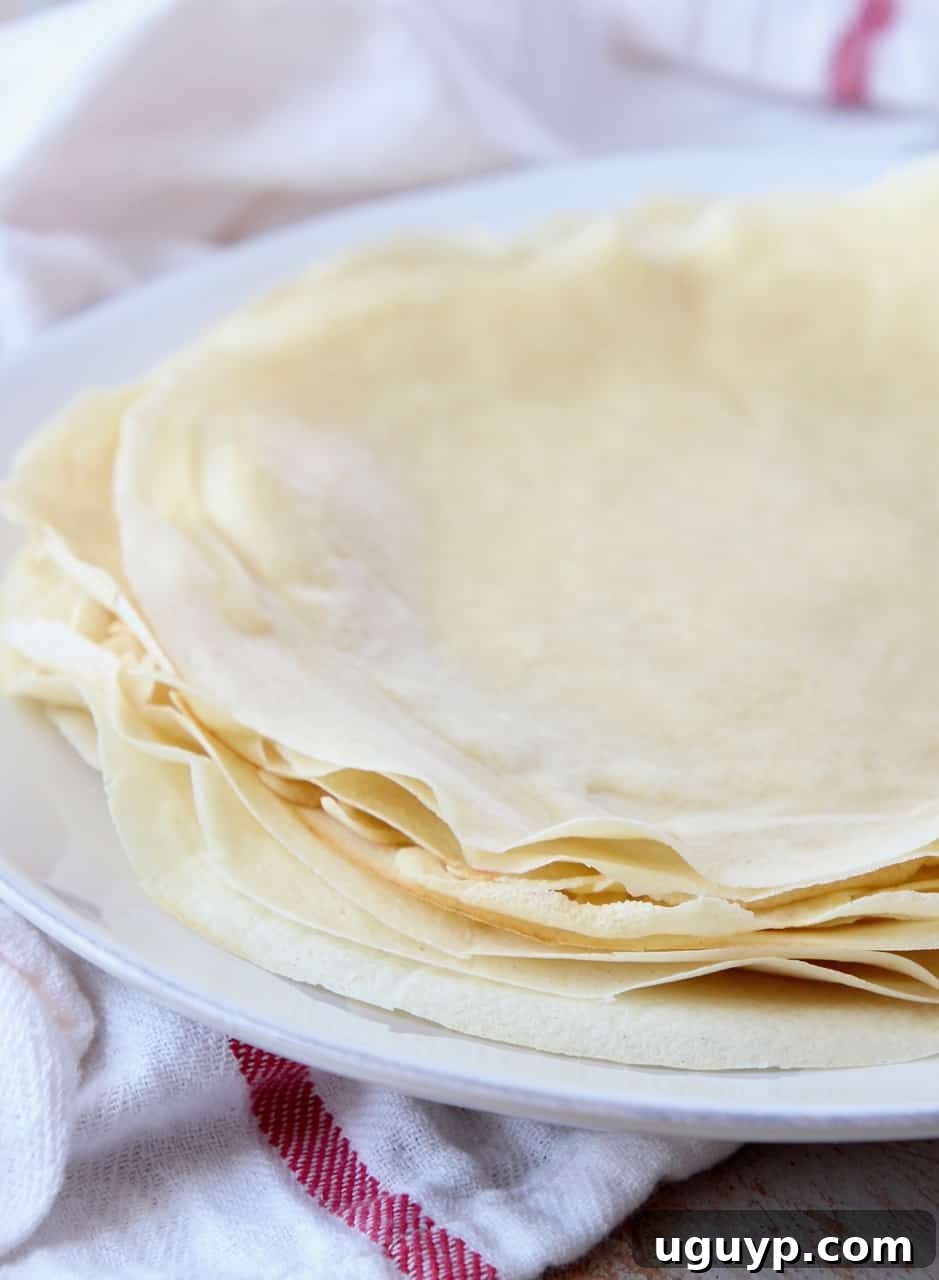
- Stack and Keep Warm: Once cooked, carefully remove the crepe from the skillet and place it on a clean plate. To keep your freshly cooked crepes warm while you continue making the rest, stack them on top of each other and cover the plate with a clean kitchen towel. This helps retain their warmth and softness.
- Repeat for Remaining Batter: Continue steps 5 through 10, spraying the pan between each crepe, until you have used up all the batter. This recipe typically yields about 16 perfectly thin and delicious crepes.
With these detailed instructions, you’re well on your way to becoming a crepe master!
Expert tips and tricks for crepe perfection
Achieving consistently perfect crepes involves more than just a recipe; it’s about understanding the nuances of the cooking process. Here are some expert tips and tricks that will elevate your crepe-making skills from good to gourmet:
- Always Blend the Crepe Batter Thoroughly: This is arguably the most crucial step for a smooth, lump-free batter. A blender effectively pulverizes any small lumps of flour, creating a perfectly thin and uniform consistency. Without a smooth batter, your crepes will be uneven and prone to tearing. Don’t skip this for the best texture!
- Prioritize Refrigerating the Batter: As I learned from culinary experts like Alton Brown, resting the batter in the refrigerator for at least an hour is non-negotiable. This chill time allows the gluten in the flour to relax and fully hydrate, and any air bubbles to dissipate. The result? A more pliable, elastic batter that spreads thinner, cooks more evenly, and is significantly less likely to tear when you flip it. Think of it as giving your batter a much-needed rest for optimal performance.
- Ensure Consistent Nonstick Spray Application: To guarantee that each crepe releases cleanly and flips effortlessly, remember to lightly spray your pan with nonstick cooking spray *between every single crepe*. Even if your pan is nonstick, this extra step provides a fresh, slick surface, preventing any potential sticking and ensuring consistent results throughout the batch.
- Measure Batter Precisely with a ¼-Cup Scoop: Using a ¼-cup measuring cup to scoop out the batter is the golden rule for uniformity. I’ve found this to be the ideal amount for creating one perfectly thin, 10-inch crepe. Consistent measurement ensures all your crepes are roughly the same size and thickness, cooking evenly and looking professionally made.
- Maintain Warmth by Stacking and Covering Cooked Crepes: The process of making crepes is a delightful but often sequential one – you cook them one by one. To ensure that your previously cooked crepes remain warm, soft, and ready to enjoy, stack them immediately on a plate as you remove them from the pan. Then, cover the stack with a clean kitchen towel. This traps the steam and heat, keeping them pliable and delicious until you’re ready to serve.
- Master Pan Temperature Control: Crepes cook best over medium-high heat. Too low, and they’ll be pale and dry; too high, and they’ll burn before cooking through. Adjust your stove’s heat as needed. The first crepe is often a “test crepe” to gauge your pan’s temperature. Don’t worry if it’s not perfect!
- The Gentle Swirl: When pouring the batter, the goal is to create the thinnest possible layer. Practice lifting and tilting your pan quickly and smoothly immediately after pouring the batter. This rapid swirl is key to achieving that classic delicate, almost translucent crepe.
- Don’t Overfill the Pan: Resist the urge to add too much batter. A thin layer is the hallmark of a good crepe. If your crepes are too thick, they become more like pancakes. Stick to the ¼ cup measurement.
- Flipping Confidence: The flip can be intimidating, but a confident, swift movement is usually best. Make sure the edges are golden and slightly crisp, and the surface is dry before attempting to flip. A thin, wide spatula is your best tool.
- Serving Immediately: While crepes can be stored, they are truly at their best when served fresh and warm, straight from the pan. Have your fillings ready to go!
By incorporating these essential tips into your crepe-making routine, you’ll be producing beautiful, delicious crepes with confidence and ease.
Frequently asked questions about crepes
Here are answers to some of the most common questions about making, storing, and customizing your homemade crepes:
- How long will the batter stay good in the refrigerator?
One of the fantastic benefits of this crepe batter is its excellent shelf life. You can prepare the batter up to 3 days in advance and store it covered in the refrigerator. This makes it perfect for meal prep or for enjoying fresh crepes throughout the week. For instance, my household often makes a full batch and uses half on the first day, then enjoys the remaining 8 crepes fresh a day or two later. Just give the batter a quick whisk or stir before using it again, as some settling may occur.
- Can leftover crepes be frozen?
Absolutely! Crepes freeze beautifully, allowing you to enjoy homemade treats whenever a craving strikes. To freeze them, stack the cooled crepes with a sheet of parchment paper placed between each one. This prevents them from sticking together, making it easy to grab just one or two at a time. Once stacked, transfer the entire stack to a freezer-safe bag or airtight container. They will remain fresh in the freezer for up to 2 months. To defrost, simply place the frozen stack in the refrigerator for about 24 hours.
- How can I reheat crepes?
Reheating crepes is straightforward. I recommend placing individual crepes in a dry skillet (no oil needed) over medium heat on the stove. Heat each side for approximately 60 seconds, or until warmed through and pliable. You can also gently reheat them in a microwave for 15-30 seconds, though the skillet method yields a slightly crisper, fresher texture.
- Should I omit the sugar and vanilla in the batter if I’m making savory crepes?
The amount of sugar and vanilla extract in this recipe is quite minimal and is designed to enhance the overall flavor without making the batter overtly sweet. You absolutely do not need to remove them, even if you plan on making savory crepes. I consistently use this single batter recipe for both sweet and savory applications, and the subtle sweetness never clashes with savory fillings. However, if you prefer a completely neutral base, you are welcome to omit them.
- What is the difference between a crepe and a pancake?
While both are griddle-cooked batter, crepes are significantly thinner and more delicate than pancakes. Crepe batter typically contains more eggs and less leavening (or none at all), resulting in their characteristic flat, pliable texture. Pancakes, on the other hand, rely on leavening agents like baking powder to be thick and fluffy.
- Can I make the batter gluten-free or dairy-free?
Yes, with some adjustments! For a gluten-free option, substitute the all-purpose flour with a 1:1 gluten-free baking flour blend (ensure it contains xanthan gum for elasticity). For a dairy-free version, simply replace the 2% milk with an unsweetened plant-based milk like almond milk or oat milk, and use a plant-based butter substitute. Be aware that the texture might be slightly different, but still delicious.
- How do I troubleshoot sticky crepes?
Sticky crepes are usually a sign of insufficient nonstick spray, a pan that isn’t hot enough, or a pan that isn’t truly nonstick. Ensure you’re spraying the pan between each crepe, allow the pan to reach medium-high heat before adding batter, and consider if your nonstick coating is worn out. Resting the batter also helps prevent sticking by improving its consistency.
Unforgettable Crepe Filling Ideas: Sweet and Savory
The true magic of crepes lies in their incredible versatility. While my initial experience with homemade crepes was limited to simple cinnamon and sugar, my culinary adventures in France ignited a passion for exploring an endless array of fillings. From delightful breakfast treats to elegant desserts, or even satisfying lunch and dinner options, crepes are a blank canvas for your culinary imagination. Here are 15 irresistible crepe filling ideas, spanning both sweet and savory palettes, that are sure to impress at any meal:
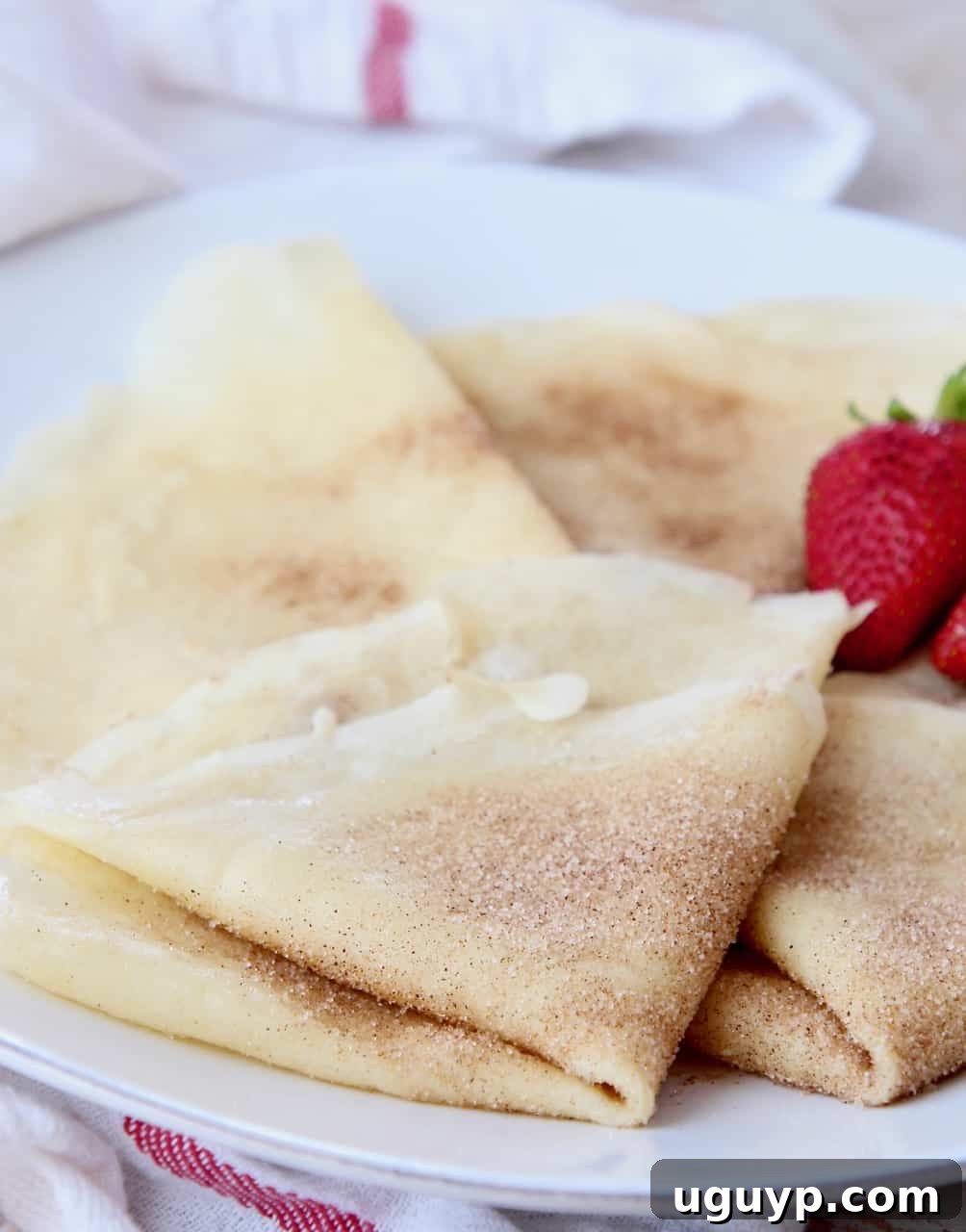
- Cinnamon Sugar: A timeless classic that’s incredibly simple yet deeply satisfying. Combine 1 tablespoon of granulated sugar with 1 teaspoon of ground cinnamon in a small bowl. Immediately after removing each hot crepe from the pan, spread a thin layer of softened butter over its surface, then generously sprinkle with the fragrant cinnamon sugar mixture. Roll or fold and enjoy!
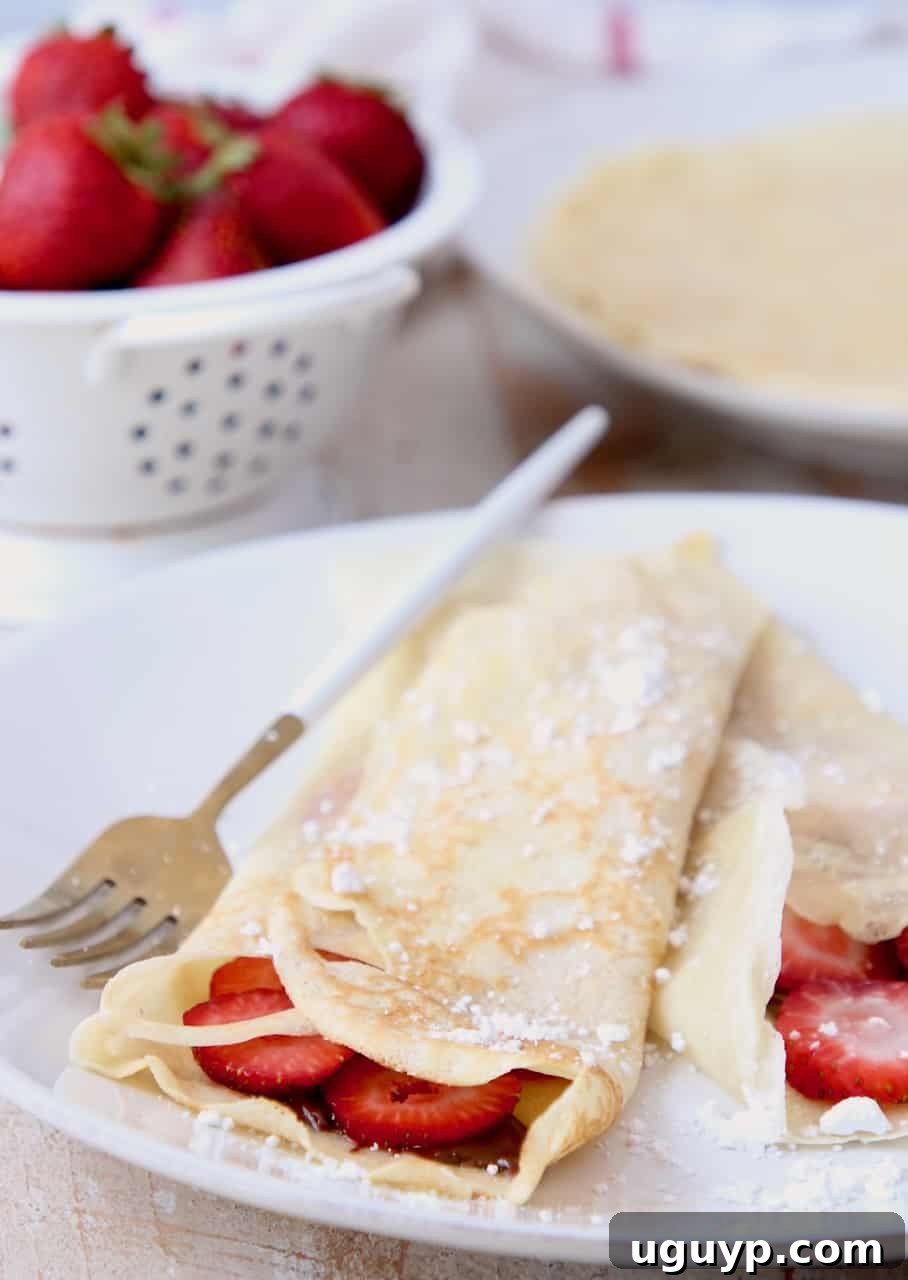
- Nutella Strawberry: My personal favorite and a universally loved combination. Spread 2-3 tablespoons of rich, creamy Nutella in the middle of a warm crepe, then top with 1-2 freshly sliced strawberries. For an extra touch of elegance and sweetness, add a light dusting of powdered sugar.
- Ham & Swiss: A savory staple that transports you straight to a French bistro. While the crepe is still gently heating in the pan, arrange 2-3 slices of deli ham in the center, then top with 2 thin slices of Swiss cheese. Allow the cheese to melt slightly and become gooey over the ham before carefully removing it from the pan.
- Berries & Cream: A light, refreshing, and naturally sweet option. Dollop 2-3 tablespoons of fluffy whipped cream in the middle of your crepe, then adorn with your favorite fresh berries, such as juicy strawberries, plump blueberries, or tangy raspberries. For an even more decadent experience, use homemade blueberry pie filling or luscious strawberry pie filling.
- Goat Cheese, Honey, Apple & Walnuts: An elegant and sophisticated blend of flavors and textures. Spread 2-3 tablespoons of creamy goat cheese in the center, layer with 4-5 thin slices of crisp apple, sprinkle with 1 tablespoon of chopped walnuts, and finish with a generous drizzle of golden honey.
- Tomato Mozzarella (Caprese Style): A fresh, Italian-inspired savory crepe. With the crepe still in the pan, place 3 slices of ripe tomato in the middle, then top with 3 thin slices of fresh mozzarella cheese. Allow the mozzarella to melt slightly over the warm tomatoes before removing. For a true Caprese experience, add fresh basil leaves before folding.
- Peanut Butter Banana: A comforting, hearty, and protein-packed option. Spread 2-3 tablespoons of your favorite peanut butter (creamy or crunchy!) in the center, then layer with slices from about half a banana. A sprinkle of mini chocolate chips is an optional, but highly recommended, addition!
- Chocolate Strawberry: A classic dessert pairing that’s always a hit. Add 2-3 sliced strawberries to the middle of the crepe, then drizzle generously with 1 tablespoon of chocolate syrup. Elevate it further with a dusting of powdered sugar or a dollop of whipped cream.
- Goat Cheese, Spinach & Sun-Dried Tomato: A delightful savory crepe bursting with Mediterranean flavors. Spread 2-3 tablespoons of tangy goat cheese, then top with 4-5 tender baby spinach leaves and 1 tablespoon of finely chopped sun-dried tomatoes.
- Brie & Jam: A refined sweet and savory fusion. Place 2 ounces of thinly sliced Brie cheese in the middle of the crepe, then top with 1-2 tablespoons of your favorite fruit jam, such as sweet strawberry, earthy fig, or tart blackberry. The warmth of the crepe will gently melt the Brie.
- Smoked Salmon & Cream Cheese: A sophisticated brunch or appetizer crepe. Spread 2-3 tablespoons of plain cream cheese, then layer with 3-4 delicate slices of smoked salmon. For an added gourmet touch, sprinkle with 3-4 baby spinach leaves or a teaspoon of briny capers.
- Monte Cristo: A breakfast-for-dinner delight with a French twist. While the crepe is still in the pan, place 2-3 slices of ham in the middle, topped with 2 thin slices of Gruyere cheese. Once the cheese has melted slightly, remove it, and finish with a tablespoon of sweet raspberry preserves and a light dusting of powdered sugar.
- Lemon Ricotta: A bright and creamy dessert or brunch crepe. Spread 2-3 tablespoons of fresh ricotta cheese, then spoon 1 tablespoon of zesty lemon curd over it. A final dusting of powdered sugar adds a touch of elegance.
- Caramel Apple: A comforting, fall-inspired treat. Arrange half a sliced apple in the middle of the crepe, then generously drizzle with rich caramel sauce. A sprinkle of cinnamon can enhance the apple flavor.
- Peaches & Cream: A wonderfully fresh and sweet option, perfect for summer. Place 1 peeled, thinly sliced peach in the middle, then top with 1 tablespoon of luxurious crème fraîche or classic whipped cream.
Don’t be afraid to mix and match these ideas or invent your own unique combinations! Crepes are all about culinary exploration and personal preference.
More delightful breakfast recipes
While crepes are incredibly versatile and can grace your table for breakfast, brunch, lunch, or even dessert, they hold a special place in our home as a cherished breakfast tradition. If you’ve enjoyed mastering these delicate French pancakes and are eager to explore more delicious ways to start your day, look no further! Here are some more tested and perfected breakfast recipes that are sure to become new favorites:

Print Recipe
Pin Recipe
Crepes
Ingredients
- 1 ½ cups all-purpose flour
- 1 tablespoon granulated sugar
- 2 cups 2% milk
- 2 large eggs
- 1 teaspoon vanilla extract
- 2 tablespoons unsalted butter, melted
- nonstick cooking spray
Instructions
-
Add the flour, sugar, milk, eggs, vanilla extract, and melted butter to a blender.
-
Pulse for 10 seconds, or until all of the ingredients are combined and no lumps remain.
-
Place the crepe batter in the refrigerator for one hour.
-
Heat a 10-inch nonstick skillet or crepe pan over medium-high heat.
-
Spray the skillet with nonstick cooking spray.
-
When the skillet is hot, pour ¼ cup of batter into the middle of the skillet.
-
Immediately lift the skillet by the handle and turn the skillet in a circular motion to thinly spread the batter evenly in the skillet.
-
After 1-2 minutes, place a spatula under the edges of the crepe to loosen it up, then flip.
-
Cook for an additional 30-60 seconds.
-
Remove from the skillet and stack the crepes on a plate.
-
Repeat steps 5-10 above until all of the crepe batter is gone.
Notes
- Spray the pan! Be sure to spray the pan with cooking spray after every crepe.
- Keep them warm! While cooking the crepes, one by one, stack the cooked crepes on a plate and cover with a clean towel to keep them warm while you make the rest of the crepes.
- Refrigerating the batter: The batter will stay good in the refrigerator for up to 3 days, so feel free to make it ahead of time.
- Freezing leftovers: Leftover crepes can be frozen for up to 2 months. Stack the leftover crepes, placing a sheet of parchment paper between each one, so they don’t stick together. Then transfer the stack to a freezer-safe bag. To defrost, place the bag in the refrigerator for 24 hours.
- Reheating crepes: Place each crepe, one by one, in a dry skillet on the stove over medium heat for 60 seconds per side.