Rustic Caramelized Onion Beef Stew
- Ticket
- № 8474
- Served
- Read
- 14 min
Ultimate French Onion Beef Stew: A Deep Dive into Cozy Comfort
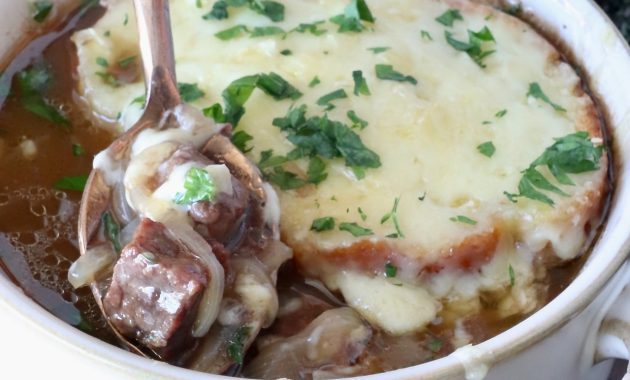
Transform your dinner table with this exquisite French Onion Beef Stew, a culinary masterpiece that marries the soul-warming depth of classic French onion soup with the rich, tender heartiness of traditional beef stew. This recipe isn’t just food; it’s an experience, featuring intensely caramelized onions, succulent, slow-cooked beef, and a deeply savory broth that’s simmered to perfection. Ideal for chilly evenings or a gathering with loved ones, this stew promises an unforgettable, family-friendly meal. Serve it generously topped with a crusty slice of bread and a blanket of melted Gruyere cheese, and prepare for rave reviews!
Unlocking Unrivaled Flavor in Every Spoonful
Have you ever savored the incredible depth of French onion soup at a high-end steakhouse? The secret often lies in their superior beef stock and expertly rendered beef. This French Onion Beef Stew recipe ingeniously captures that steakhouse-quality flavor by cooking the beef directly within the luxurious, onion-infused broth, ensuring every element contributes to a symphony of taste.
After extensive testing and meticulous refinement, I’ve perfected a method that guarantees layers of profound flavor in every single bite of this comforting stew. Here’s a breakdown of the critical steps:
- Mastering the Caramelization of Onions. The foundation of any great French onion dish is perfectly caramelized onions. By dedicating time to slowly cook the onions on their own, we allow their natural sugars to develop into a deep, complex sweetness, transforming their sharp pungency into an extraordinary savory depth. This crucial step is non-negotiable for achieving the signature flavor profile of French onion soup.
- Leveraging a Rich, High-Quality Beef Stock. The liquid base is paramount in a stew, and for this recipe, a robust beef stock makes all the difference. Unlike thinner beef broth, a premium beef stock boasts a richer body, more intense beef flavor, and a gelatinous quality that contributes to a velvety texture in the final stew. This forms the backbone of our savory liquid gold.
- Searing the Beef to Perfection. Before the beef embarks on its slow-cooking journey to fork-tenderness, it undergoes a quick, high-heat sear in a hot pan. This process, known as the Maillard reaction, creates a beautiful brown crust on the exterior of the meat, locking in juices and developing hundreds of new flavor compounds that add incredible savory notes and a delightful complexity to the stew.
These three foundational techniques work in harmony to elevate this French Onion Beef Stew beyond a simple meal, turning it into a truly memorable dining experience that celebrates deep, comforting flavors.
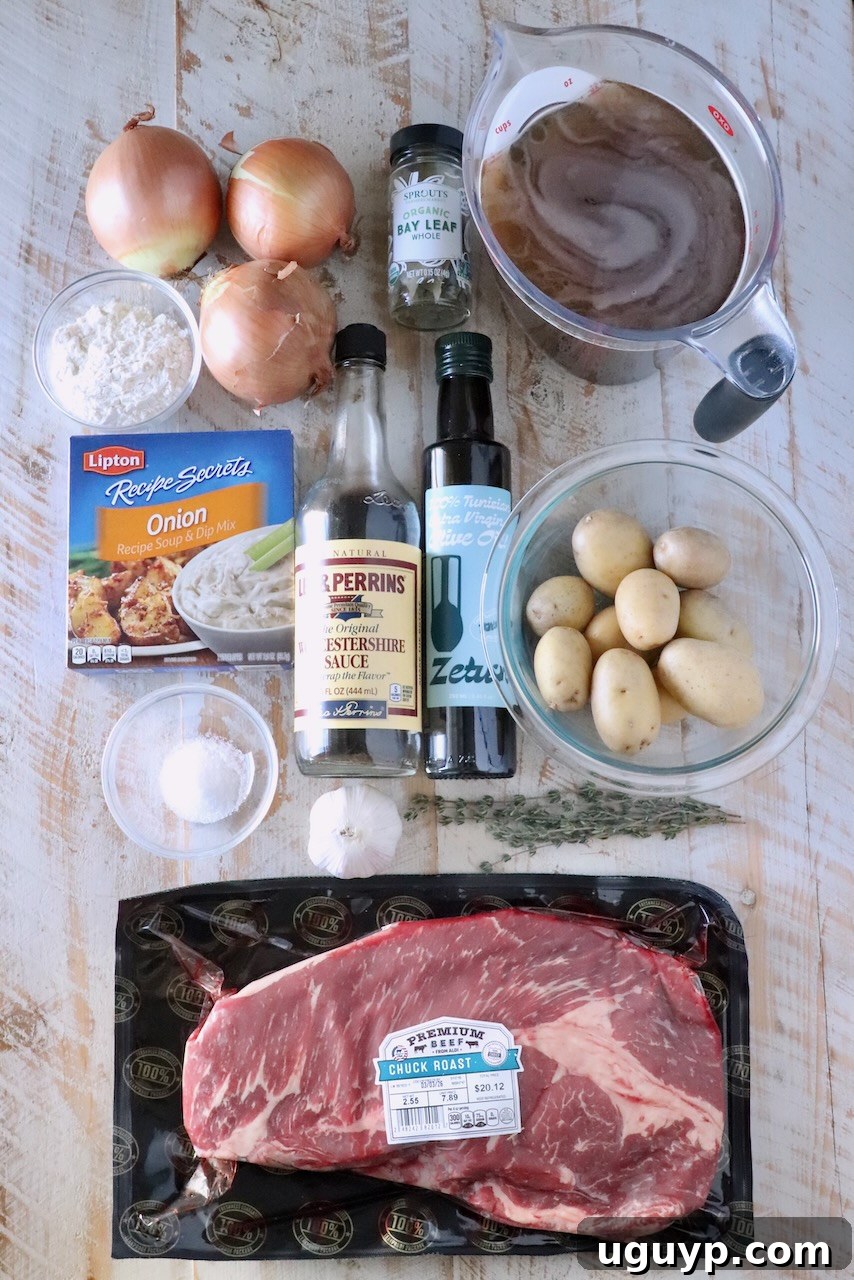
Essential Ingredients and Thoughtful Substitutions
Above, you’ll find a helpful visual representation of all the ingredients, because I believe seeing them laid out makes the cooking process much clearer. Below, I’ll delve into the main components of this French Onion Beef Stew, explaining their importance and offering practical substitution ideas. For the complete list of ingredients with precise measurements, always refer to the recipe card at the bottom of this post.
-
Beef Chuck Roast: This cut is the star of our stew, renowned for its marbling and connective tissue that breaks down beautifully during slow cooking, yielding incredibly tender and flavorful results. When cooked low and slow, chuck roast transforms into melt-in-your-mouth perfection.
- Substitution Ideas: You can also use a flat-cut beef brisket for its similar tenderness, beef stew meat (often pre-cut chuck or round), or a bottom round roast. Keep in mind that leaner cuts like bottom round may require slightly longer cooking to achieve optimal tenderness.
-
French Onion Seasoning Mix: This blend is a flavor powerhouse, infusing the beef with the iconic taste of French onion soup. My homemade French Onion Mix (click for recipe) combines onion powder, garlic powder, salt, and black pepper for a truly authentic taste.
- Substitution Ideas: If you’re short on time, a store-bought pre-made French Onion Soup Mix packet works perfectly. For this recipe, two tablespoons of homemade mix are equivalent to a one-ounce package of store-bought mix. Ensure your chosen mix doesn’t contain undesirable additives.
-
Beef Stock: As the primary liquid base, the quality of your beef stock profoundly impacts the final flavor of the stew. Opt for a high-quality beef stock – preferably homemade or a premium store-bought brand – over beef broth.
- Why Stock over Broth? Beef stock is typically made from roasted bones, vegetables, and aromatics, giving it a richer, deeper flavor profile and often a thicker, more gelatinous texture due to collagen breakdown. Beef broth is usually made from meat and is lighter. The robust nature of stock is essential for this recipe’s deep umami. I personally love the Custom Culinary Beef Base, which I found at a restaurant supply store, for its exceptional richness.
- Enhancement Tip: For an even deeper flavor, consider replacing one cup of beef stock with a dry red wine, such as a Cabernet Sauvignon, adding a layer of complexity typical of classic French stews.
-
Potatoes: Potatoes absorb the wonderful flavors of the stew and add satisfying bulk. Red potatoes or gold potatoes cut into one-inch cubes work beautifully.
- Texture Preference: For a firmer texture in your cooked potatoes, use whole baby potatoes. If you prefer a softer, more integrated potato that slightly melts into the stew, dice larger potatoes into one-inch cubes. Both options are delicious; it’s simply a matter of personal preference for the final consistency.
-
Garlic: Whole peeled garlic cloves cook down with the onions, adding a foundational aromatic sweetness that complements the savory beef.
- Tip: Don’t be shy with the garlic; slow roasting mellows its intensity beautifully.
- Worcestershire Sauce: A small but mighty ingredient, Worcestershire sauce adds a crucial layer of umami and a subtle tang that balances the richness of the beef and caramelized onions, enhancing the overall savory profile.
-
Fresh Thyme and Bay Leaves: These herbs are classic companions to beef stews, imparting earthy, aromatic notes that tie all the flavors together during the long simmer.
- Substitution: Fresh rosemary can be used in place of thyme for a slightly different, but equally delicious, aromatic profile.
Step-by-Step Culinary Journey to French Onion Beef Stew
Creating this French Onion Beef Stew is a rewarding experience, and I’ve included step-by-step photos below to guide you seamlessly through each stage of the recipe. For the complete, detailed recipe instructions, including precise measurements and an optional video guide, please scroll down to the comprehensive recipe card at the very bottom of this post.
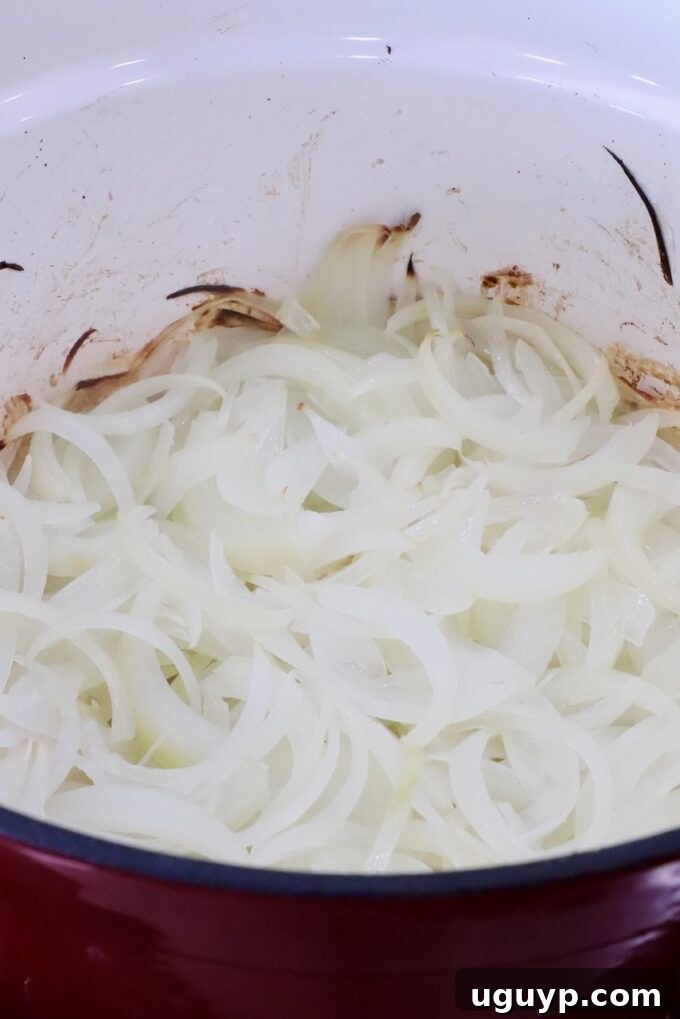
- Caramelize the Onions and Garlic: Begin by thinly slicing your yellow onions and peeling your garlic cloves. Toss them with olive oil and sea salt in an oven-safe Dutch oven. Cover and bake at 400°F (200°C) for approximately one hour. This slow roasting process is key to developing their deep, sweet, and savory essence. Once caramelized, remove them from the Dutch oven and set aside. Reduce the oven temperature to 350°F (175°C).
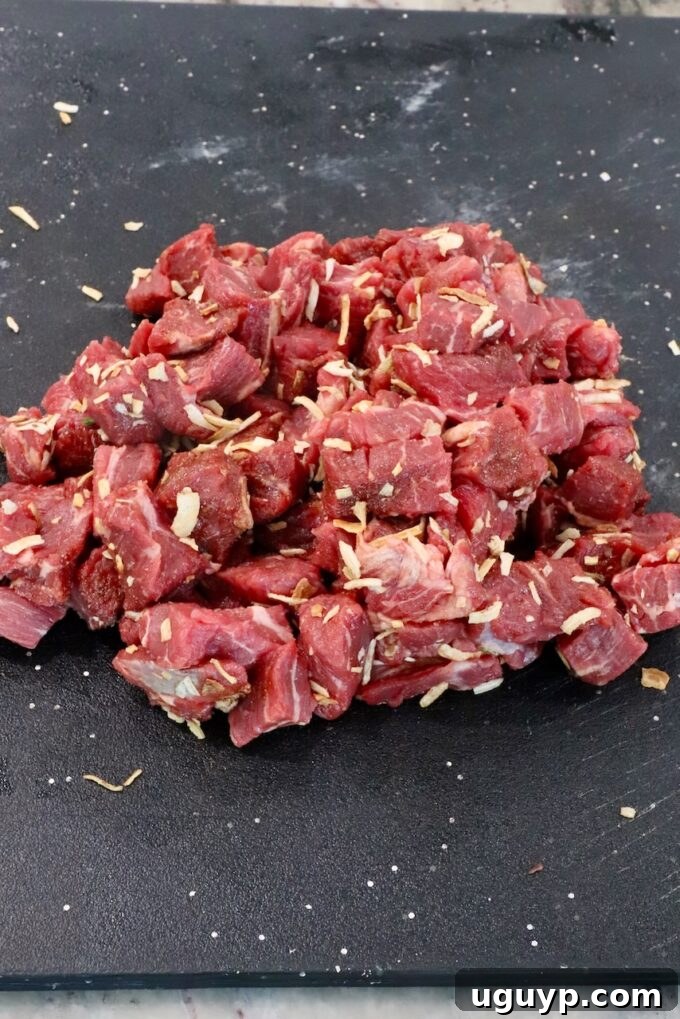
- Season the Beef: While the onions caramelize, cut your beef chuck roast into uniform ½-inch pieces. Generously toss the cubed beef with the French onion seasoning mix, ensuring each piece is well coated for maximum flavor development during searing.
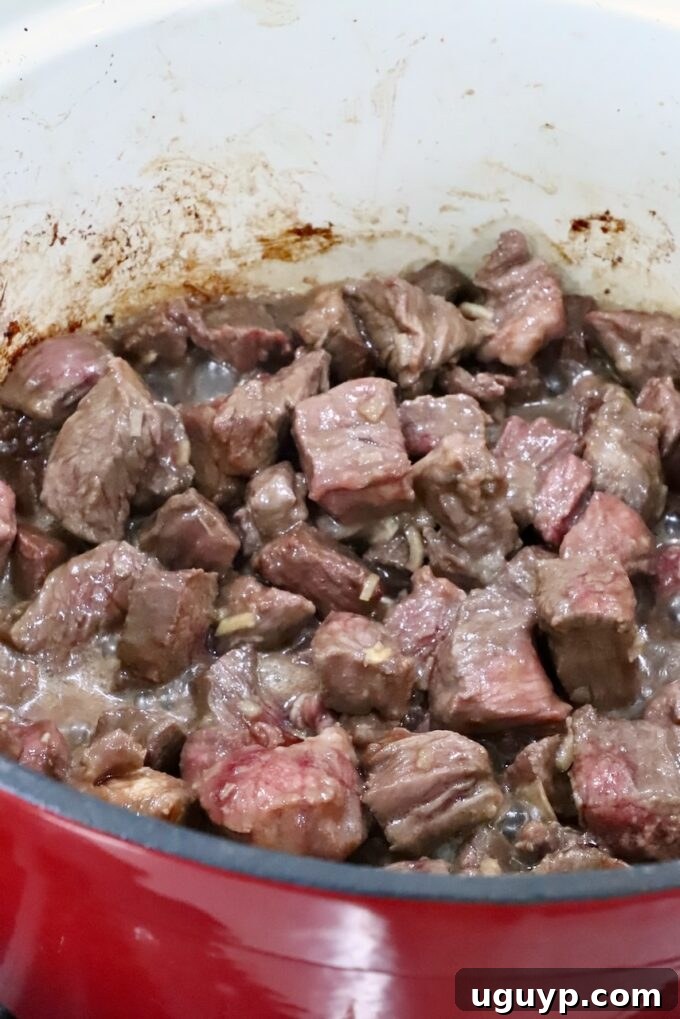

- Sear the Cubed Beef: Place the Dutch oven back on the stovetop over high heat and add the remaining olive oil. Once the oil is shimmering hot, add the seasoned beef in batches if necessary (to avoid overcrowding, which steams rather than sears). Sear for 4-6 minutes, turning until beautifully browned on all sides. This searing step is crucial for flavor development. Use a slotted spoon to transfer the seared beef to the plate with the onions and garlic.
- Build the Roux and Deglaze: Pour a ¼ cup of beef stock into the hot Dutch oven and use a wooden spoon to scrape up all the flavorful browned bits (fond) stuck to the bottom of the pot. This deglazing technique adds immense depth to your stew. Then, sprinkle the all-purpose flour evenly over the liquid and drippings. Stir constantly for about 1 minute to create a roux, which will thicken the stew.
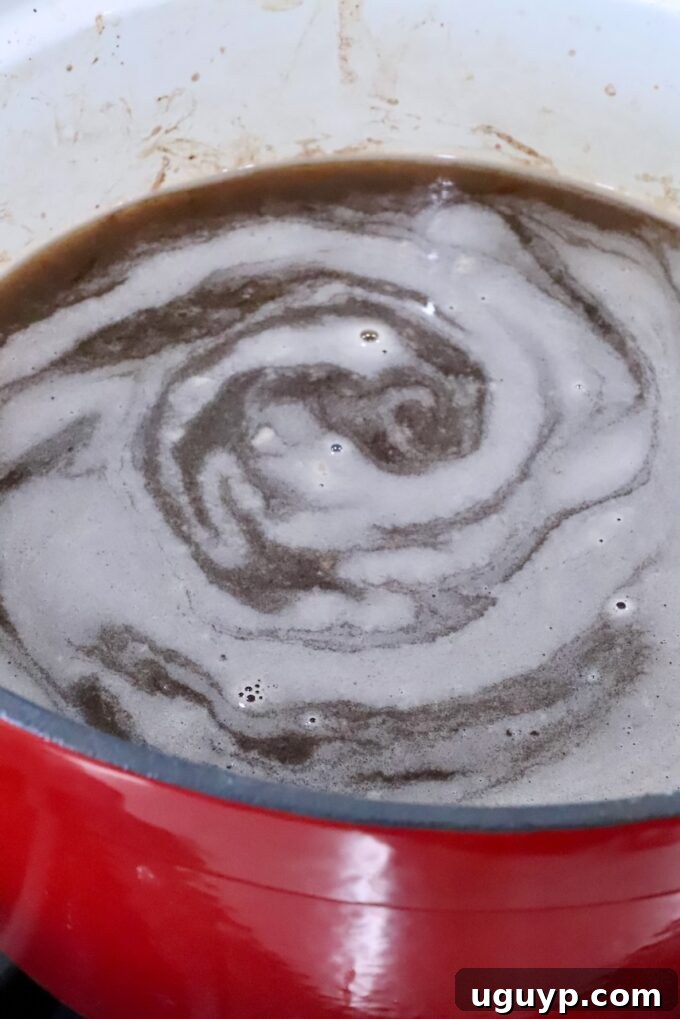
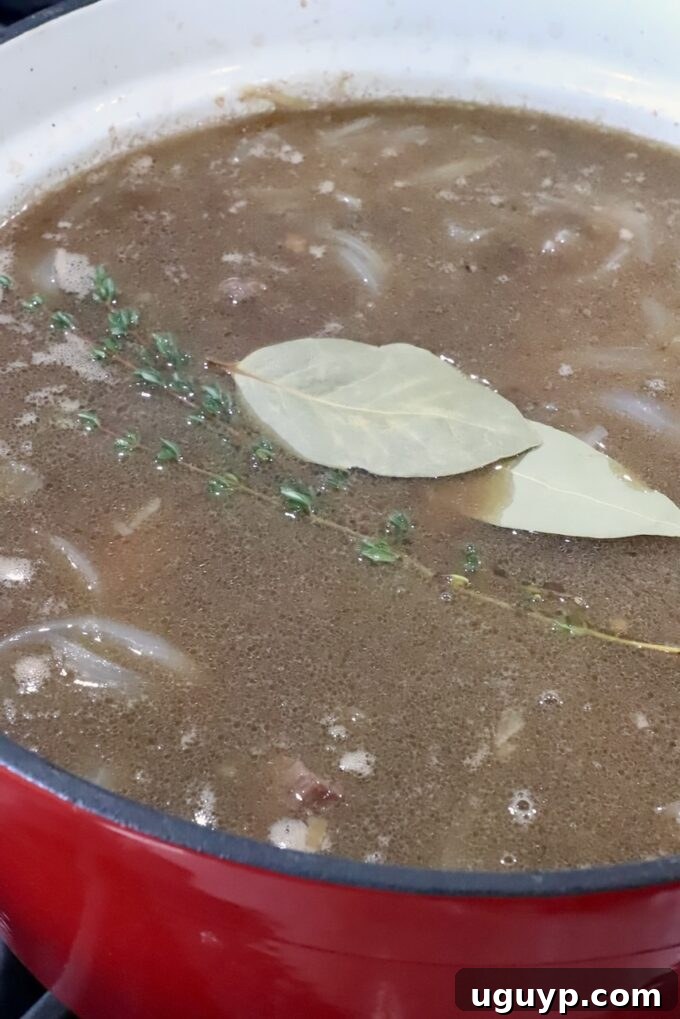
- Simmer the Broth: Pour in the remaining 7 ¾ cups of beef stock and the two tablespoons of Worcestershire sauce. Stir well to combine all ingredients, ensuring the roux is fully incorporated and there are no lumps. Increase the stovetop heat to high and bring the mixture to a rolling boil.
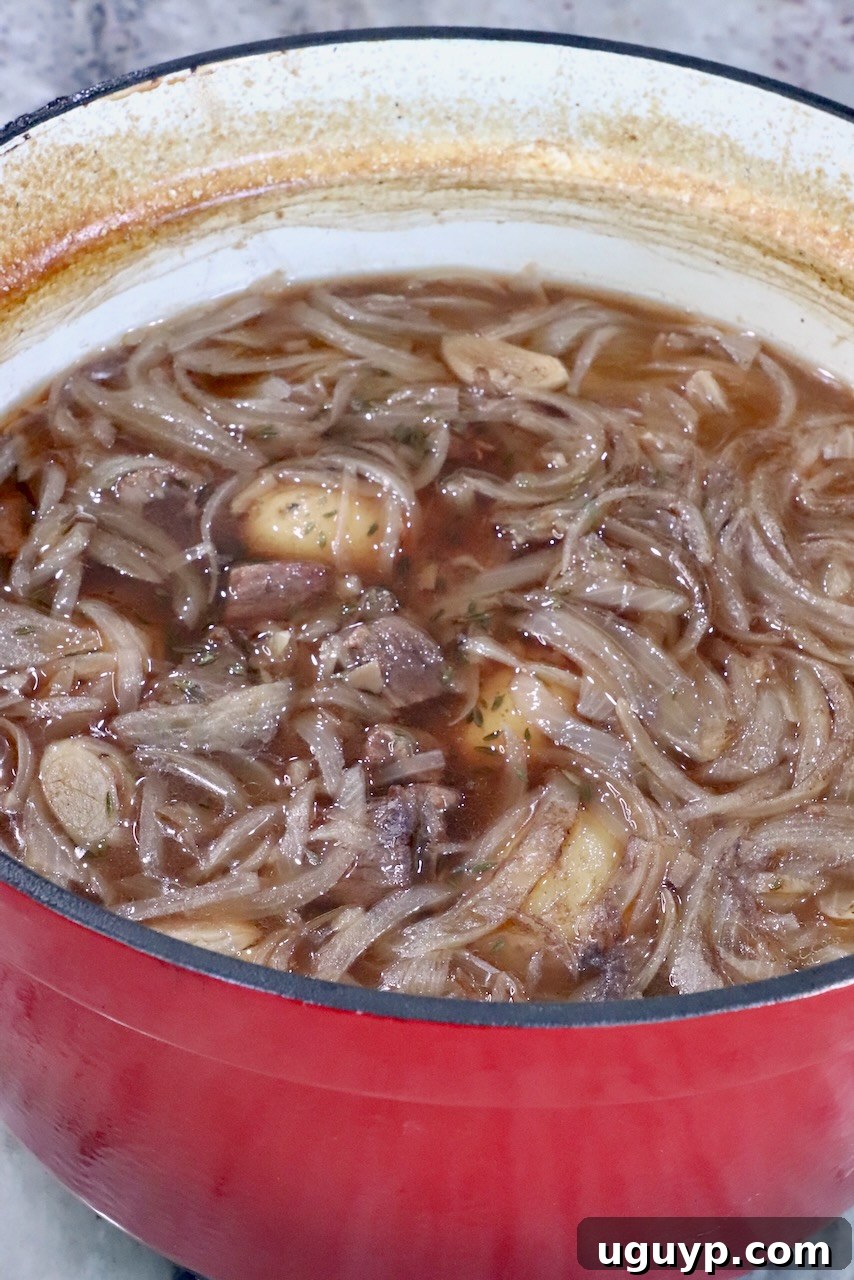
- Slow Cook to Perfection: Return the seared beef, caramelized onions, and garlic to the pot. Add the potatoes (whole baby or cubed), fresh thyme sprigs, and bay leaves. Stir gently to distribute everything. Cover the Dutch oven tightly with its lid (or aluminum foil) and transfer it to your preheated 350°F (175°C) oven. Allow the stew to slow cook for 2 hours, during which the beef will become incredibly tender, and the flavors will meld beautifully. After cooking, remove the pot from the oven, and use tongs to discard the spent bay leaves and thyme sprigs before serving.
The Perfect Presentation: Serving Your French Onion Beef Stew
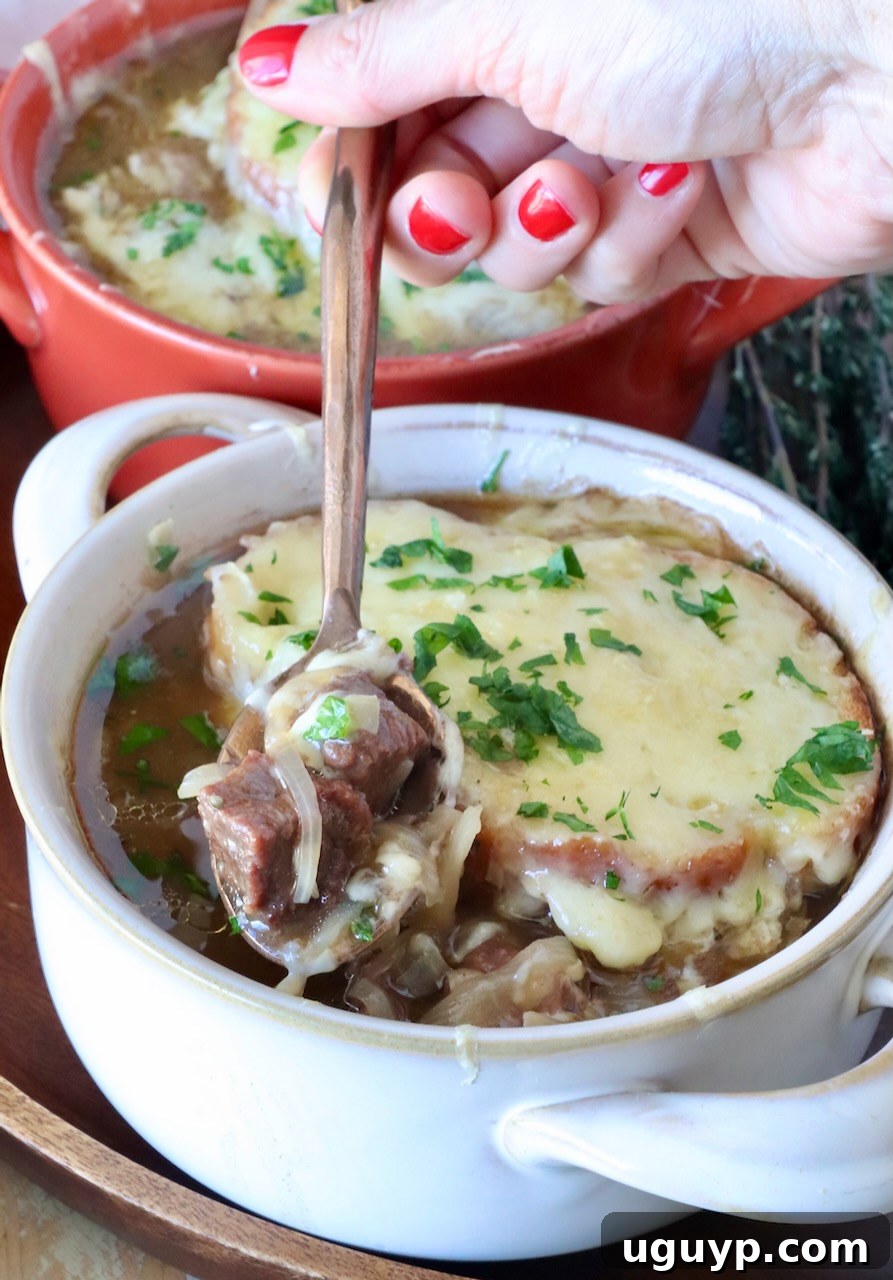
The best way to enjoy this French Onion Beef Stew is to serve it with the quintessential French onion soup flourish. This method not only looks impressive but also adds incredible texture and flavor to each spoonful.
- Prepare for Broiling: Ladle generous portions of the hot stew into individual oven-safe bowls.
- Toast the Bread: While the stew is hot, arrange slices of crusty French bread on a baking sheet. You can brush them lightly with olive oil or melted butter for extra richness. Briefly toast them under the broiler for 1-2 minutes until golden brown. This adds a delightful crunch without being soggy.
- Add Cheese and Broil: Place a toasted bread slice atop each bowl of stew, then generously pile shredded Gruyere cheese (or Swiss cheese for a similar effect) over the bread, ensuring it cascades slightly into the stew. Carefully place the bowls back on the baking sheet and transfer them to the oven under the broiler.
- Watch Carefully: Broilers are incredibly hot, and cheese can burn very quickly! Keep a vigilant eye on the oven for just 1-2 minutes. The moment the cheese is melted, bubbly, and beautifully golden brown, carefully remove the bowls from the oven.
- Serve Immediately: Present your magnificent French Onion Beef Stew piping hot. The melted cheese and crusty bread provide a wonderful contrast to the tender beef and rich broth.
For those who love dipping, always serve extra toasted bread on the side. To truly capture that full steakhouse experience at home, my favorite accompaniment is a crisp blue cheese salad. The tangy dressing and sharp cheese provide a refreshing counterpoint to the hearty stew, creating a perfectly balanced meal.

Print Recipe
Pin Recipe
French Onion Beef Stew
French Onion Beef Stew is a hearty, intensely flavorful twist on classic French onion soup, featuring incredibly tender beef, deeply caramelized onions, and a rich, savory broth. It’s the ultimate cozy comfort food, perfect for an easy yet elegant meal that truly satisfies.
- Servings:
- 6 servings
- Prep Time:
- 30 mins
- Cook Time:
- 3 hrs
- Total Time:
- 3 hrs 30 mins
- Author:
- Whitney Bond
- Course:
- Main Course, Soup
- Cuisine:
- French
Ingredients
- 2 pounds yellow onions, thinly sliced
- 1 head garlic, peeled and cloves removed
- 6 tablespoons olive oil, divided
- 1 teaspoon sea salt
- 2 pounds beef chuck roast, cut into ½ inch pieces
- 2 tablespoons french onion seasoning (click link for recipe)
- ¼ cup all-purpose flour
- 8 cups beef stock
- 2 tablespoons Worcestershire sauce
- 1 pound baby potatoes, or cubed red potatoes
- 2 sprigs fresh thyme, or fresh rosemary
- 2 bay leaves
Optional toppings
- 1 cup shredded gruyere cheese, or Swiss cheese
- ½ loaf french bread, sliced
Equipment
-
6 quart Dutch oven
Instructions
-
Preheat the oven to 400°F (200°C).
-
Thinly slice the yellow onions using a sharp knife or a mandoline for uniform pieces.
-
Add the sliced onions and peeled garlic cloves to an oven-safe cast iron Dutch oven. Pour 4 tablespoons of olive oil over the onions, sprinkle with the sea salt, and toss everything thoroughly to coat.
-
Cover the Dutch oven and bake for 1 hour. Remove from the oven and carefully transfer the caramelized onions and garlic to a rimmed plate or a cutting board with grooves, as they will release liquid. Turn the oven temperature down to 350°F (175°C).
-
Place the Dutch oven on the stove over high heat.
-
Toss the cubed beef with the French onion seasoning until each piece is well coated.
-
Heat the remaining 2 tablespoons of olive oil in the Dutch oven. Once the oil is shimmering hot, add the seasoned chuck roast (working in batches if necessary to avoid overcrowding) and sear the pieces for about 4-6 minutes, or until deeply browned on all sides. Use a slotted spoon to remove the beef from the pot and set it aside with the onions and garlic.
-
Pour ¼ cup of beef stock into the pot and stir vigorously, scraping up any browned bits (fond) from the bottom of the pot. This deglazing step adds incredible flavor.
-
Sprinkle the all-purpose flour evenly over the contents of the pot, stir to combine, and cook for 1 minute, creating a quick roux.
-
Add the remaining 7 ¾ cups of beef stock and 2 tablespoons of Worcestershire sauce to the pot. Stir thoroughly to combine everything, ensuring no lumps of flour remain. Turn the heat on the stove up to high and bring the stock mixture to a boil.
-
Return the seared pieces of beef, along with the caramelized onions and garlic, to the pot. Add the baby potatoes (or cubed red potatoes), fresh thyme sprigs, and bay leaves.
-
Cover the pot with its lid (or tightly with a piece of aluminum foil) and transfer it to the preheated 350°F (175°C) oven. Cook for 2 hours, or until the beef is fork-tender and the flavors have fully developed.
-
Carefully remove the stew from the oven. Use tongs to remove and discard the bay leaves and thyme sprigs before serving.
Optional serving method (for that classic French onion soup topping)
-
Adjust your oven rack to the middle position and preheat the oven to broil on high.
-
Slice a half loaf of French bread into thick pieces. Arrange the slices on a baking sheet and lightly spray with cooking spray or brush with melted butter. Place them under the broiler for 1-2 minutes, or until they are lightly toasted and golden. Remove the bread from the oven.
-
Ladle the hot French Onion Beef Stew into individual oven-safe bowls. Top each bowl with a slice of the toasted bread, then generously cover with shredded Gruyere cheese. Place the bowls back on the baking sheet and return them to the oven under the broiler for 1-2 minutes, or until the cheese is beautifully melted, bubbly, and slightly golden. Serve immediately and enjoy!
Notes and Tips for Success
- Make Ahead Option: This French Onion Beef Stew is fantastic when made in advance! After the initial 2-hour cooking period in the oven at 350°F (175°C), you can simply turn your oven to its “warm” setting and leave the covered stew in there for up to 2 hours. Alternatively, transfer the entire stew to a slow cooker set to “warm” for extended holding.
- Stovetop Cooking Alternative: If you prefer to cook this stew entirely on the stovetop, you certainly can. After bringing the stock to a boil (Step 10), reduce the stovetop temperature to medium-low heat, cover the pot, and allow the stew to simmer gently for approximately 2 hours, or until the beef is tender. Stir occasionally to prevent sticking.
- Gluten-Free Adaptation: To make this hearty beef stew gluten-free, substitute the all-purpose flour with 2 tablespoons of cornstarch. Cornstarch is a more potent thickening agent, so a smaller amount is needed. Dissolve the cornstarch in a small amount of cold water or beef stock before adding it to the simmering broth to prevent lumps.
- Wine for Enhanced Flavor: For an additional layer of classic French depth and sophistication, consider replacing one cup of the beef stock with a dry red wine, such as a Cabernet Sauvignon, Merlot, or Pinot Noir. Add the wine during Step 10 with the beef stock and Worcestershire sauce, allowing it to simmer and reduce slightly before adding the remaining ingredients.
- Storing Leftovers: Leftover French Onion Beef Stew can be stored in an airtight container in the refrigerator for up to 5 days. To reheat, transfer the desired portion to a pot on the stove over medium-high heat. Bring it to a gentle simmer, stirring occasionally, for 5-7 minutes until heated through. Individual portions can also be reheated in a microwave-safe bowl, covered, for 2-3 minutes.
- Freezing for Future Enjoyment: This stew freezes wonderfully, making it an excellent meal prep option. Allow the cooked stew to cool completely to room temperature. Then, transfer it to freezer-safe storage containers or heavy-duty freezer bags. It can be frozen for up to 6 months. To defrost, transfer the frozen stew from the freezer to the refrigerator and allow it to thaw for 24 hours. Once thawed, reheat it in a large pot on the stove over medium-high heat for 15-20 minutes, stirring frequently, until thoroughly warmed.
Nutrition Facts
- Calories
- 773 kcal (39%)
- Carbohydrates
- 56 g (19%)
- Protein
- 50 g (100%)
- Fat
- 40 g (62%)
- Saturated Fat
- 14 g (70%)
- Polyunsaturated Fat
- 4 g
- Monounsaturated Fat
- 22 g
- Trans Fat
- 1 g
- Cholesterol
- 129 mg (43%)
- Sodium
- 1587 mg (66%)
- Potassium
- 1771 mg (51%)
- Fiber
- 5 g (20%)
- Sugar
- 11 g (12%)
- Vitamin A
- 291 mg (6%)
- Vitamin C
- 29 mg (35%)
- Calcium
- 365 mg (37%)
- Iron
- 8 mg (44%)
Did you make this recipe?
Tag @WhitneyBond on Instagram and hashtag it #WBRecipes!
Discover More Cozy Comfort Food Recipes
If you’ve fallen in love with the comforting warmth of this French Onion Beef Stew, then you’re in for a treat! We have a curated collection of other classic comfort food recipes that are perfect for your next family dinner. Explore these favorites and fill your home with delicious aromas and satisfied smiles.