Slow-Simmered Beef Stew
- Ticket
- № 8404
- Served
- Read
- 17 min
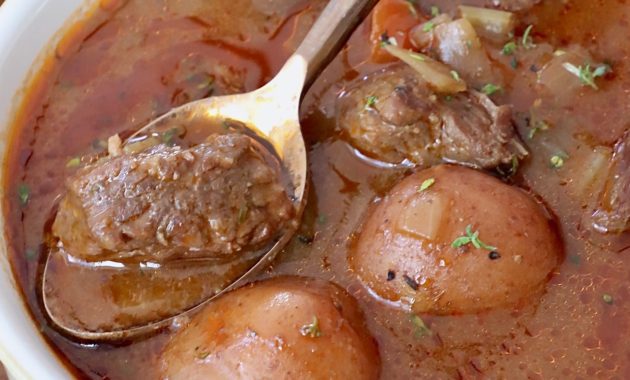
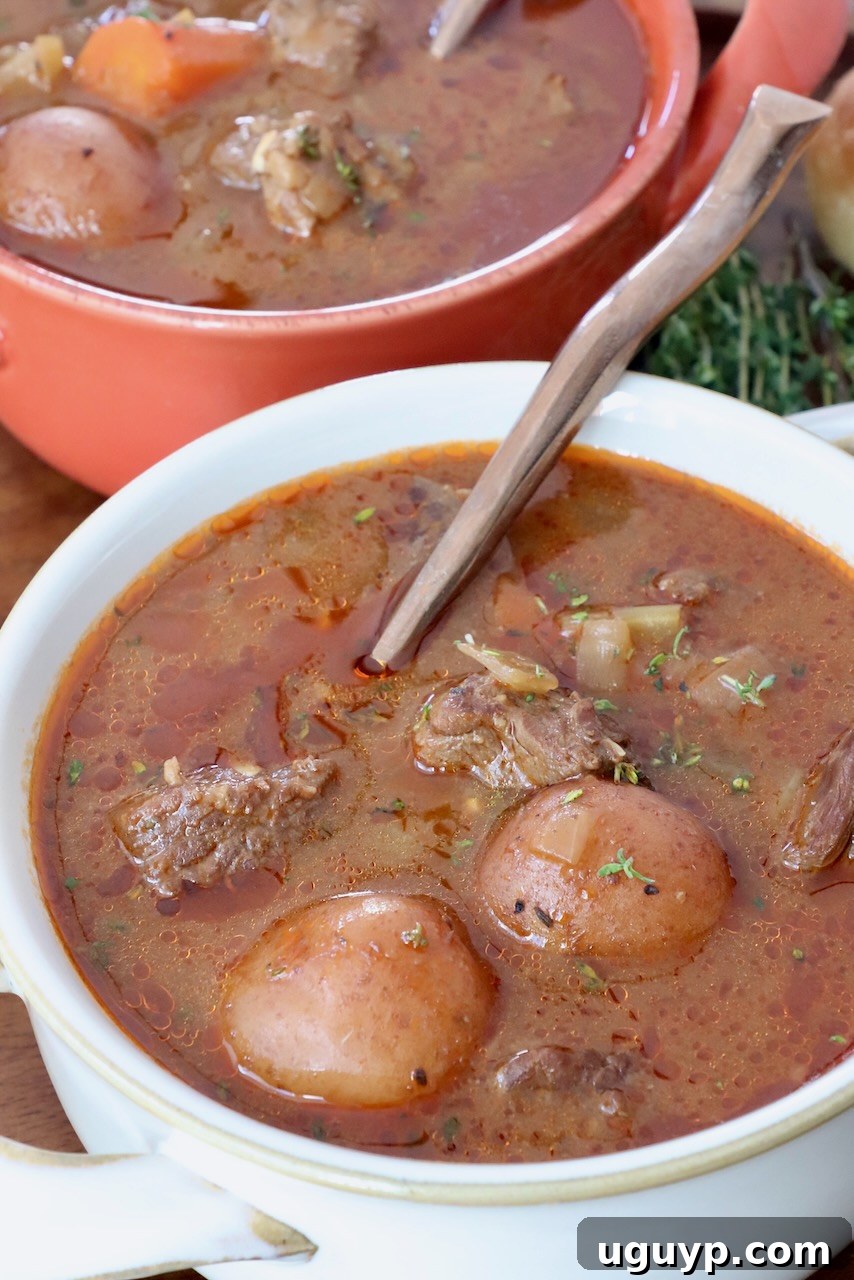
Indulge in the ultimate comfort food with this exquisite, homemade Beef Stew recipe. Boasting incredibly rich flavors and melt-in-your-mouth tender beef, this classic dish is surprisingly simple to prepare. Whether you prefer the steady braise of your oven or the convenience of a slow cooker, this recipe requires just 20 minutes of active prep time before transforming into a truly delicious meal.
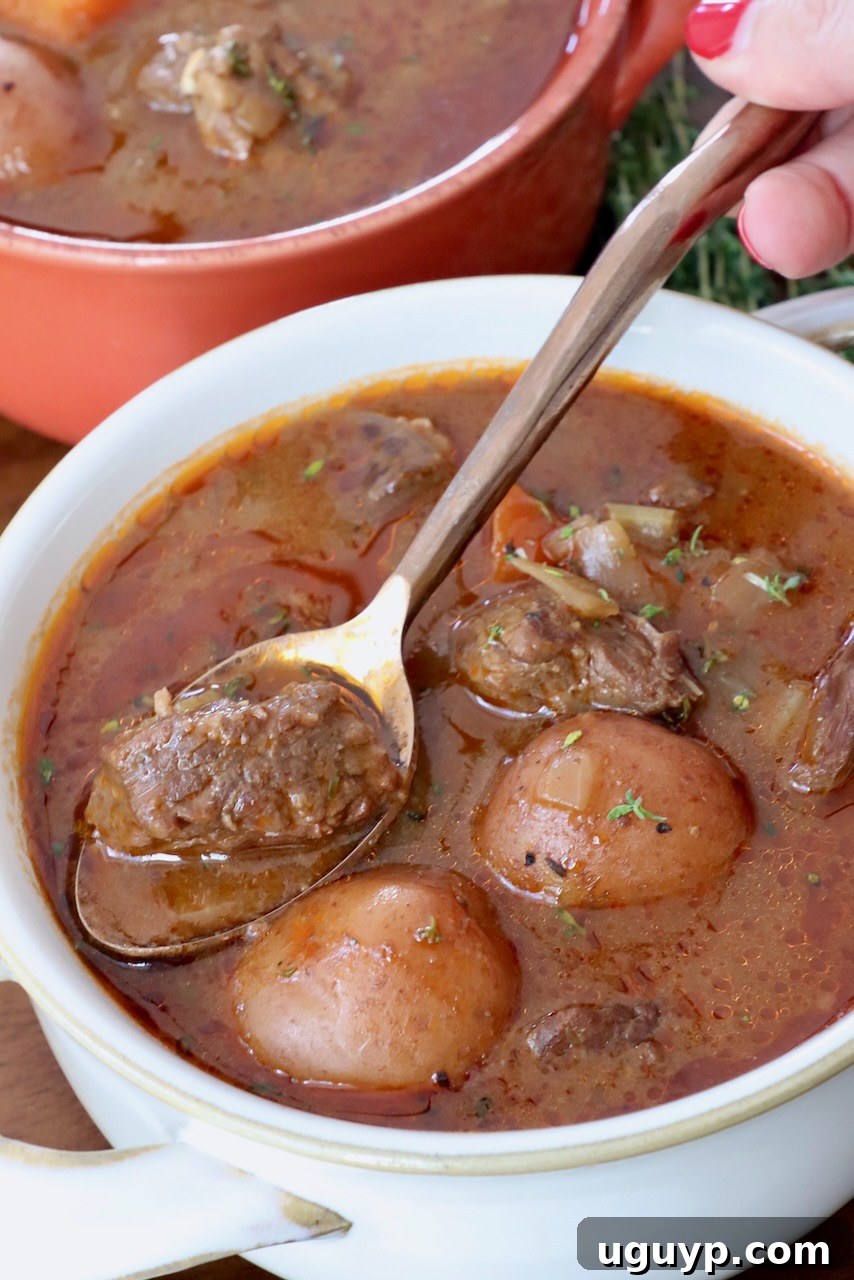
Table of Contents
- The Essence of Beef Stew
- Key Ingredients for an Unforgettable Stew
- Step-by-Step Guide to Perfection
- Slow Cooker Magic
- Substitutions and Variations to Customize Your Stew
- Expert Recipe Notes and Tips
- Storing and Reheating Your Beef Stew
- More Comfort Food Recipes
The Essence of Beef Stew: A Hearty Embrace
There’s something uniquely comforting about a rich and hearty beef stew. It’s a culinary hug in a bowl, brimming with fork-tender vegetables and succulent, melt-in-your-mouth beef, all enveloped in a deeply savory broth. This particular recipe captures the very essence of traditional homemade stew, delivering a super delicious dinner that truly warms you from the inside out.
Ideal for crisp fall evenings or chilly winter days, this beef stew is designed for both ease and exceptional flavor. With a mere 20 minutes of active preparation, you can let it simmer gently in the oven for a couple of hours or entrust it to your slow cooker for an all-day, hands-off experience. The minimal effort belies the complex, satisfying taste you’ll achieve.
One of my favorite tips for this recipe is to make a double batch. Enjoy half for dinner tonight, and freeze the other half for a future meal. It’s like magic – you’ve made two meals in one go, setting yourself up for an effortlessly delicious “heat-and-eat” dinner down the road. This foresight ensures you always have a wholesome, comforting meal at your fingertips.
To truly complete this ultimate comfort food experience, I wholeheartedly recommend serving your beef stew with a crusty baguette or homemade pull-apart rolls. These are perfect for soaking up every last drop of the flavorful broth, adding a delightful textural contrast and making each spoonful even more satisfying.
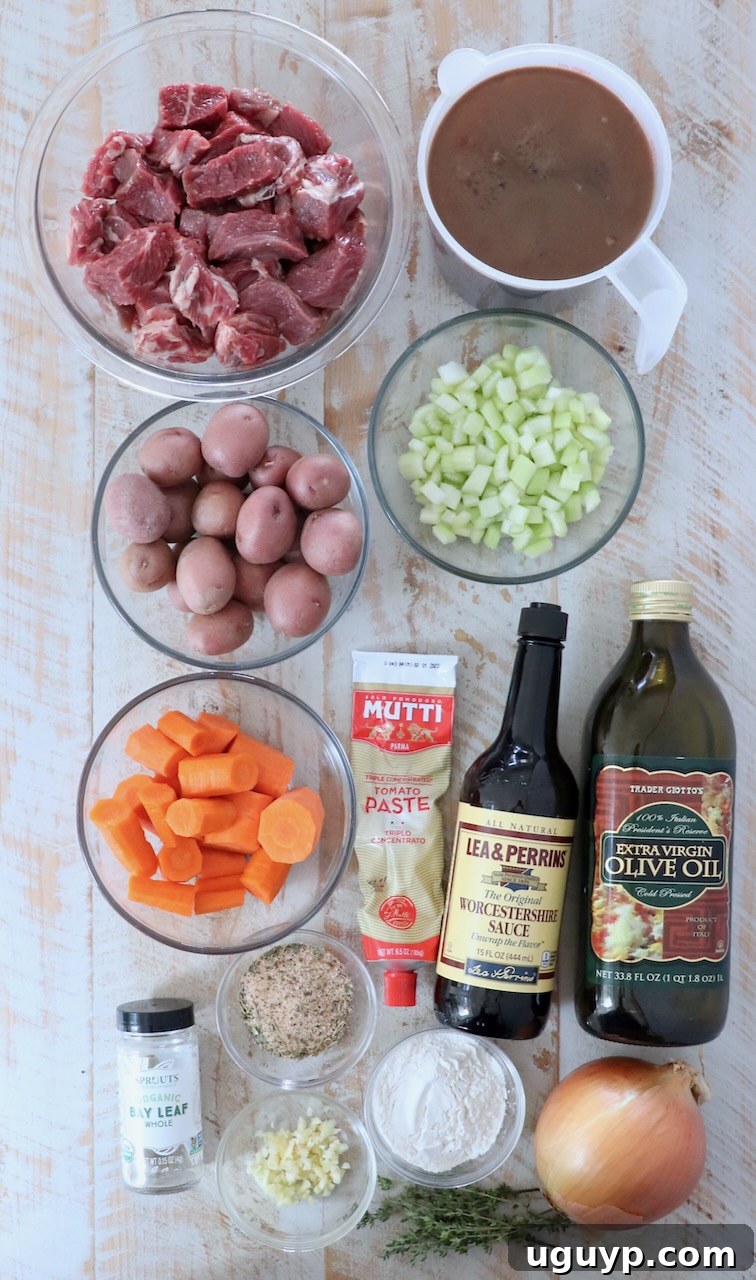
Key Ingredients for an Unforgettable Stew
Crafting a memorable beef stew starts with selecting the right ingredients. Each component in this recipe plays a crucial role in building layers of flavor and achieving that coveted tender texture.
- Beef Chuck Roast: This cut is the star of any great beef stew. Its rich, beefy flavor and generous marbling make it ideal for braising. The connective tissue in chuck roast breaks down beautifully during slow cooking, resulting in incredibly tender pieces of beef that practically melt in your mouth. When preparing, aim for 1-inch cubes for even cooking and optimal texture. If chuck roast isn’t available, a flat cut beef brisket, pre-cut beef stew meat, or a bottom round roast can also be used effectively, offering similar results with their robust profiles.
- Beef Stew Seasoning: This homemade seasoning blend is my secret weapon for an unbelievably flavorful beef stew. It’s a meticulously crafted mix of nine essential herbs and spices, including common pantry staples like garlic powder, onion powder, salt, black pepper, dried rosemary, and dried oregano. This aromatic blend infuses the beef with depth and warmth. It’s quick to prepare in about 5 minutes and can be stored in your pantry for up to six months, making it perfect for meal planning ahead of time.
- Olive Oil: A high-quality olive oil, or another neutral-flavored cooking oil like canola or vegetable oil, is essential for searing the beef chuck roast and sautéing the vegetables, laying the groundwork for flavor.
- Onions: You’ll need about one cup of diced yellow onions, roughly equivalent to half of a large onion. Onions form the aromatic base of the stew, adding a foundational sweetness and savory depth as they caramelize.
- Celery: Approximately half a pound of celery, diced to yield one cup, contributes a subtle herbaceous note and essential texture to the stew, complementing the onions and garlic.
- Garlic: Freshly minced garlic cloves are highly recommended for the most potent and authentic flavor. Garlic provides a pungent warmth that is indispensable in a robust stew.
- All-Purpose Flour: This is used to lightly coat the beef and later to create a roux-like base that thickens the broth, giving the stew its comforting, luscious consistency.
- Beef Broth: As the main liquid component, the quality of your beef broth or stock significantly impacts the final flavor. Beef stock, with its richer, deeper profile, is preferred over broth for a more profound taste. If you’re looking for an exceptional base, specialty culinary bases like Custom Culinary Beef Base (often found at restaurant supply stores) offer remarkable depth. For an added layer of complexity and savory notes, consider replacing one cup of the beef broth with stout beer or a robust red wine like Cabernet Sauvignon.
- Tomato Paste: Cooked down to a concentrated paste, tomato paste delivers a wonderful sweet, acidic, and umami flavor. It deepens the stew’s color and provides a crucial savory backbone.
- Worcestershire Sauce: This amazing condiment is a flavor powerhouse, contributing a unique blend of sweet, salty, and tangy notes, along with a significant boost of umami. If Worcestershire sauce is unavailable, soy sauce can be used as a suitable substitute, offering a similar savory depth.
- Potatoes: The choice of potatoes influences texture. You can use larger potatoes like Russet or Yukon Gold, cut into 1-inch cubes, or opt for whole baby potatoes. Diced larger potatoes tend to yield a softer texture and may partially break down, contributing to the stew’s thickness. Whole baby potatoes, while cooking through, maintain a firmer bite. My personal preference leans towards whole baby potatoes for their consistent texture, but either option works wonderfully based on your desired outcome.
- Carrots: About half a pound of peeled whole carrots, cut into 1-inch pieces, will yield one cup. Cutting them into substantial pieces ensures they remain tender-crisp and don’t become overly soft during the long cooking process.
- Fresh Thyme: Fresh thyme sprigs infuse the stew with an earthy, aromatic fragrance. Fresh rosemary sprigs can also be used for a slightly different, equally delightful herbal note.
- Bay Leaves: Adding a couple of bay leaves introduces a subtle, slightly floral and earthy background note that enhances the overall flavor profile of the stew without overpowering it. Remember to remove them before serving.
Step-by-Step Guide to Perfection
Achieving a perfectly rich and tender beef stew is straightforward with these detailed steps. The process involves building flavor in layers, ensuring every bite is deeply satisfying. Refer to the full recipe card at the bottom of this post for precise ingredient quantities.
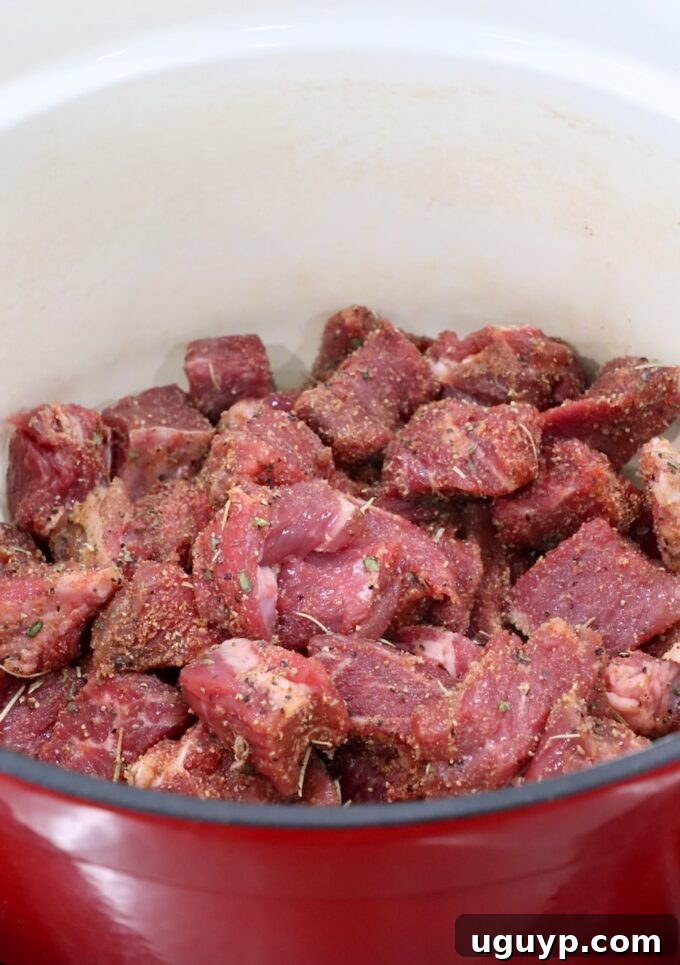
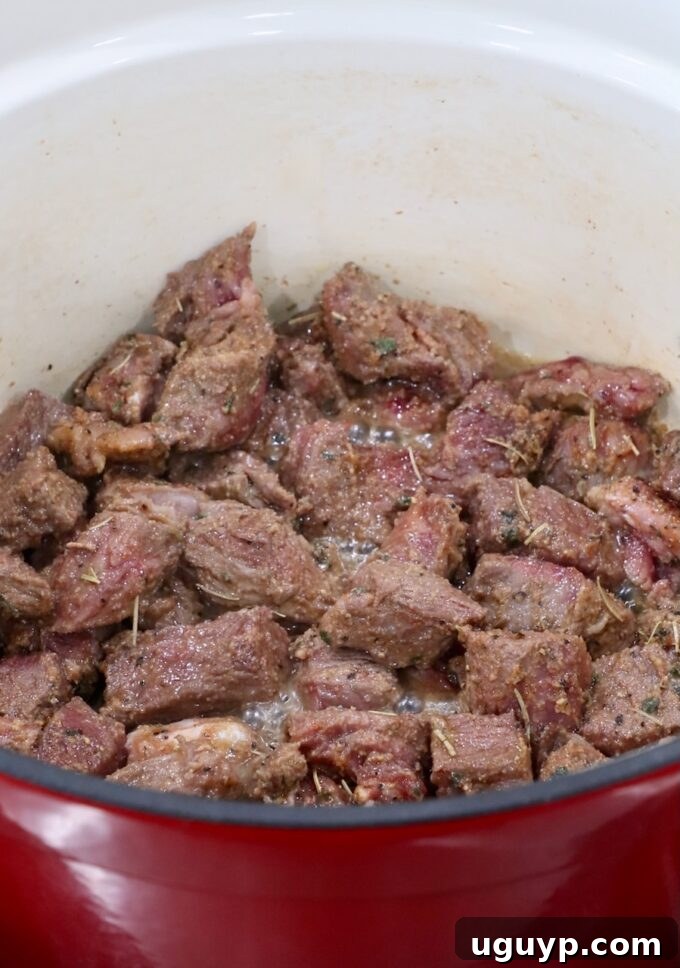
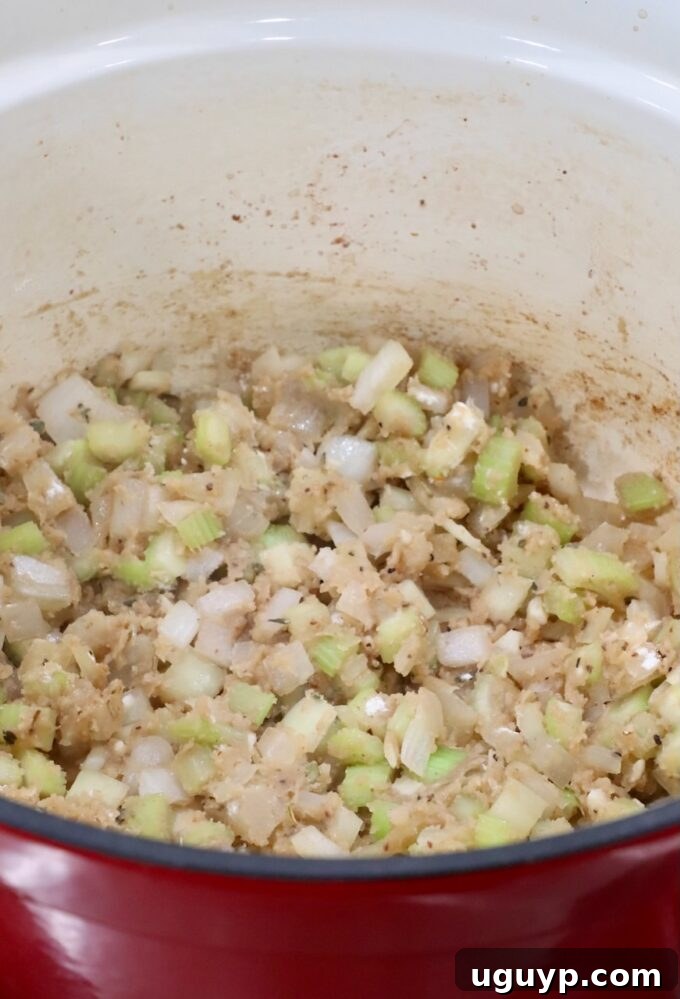
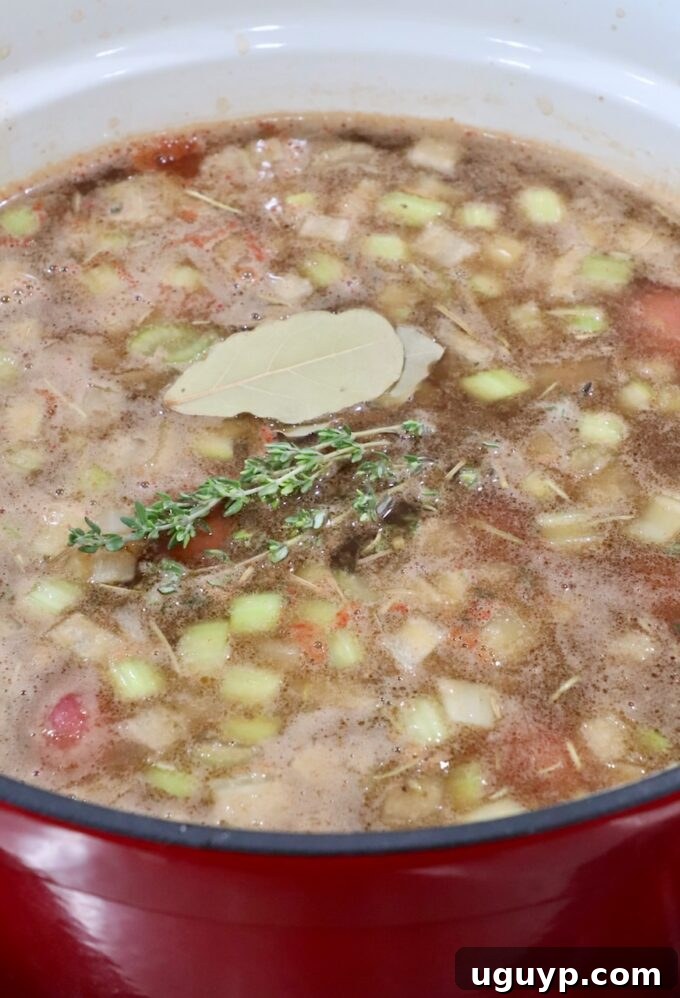
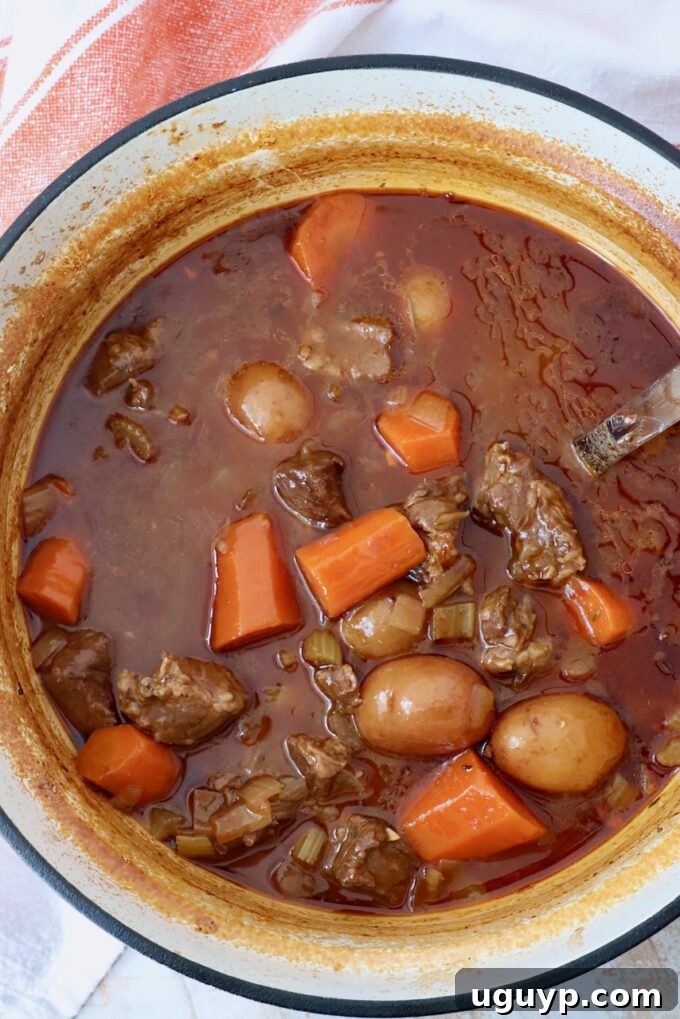
- Prepare and Brown the Beef: Begin by dicing your beef chuck roast into uniform 1-inch cubes. This ensures even cooking. Toss the beef pieces generously with the beef stew seasoning, coating them thoroughly. Heat two tablespoons of olive oil in a large oven-safe pot or a sturdy Dutch oven (I prefer a 7-quart capacity for this recipe) over medium-high heat on the stove. Once the oil is shimmering and hot, add the seasoned beef in batches, making sure not to overcrowd the pot. Sear each batch for about 4-6 minutes, turning until beautifully browned on all sides. This crucial step, known as the Maillard reaction, develops deep, complex flavors. Use a slotted spoon to remove the browned beef from the pot and set it aside.
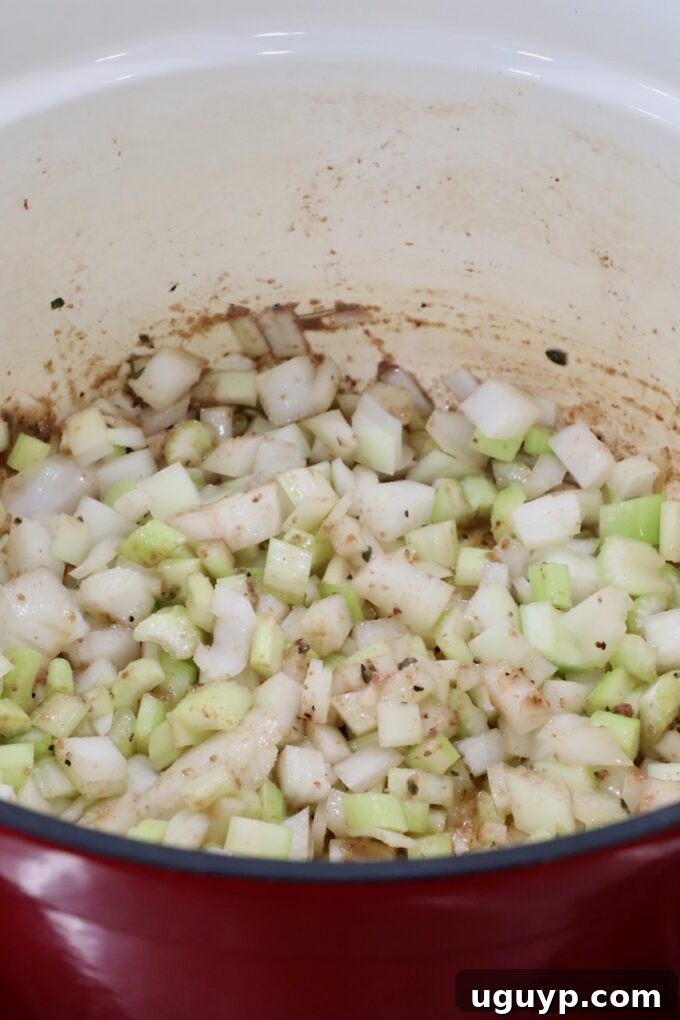
- Build the Aromatic Base: Add the remaining olive oil to the same pot. Introduce the diced onions and celery, cooking them for approximately 5 minutes until they begin to soften. Stir in the minced garlic and cook for an additional minute until fragrant. Pour in ¼ cup of beef broth to deglaze the pot, scraping up any delicious browned bits (fond) from the bottom of the pan. This fond holds immense flavor and will enrich your stew. Sprinkle the all-purpose flour evenly over the vegetables and stir continuously for 1 minute, allowing the flour to cook out its raw taste and slightly brown, forming a flavorful base.
- Simmer and Season: Gradually pour in the remaining beef broth. Add the tomato paste and Worcestershire sauce, stirring until all ingredients are well combined and the paste dissolves into the liquid. Increase the heat to high and bring the broth mixture to a rolling boil.
- Combine and Braise: Return the seared beef pieces to the pot. Add the potatoes, carrots, fresh thyme sprigs, and bay leaves. Stir gently to distribute everything. Cover the pot securely with a lid, or if your pot lacks a tight-fitting lid, wrap it tightly with a piece of aluminum foil. Transfer the covered pot to a preheated 350°F (175°C) oven for a slow braise of 2 hours. This low and slow cooking process tenderizes the beef and allows the flavors to meld beautifully. After 2 hours, carefully remove the beef stew from the oven and lift the lid. Use a slotted spoon or tongs to remove and discard the bay leaves and thyme sprigs before serving.
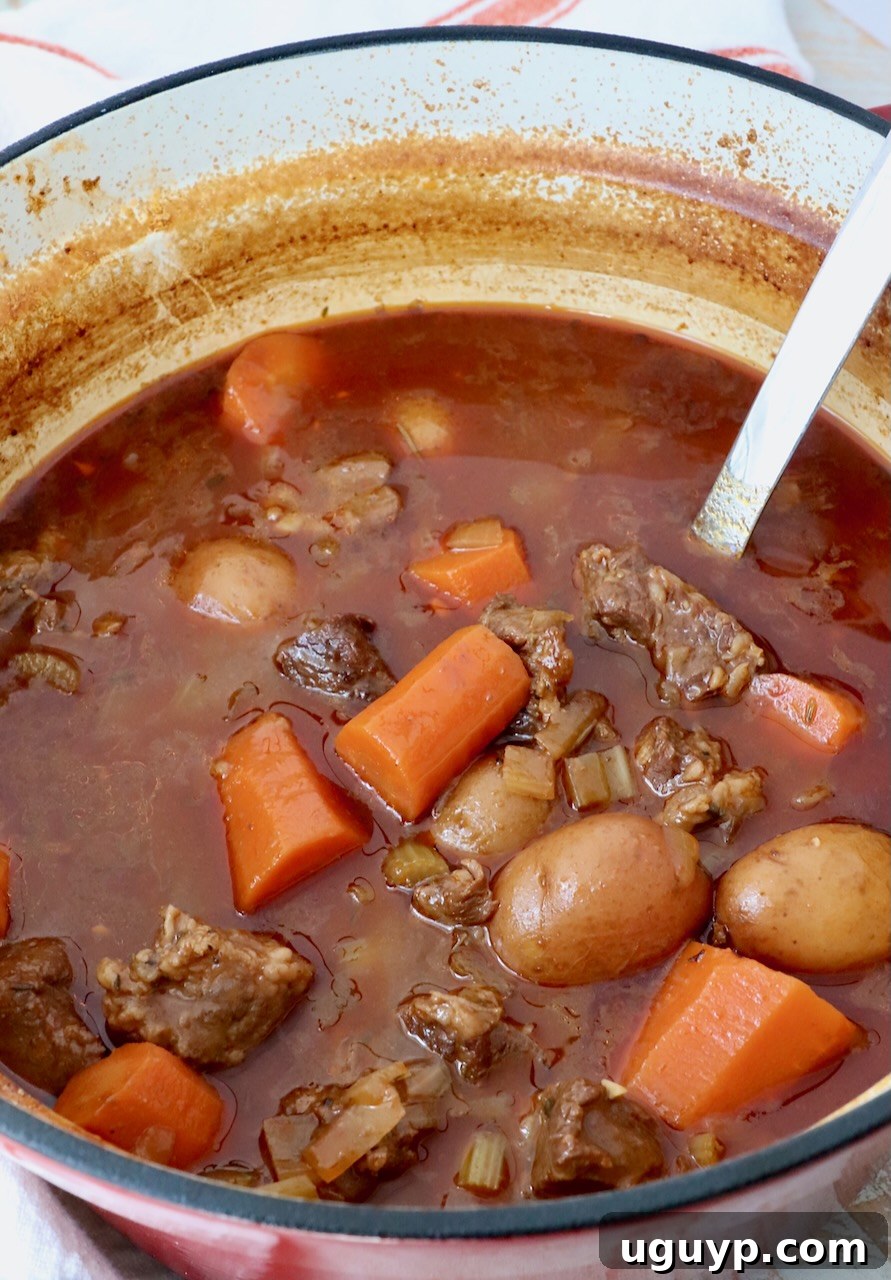
Slow Cooker Magic: Set It and Forget It Beef Stew
For those days when you need a delicious meal with minimal oversight, a slow cooker is your best friend. This recipe adapts beautifully to the “set it and forget it” method, yielding equally tender beef and rich flavors. Here’s how to make this comforting beef stew in your slow cooker:
- Sear the Beef: Begin by dicing a 2-pound beef chuck roast into 1-inch cubes. Toss the beef generously with 2 tablespoons of beef stew seasoning. In a large pot or Dutch oven on your stove, heat 2 tablespoons of olive oil over medium-high heat. Once hot, add the seasoned beef in batches and cook until well browned on all sides, about 4-6 minutes per batch. This searing step is crucial for developing deep flavor. Using a slotted spoon, transfer the browned beef to your Crock-Pot slow cooker.
- Sauté Aromatics and Thicken: Add an additional tablespoon of olive oil to the pot on the stove. Sauté 1 cup of diced onions and 1 cup of diced celery for 5 minutes until softened. Stir in 3 cloves of minced garlic and cook for another minute until fragrant. Pour in ¼ cup of beef stock to deglaze the pan, scraping up any flavorful browned bits. Sprinkle ¼ cup of all-purpose flour evenly over the vegetables, stir to combine, and cook for 1 minute. Then, add 5 ¾ cups of beef broth, 2 tablespoons of tomato paste, and 1 tablespoon of Worcestershire sauce to the pot. Stir well to combine all ingredients, then transfer this flavorful mixture from the pot to the slow cooker with the beef.
- Slow Cook to Perfection: Add the potatoes, carrots, fresh thyme sprigs, and bay leaves to the slow cooker. Give everything a gentle stir to ensure even distribution. Cover the slow cooker with its lid and cook on high heat for 4-6 hours, or on low heat for 8-10 hours. The extended cooking time ensures the beef becomes incredibly tender and the flavors fully meld. Before serving, remember to remove and discard the bay leaves and thyme sprigs.
Substitutions and Variations to Customize Your Stew
This traditional beef stew recipe is wonderfully versatile, allowing for creative substitutions and variations to suit your palate or what you have on hand. Don’t hesitate to experiment and make it your own!
- Liquid Enhancements: To introduce an additional layer of complex flavor, consider replacing one cup of the beef broth with either a robust stout beer or a dry red wine, such as a Cabernet Sauvignon, Merlot, or Pinot Noir. The beer adds a malty richness, while red wine contributes tannic depth and fruit notes, both deepening the savory profile of the stew.
- Vegetable Additions: Beyond the classic potatoes and carrots, numerous other vegetables can be incorporated to enhance texture and nutrition. Delicious additions include whole button mushrooms or baby bella mushrooms, which add an earthy umami flavor. Cubed sweet potatoes offer a touch of sweetness and vibrant color, while parsnips contribute a unique, slightly spicy and sweet, earthy flavor. You might also consider adding frozen peas or corn during the last 30 minutes of cooking for a fresh pop of color and sweetness, or turnips for a hearty, slightly bitter counterpoint.
- Alternative Beef Cuts: While chuck roast is highly recommended for its tenderness and flavor when braised, you can certainly use other cuts of beef. A flat cut beef brisket works well, breaking down into tender shreds. Beef stew meat, often a mix of various cuts pre-cubed, is a convenient option. A bottom round roast, while leaner, will also become tender with slow cooking.
- Herb & Spice Twists: Beyond thyme and bay leaves, a sprig of fresh rosemary adds a piney aroma. For a hint of warmth and smokiness, a pinch of smoked paprika can be stirred in with the flour. A touch of red pepper flakes can introduce a subtle heat, if desired. Fresh parsley, chopped and stirred in just before serving, adds a bright, fresh finish.
Expert Recipe Notes and Tips for the Perfect Stew
Achieving the perfect beef stew involves a few key considerations and techniques. These notes will help you ensure your stew turns out incredibly flavorful and tender every time.
- The Right Pot Matters: A cast iron Dutch oven is highly recommended for this recipe. Its exceptional heat retention and even heat distribution are crucial for the long, slow cooking process, preventing hot spots and ensuring uniformly tender beef. Furthermore, its substantial size typically accommodates the entire recipe without overcrowding. If a cast iron Dutch oven isn’t available, use any other heavy, oven-safe pot that is at least 12 inches wide with sides around 6 inches tall, ensuring enough capacity for all ingredients.
- Lid Security: A tight-fitting lid is essential to trap moisture and facilitate the braising process. If your pot does not have a lid, or if it doesn’t seal tightly, simply cover the pot securely with heavy-duty aluminum foil before placing it in the oven. This creates a steamy environment that tenderizes the beef.
- Make Ahead Advantage: This beef stew is an excellent candidate for making ahead of time. After the initial 2 hours of cooking at 350°F (175°C), you can simply turn your oven to a “warm” setting (or the lowest possible temperature) and leave the covered stew in the oven for up to 2 hours. In fact, many believe that beef stew tastes even better the next day, as the flavors have more time to meld and deepen.
- Stovetop Cooking Option: If you prefer not to use the oven, or simply don’t have access to one, you can cook the beef stew entirely on the stovetop. After the initial browning and sautéing steps, cover the pot, set your stovetop burner to medium-low heat, and allow the stew to simmer gently for approximately 2 hours. Ensure the heat is low enough to maintain a gentle simmer rather than a rapid boil, which can toughen the meat. Stir occasionally to prevent sticking.
- Gluten-Free Adaptation: To make this recipe suitable for a gluten-free diet, substitute the all-purpose flour with cornstarch for thickening the broth. Cornstarch is a more potent thickening agent than flour, so you will only need about 2 tablespoons. To use, dissolve the cornstarch in a small amount of cold water or broth before adding it to the simmering stew to prevent lumps. Always double-check the labels of all other ingredients, especially beef broth and Worcestershire sauce, to ensure they are certified gluten-free, as formulations can vary by brand.
- Adjusting Consistency: If your stew is too thin after cooking, you can thicken it further by making a cornstarch slurry (1 tablespoon cornstarch mixed with 1 tablespoon cold water) and stirring it into the simmering stew. If it’s too thick, simply add a splash more beef broth or water until it reaches your desired consistency.
Storing and Reheating Your Beef Stew
Proper storage and reheating are key to enjoying your delicious beef stew for days to come, or even months later. Beef stew is one of those dishes that often tastes even better after a day or two, as the flavors continue to develop.
Storing Leftovers in the Refrigerator: Once your beef stew has cooled down to room temperature (within 2 hours of cooking), transfer it to an airtight container. It can be safely stored in the refrigerator for up to 5 days. For the best flavor and safety, ensure it’s properly sealed.
Reheating from the Refrigerator:
- Stovetop Method: For a larger batch, add the stew to a pot on the stove over medium-high heat. Bring it to a gentle simmer, stirring occasionally, and continue to cook for 5-7 minutes, or until thoroughly heated through. Add a splash of broth or water if it seems too thick.
- Microwave Method: For individual portions, transfer the stew to a microwave-safe bowl. Cover the bowl (to prevent splatters and retain moisture) and microwave on high for 2-3 minutes, stirring halfway through, until piping hot.
Freezing for Long-Term Storage: Beef stew freezes exceptionally well, making it a fantastic meal prep option. Allow the stew to cool completely to room temperature. Transfer it to freezer-safe storage containers or heavy-duty freezer bags. For convenience, consider freezing it in individual portions. Label the containers with the date, and freeze for up to 6 months.
Defrosting and Reheating from the Freezer:
- Defrosting: The best method for defrosting is to transfer the frozen stew from the freezer to the refrigerator 24 hours before you plan to reheat it. This allows for a gradual and safe thawing process.
- Reheating: Once thawed, or even from partially frozen if you’re in a pinch (though it will take longer), add the stew to a large pot on the stove over medium-high heat. Stir frequently as it heats to ensure even thawing and prevent sticking. Bring it to a simmer and cook for 15-20 minutes, or until it reaches a safe internal temperature and is bubbling hot. If needed, add a little extra beef broth or water to achieve the desired consistency.
More Comfort Food Recipes to Savor
If you love the heartwarming appeal of this beef stew, you’ll surely enjoy these other classic comfort food recipes. Perfect for family dinners, these dishes are designed to bring joy and coziness to your table.

Print Recipe
Pin Recipe
Rate this Recipe
Classic Homemade Beef Stew
Ingredients
(Recipe yields 6 servings. Adjust quantities as needed.)
- 2 pounds beef chuck roast, cut into 1-inch cubes
- 2 tablespoons homemade beef stew seasoning, see link for recipe details
- 3 tablespoons olive oil, divided
- 1 cup yellow onions, diced
- 1 cup celery, diced
- 3 cloves garlic, minced
- ¼ cup all-purpose flour
- 6 cups beef broth
- 2 tablespoons tomato paste
- 1 tablespoon Worcestershire sauce
- 1 pound baby potatoes, or peeled and cubed larger potatoes
- 1 cup carrots, peeled and cut into 1-inch pieces
- 2 sprigs fresh thyme, or fresh rosemary
- 2 bay leaves
Instructions
-
Preheat your oven to 350°F (175°C) and arrange an oven rack in the lower third of the oven.
-
Cut the chuck roast into 1-inch cubes, then toss them thoroughly with the beef stew seasoning until well coated.
-
Heat 2 tablespoons of olive oil in a large oven-safe pot or Dutch oven over medium-high heat on the stove.
-
Once the oil is hot and shimmering, add the seasoned chuck roast pieces in batches (do not overcrowd the pot). Sear for about 4-6 minutes, turning until well browned on all sides. Use a slotted spoon to remove the beef from the pot and set it aside.
-
Add the remaining 1 tablespoon of olive oil to the pot. Add the diced onions and celery, and cook for 5 minutes until they begin to soften. Stir in the minced garlic and cook for an additional minute until fragrant. Pour ¼ cup of beef stock into the pot and stir, scraping up any browned bits from the bottom of the pan to deglaze it.
-
Sprinkle the all-purpose flour evenly over the vegetables in the pot, stir to combine, and cook for 1 minute, allowing the flour to cook and lightly brown.
-
Add the remaining 5 ¾ cups of beef broth, 2 tablespoons of tomato paste, and 1 tablespoon of Worcestershire sauce to the pot. Stir thoroughly to combine all ingredients. Turn the heat on the stove up to high and bring the broth mixture to a boil.
-
Return the seared beef pieces to the pot, along with the potatoes, carrots, fresh thyme sprigs, and bay leaves. Stir gently to incorporate.
-
Cover the pot with a tight-fitting lid (or tightly with a piece of aluminum foil) and transfer it to the preheated oven. Braise for 2 hours.
-
Remove the pot from the oven and carefully remove the lid. Using tongs, remove and discard the bay leaves and thyme sprigs before serving.
Notes
- Refer to the blog post above for comprehensive step-by-step instructions on how to adapt this beef stew recipe for a slow cooker.
- For an enhanced flavor profile, you can replace one cup of the beef broth with stout beer or a robust red wine, such as a Cabernet Sauvignon, for added depth and complexity.
- While chuck roast is highly recommended for its tenderness when braised, you can use other cuts of beef like a flat cut beef brisket, pre-cut beef stew meat, or a bottom round roast, which will also yield tender results.
- This recipe is excellent for making ahead of time. After cooking in the oven for 2 hours at 350°F (175°C), simply turn the oven to its “warm” setting (or lowest temperature) and leave the covered stew in the oven for up to 2 hours. Flavors often deepen overnight.
- You have the option to cook the beef stew on the stovetop instead of the oven. After the initial searing and sautéing steps, simply cover the pot, set the stovetop temperature to medium-low heat, and allow the stew to simmer gently for 2 hours. Stir occasionally to prevent sticking.
- To prepare a gluten-free version of this recipe, use 2 tablespoons of cornstarch instead of flour to thicken the broth. Dissolve the cornstarch in a small amount of cold water before adding it to the simmering stew to avoid lumps. Always check ingredient labels, especially for Worcestershire sauce, to ensure they are gluten-free.
- Store leftover beef stew in an airtight container in the refrigerator for up to 5 days. To reheat, warm in a pot on the stove over medium-high heat until simmering (5-7 minutes), stirring occasionally, or microwave individual portions for 2-3 minutes until heated through.