Speckled Delights
- Ticket
- № 9857
- Served
- Read
- 15 min
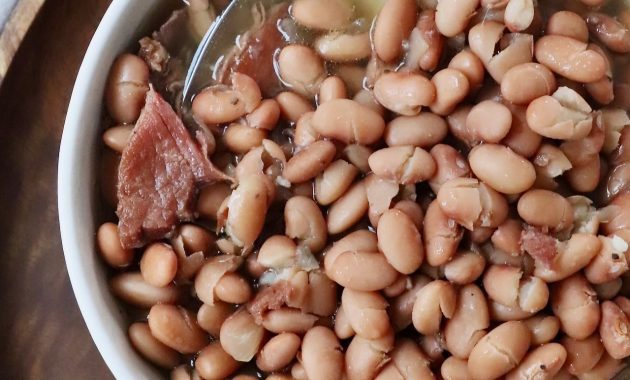
Experience the true essence of Southern comfort food with these flavorful Pinto Beans. This recipe makes it incredibly easy to create a hearty, rich, and deeply satisfying dish right on your stove. The secret to their authentic, savory depth lies in the humble ham hock – or even better, a leftover ham bone from a recent holiday feast. Instead of discarding that precious bone, transform it into the cornerstone of a meal that will warm your soul and impress your taste buds.
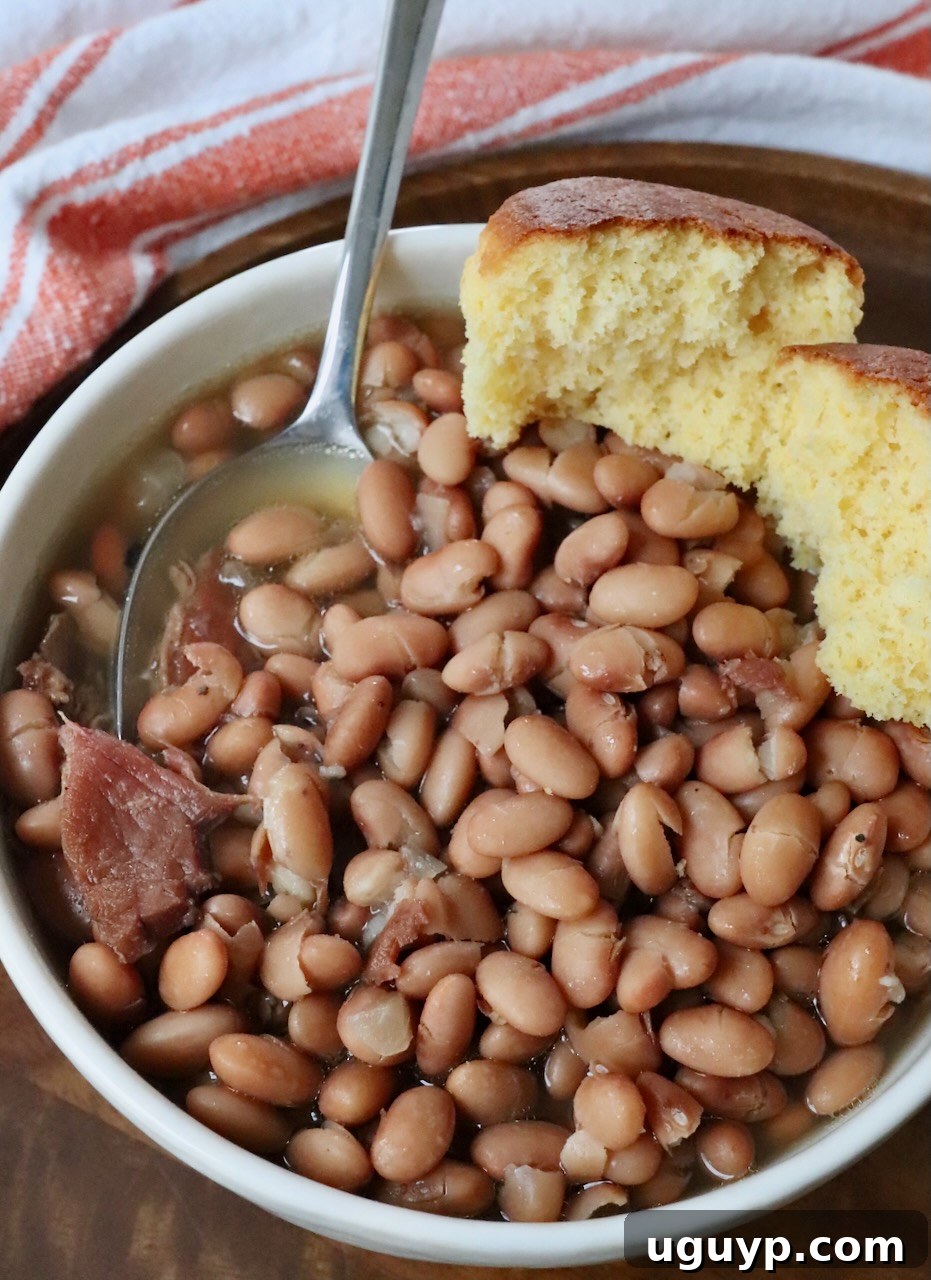
Table of Contents
- The Soul of Southern Cooking: Why Pinto Beans Reign Supreme
- Mastering the Art of Pinto Beans from Scratch
- Ingredients for Unforgettable Pinto Beans
- Step-by-Step Instructions for Perfect Pinto Beans
- Frequently Asked Questions
- What to Serve with Your Pinto Beans
- Storage and Reheating Tips
- Explore More Delicious Bean Recipes
The Soul of Southern Cooking: Why Pinto Beans Reign Supreme
Growing up in Oklahoma, a state often considered the crossroads of the South and Midwest, our culinary traditions proudly draw from a rich tapestry of regional influences, including classic Southern comfort, hearty Midwestern fare, and vibrant Tex-Mex flavors. Amidst this delicious melting pot, one dish consistently held a place of honor at our family table: Southern-style pinto beans.
My Grandma, a true maestro of Southern cooking, instilled in me the timeless wisdom of preparing pinto beans from scratch. Her secret? A beautiful ham bone, slowly simmering with the beans, infusing them with an unparalleled depth of rich, smoky, and salty flavor that is simply irresistible. This method transforms simple dried beans into a dish brimming with heritage and heart.
After a holiday meal featuring a succulent Honey Baked Ham, the thought of discarding the ham bone was unthinkable. In my Grandma’s kitchen, that ham bone was not waste; it was the invaluable “secret ingredient” destined to create the most incredible batch of pinto beans. It’s a testament to the resourcefulness and flavor-first approach of traditional Southern cooking.
Mastering the Art of Pinto Beans from Scratch
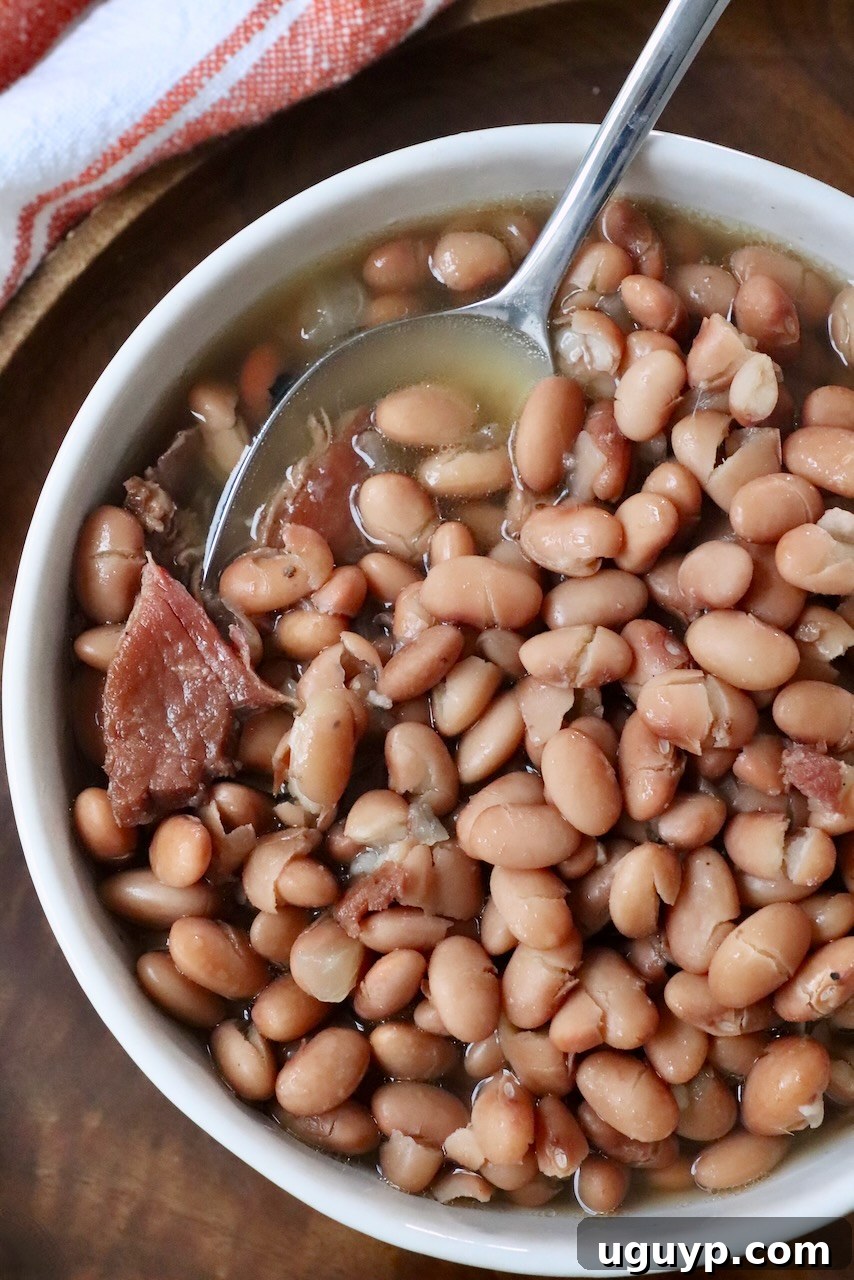
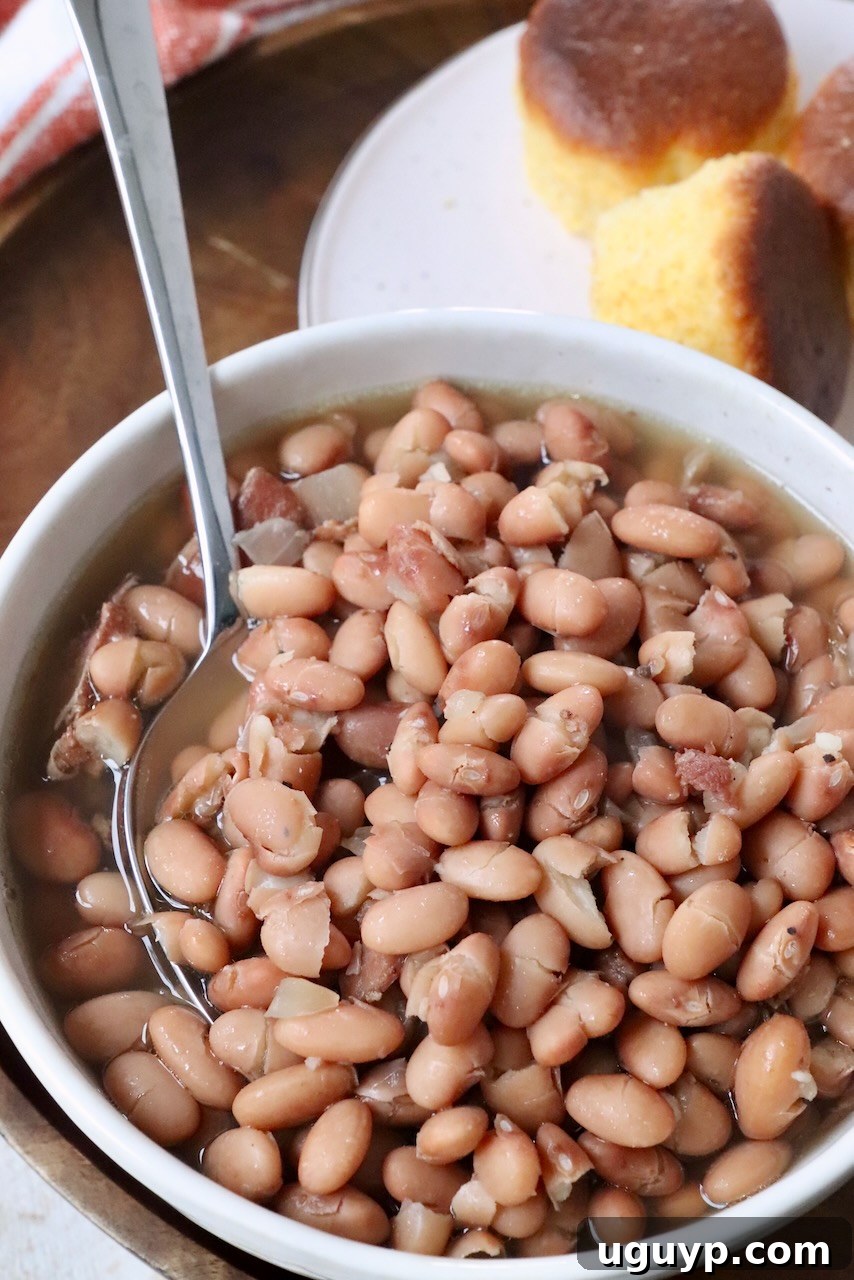
While cooking pinto beans from dried might sound like a lengthy endeavor, the process is surprisingly straightforward and incredibly rewarding. The time spent simmering on the stove is minimal effort for maximum flavor. The result is a versatile dish that can shine as a satisfying side or even take center stage as a main course. In our home, a generous bowl of these savory beans was always accompanied by warm, fluffy cornbread – perfect for dipping and soaking up every last drop of the flavorful broth.
You can easily build a complete meal around these delicious beans by pairing them with another main dish or a few complementary sides. Or, for a truly comforting experience, simply grab a large bowl, a side of cornbread muffins, and dig in. It’s a simple pleasure that embodies the heartiness and warmth of Southern cuisine.
Beyond their incredible taste, cooking dried pinto beans offers numerous benefits. It’s a budget-friendly option, providing a nutritious meal for a fraction of the cost of canned alternatives. You also have complete control over the seasoning and ingredients, ensuring a wholesome dish free from unwanted additives. The slow simmering process allows the flavors to meld beautifully, creating a complex taste that quick-cooking methods simply can’t replicate. Embracing the tradition of cooking dried beans connects you to a culinary legacy, transforming humble ingredients into something truly extraordinary.
Ingredients for Unforgettable Pinto Beans
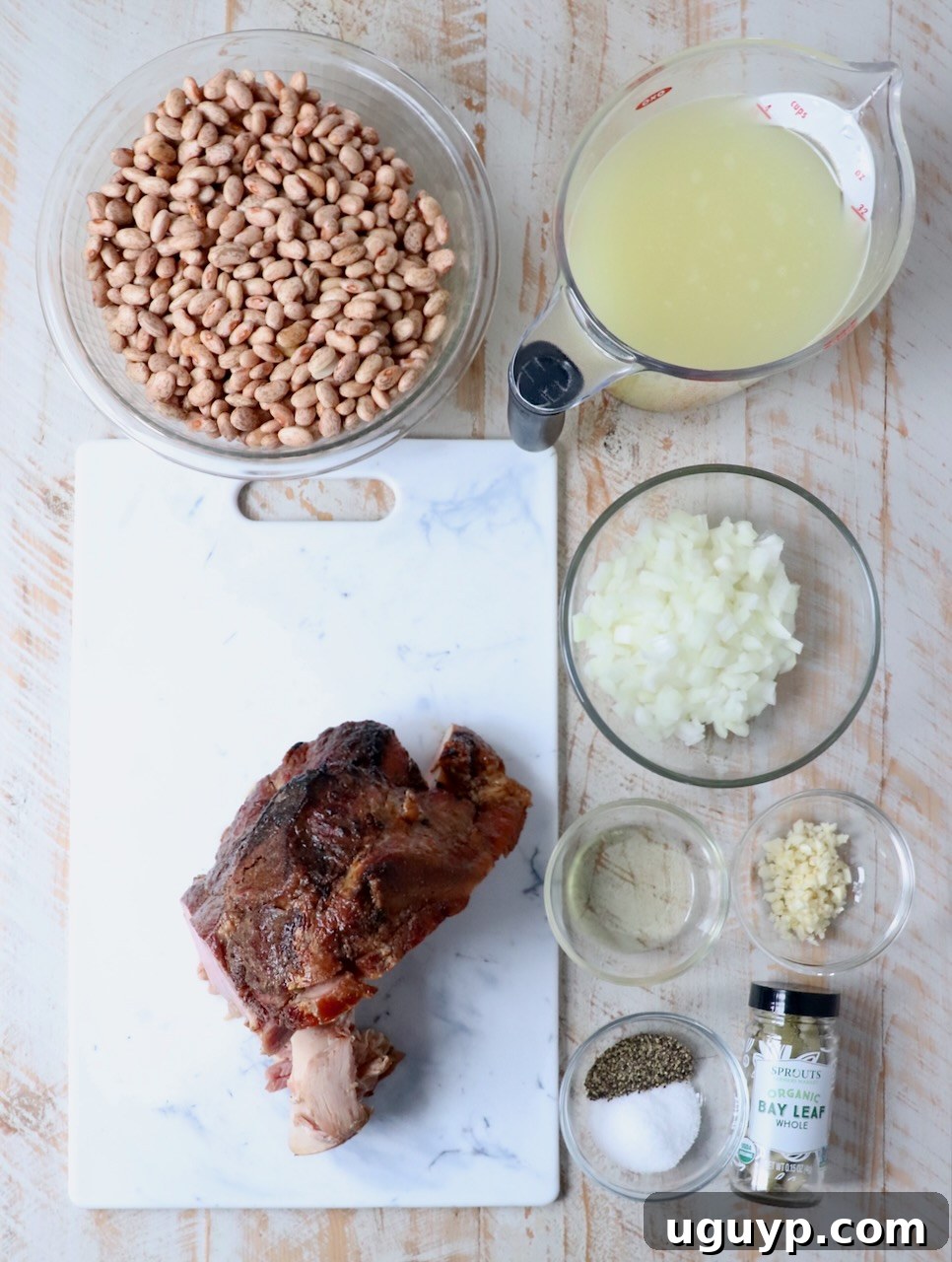
Crafting the perfect pot of Southern pinto beans requires a few key ingredients, each playing a vital role in building that signature deep, savory flavor profile.
- Dried Pinto Beans: The foundation of our dish. Look for these in the dry bean aisle or bulk bins of your grocery store. The fresher the beans, the quicker and more evenly they will cook. While dried beans are shelf-stable, older beans may require longer cooking times, so aim for a relatively fresh batch for best results.
- Oil: A neutral-flavored oil such as canola oil, vegetable oil, or a mild olive oil is ideal for sautéing our aromatics without imparting any overpowering flavors.
- Onion: A large yellow onion is recommended for its balanced, slightly sweet, and neutral flavor profile, which provides a perfect base for the beans. Diced finely, it will melt into the sauce as the beans simmer.
- Garlic: Freshly minced garlic cloves are non-negotiable for superior flavor. Avoid pre-minced garlic if possible, as the fresh variety offers a much more pungent and aromatic contribution.
- Ham Hock (or Ham Bone): This is where the magic happens!
- Ham Hocks: Readily available in the meat department of most grocery stores year-round. A ham hock comes from the lower part of a pig’s leg and is typically cured and smoked, lending an incredible smoky, salty flavor and velvety texture to the broth.
- Leftover Ham Bone: If you’ve just enjoyed a holiday ham, using the leftover bone is an excellent and highly recommended alternative. Ham bones, usually from the upper leg, often contain more meat than hocks, adding extra richness and flavor to your beans. This is the ultimate way to utilize every bit of that delicious ham!
- Water + Chicken Broth (or Chicken Stock): For the most flavorful pinto beans, a 50/50 blend of water and chicken broth is preferred. The broth adds an additional layer of savory depth. If you only have water on hand, that works too, but you might need to adjust the salt content at the end to achieve the desired seasoning.
- Salt + Black Pepper: Essential seasonings to enhance all the other flavors. Remember that ham hocks and broth contribute salt, so taste and adjust as you go.
- Bay Leaves: These aromatic leaves simmer gently with the beans, releasing a subtle, herbaceous note that adds complexity and depth to the overall dish. Be sure to remove them before serving.
Step-by-Step Instructions for Perfect Pinto Beans
Follow these detailed steps and accompanying photos to easily prepare a delicious pot of Southern-style pinto beans at home. For the complete, concise recipe and printable card, please scroll to the recipe card at the bottom of this post.
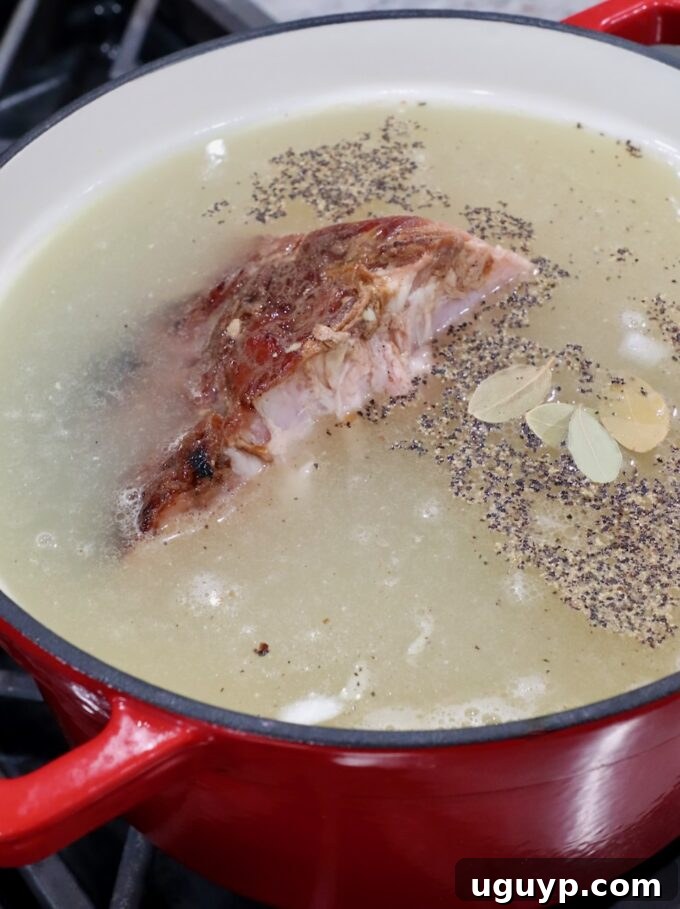
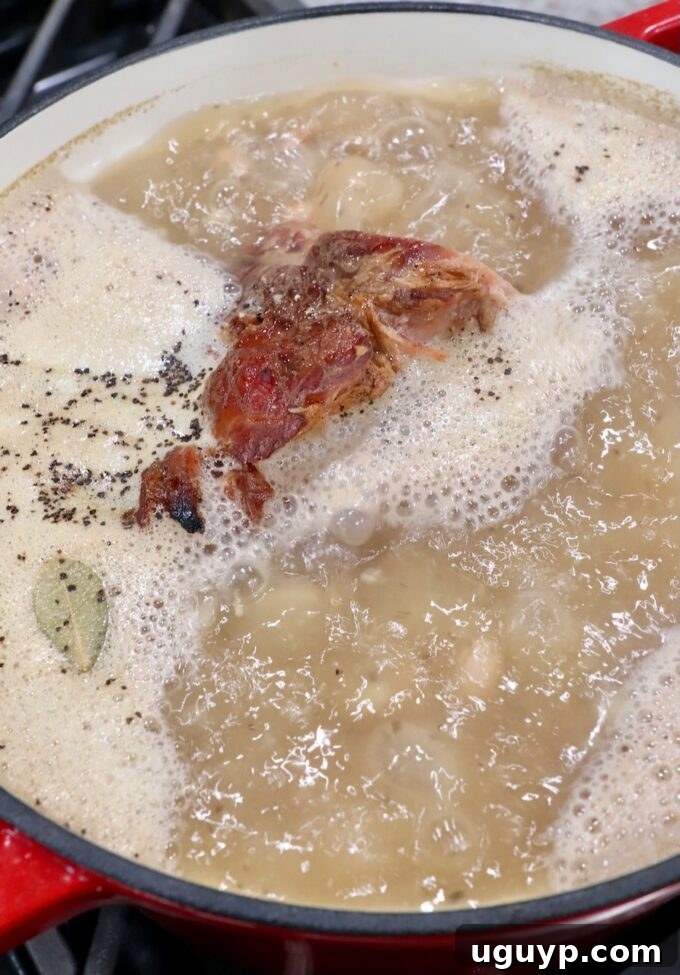
- Prepare the Beans: Begin by adding your dried pinto beans to a fine-mesh strainer or colander. Rinse them thoroughly under cold running water to remove any dust or debris. Next, transfer the rinsed beans to a large bowl and cover them completely with fresh water. Allow the beans to soak for a minimum of 8 hours, or ideally, overnight (up to 24 hours). This crucial step helps the beans cook more evenly, reduces cooking time, and aids in digestion. Once soaked, drain the beans completely and set them aside.
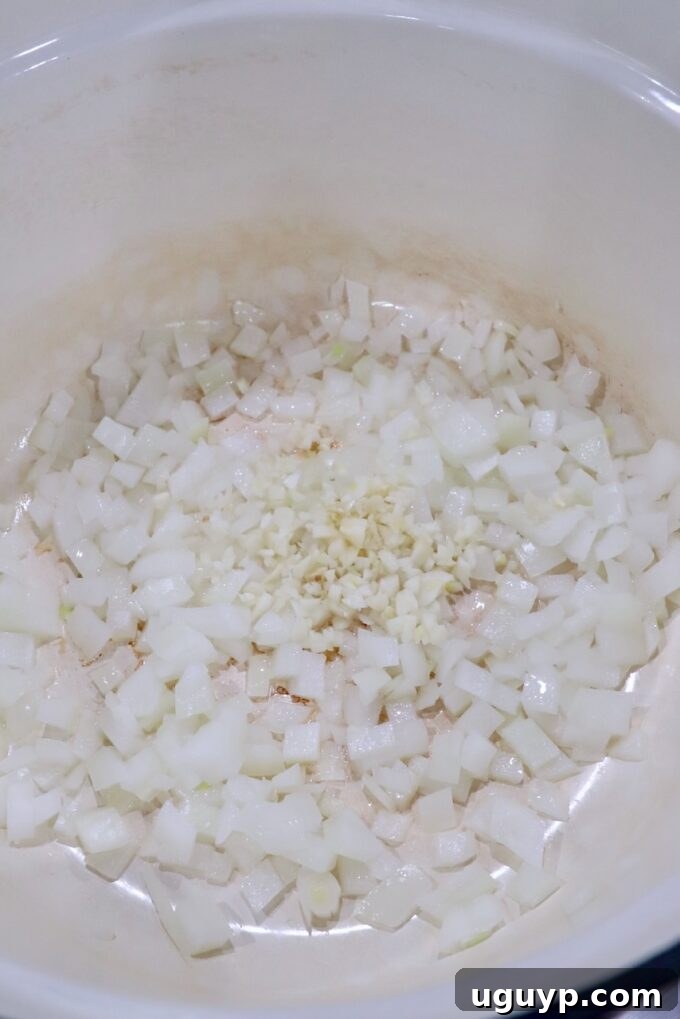
- Sauté Aromatics: Heat a large, heavy-bottomed stockpot or Dutch oven over medium-high heat on your stove. Add the oil, and once shimmering, add the diced yellow onions. Cook the onions, stirring occasionally, for 4-5 minutes until they begin to soften and become translucent. Then, add the minced garlic and continue to cook for an additional minute until fragrant. Be careful not to burn the garlic.
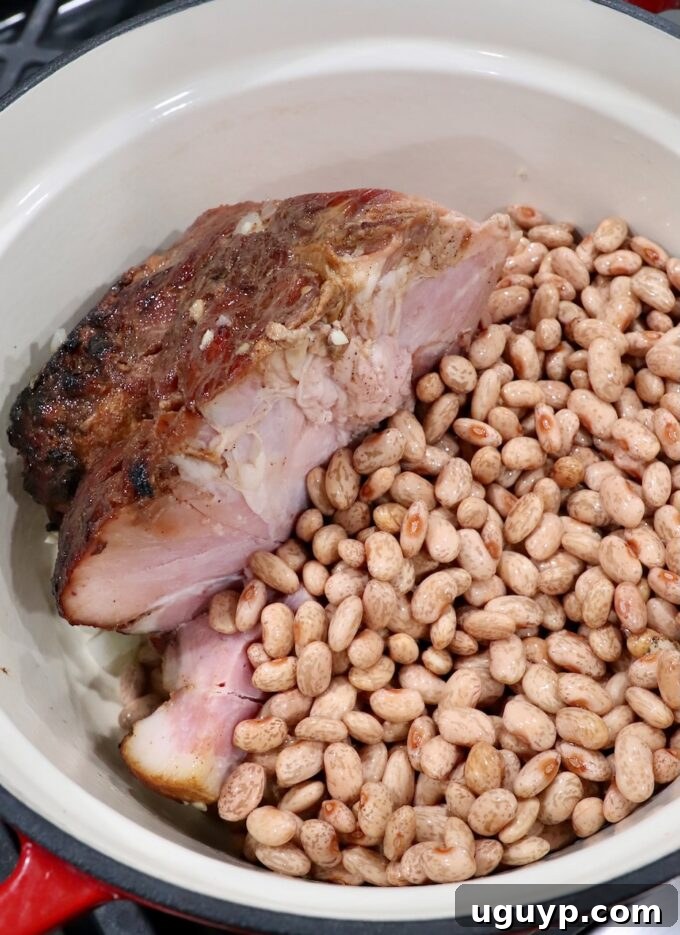
- Combine Ham and Beans: Carefully place the ham hock (or your leftover ham bone) into the pot with the sautéed onions and garlic. Add the soaked and drained pinto beans to the pot, distributing them evenly around the ham.
- Add Liquid and Seasonings: Pour in the specified amounts of water and chicken broth (or simply use all water if preferred). Ensure the beans are fully submerged in the liquid; add more water if needed. Stir in the salt, black pepper, and bay leaves. Give everything a good stir to combine all the ingredients.
- Simmer to Perfection: Bring the liquid in the pot to a rolling boil over high heat. Once boiling, reduce the heat to medium-low, allowing the beans to maintain a gentle simmer. Cook uncovered for 1-2 hours, or until the beans are tender and creamy. Throughout the simmering process, keep an eye on the liquid level. If it drops below the beans, add more water to ensure the beans remain covered at all times for even cooking.
- Checking for Doneness: To test if the pinto beans are done, carefully remove a bean or two from the pot and press them against the side of the pot with a fork. They should collapse easily and be tender, but not mushy. Start checking after 1 hour of cooking, then every 15 minutes thereafter until your desired texture is achieved.
- Serving Preparation: Before serving, use a slotted spoon to remove and discard the bay leaves. Carefully remove the ham hock or ham bone from the pot using tongs. Allow it to cool slightly, then pick off any tender meat from the bone. Shred or chop this flavorful ham meat and return it to the pot with the beans. Discard the bare bone or hock. Stir the meat back into the beans and serve hot.
Frequently Asked Questions
- Can I make this pinto beans recipe with bacon instead of a ham hock? Absolutely! To incorporate bacon, dice up a pound of your favorite bacon. Start the recipe by adding the diced bacon to the pot (without any additional oil) and cook for 3-4 minutes until crispy. Remove the bacon with a slotted spoon and set aside, leaving the rendered bacon grease in the pot. Use this flavorful grease to sauté the diced onions for 4-5 minutes, then add the minced garlic and cook for an additional minute. Return the cooked bacon to the pot along with the soaked beans, water, broth, salt, pepper, and bay leaves. Bring to a simmer and continue cooking as instructed.
- How do I know when the pinto beans are fully cooked? Pinto beans are done when they are fork-tender and creamy, but still hold their shape without being mushy. You can easily test their doneness by taking a bean or two from the pot and pressing them against the side of the pot with a fork; they should easily collapse. Start checking around the 1-hour mark and continue every 15 minutes until they reach your preferred tender consistency.
- Is soaking pinto beans before cooking truly necessary? While not strictly mandatory, I strongly recommend soaking your dried pinto beans. Soaking offers several advantages: it significantly reduces cooking time, promotes more even cooking, helps achieve a better final texture (less starchy), and can make the beans easier to digest. If you opt not to pre-soak, the recipe will still work, but expect longer cooking times and potentially a slightly firmer texture.
- What is the quick-soak method for pinto beans? If you forgot to soak your beans overnight, the quick-soak method is a great alternative. Place the rinsed beans in a large pot and cover them generously with water. Bring the water to a rolling boil over high heat. Once boiling, remove the pot from the heat, cover it tightly with a lid, and let the beans soak for 1 hour. After an hour, drain the beans and proceed with the recipe as usual.
- How long does it typically take to cook pinto beans from scratch? The cooking time for pinto beans can vary based on several factors: the freshness of your dried beans, whether they were pre-soaked (and for how long), and your desired level of tenderness. Generally, after soaking, they can take anywhere from 1 to 2 hours to simmer on the stove. I suggest beginning to check for doneness after the first hour, then every 15 minutes until they’re perfectly tender.
- How can I make this pinto beans recipe vegetarian? To adapt this recipe for a vegetarian diet, simply omit the ham hock or ham bone entirely. Replace the chicken broth with an equal amount of high-quality vegetable broth. You can also add a smoky flavor with a pinch of smoked paprika or a dash of liquid smoke, if desired, to mimic some of the depth lost from the ham.
- Can I cook pinto beans in a slow cooker or Instant Pot? While this recipe focuses on the stovetop method, pinto beans can certainly be cooked in a slow cooker or Instant Pot. For a slow cooker, follow the sautéing steps, then combine all ingredients and cook on low for 6-8 hours or on high for 3-4 hours. For an Instant Pot, follow the sautéing steps, then add beans and liquid (reducing liquid slightly if unsoaked), and pressure cook for about 25-30 minutes for soaked beans, or 40-50 minutes for unsoaked beans, followed by natural release.
What to Serve with Your Pinto Beans
These versatile pinto beans are truly a star, whether served as a comforting side or the heart of a hearty main meal. Their rich, savory profile pairs beautifully with a range of dishes, from classic Southern staples to vibrant Tex-Mex favorites.
- Classic Southern Comfort Meal: Create an unforgettable Southern feast by pairing these flavorful pinto beans with tender Southern collard greens and warm, crumbly cornbread. A sprinkle of hot sauce elevates this comforting trio.
- Hearty Side Dish Pairing: Serve the beans alongside a succulent main course like this savory bacon-wrapped pork loin and a vibrant green vegetable such as roasted garlic parmesan broccolini for a well-rounded and satisfying dinner.
- Authentic Tex-Mex Experience: Elevate your Tex-Mex night by serving these pinto beans with fluffy cilantro lime rice and colorful fajita veggies. They also make a fantastic accompaniment to rich, tender slow-cooked beef barbacoa, perfect for tacos or bowls.
- Simple Yet Satisfying Meal: Sometimes, the simplest pairings are the best. Transform two humble sides into a fulfilling meal by enjoying these pinto beans with perfectly cooked white rice. For another delicious option, serve them with a piping hot baked potato or a naturally sweet baked sweet potato.
- As a Topping: Use these flavorful beans as a topping for nachos, baked potatoes, or even over hot dogs for a quick and easy twist on classic dishes.
Storage and Reheating Tips
These Southern-style pinto beans are excellent for meal prepping and often taste even better the next day as the flavors continue to meld. Proper storage ensures you can enjoy them for days to come.
Store any leftover cooked pinto beans in an airtight container in the refrigerator for up to 5 days. For longer preservation, transfer them to a freezer-safe container or heavy-duty freezer bags and freeze the beans for up to 6 months. Label with the date for easy tracking.
When you’re ready to enjoy them again:
- Stovetop Reheating: For a larger batch or a rich, creamy consistency, reheat the beans in a pot on the stove over medium heat. Stir frequently to prevent sticking, adding a splash of water or broth if they seem too thick. Heat for 5-10 minutes, or until thoroughly warmed through.
- Microwave Reheating: For a single serving, transfer the beans to a microwave-safe bowl. Heat on high for 2-3 minutes, stirring halfway through, until hot.
Frozen beans should be thawed in the refrigerator overnight before reheating on the stove or in the microwave. Freezing and reheating may slightly alter the texture, but the flavor will remain robust and delicious.
Explore More Delicious Bean Recipes
Beans are incredibly versatile, nutritious, and a staple in many cuisines. If you loved these pinto beans, you’ll surely enjoy exploring more bean-centric recipes to add to your weekly meal rotation. From comforting chilis to flavorful soups and satisfying burgers, beans offer endless possibilities for delicious and wholesome meals.

Print
Pin
Rate this Recipe
Pinto Beans
Ingredients
- 2 cups dried pinto beans, soaked overnight
- 1 tablespoon neutral oil
- 1 cup yellow onion, diced
- 3 cloves garlic, minced
- 1 pound smoked ham hock, or a leftover ham bone
- 4 cups water
- 4 cups chicken broth, or vegetable broth for vegetarian option
- 2 teaspoons salt, or to taste
- 1 teaspoon black pepper, freshly ground
- 3 bay leaves
Instructions
-
Add the dried pinto beans to a fine-mesh strainer or colander and rinse thoroughly under cold water to remove any debris.
-
Transfer the rinsed beans to a large bowl and add enough water to completely cover them. Soak the beans for at least 8 hours, or ideally, overnight (up to 24 hours).
-
After the soaking time, drain the beans completely from the water and set them aside.
-
Place a large stockpot or Dutch oven on the stove over medium-high heat and add the oil.
-
Once the oil is hot, add the diced onion and cook for 4-5 minutes until softened. Then, add the minced garlic and cook for an additional minute until fragrant.
-
Add the ham hock (or ham bone) and the soaked and drained pinto beans to the pot. Pour in the water and chicken broth, then season with salt, black pepper, and bay leaves. Stir to combine. Ensure the beans are fully covered by the liquid.
-
Bring the liquid to a boil over high heat, then reduce the heat to medium-low to maintain a gentle simmer. Cook uncovered for 1-2 hours, or until the beans are tender. If the liquid level drops below the beans, add more water to keep them submerged. To check for doneness, press a bean against the side of the pot with a fork; it should collapse easily but not be mushy. Begin checking after 1 hour, then every 15 minutes as needed.
-
Use a slotted spoon to remove and discard the bay leaves before serving.
-
Carefully remove the ham hock or ham bone from the pot. Once cooled slightly, pick off any meat from the bone, shred or chop it, and return the meat to the beans. Discard the bare bone. Stir the meat into the beans and serve hot.
Notes
- Using a ham hock vs. ham bone: A ham hock is a cured and smoked cut from the lower leg, readily available in grocery stores, providing deep smoky flavor. A leftover ham bone from a holiday ham (e.g., a spiral ham) can be used instead and often contains more meat, adding extra richness to your beans. Both are excellent choices for this recipe.
- Using bacon instead of ham: For a bacon-flavored alternative, dice 1 pound of bacon and cook it in the pot for 3-4 minutes until crispy. Remove the bacon and set it aside. Use the rendered bacon grease to sauté the diced onions for 4-5 minutes, then add the minced garlic for 1 minute. Return the cooked bacon to the pot with the soaked beans, water, broth, salt, pepper, and bay leaves. Bring to a simmer and follow the remaining cooking instructions.
- Chicken broth alternative: If chicken broth is unavailable, you can use 8 cups of water as the cooking liquid. Remember to taste the beans at the end and adjust the salt as needed, as water contains no inherent sodium.
- To quick-soak the beans: If you’re short on time, place the rinsed dried beans in a large pot and cover with plenty of water. Bring the water to a boil over high heat. Once boiling, remove the pot from the heat, cover, and let the beans soak for 1 hour. Drain and proceed with the recipe.
- To make this recipe vegetarian: Simply omit the ham hock or ham bone. Replace the chicken broth with an equal amount of vegetable broth. For added depth, consider a pinch of smoked paprika.
- Storage: Store leftover cooked pinto beans in an airtight container in the refrigerator for up to 5 days. For longer storage, transfer them to a freezer-safe container and freeze for up to 6 months.
- Reheating: Reheat beans on the stove over medium heat for 5-10 minutes, stirring occasionally and adding a splash of water/broth if needed. Alternatively, microwave single servings for 2-3 minutes until heated through.