Zucchini and Feta Phyllo Pie
- Ticket
- № 3532
- Served
- Read
- 17 min
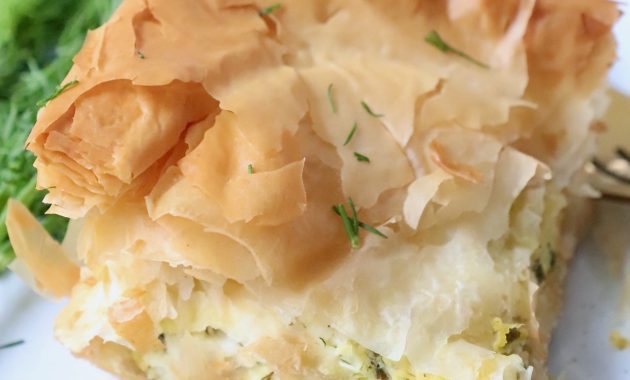
Experience the authentic taste of Greece with this traditional Greek Zucchini Pie, known locally as Kolokithopita. This incredibly flavorful savory pie features a wonderfully flaky phyllo crust enveloping a rich, creamy filling of fresh zucchini and tangy feta cheese. It’s an absolutely exquisite dish, perfect as a delightful appetizer, a standout component of a savory brunch spread, or a light and satisfying meal on its own. Prepare to be enchanted by the vibrant flavors of the Mediterranean with this straightforward, yet incredibly scrumptious recipe!
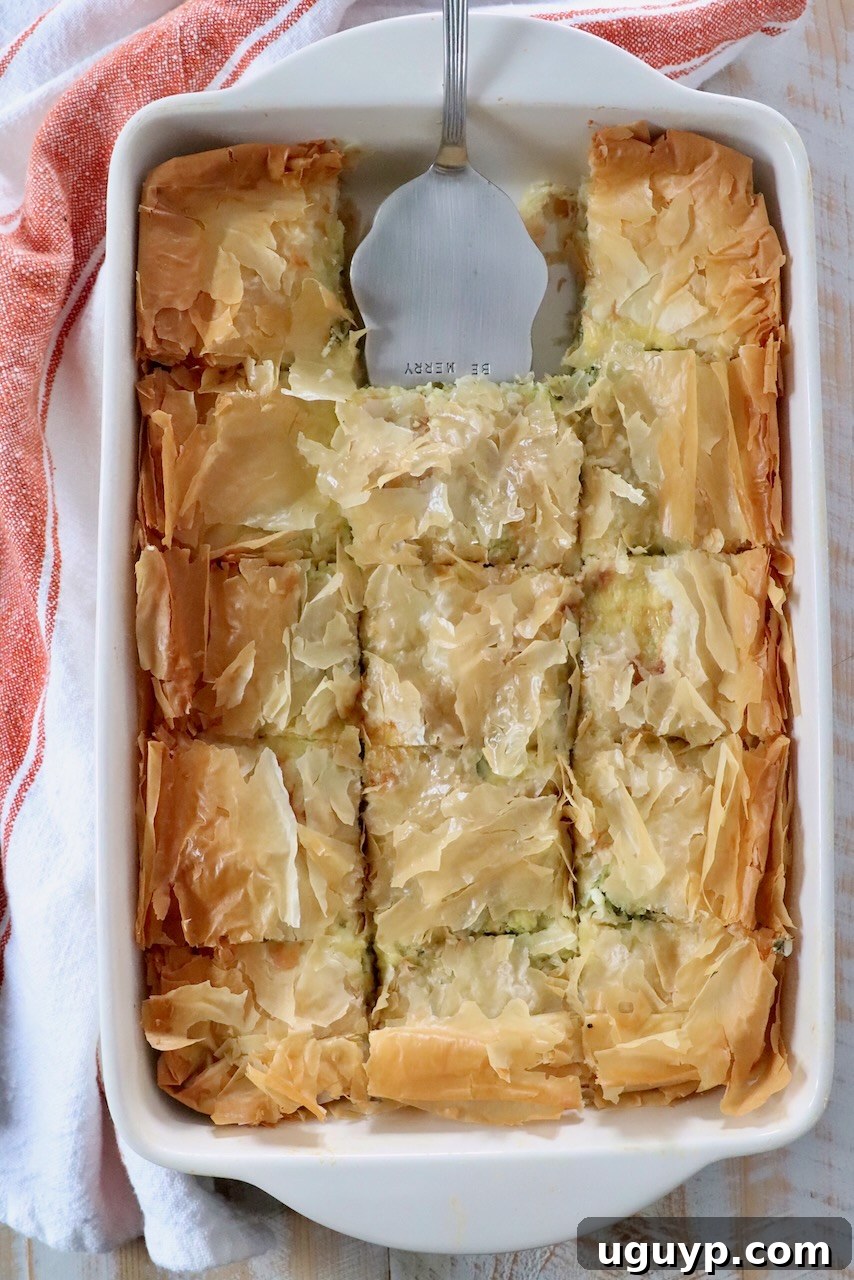
Table of contents
- Introduction to Kolokithopita
- The Story Behind This Recipe
- Ingredients
- Step-by-Step Instructions
- Pro Tips for the Perfect Pie
- Storage and Reheating Kolokithopita
- What to Serve with This Greek Zucchini Pie
- More Delightful Zucchini Recipes
- Greek Zucchini Pie Recipe Card
Introduction to Kolokithopita: A Taste of Greece
Kolokithopita, or Greek Zucchini Pie, stands as a testament to the simplicity and incredible flavor profile of traditional Greek cuisine. Similar to the famous spanakopita (spinach pie), this savory delight swaps the leafy greens for tender, juicy zucchini, creating a distinctively fresh and herbaceous experience. Encased in layers of golden, crispy phyllo dough, the filling combines the subtle sweetness of zucchini with the salty, piquant notes of authentic Greek feta cheese. Aromatic fresh dill, parsley, and mint elevate the dish, infusing every bite with a burst of Mediterranean essence. This pie isn’t just a dish; it’s a culinary journey to the sun-drenched islands and verdant landscapes of Greece, offering comfort and sophistication in equal measure.
The Story Behind This Recipe: A Santorini Honeymoon Inspiration
The inspiration for this particular Kolokithopita recipe stems from a truly unforgettable experience in Santorini, Greece. During my honeymoon, this incredible Greek Zucchini Pie was a staple at our hotel’s breakfast and brunch buffet. Each morning, I eagerly anticipated indulging in slice after slice of this exquisite creation, finding new reasons to adore its delicate layers and rich filling. By our final morning, I confess to having enjoyed at least three generous servings, determined to capture its essence. I meticulously took photos of its interior and jotted down detailed tasting notes, understanding that this was a flavor I simply had to recreate at home. Yes, that’s precisely what a dedicated food blogger does, even on her honeymoon – seeking culinary inspiration wherever she goes!
The magic of this pie lies in its harmonious blend of simple, fresh ingredients. The heart of the filling is primarily fresh, grated zucchini and crumbly feta cheese, perfectly seasoned with fragrant garlic, vibrant fresh dill, bright parsley, and refreshing mint. This combination of the creamy, salty feta with the garden-fresh herbs and tender zucchini, all embraced by shatteringly crisp, buttery phyllo dough, creates an absolute triumph of flavors and textures. Whether you’re a seasoned fan of Greek cuisine or new to its delights, this Kolokithopita offers a truly delightful experience that transports you straight to the heart of the Mediterranean.
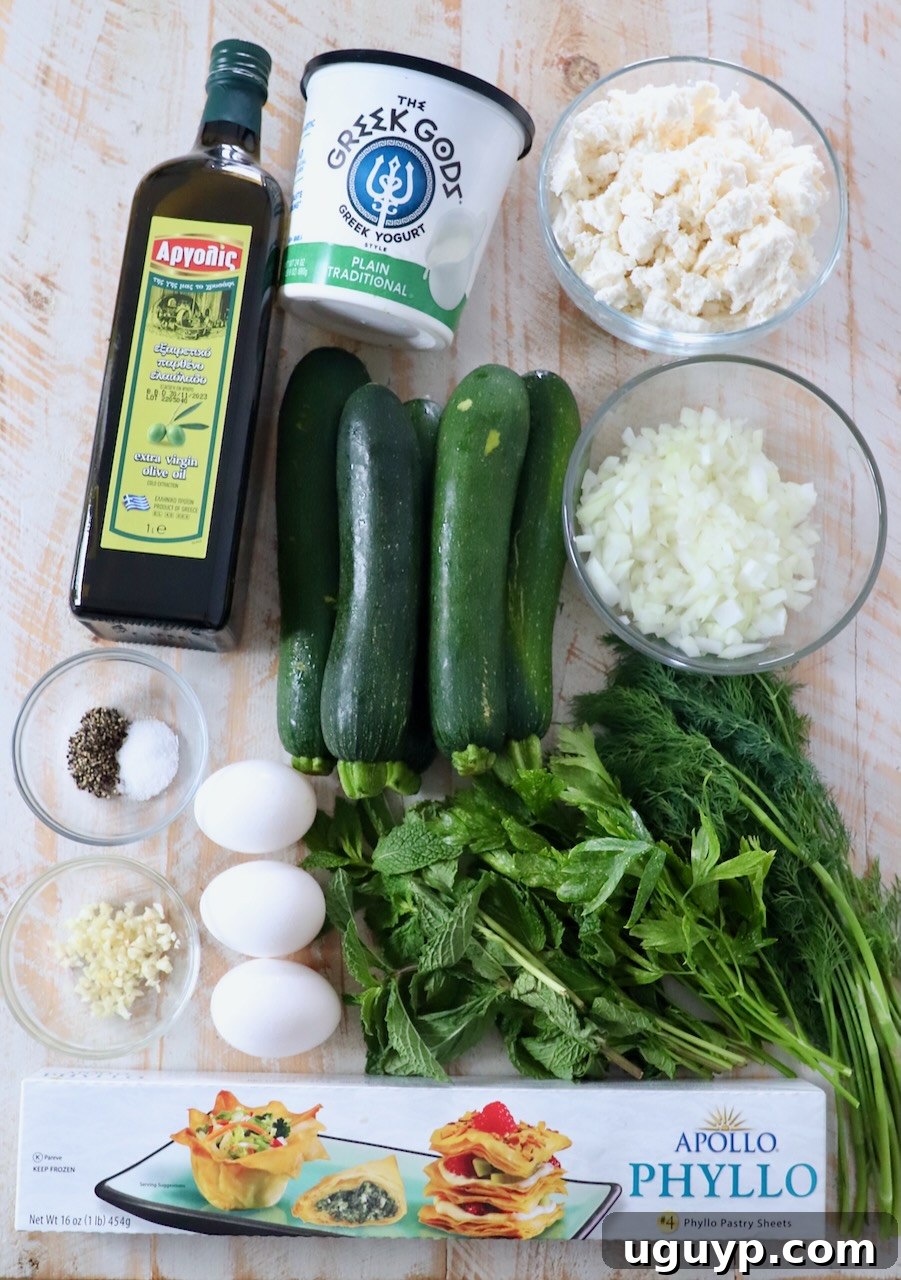
Essential Ingredients for Your Kolokithopita
Crafting the perfect Greek Zucchini Pie begins with selecting the freshest, highest-quality ingredients. Each component plays a crucial role in achieving the authentic taste and desired texture of this classic dish:
- Zucchini: You’ll need about two pounds of fresh zucchini. This typically translates to 4-6 small to medium-sized zucchinis, or 2-3 larger ones, depending on their size. Fresh, firm zucchini with vibrant green skin is ideal.
- Onion: A single medium yellow onion is recommended. Its mild sweetness and ability to caramelize slightly when cooked provide a perfect aromatic base for the filling without overpowering the other delicate flavors.
- Garlic: Two cloves of fresh minced garlic are essential. Fresh garlic offers a pungent, fragrant flavor that dried garlic simply cannot replicate, truly enhancing the savory depth of the pie.
- Extra Virgin Olive Oil: This is a cornerstone of Greek cooking. You’ll need about 5 tablespoons for the filling, plus extra for brushing the phyllo dough. If possible, opt for a high-quality Greek olive oil for an authentic flavor profile. Its rich, fruity notes are indispensable.
- Greek Yogurt: Use ¼ cup of plain, full-fat Greek yogurt. The yogurt adds a wonderful tanginess and creamy texture to the filling, acting as a binder and contributing to its luscious consistency. I’ve found brands like Greek Gods or Chobani work beautifully to achieve the desired richness.
- Eggs: Three beaten eggs are incorporated into the filling. They serve as a vital binder, helping to set the zucchini and feta mixture as the pie bakes, ensuring a cohesive and sliceable filling.
- Feta Cheese: One pound of crumbled feta cheese is the star of the filling. For the most authentic experience, seek out genuine Greek feta, which is typically made from sheep’s or goat’s milk and boasts a distinct tangy, briny flavor and crumbly texture. However, readily available tubs of crumbled feta from most grocery stores will also work well.
- Fresh Herbs (Dill, Parsley, Mint): This trio of fresh herbs is non-negotiable for the true Kolokithopita flavor. You’ll need ¼ cup fresh dill, 2 tablespoons fresh parsley, and 2 tablespoons fresh mint leaves, all finely chopped. The combination of their distinct aromas—dill’s grassy freshness, parsley’s clean notes, and mint’s bright coolness—is what makes this dish sing. Dried herbs simply won’t deliver the same vibrant taste.
- Salt and Black Pepper: To season the filling to perfection. Adjust to your taste, remembering that feta cheese is already quite salty.
- Phyllo Dough: One package (typically 1 pound) of frozen phyllo dough (sometimes labeled fillo dough) is needed for the crust. You’ll find it in the freezer section of most major supermarkets. Proper thawing is crucial: either place it in the refrigerator overnight or allow it to thaw on the counter at room temperature for 3-4 hours before you begin preparing the pie.
Step-by-Step Instructions: Crafting Your Kolokithopita
Follow these detailed instructions to create your delicious Greek Zucchini Pie. For precise measurements and a condensed format, please refer to the recipe card at the bottom of this post. I’ve included step-by-step photos below to guide you through the process, making it simple to achieve perfect results at home.
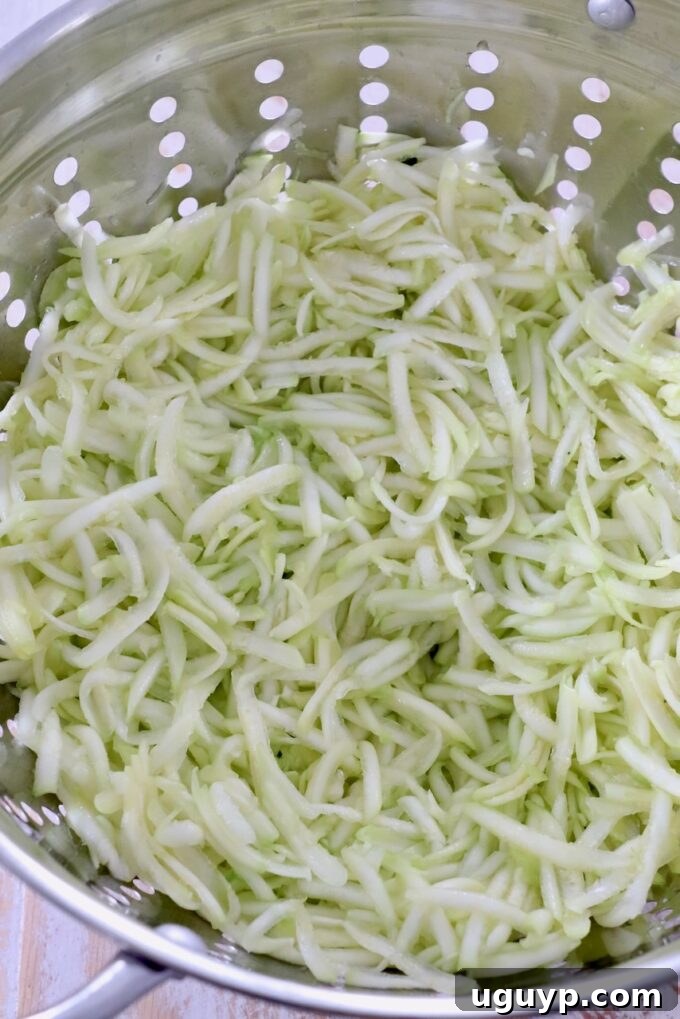
- Prepare the Zucchini: Begin by peeling the skin from the zucchini using a vegetable peeler. Trim off both ends of each zucchini. Next, use a box grater, a salad shooter, or the grating attachment on a KitchenAid to grate the zucchini. Place the grated zucchini in a large colander set in the sink. Sprinkle it generously with about ¼ teaspoon of salt, which helps draw out excess moisture. Allow the zucchini to drain for at least 20 minutes, or up to an hour. This crucial step prevents a soggy pie. After draining, wrap the grated zucchini tightly in several layers of paper towels or a clean kitchen towel and squeeze out any remaining liquid vigorously.
- Sauté Aromatics: While the zucchini is draining, heat 1 tablespoon of olive oil in a large skillet over medium-high heat. Once the oil shimmers, add the finely diced yellow onions and cook for 3-4 minutes until softened and translucent. Add the minced garlic and cook for an additional minute until fragrant. Be careful not to burn the garlic. Remove the skillet from the heat and set it aside to cool slightly.
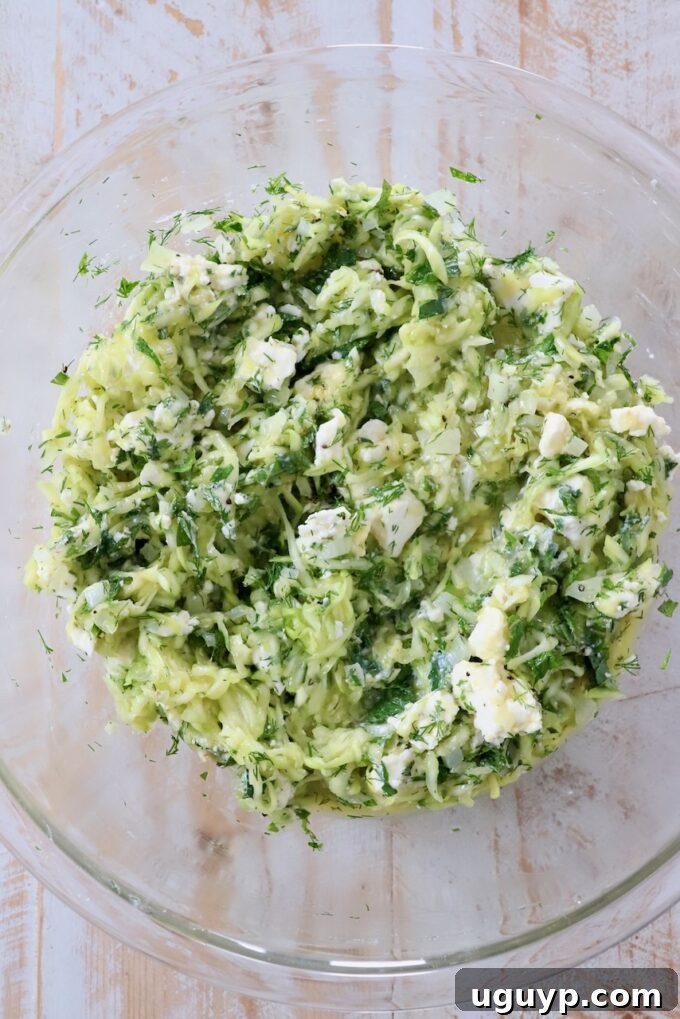
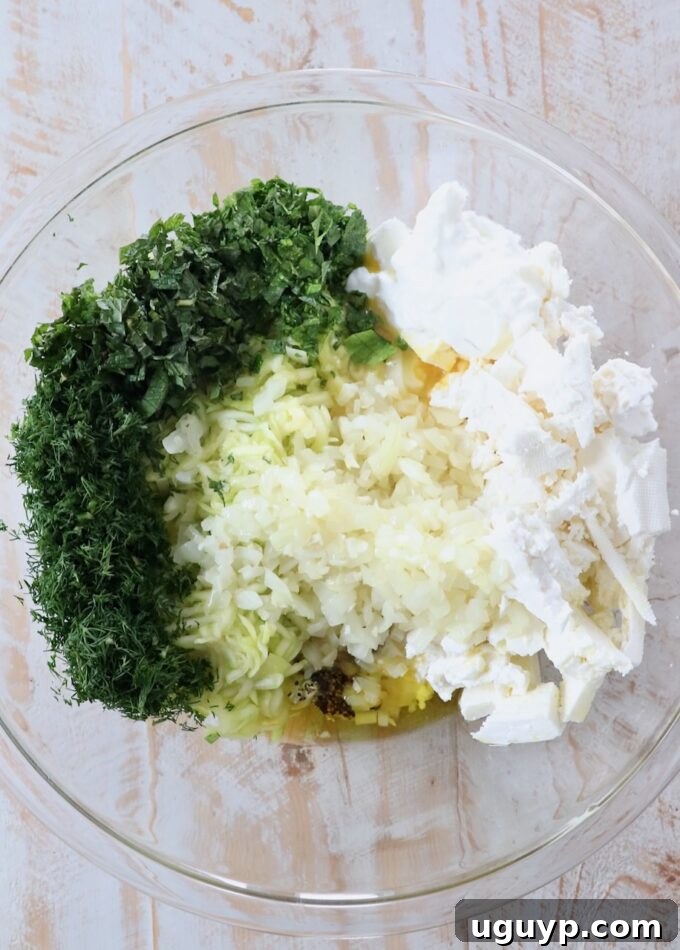
- Create the Filling: In a large mixing bowl, combine the thoroughly squeezed zucchini with the cooked onions and garlic. Add the remaining 4 tablespoons of olive oil, the beaten eggs, plain Greek yogurt, crumbled feta cheese, fresh chopped dill, fresh chopped parsley, fresh chopped mint, and season with ½ teaspoon of salt and ½ teaspoon of black pepper. Stir all the ingredients together until they are well combined and evenly distributed. Set the filling aside while you prepare the phyllo dough.
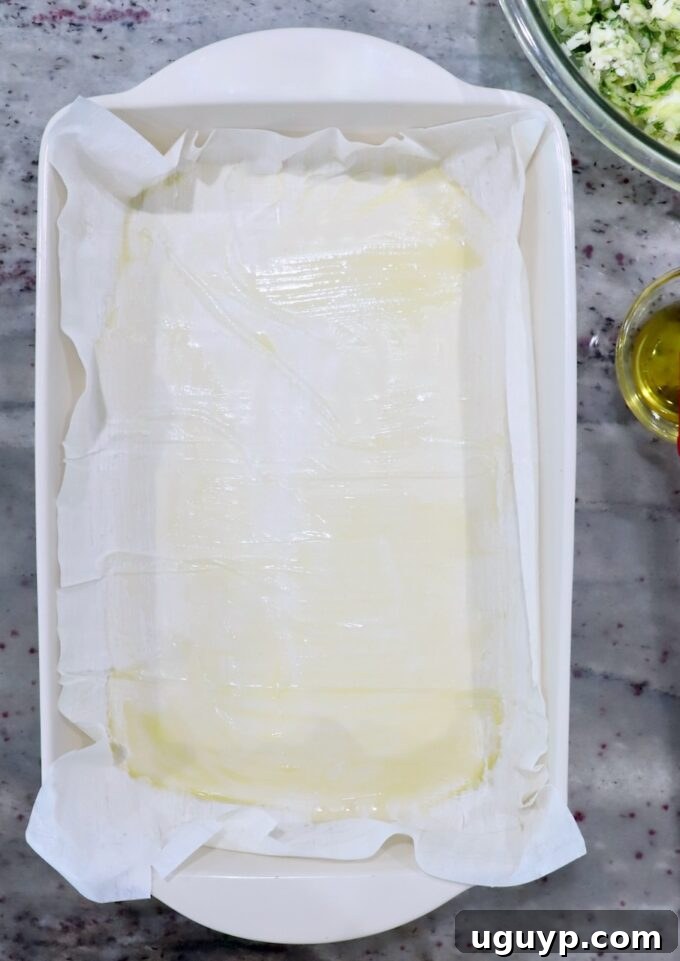
- Prepare the Phyllo Dough Base: Preheat your oven to 350°F (175°C). Lightly spray a 9-inch x 13-inch baking dish with non-stick cooking spray. Pour about ¼ to ½ cup of olive oil into a small bowl; this will be for brushing the phyllo sheets. Have a pastry brush ready. Carefully unroll the thawed phyllo dough onto a clean, dry surface. Take one sheet of phyllo dough and gently lay it into the prepared baking dish, allowing it to slightly hang over the edges if necessary. Using your pastry brush, lightly and evenly coat the entire sheet of dough with olive oil.
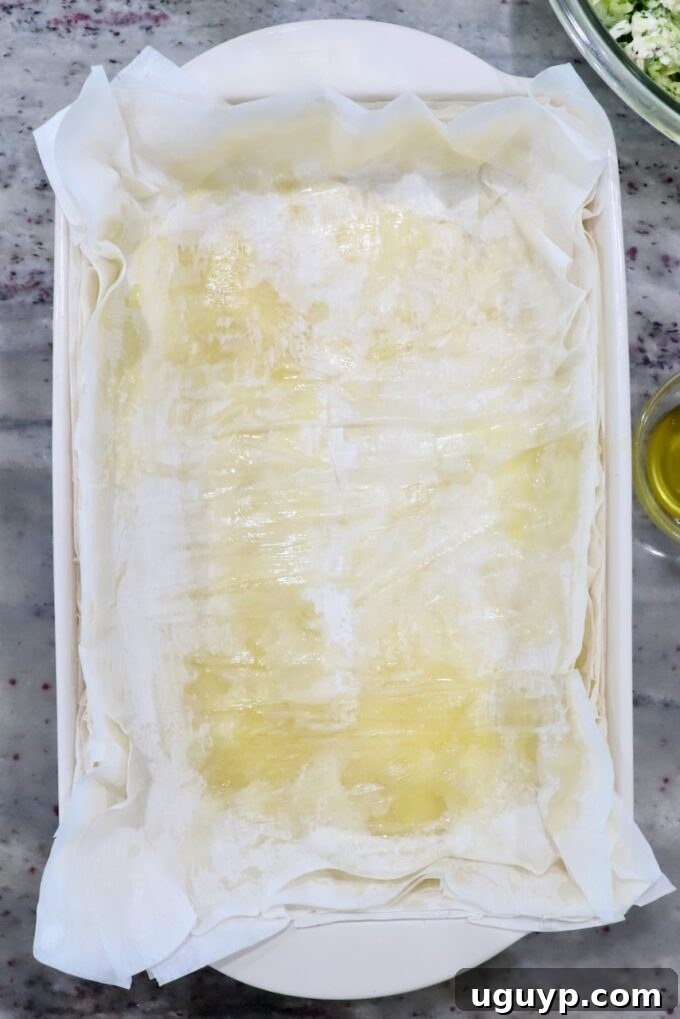
- Layer the Phyllo Dough: Continue this process, layering 7 more sheets of phyllo dough, brushing each individual sheet thoroughly with olive oil before carefully adding the next one. This creates a sturdy and deliciously flaky bottom crust for your pie.
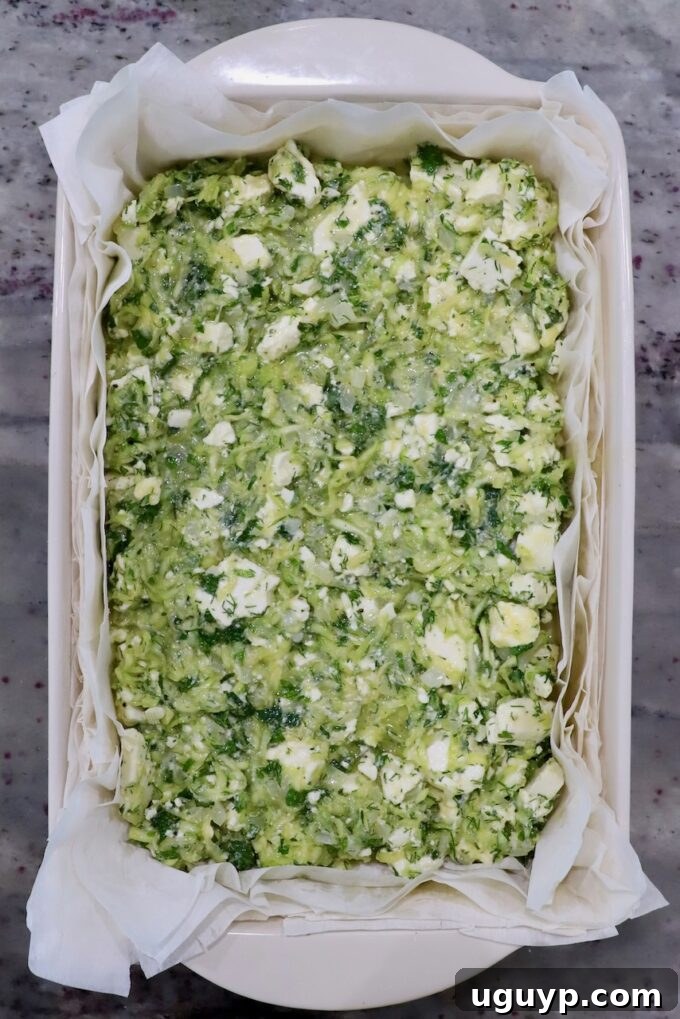
- Add the Filling: Evenly pour the prepared zucchini and feta mixture on top of the layered phyllo dough in the baking dish. Spread it gently with a spatula to ensure an even layer across the entire surface.
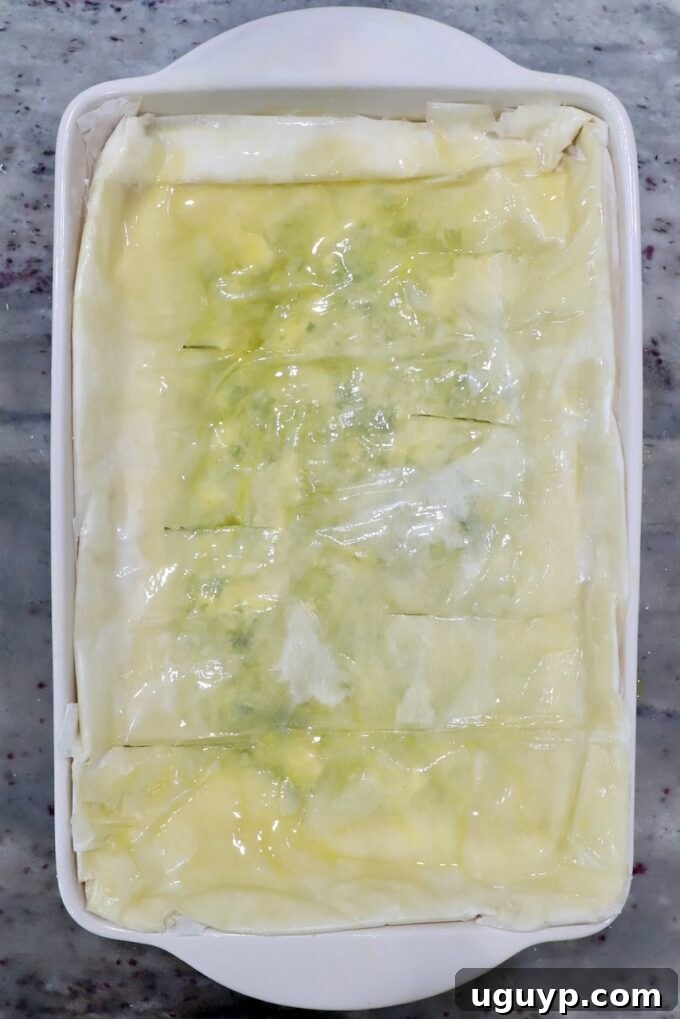
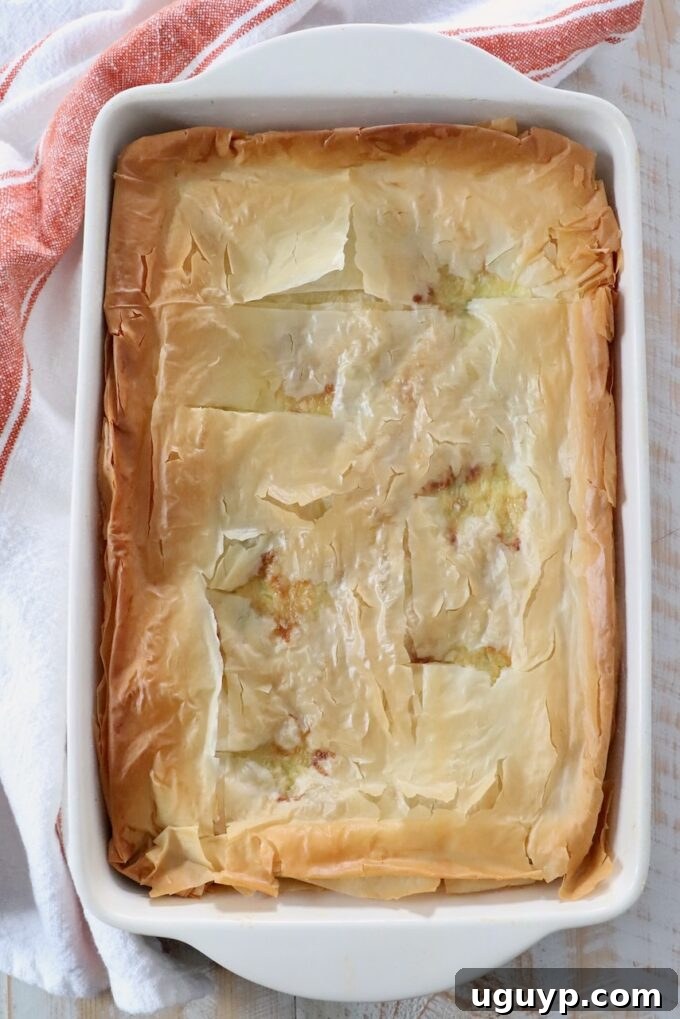
- Add the Top Layer of Phyllo Dough: Carefully place a new sheet of phyllo dough on top of the zucchini filling, then brush it with olive oil. Repeat this process with 5 more sheets of phyllo dough, ensuring each layer is brushed with olive oil before the next is added. Once all the top layers are in place, gently tuck in any phyllo dough that might be overlapping the edges of the baking dish, creating a neat finish. Ensure the entire top surface of the pie is well-covered with olive oil for that beautiful golden crisp. Finally, use a sharp knife to make 6-8 shallow slashes (about 1-2 inches long) across the top of the pie. These vents are important for allowing steam to escape during baking, which helps keep the crust flaky and prevents it from becoming soggy.
- Bake the Pie: Place the assembled pie into your preheated 350°F (175°C) oven. Bake for 50-60 minutes, or until the top layer of the phyllo crust is puffed, deeply golden brown, and appears crisp. The delicious aroma will fill your kitchen! Once baked to perfection, carefully remove the pie from the oven. It’s essential to let the pie rest for at least 20 minutes before attempting to slice and serve. This resting period allows the filling to set further and makes for cleaner cuts, ensuring your Kolokithopita holds its beautiful shape.
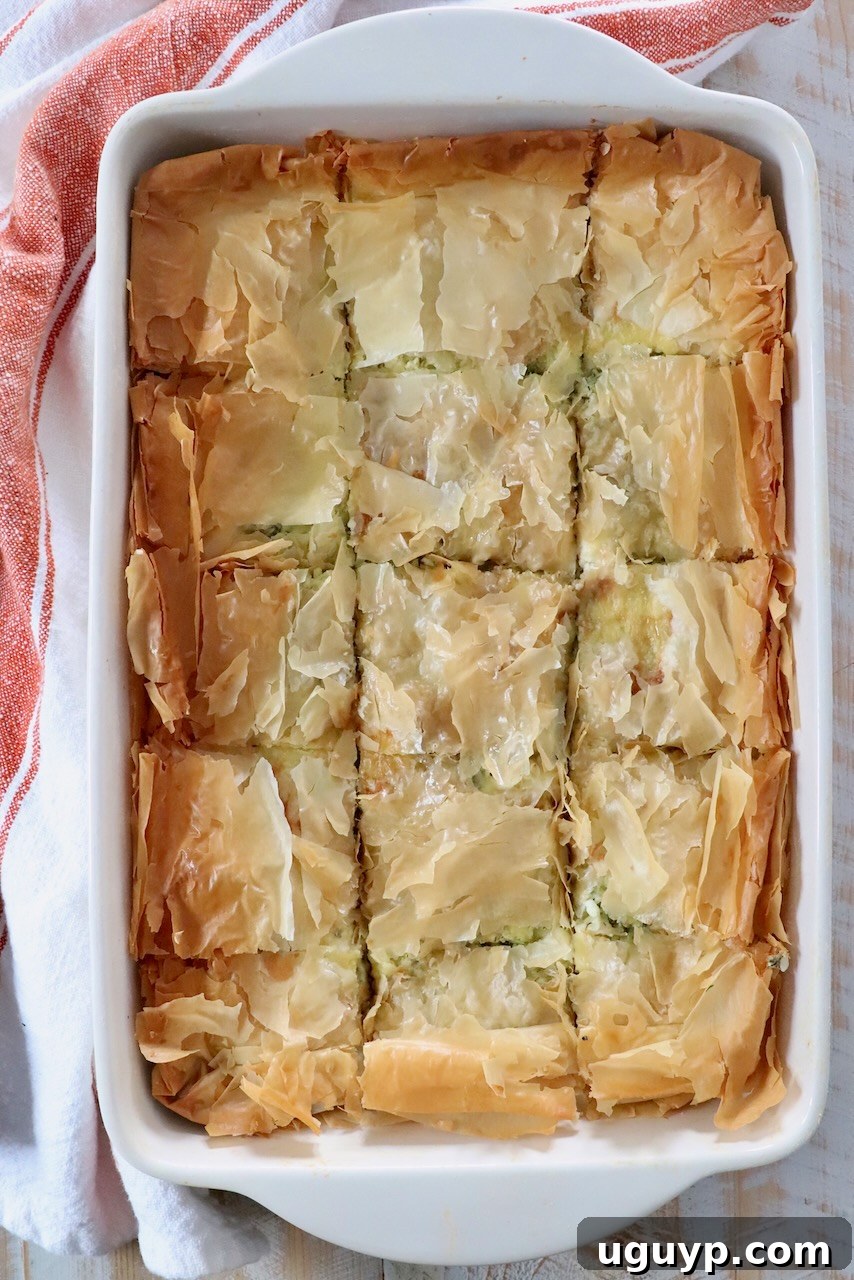
Pro Tips for the Perfect Kolokithopita Every Time
Achieving a show-stopping Greek Zucchini Pie requires attention to a few key details. These professional tips will ensure your Kolokithopita is perfectly flaky, flavorful, and moist without being soggy:
- The Golden Rule: Always Drain the Zucchini! This is perhaps the most crucial step for a successful Kolokithopita. Zucchini naturally contains a very high moisture content. If you skip the draining process and add grated zucchini directly to the filling, it will release excessive liquid as the pie bakes. This moisture will get trapped, resulting in a soggy bottom crust and a watery filling—a culinary disappointment no one wants! By salting and thoroughly squeezing out the water, you concentrate the zucchini’s flavor and guarantee a wonderfully crisp phyllo crust and a perfectly set filling.
- Plan Ahead for Phyllo Dough Thawing: Phyllo dough is a delicate ingredient that requires proper handling. It must be completely thawed before you attempt to unroll and use it. Trying to work with partially frozen dough will cause it to tear and crumble. For best results, either transfer the frozen phyllo package to your refrigerator overnight (at least 8-12 hours) or, if you’re short on time, let it thaw on your kitchen counter at room temperature for a minimum of 3 hours. This gentle thawing process ensures the sheets are pliable and easy to work with.
- Keep Phyllo Covered Until Ready to Use: Once thawed, phyllo dough dries out incredibly quickly when exposed to air, becoming brittle and unmanageable. To prevent this, do not remove the phyllo sheets from their original packaging until you are absolutely ready to begin assembling your pie. Once opened, keep the unused stack of phyllo sheets covered with a damp, clean kitchen towel or plastic wrap while you work on layering each sheet. This maintains its moisture and elasticity, making it much easier to handle.
- Embrace the Olive Oil for Crispiness: Don’t be shy with the olive oil when brushing the phyllo layers. Each layer needs to be adequately coated. The oil is what gives the phyllo its signature golden-brown color, incredible crispness, and rich flavor. Skimping on oil can lead to a dry, less flavorful crust.
- Make-Ahead Options for Convenience: This Kolokithopita recipe is wonderfully adaptable for meal prepping. You can prepare the zucchini and feta filling up to 24 hours in advance. Store it in an airtight container in the refrigerator until you’re ready to assemble the pie. For ultimate convenience, the entire pie can be assembled and baked up to 3 days ahead of time. Once baked and cooled, cover the pie tightly with plastic wrap or foil and store it in the refrigerator. When you’re ready to serve, simply reheat the whole pie, covered, in a 325°F (160°C) oven for 15-20 minutes until warmed through.
Storage and Reheating Kolokithopita
Proper storage and reheating are key to enjoying your Greek Zucchini Pie long after it’s baked, ensuring the phyllo crust retains as much of its desirable crispness as possible. Don’t let any delicious leftovers go to waste!
Storage: Any leftover pie should be stored promptly in the refrigerator. You can either leave it in the original baking dish, tightly covered with plastic wrap or aluminum foil, or transfer individual slices to an airtight container. When stored correctly, the pie will maintain its quality and taste in the refrigerator for up to 5 days. For longer storage, Kolokithopita can be frozen. Wrap individual slices or the entire cooled pie (if cut into portions) tightly in plastic wrap, then a layer of aluminum foil, and place in a freezer-safe bag or container. It will keep well in the freezer for up to 2-3 months. Thaw overnight in the refrigerator before reheating.
Reheating Individual Slices: To preserve the flaky texture of the phyllo dough, I highly recommend reheating individual slices of Kolokithopita in either an oven or an air fryer. Microwaving is generally not advised, as it tends to make the phyllo soggy and chewy, losing its characteristic crispness.
- Air Fryer Method: For the crispiest results, arrange individual pieces of pie in a single layer in your air fryer basket, ensuring they are not touching. This allows for optimal air circulation. Air fry at 400°F (200°C) for 3-5 minutes, or until thoroughly heated and the phyllo is re-crisped.
- Oven Method: Place individual slices on a baking sheet. Preheat your oven to 400°F (200°C) and reheat for approximately 5-8 minutes, or until the pie is warmed through and the crust is crisp again.
Reheating the Whole Pie: If you’re reheating an entire pie (or a large portion of it), place the baking dish, covered with foil, into a preheated 325°F (160°C) oven. Reheat for 15-20 minutes, or until the center is hot. Covering with foil prevents the phyllo from browning too much while the interior heats up. Remove the foil for the last few minutes if you desire extra crispiness on top.
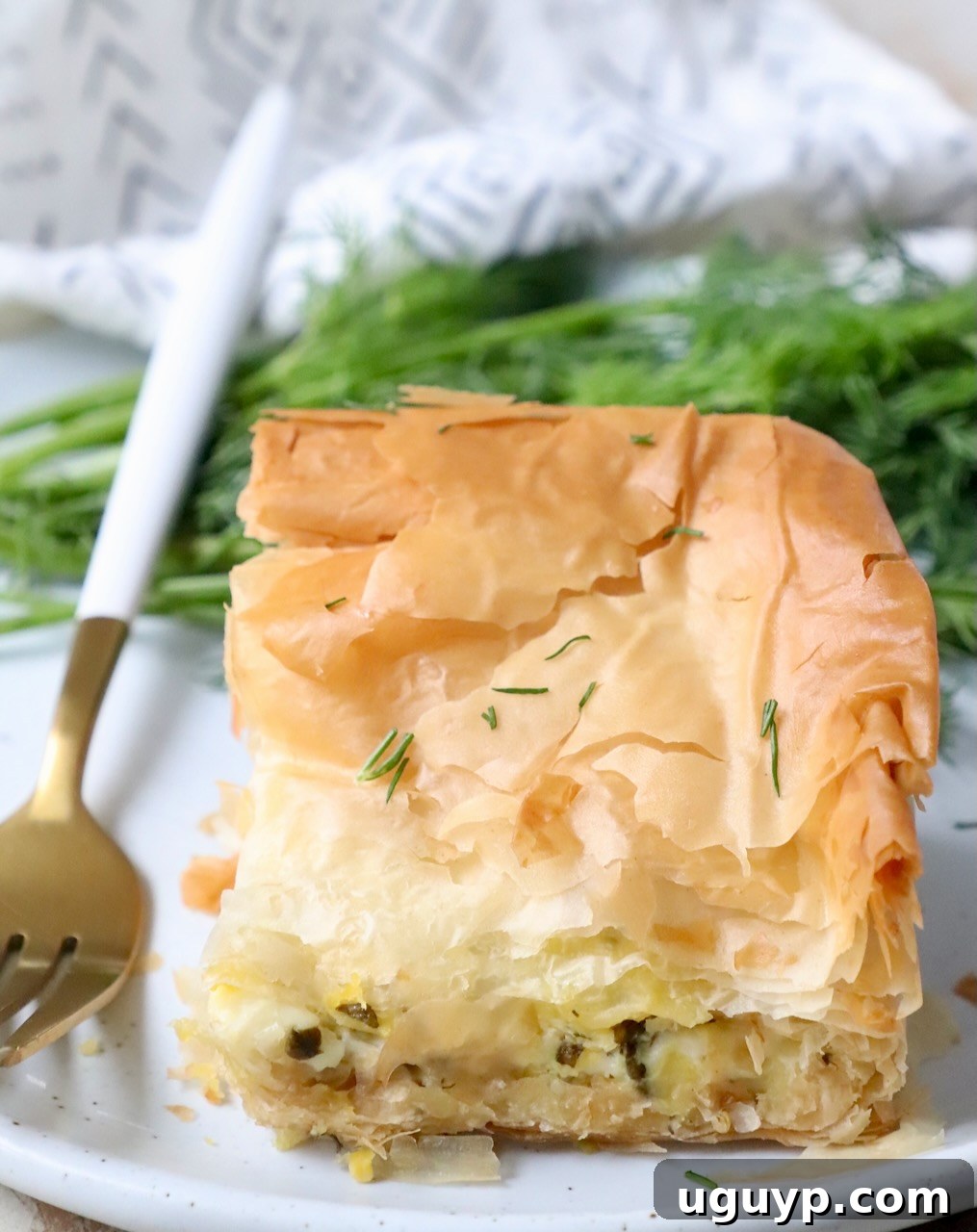
What to Serve with This Greek Zucchini Pie
This recipe yields approximately 15 generous slices of Kolokithopita, making it perfect for sharing—though you might find yourself, like my husband and I, devouring it all within a few days! We enjoyed it for breakfast, lunch, and dinner; it truly is *that good* and versatile.
While delicious on its own, Kolokithopita truly shines when paired with other traditional Greek dishes, making it an excellent appetizer or a delightful component of a larger Mediterranean feast. Consider these fantastic pairings:
- Moussaka: A classic layered casserole with eggplant, minced meat, and béchamel sauce, offering a hearty complement to the lighter zucchini pie.
- Pastitsio: The ultimate Greek baked pasta dish, rich with ground meat and a creamy topping, perfect for a satisfying main course.
- Spicy Feta Dip (Tirokafteri): A flavorful and tangy dip that adds a vibrant kick, ideal for dipping warm bread or fresh vegetables alongside your pie.
- Greek Quinoa Salad: A light, refreshing, and protein-packed salad with cucumber, tomatoes, olives, and feta, balancing the richness of the pie.
- Greek Meatballs (Keftedes) with Tzatziki Sauce: Savory meatballs served with a cool, creamy cucumber-yogurt sauce provide a delightful texture and flavor contrast.
- One Pot Mediterranean Pasta: A simple yet flavorful pasta dish that can easily complete a Mediterranean-inspired meal.
- Greek Marinated Chicken: Juicy, herb-infused grilled or baked chicken offers a lean protein option that harmonizes beautifully with the pie.
- Greek Orzo Salad: A vibrant pasta salad featuring orzo, fresh vegetables, and a zesty dressing, perfect for a lighter side.
- Eggplant Salad (Melitzanosalata): A smoky, creamy eggplant dip that adds another authentic Greek element to your spread.
Whether you’re hosting a dinner party, preparing a lavish brunch, or simply enjoying a quiet meal at home, Kolokithopita is sure to impress and satisfy with its delectable flavors and textures.
More Delightful Zucchini Recipes
Zucchini is a truly remarkable and versatile vegetable, readily available in grocery stores throughout the year. Its mild flavor and firm texture make it an ideal candidate for a myriad of dishes, from savory bakes to grilling specialties. If you find yourself with an abundance of zucchini or simply want to explore more ways to incorporate this healthy vegetable into your cooking, here are some other delicious zucchini recipes to try:

Print
Pin
Rate this Recipe
Greek Zucchini Pie
15
pie slices
40 minutes
50 minutes
1 hour
30 minutes
Whitney Bond
Appetizer, Brunch, Side Dish
Greek
Ingredients
-
2
pounds
zucchini,
peeled and grated -
5
tablespoons
olive oil,
divided – plus more for brushing the phyllo dough -
1
cup
onion,
finely chopped -
2
garlic cloves,
minced -
¼
cup
plain Greek yogurt -
3
eggs,
beaten -
1
pound
feta cheese,
crumbled -
¼
cup
fresh dill,
chopped -
2
tablespoons
fresh parsley,
chopped -
2
tablespoons
fresh mint leaves,
chopped -
½
teaspoon
salt -
½
teaspoon
black pepper -
14
sheets
Phyllo dough
Instructions
-
Make sure to start this recipe by thawing the phyllo dough, either overnight in the fridge, or for 3-4 hours at room temperature.
-
Peel and grate the zucchini. Use a vegetable peeler to peel the skin from the zucchini. Cut off the ends of each zucchini. Use a box grater, salad shooter or the grating attachment on a KitchenAid to grate the zucchini.
-
Place the grated zucchini in a large colander in the sink. Sprinkle with salt (just about ¼ teaspoon) and leave the zucchini for at least 20 minutes, up to 60 minutes, to drain.
-
While the zucchini is draining, heat 1 tablespoon olive oil in a medium skillet on the stove over medium-high heat.
-
Once the oil is hot, add the chopped onions and saute for 3-4 minutes. Add the minced garlic and cook for an additional minute. Remove from the heat and set aside.
-
Wrap the zucchini in a towel and squeeze, getting rid of any excess water. Add the zucchini to a large bowl. Add the cooked onions and garlic to the bowl.
-
Add the remaining 4 tablespoons olive oil, beaten eggs, greek yogurt, crumbled feta cheese, fresh dill, parsley, mint, salt and pepper to the bowl.
-
Stir to combine all of the ingredients and set aside.
-
Preheat the oven to 350°F.
-
Spray a 9” x 13” baking dish with nonstick cooking spray.
-
Pour some olive oil (around 1/4 – 1/2 cup) in a small bowl and grab a pastry brush.
-
Add a sheet of phyllo dough to the bottom of the pan, brush with olive oil. Continue to layer 7 more sheets of phyllo dough, brushing each sheet with olive oil before adding the next sheet of dough.
-
Cover the phyllo dough with the prepared zucchini filling.
-
Top with a sheet of phyllo dough, brush with olive oil. Continue to layer 5 more sheets of phyllo dough, brushing each sheet with olive oil before adding the next sheet of dough.
-
Use a sharp knife to cut 6-8 slashes (1-2 inches long) in the top of the pie so that steam can release as the pie bakes in the oven.
-
Place in the oven and bake at 350°F for 50-60 minutes, or until the top layer of the crust starts to turn golden brown.
-
Remove from the oven and let rest at least 20 minutes before slicing into 15 pieces and serving.
Notes
- Don’t skip the step of draining the zucchini! Zucchini has a high moisture content. If you simply grate it and add it straight to the filling, the zucchini will release too much liquid as the pie bakes in the oven and you will get a soggy pie. No one wants that!
- Always be sure to thaw the phyllo dough ahead of time! Either place the dough in the refrigerator overnight, or remove it from the freezer and allow it to thaw at room temperature for at least 3 hours.
- Do not remove the phyllo pastry sheets from the box until you’re ready to prepare the pie! Phyllo dough dries out quickly, so you don’t want to remove it from the packaging until you’re ready to use the dough. Once the filling for the pie is prepared and you’ve greased a baking pan, you’re ready to remove the phyllo dough and start assembling the pie.
- This recipe can be made ahead of time. Make the filling up to 24 hours in advance and store it in the refrigerator until you’re ready to assemble the pie. The entire pie can be assembled and baked up to 3 days ahead of time. Cover and store the pie in the refrigerator. When ready to serve the pie, place it back in the oven, covered, at 325°F for 15-20 minutes to reheat the entire pie.
- Store any leftover pie in the fridge, either covered in the baking dish or in an airtight container. The pie will stay good in the refrigerator for up to 5 days.
- To reheat individual pieces of pie in the air fryer, make sure the pieces of pie are not touching so that there’s room for air to circulate around the pieces of pie. Air fry at 400°F for 3-5 minutes.
- To reheat individual pieces of pie in the oven, separate the pieces on a baking sheet. Preheat the oven to 400°F and reheat for 5 minutes.
- To reheat the whole pie, place the baking dish, covered, in a 325°F oven and reheat for 15-20 minutes.
Nutrition Facts
Calories
205
kcal
(10%)
Carbohydrates
14
g
(5%)
Protein
8
g
(16%)
Fat
13
g
(20%)
Saturated Fat
5
g
(25%)
Polyunsaturated Fat
1
g
Monounsaturated Fat
6
g
Trans Fat
0.003
g
Cholesterol
60
mg
(20%)
Sodium
528
mg
(22%)
Potassium
237
mg
(7%)
Fiber
1
g
(4%)
Sugar
2
g
(2%)
Vitamin A
431
mg
(9%)
Vitamin C
13
mg
(16%)
Calcium
177
mg
(18%)
Iron
1
mg
(6%)
Did you make this recipe?
Tag @WhitneyBond on Instagram and hashtag it #WBRecipes!