Secrets to Perfectly Hard-Boiled Eggs
- Ticket
- № 7479
- Served
- Read
- 12 min
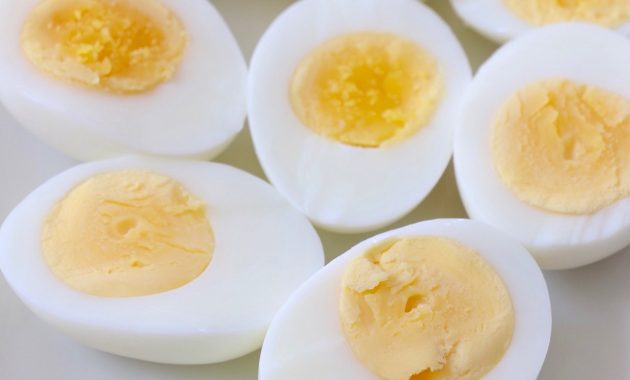
Unlock the secret to crafting perfect hard-boiled eggs every single time with our meticulously TESTED and PERFECTED methods! This comprehensive stove-top recipe ensures you achieve consistently delightful hard-boiled eggs featuring a creamy, vibrant yolk and a tender, soft white exterior. Whether you’re planning to whip up delectable Deviled Eggs, a hearty Egg Salad, or a refreshing Cobb Salad, this guide will make them the star of your dish. Say goodbye to rubbery whites and green rings around your yolks – your quest for the ultimate hard-boiled egg ends here!
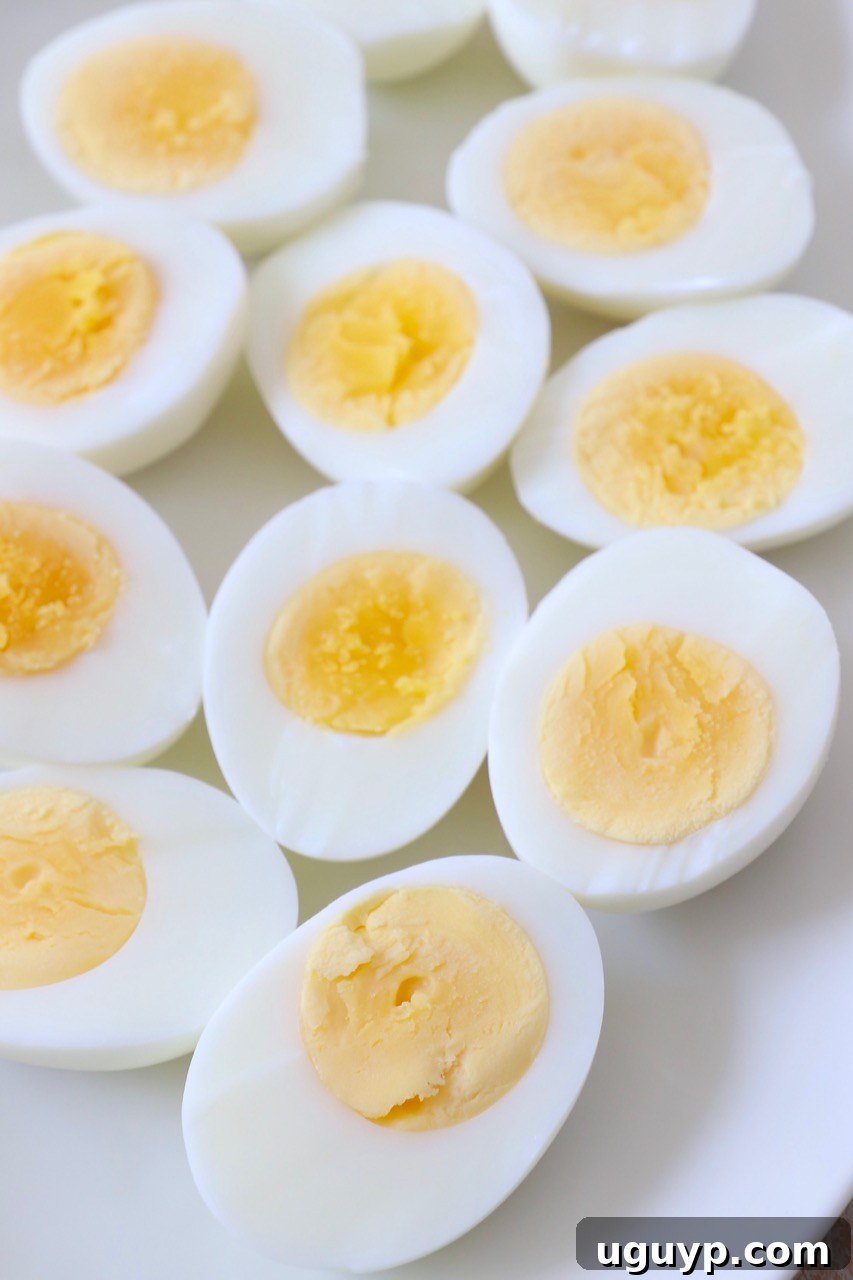
Table of contents
- Mastering the Art of Hard Boiling Eggs: Step-by-Step Instructions
- Effortless Peeling: The Secret to Smooth Hard-Boiled Eggs
- Expert Tips for Hard-Boiled Egg Perfection
- Storage Solutions for Fresh Hard-Boiled Eggs
- Creative Ways to Enjoy Your Hard-Boiled Eggs
When your refrigerator is overflowing with a fresh bounty of eggs, one of the most practical and satisfying culinary endeavors is preparing a generous batch of hard-boiled eggs. These humble kitchen staples are not only incredibly versatile but also packed with protein, making them an ideal component for healthy meals and quick snacks throughout your week.
But the age-old question remains: how do you achieve truly perfect hard-boiled eggs? The kind that are miraculously easy to peel, devoid of that unsightly green ring around the yolk, and boast a perfectly set, tender yolk without being overcooked or, worse, undercooked? It might seem like an elusive goal, fraught with potential pitfalls and frustrating attempts. Yet, we’re here to tell you it’s not impossible; in fact, with the right technique and a few simple tricks, achieving perfection is remarkably easy to do.
Eggs offer an unparalleled array of possibilities for your weekly meal planning. Imagine grating them over creamy avocado toast for a protein-rich breakfast, sprinkling them with your favorite seasonings for a quick and satisfying snack, or chopping them into vibrant salads. They form the foundation of classic sandwiches, elevate pasta dishes, and serve as an essential ingredient in countless appetizers. From breakfast to dinner, the culinary applications of a perfectly hard-boiled egg are truly endless, making this skill a valuable addition to any home cook’s repertoire.
Mastering the Art of Hard Boiling Eggs: Step-by-Step Instructions
Follow these precise steps to ensure your hard-boiled eggs turn out flawlessly, with consistent results every time.
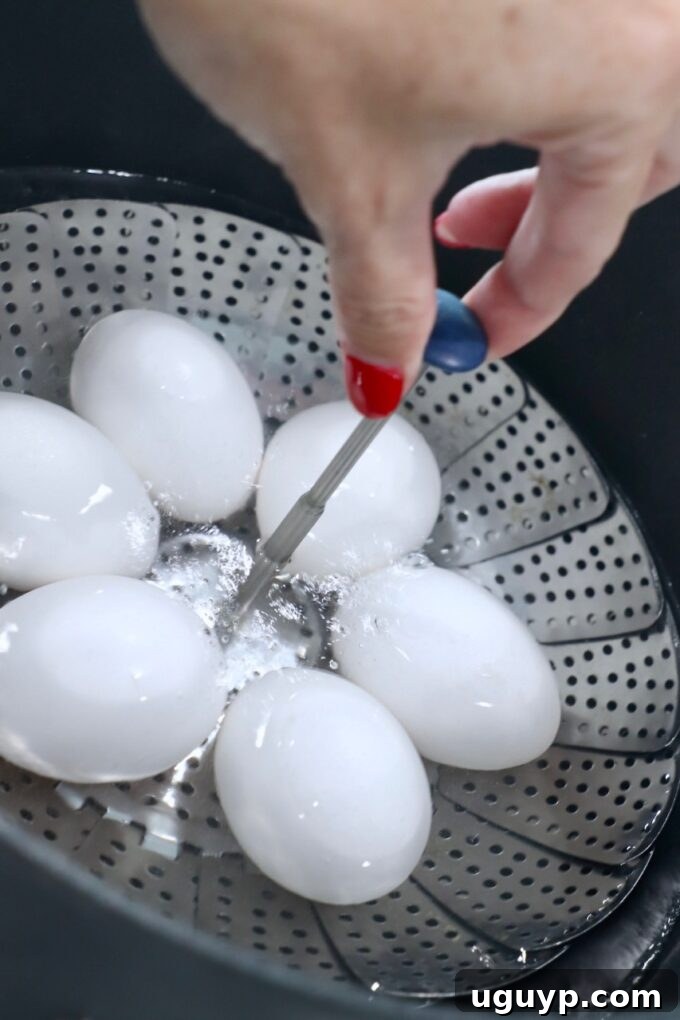
- Prepare the Water: Begin by filling a large pot with an adequate amount of water. You’ll want approximately 6-8 cups, ensuring there’s enough liquid to completely submerge all your eggs in a single layer. Place the pot on your stove over high heat and bring the water to a vigorous, rolling boil. This strong boil is crucial for consistent cooking temperatures.
- Cook the Eggs with Precision: Carefully lower your eggs into the intensely boiling water. You can do this gently, one by one, using a slotted spoon to prevent cracking. Alternatively, for greater ease and efficiency, load them all into a steamer basket and lower the entire basket into the pot. This steamer basket method is highly recommended as it allows for simultaneous addition and removal of eggs, reducing the risk of uneven cooking. Immediately cover the pot with a tight-fitting lid. Reduce the heat on the stove to a medium setting, maintaining a gentle simmer, and allow the eggs to cook for precisely 11 minutes.
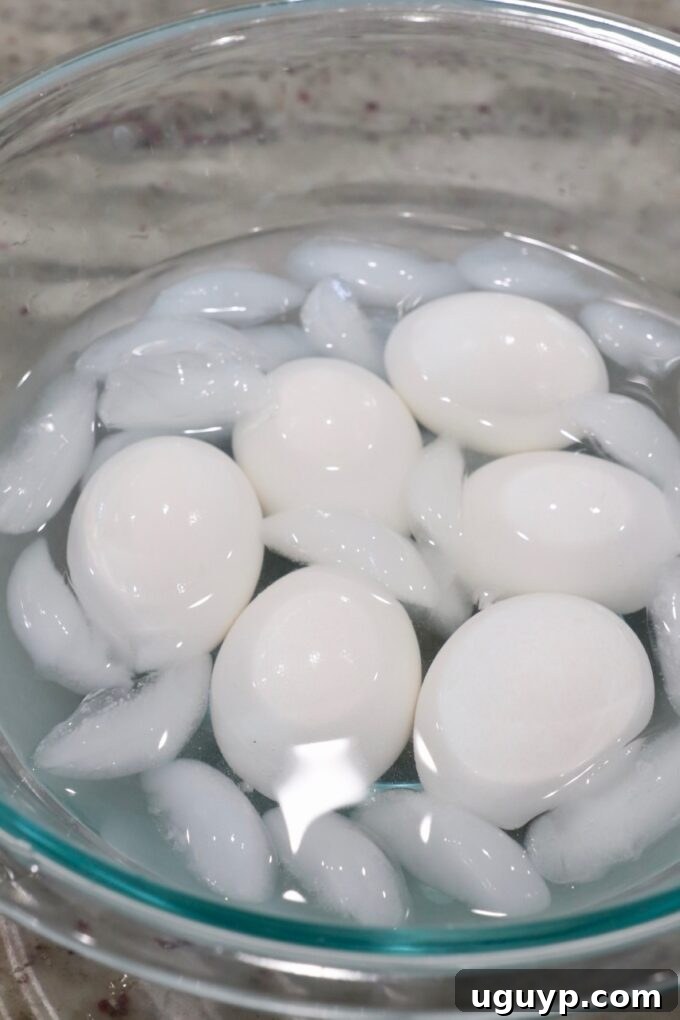
- Shock the Boiled Eggs in an Ice Bath: Once the 11 minutes are up, promptly remove the pot from the heat. Using a slotted spoon or by lifting the steamer basket, carefully transfer the eggs from the hot boiling water directly into a large bowl generously filled with ice water. This immediate temperature change, known as “shocking,” is vital for halting the cooking process and preventing the formation of that undesirable greenish ring around the yolk. Let them rest and cool completely in this cold water for at least 15 minutes.
- Store or Enjoy Immediately: After the ice bath, your perfect hard-boiled eggs are ready! You can either peel them and enjoy them right away, or store the unpeeled hard-boiled eggs in the refrigerator. When stored properly, unpeeled eggs will remain fresh and delicious for up to one week.
Effortless Peeling: The Secret to Smooth Hard-Boiled Eggs
One of the most common frustrations with hard-boiled eggs is the difficulty in peeling them without damaging the delicate whites. While some cooks might argue against its necessity, adding baking soda to the boiling water is a game-changer for achieving consistently easy-to-peel eggs. My own extensive experiments have consistently demonstrated its effectiveness.
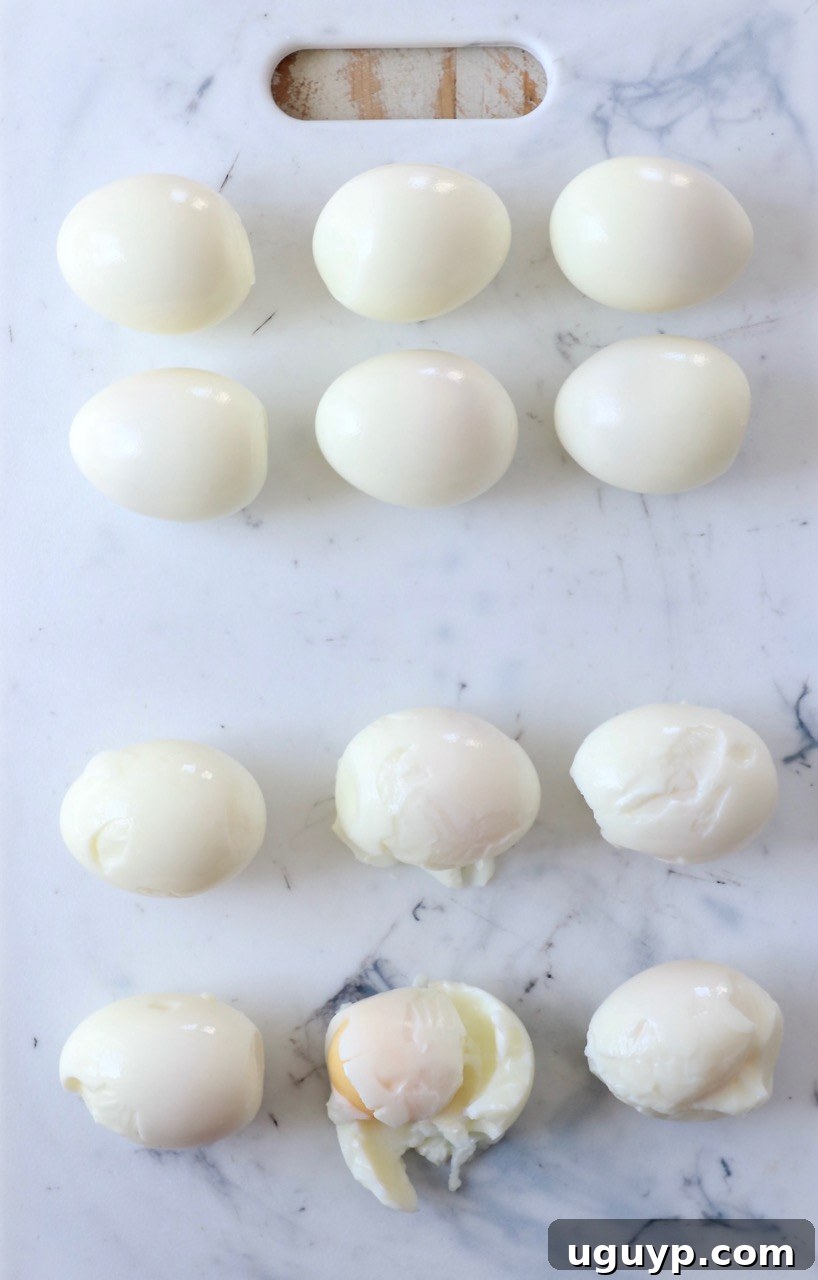
To illustrate this, I conducted a side-by-side comparison: boiling eggs from the same carton, using identical cooking times and temperatures. The crucial difference was the addition of baking soda to one batch, and none to the other. The results were visually striking.
As depicted in the image above, the six eggs positioned at the top were cooked with a touch of baking soda in the water. Their shells practically glided off, revealing perfectly smooth, unblemished hard-boiled eggs beneath. In stark contrast, the bottom six eggs, cooked without baking soda, proved significantly more challenging to peel. Each attempt resulted in fragments of egg white clinging stubbornly to the shell, leading to a noticeable loss of the pristine exterior.
Therefore, let my experiment serve as a clear lesson: for consistently easy-to-peel eggs every single time, always add a teaspoon of baking soda to your boiling water. This simple addition slightly raises the pH level of the water, which helps to weaken the bond between the egg white and the inner membrane, making peeling a breeze. Once your eggs are perfectly cooked and shocked, follow these straightforward instructions to peel them with ease:
- After their essential 15-minute ice bath, remove the eggs one by one, ensuring they are thoroughly chilled.
- Gently tap each egg against a hard surface – such as your countertop or cutting board – first on the top and bottom, and then lightly on one side. This action creates a network of fine cracks across the shell.
- With the shell sufficiently cracked, gently begin peeling it away from the hard-boiled egg. For maximum tidiness, we recommend performing this step over a colander in the sink. This allows you to easily collect and discard all the shell fragments into the trash once you’ve finished peeling.
- After peeling, rinse the egg under cool running water. This final rinse helps to dislodge any remaining tiny membrane bits or stray shell fragments, leaving you with a perfectly clean and smooth egg.
If you encounter a particularly stubborn egg where the shell still proves difficult to peel, don’t despair! Place the cracked egg in a small bowl of water and let it soak for a few minutes. The water will seep underneath the membrane, further loosening its grip and making it considerably easier to peel. Alternatively, you can try peeling the egg directly under a slow stream of running water, which also aids in separation.
Expert Tips for Hard-Boiled Egg Perfection
Beyond the core instructions, these expert insights will elevate your hard-boiling game, ensuring consistently perfect results and making the process smoother.
- Temper Your Eggs: For best results and to minimize cracking, remove your eggs from the refrigerator approximately 15-20 minutes before you intend to start boiling the water. Allowing them a few minutes to warm up slightly to room temperature helps prevent the thermal shock that can cause cold eggs to crack when suddenly introduced to intensely hot water.
- Mind Your Egg Size: The cooking time specified in this recipe, 11 minutes, is optimized for large eggs. If you are using eggs of a different size – whether extra-large, medium, or small – be aware that the cook time will likely need to be adjusted accordingly. Smaller eggs will cook faster, while larger ones may require an additional minute or two.
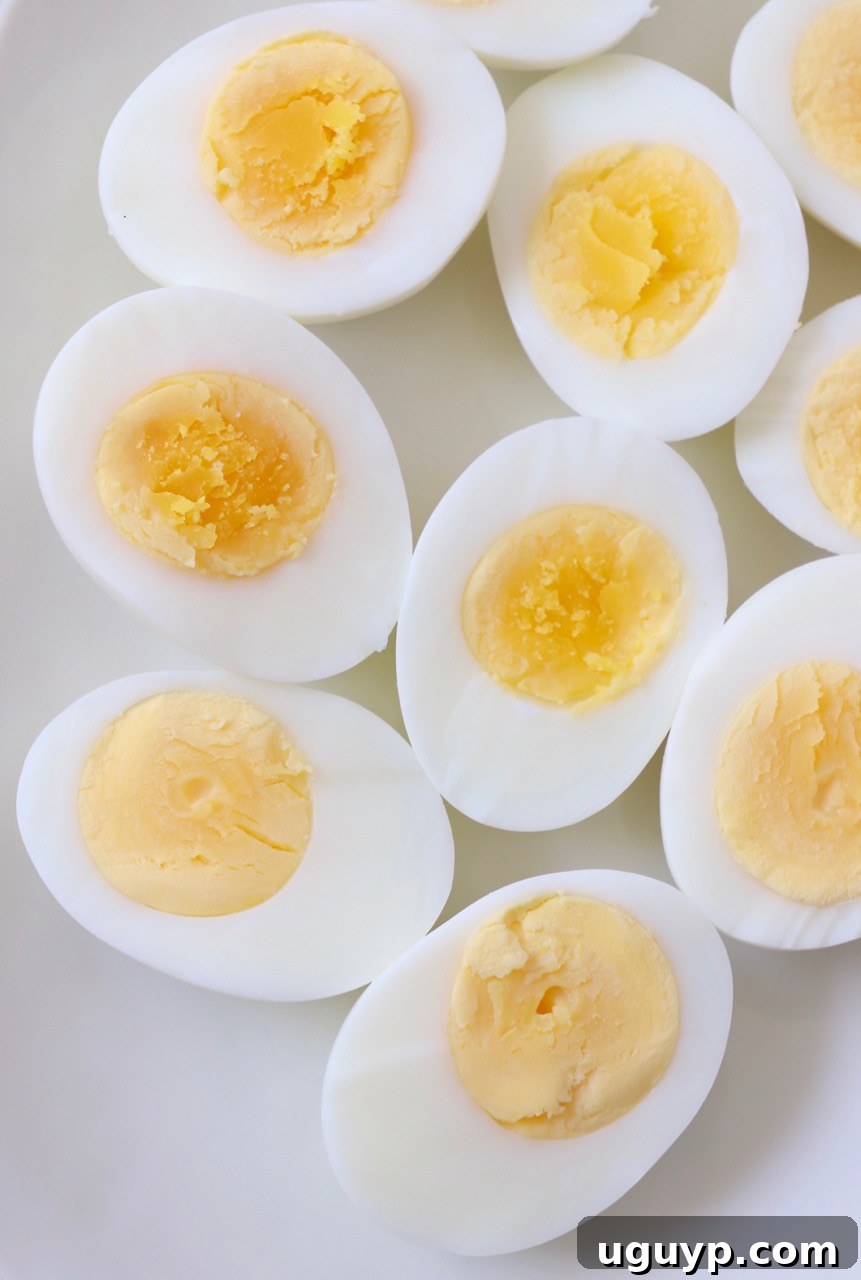
- The Crucial Ice Bath: Do not, under any circumstances, skip the ice bath! That unattractive green-gray ring you sometimes observe around the yolk is a tell-tale sign of an overcooked egg, caused by a reaction between iron in the yolk and sulfur in the white. Immediately shocking the eggs in ice-cold water instantly halts the cooking process, preventing this discoloration and ensuring a bright, creamy yellow yolk. Furthermore, the rapid cooling helps to contract the egg, which aids in separating the inner membrane from the whites, making for much easier peeling.
- Choose Older Eggs for Easy Peeling: Counterintuitively, older eggs are much easier to peel than very fresh ones. As eggs age, the pH level of their whites increases, which causes the inner membrane to detach more readily from the shell. Most eggs purchased from a typical grocery store are already at least a week old by the time they reach your home, making them ideal for hard-boiling. If you’re fortunate enough to receive farm-fresh eggs, particularly those laid that very morning, it’s highly advisable to wait at least one week before hard-boiling them to ensure effortless peeling.
- Adjust for Soft-Boiled Eggs: This versatile method can also be used to create perfect soft-boiled eggs. Simply adjust the cooking time: instead of simmering for 11 minutes, set your timer for 6 minutes. This will yield a delicate, jammy yolk that’s wonderfully runny in the center, perfect for dipping toast or serving atop a bowl of ramen.
Storage Solutions for Fresh Hard-Boiled Eggs
Proper storage is key to maintaining the freshness and quality of your hard-boiled eggs. Understanding how to store them effectively will help you enjoy them longer and prevent spoilage.
It is generally recommended to keep the shell on hard-boiled eggs during storage, as the shell acts as a natural protective barrier, helping the eggs stay fresh for an extended period. Unpeeled hard-boiled eggs, when stored correctly in the refrigerator, will remain good for up to 1 week. Once peeled, their protective layer is gone, so peeled hard-boiled eggs should be consumed within 2-3 days for optimal freshness and safety.
To prevent any lingering egg odors from permeating other items in your refrigerator, always store your hard-boiled eggs in an airtight container. This simple step locks in freshness and keeps your fridge smelling clean.
While it is technically possible to freeze hard-boiled eggs, it is generally not recommended to freeze them whole. The primary reason for this caution is that the texture of the egg white tends to become noticeably rubbery and unappetizing once defrosted, significantly diminishing the eating experience. However, the yolks fare much better in the freezer! If you wish to preserve hard-boiled egg yolks, simply separate them from the whites, place them in an airtight freezer-safe container or bag, and freeze. When you’re ready to use them, defrost them slowly in the refrigerator overnight. These frozen and defrosted yolks are perfect for crumbling over salads, incorporating into sauces, or using in dishes where texture is less critical than flavor.
Creative Ways to Enjoy Your Hard-Boiled Eggs
The versatility of hard-boiled eggs extends far beyond just eating them plain. They are a fantastic snack on their own or an invaluable ingredient in a myriad of dishes. Here are some of the best and most creative ways to incorporate your perfectly cooked hard-boiled eggs into your diet, transforming simple ingredients into delightful meals.
For a quick, satisfying snack, simply slice your hard-boiled eggs in half and top them with any of these delicious additions:
- A classic sprinkle of salt and freshly ground black pepper for a timeless taste.
- Creamy mashed avocado or a dollop of zesty guacamole for a healthy fat boost.
- A generous spread of hummus – especially delicious with this vibrant Spicy Sriracha Hummus!
- A dash of trendy Everything Bagel Seasoning for a savory crunch.
- A sprinkle of homemade Ranch Seasoning for a burst of herbaceous flavor.
- A touch of your favorite mustard for a tangy kick.
- A few drops of hot sauce to add a spicy zing.
Beyond snacking, your perfect hard-boiled eggs are essential for these fantastic recipes:
- Slice and add them generously to your favorite mixed green salad, or explore exciting variations like a Cajun Turkey Cobb Salad, a refreshing Crispy Chicken Salad, or this nutritious Healthy Cobb Salad.
- Create a delightful Avocado Egg Salad, perfect for spreading on toast, serving in lettuce cups, or making classic sandwiches!
- Incorporate them into a hearty Cheddar Ranch Instant Pot Potato Salad for a picnic-ready side dish.
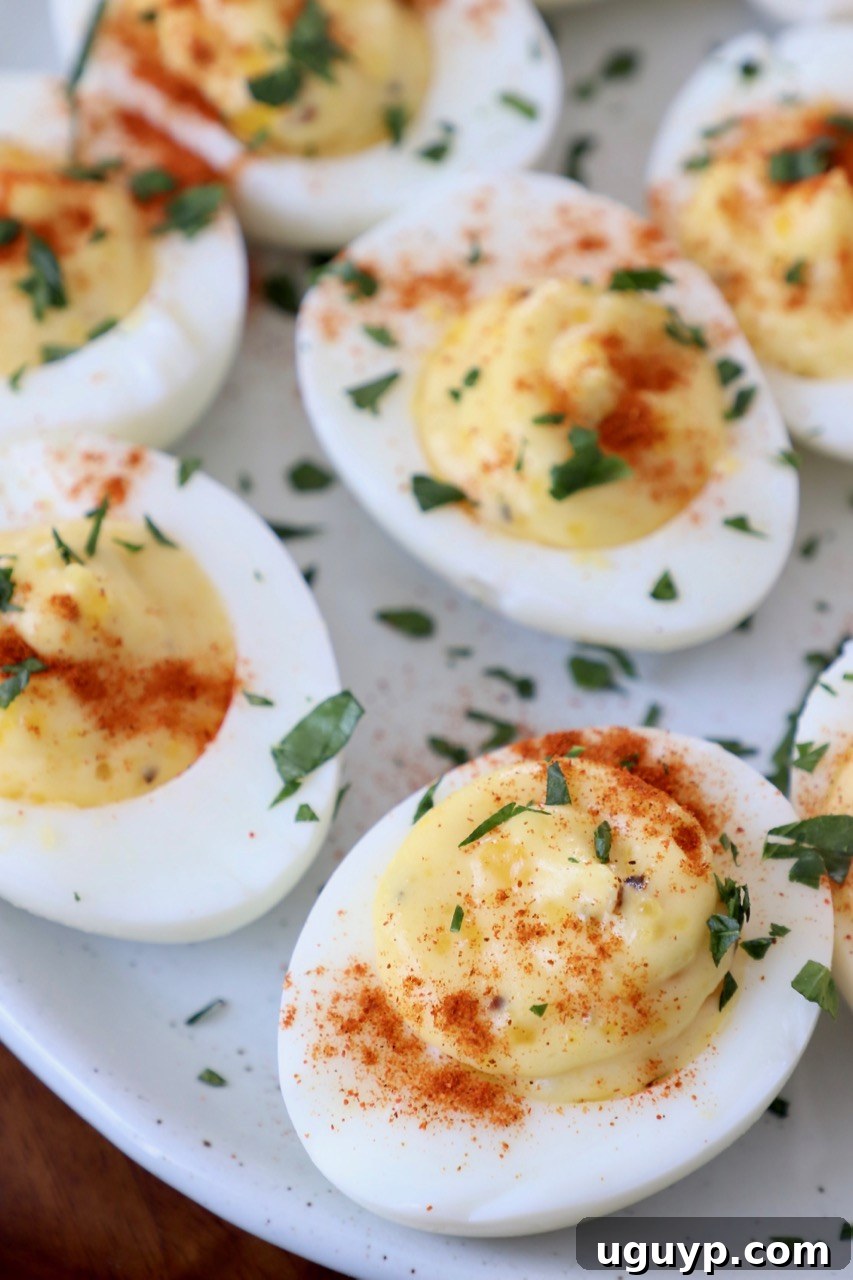
- The ultimate use: prepare classic Classic Deviled Eggs (pictured above), or experiment with exciting twists such as Deviled Eggs with Relish, spicy Buffalo Deviled Eggs, or vibrant Beet Deviled Eggs.
- Elevate your appetizer game with Bacon and Blue Deviled Eggs for a gourmet touch.
- Dice them finely and sprinkle over tender Grilled Asparagus for added protein and texture.
- Add flavorful slices to deli sandwiches or wraps for a quick and nutritious lunch.
- Place medium or hard-boiled eggs on top of a savory bowl of Miso Ramen soup to enhance richness and heartiness.
- Utilize them in this delicious and creative recipe for Deviled Egg Pasta Salad, a comforting and flavorful meal.
Print Recipe
Pin Recipe
Rate this Recipe
Hard Boiled Eggs
Video
For a visual guide, watch our detailed video demonstration on how to perfectly hard boil eggs:
Ingredients
- 6 large eggs
- 1 teaspoon baking soda
Instructions
- Add 6-8 inches of water to a large pot. Ensure there is enough water to completely cover the eggs.
- Place the pot on the stove over high heat and bring the water to a rapid, rolling boil.
- Once the water has reached a vigorous boil, carefully add the baking soda to the water.
- Gently lower the eggs into the boiling water. This can be done one by one with a slotted spoon or by placing them all into a steamer basket and lowering the basket into the water.
- Cover the pot with a lid, reduce the heat on the stove to medium, and cook the eggs for precisely 11 minutes.
- Remove the pot from the heat. Using a slotted spoon, carefully remove each egg from the hot water and immediately transfer them into a large bowl filled with ice water.
- Allow the eggs to remain submerged in the ice bath for 15 minutes to fully halt the cooking process.
- Remove the eggs from the ice bath. You can peel them immediately to eat or use in a recipe, or place them unpeeled in the refrigerator for later consumption.
- When ready to peel, gently tap the eggs against a hard surface on both the top and bottom, and then lightly on one side to create cracks in the shell.
- Carefully peel the shell from the hard-boiled eggs.
- Rinse the peeled egg under cool running water to ensure all membrane and shell fragments are removed.
Notes
- Temper your eggs: Remove eggs from the refrigerator 15-20 minutes before boiling to prevent cracking.
- Egg Size Matters: The 11-minute cook time is for large eggs. Adjust cooking time for different sizes.
- Older eggs are easier to peel: Opt for eggs that are at least one week old for best peeling results.
- Soft-boiled option: For soft-boiled eggs with a runny yolk, simmer for 6 minutes instead of 11.
- Storage: Store unpeeled hard-boiled eggs in the refrigerator for up to 1 week. Peeled eggs should be eaten within 2-3 days.
- Airtight containers: Always seal hard-boiled eggs in an airtight container to prevent odor transfer in the fridge.
- Freezing: Freezing whole hard-boiled eggs is not recommended due to rubbery whites. However, yolks freeze well; separate and store them in an airtight freezer-safe container, then defrost in the fridge.