Effortless Pomegranate Seeding
- Ticket
- № 4513
- Served
- Read
- 14 min
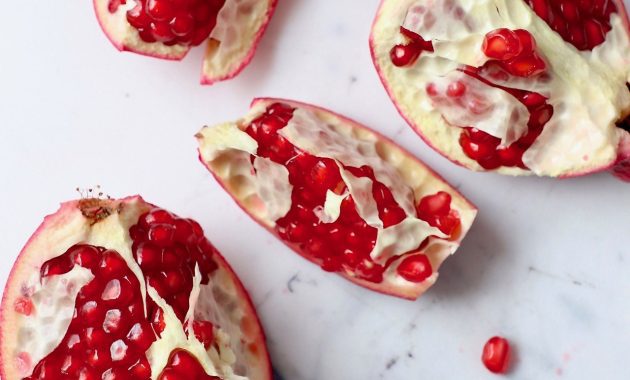
Discover the vibrant world of pomegranates with this ultimate guide on how to cut a pomegranate and effortlessly remove its jewel-like seeds. Often called pomegranate seeds, these tender, juicy morsels are scientifically known as arils. Their dazzling bright red color and exquisite sweet-tart flavor make them a truly delicious and visually stunning addition to an array of culinary creations. From refreshing salads to decadent desserts, mastering the art of deseeding a pomegranate unlocks a universe of flavorful possibilities.
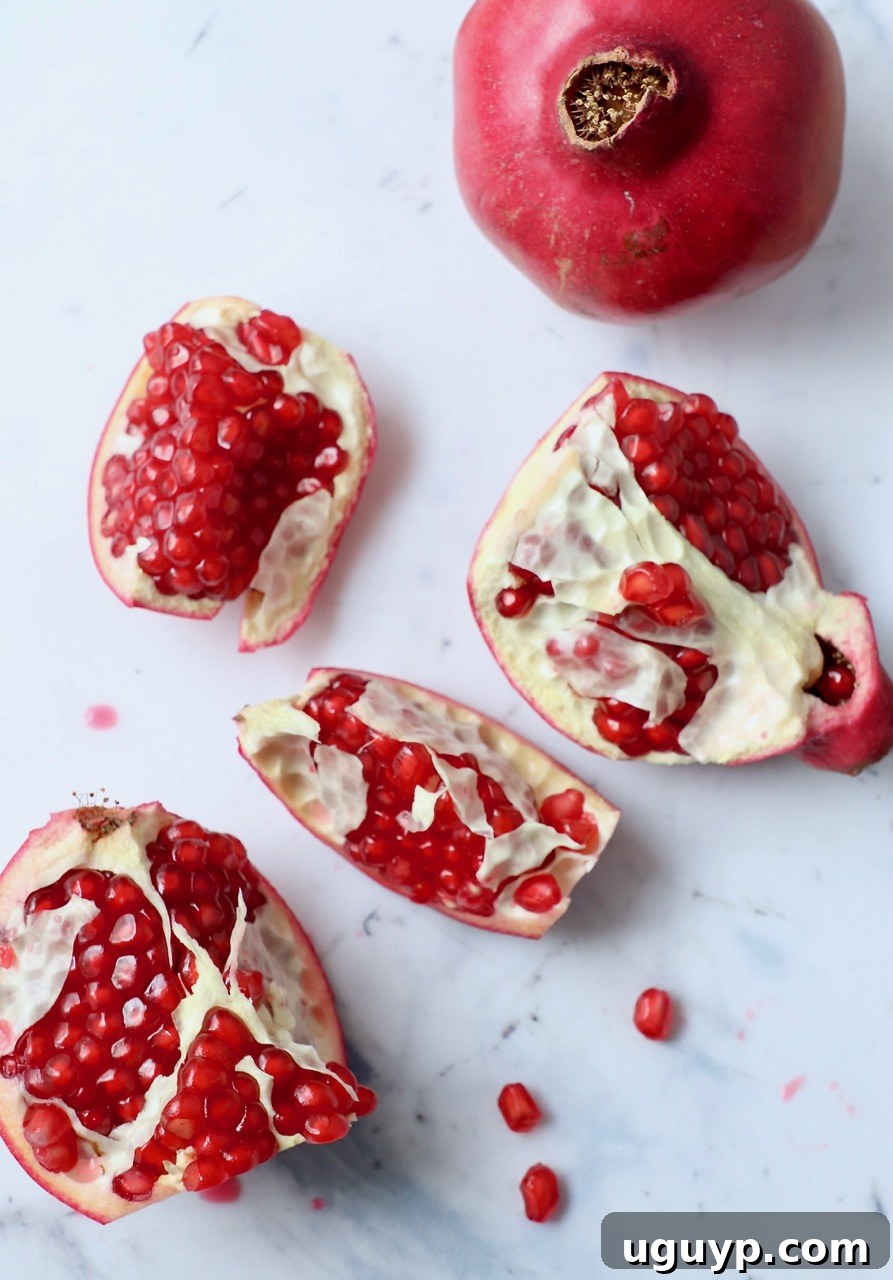
Table of Contents: Your Pomegranate Journey
- The Allure of Pomegranates: A Culinary Gem
- Selecting the Perfect Pomegranate: Tips for Optimal Freshness
- Essential Tools for Pomegranate Preparation
- How to Cut a Pomegranate: The Easy Scoring Method
- How to Remove the Seeds: The Mess-Free Water Immersion Technique
- Storage Options: Keeping Your Arils Fresh
- How to Make Pomegranate Juice: A Refreshing Homemade Treat
- The Remarkable Health Benefits of Pomegranates
- Ways to Use Pomegranate Arils: Culinary Inspirations
- Frequently Asked Questions About Pomegranates
- More Kitchen Tutorials to Master
The Allure of Pomegranates: A Culinary Gem
Often celebrated for their stunning appearance and distinctive flavor, pomegranates (Punica granatum) have captivated cultures for centuries. Native to the Middle East, these ancient fruits are more than just a feast for the eyes; they are packed with an impressive array of nutrients and a uniquely complex taste profile. What we commonly refer to as pomegranate seeds are actually the juicy, translucent casings that surround the tiny, edible inner seed, known as arils. These little gems boast a wonderfully balanced sweet and tart flavor that brightens any dish.
The thought of deseeding a pomegranate can sometimes feel daunting, conjuring images of stained hands and kitchen counters. However, with the right technique, extracting these precious arils is surprisingly simple and satisfying. This comprehensive guide will demystify the process, sharing an easy, mess-free method that will have you enjoying fresh pomegranate arils in no time. Once you master this skill, you’ll find yourself reaching for pomegranates more often, eager to incorporate their vibrant color and tantalizing taste into your everyday meals and special occasions.
Selecting the Perfect Pomegranate: Tips for Optimal Freshness
Before you begin, choosing a ripe and healthy pomegranate is key to a rewarding experience. Look for fruits that are heavy for their size, as this indicates a high juice content within the arils. The skin should be firm, taut, and glossy, without any soft spots, bruises, or cracks. A ripe pomegranate often has a slightly flattened, angular shape rather than being perfectly round, suggesting that the arils inside have fully developed and are pressing against the rind. While the color can vary from bright red to a deeper reddish-brown, uniform coloration is generally a good sign. Avoid pomegranates with shriveled or dry skin, as these are likely past their prime and will yield fewer, less juicy arils.
Essential Tools for Pomegranate Preparation
Gathering your tools beforehand will ensure a smooth and efficient deseeding process. You won’t need anything fancy, just a few basic kitchen items:
- A Sharp Knife: A small, sharp paring knife or a chef’s knife is ideal for making precise cuts without damaging the delicate arils inside.
- A Large Bowl: Essential for the water immersion method, as it will contain the arils and prevent splattering.
- Cold Water: To fill the bowl, facilitating the separation of arils from the pith.
- A Fine-Mesh Strainer: For draining the arils once they are separated.
- A Cutting Board: To protect your countertop while slicing the pomegranate.
- Optional: An Apron: Pomegranate juice can stain, so wearing an apron is a good precautionary measure, especially if you’re new to the process.
How to Cut a Pomegranate: The Easy Scoring Method
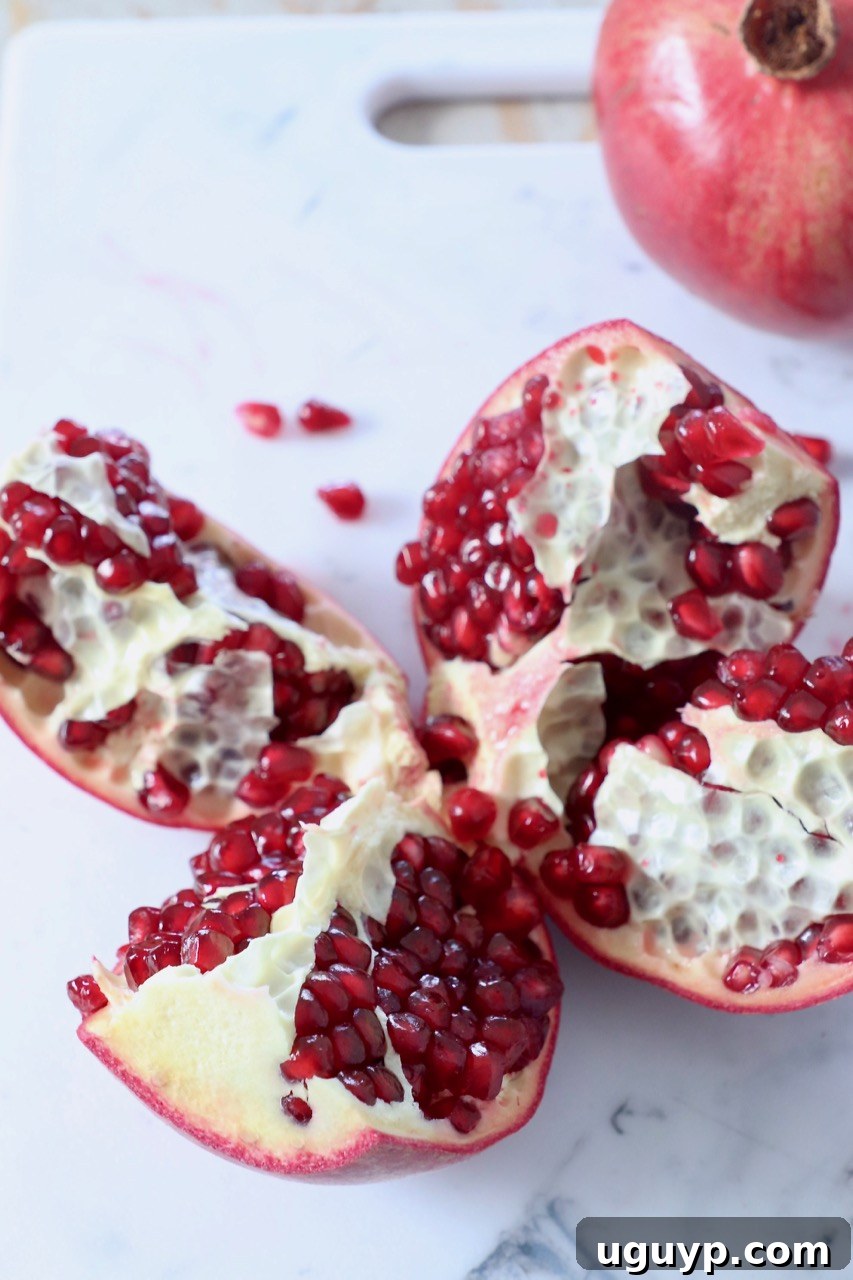
The primary goal when preparing a pomegranate is to open it without puncturing or crushing the precious arils within. A clean cut ensures less mess and perfectly intact arils for your recipes. This simple scoring method will guide you to a perfectly sectioned pomegranate.
-
Prepare the Pomegranate:
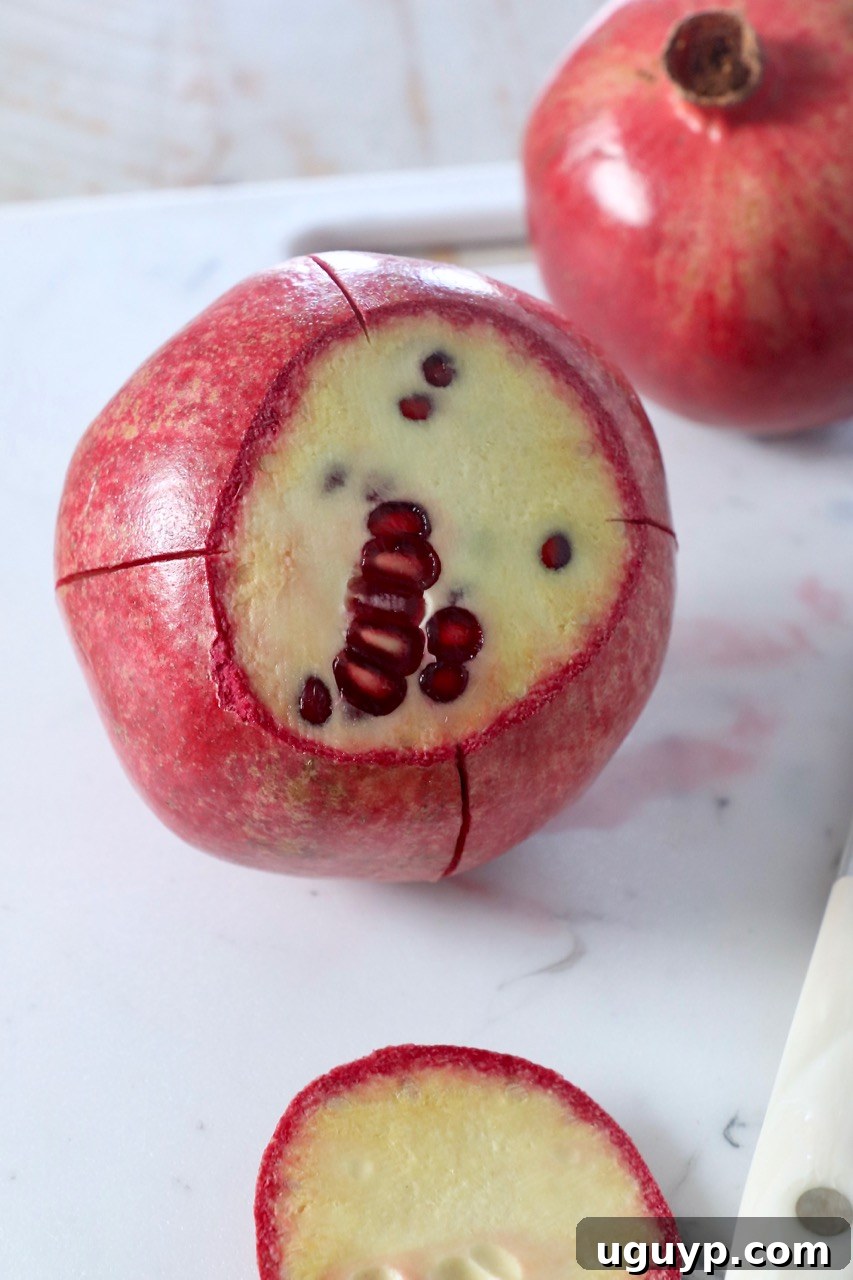
Start by placing the pomegranate on a stable cutting board. Using your sharp knife, carefully slice off a thin piece from the stem end (the top, where the crown is) of the pomegranate. Then, flip it over and cut another thin slice from the blossom end (the bottom, which is usually flatter). This creates two flat surfaces, allowing the pomegranate to sit stably and making it easier to identify the internal ridges.
-
Identify Ridges and Score the Skin:
Examine the exterior of the pomegranate. You’ll notice subtle ridges or lines running vertically down the sides, corresponding to the internal membranes that separate the arils. Using your knife, score along these natural ridges, making shallow cuts through the outer skin only. Be careful not to cut too deeply, as you want to avoid piercing the arils themselves. Aim for 4 to 6 equally spaced scores around the fruit.
-
Gently Separate the Sections:
Once you’ve scored the pomegranate, use your thumbs or fingers to gently pull the scored sections apart. The fruit should easily split into segments along the cuts you made, revealing the beautiful clusters of arils nestled within the white pith. You’ll now have 4 to 6 manageable sections, ready for deseeding.
How to Remove the Seeds: The Mess-Free Water Immersion Technique
Now that your pomegranate is beautifully sectioned, it’s time for the most efficient and least messy method for extracting those precious arils: the water immersion technique. This method minimizes splattering and makes separating the arils from the bitter white pith incredibly easy.
-
Prepare Your Workspace with Water:
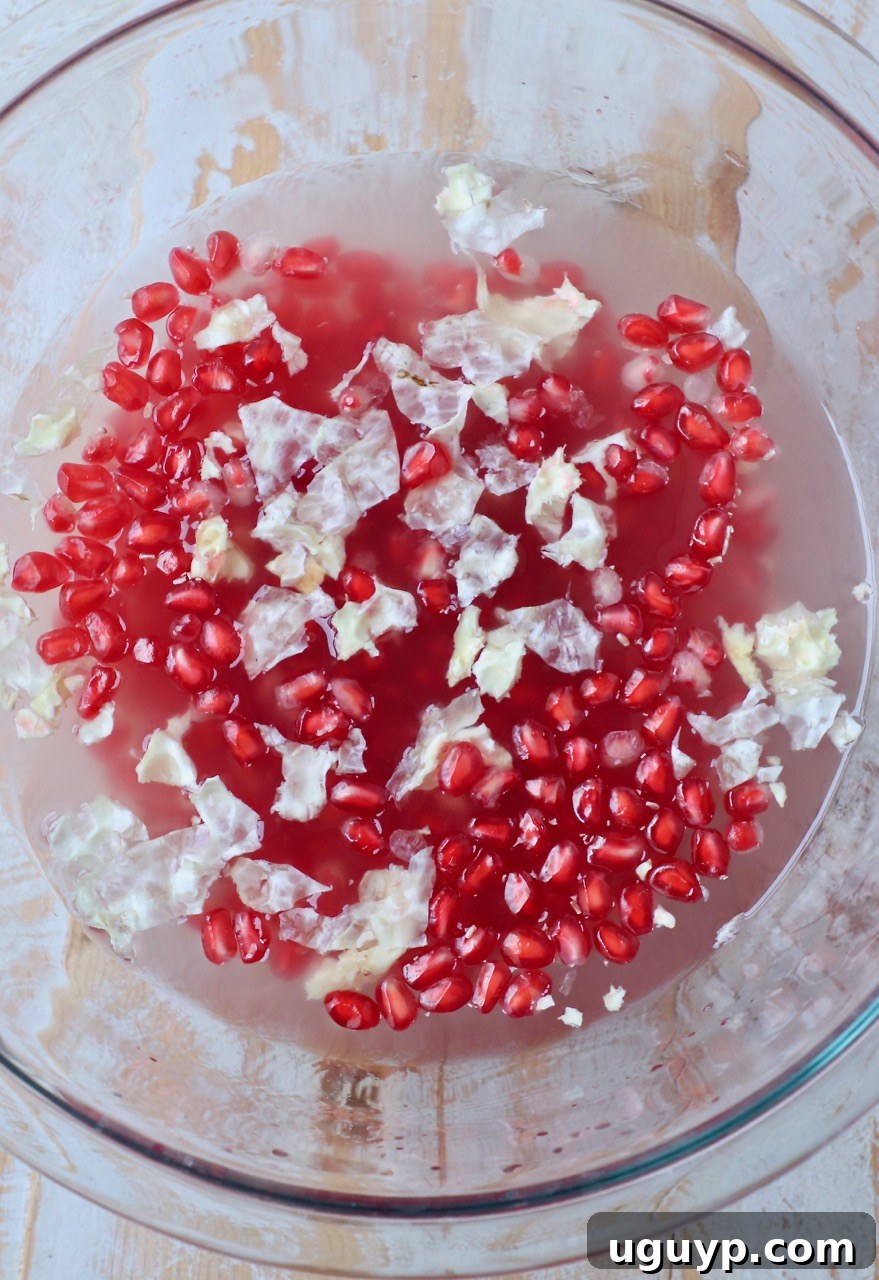
Fill a large bowl with about 2-3 inches of cold water. This bowl will be your primary workstation for deseeding. Working submerged in water is the secret to avoiding those pesky pomegranate juice stains on your countertop or clothing, as the water naturally dilutes and contains any released juice.
-
Submerge and Deseed:
Take one section of the cut pomegranate and hold it over the bowl of water. Gently use your fingers to pull the arils away from the white pith (the bitter membrane) and the rind. Let the arils and any bits of pith fall directly into the water. The beauty of this method is that the dense, juicy arils will sink to the bottom of the bowl, while the lighter, fibrous white membrane (pith) will float to the surface.
-
Separate Arils from Pith:
Continue this process with all the pomegranate sections until you have removed all the arils. Once all the arils are at the bottom of the bowl, use a spoon or your hands to scoop off all the floating white membrane pieces from the surface of the water and discard them. This step is quick and easy thanks to the differing densities of the arils and pith.
-
Strain and Dry:
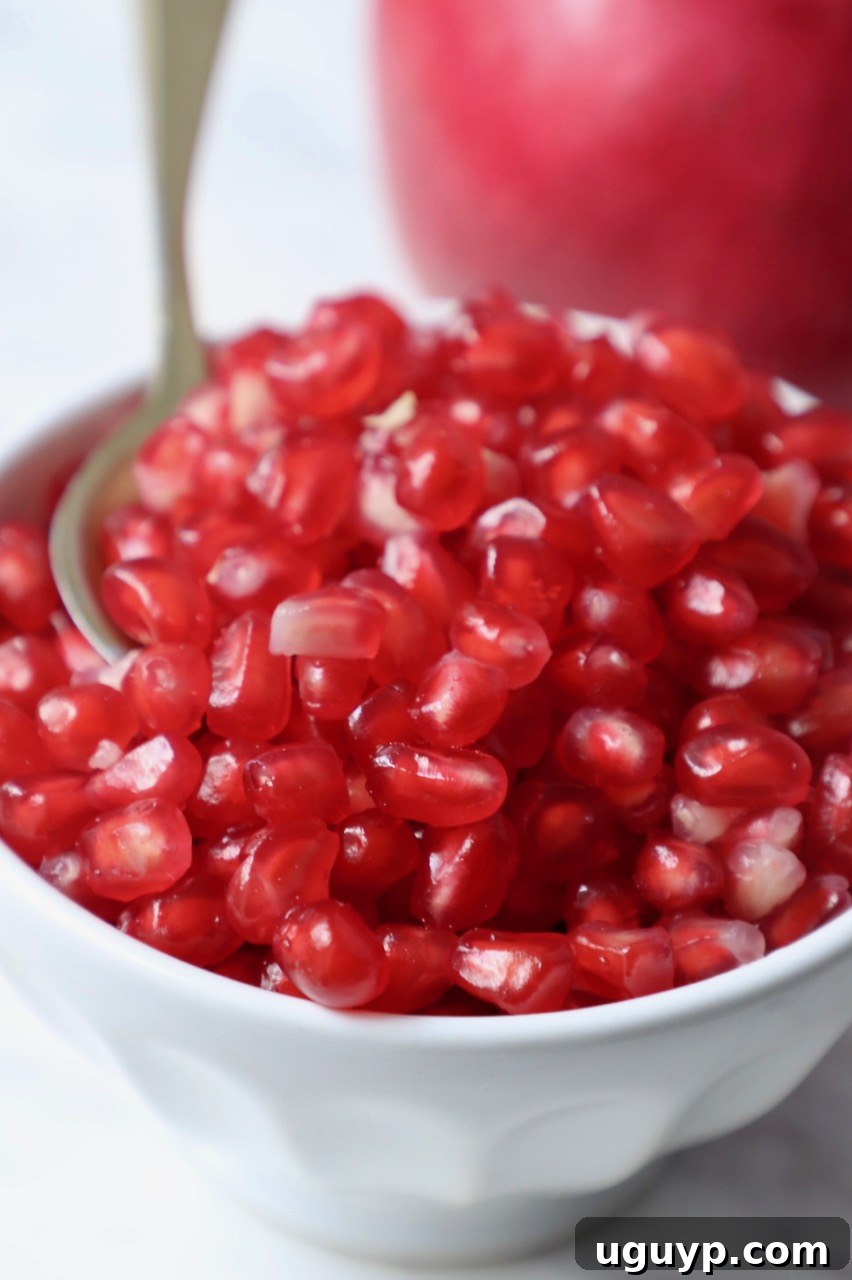
Carefully pour the contents of the bowl—water and arils—through a fine-mesh strainer. Gently shake the strainer to remove excess water. Allow the pomegranate arils to air dry for a few minutes on a clean kitchen towel or paper towels before serving or storing. This helps prevent them from clumping together. Typically, one medium-sized pomegranate yields approximately 1 to 1½ cups of fresh arils.
This water immersion method is not only clean but also highly effective, ensuring you get the maximum yield of perfectly intact arils, ready to elevate any dish.
Storage Options: Keeping Your Arils Fresh
Pomegranate arils are best enjoyed fresh, but knowing how to store them properly means you can have these vibrant gems on hand for days or even months.
Refrigerator Storage:
For short-term storage, place the freshly deseeded arils in an airtight container. Make sure the container is sealed well to prevent them from drying out. Stored this way, pomegranate arils will stay fresh and juicy in the refrigerator for up to 10 days.
Freezer Storage:
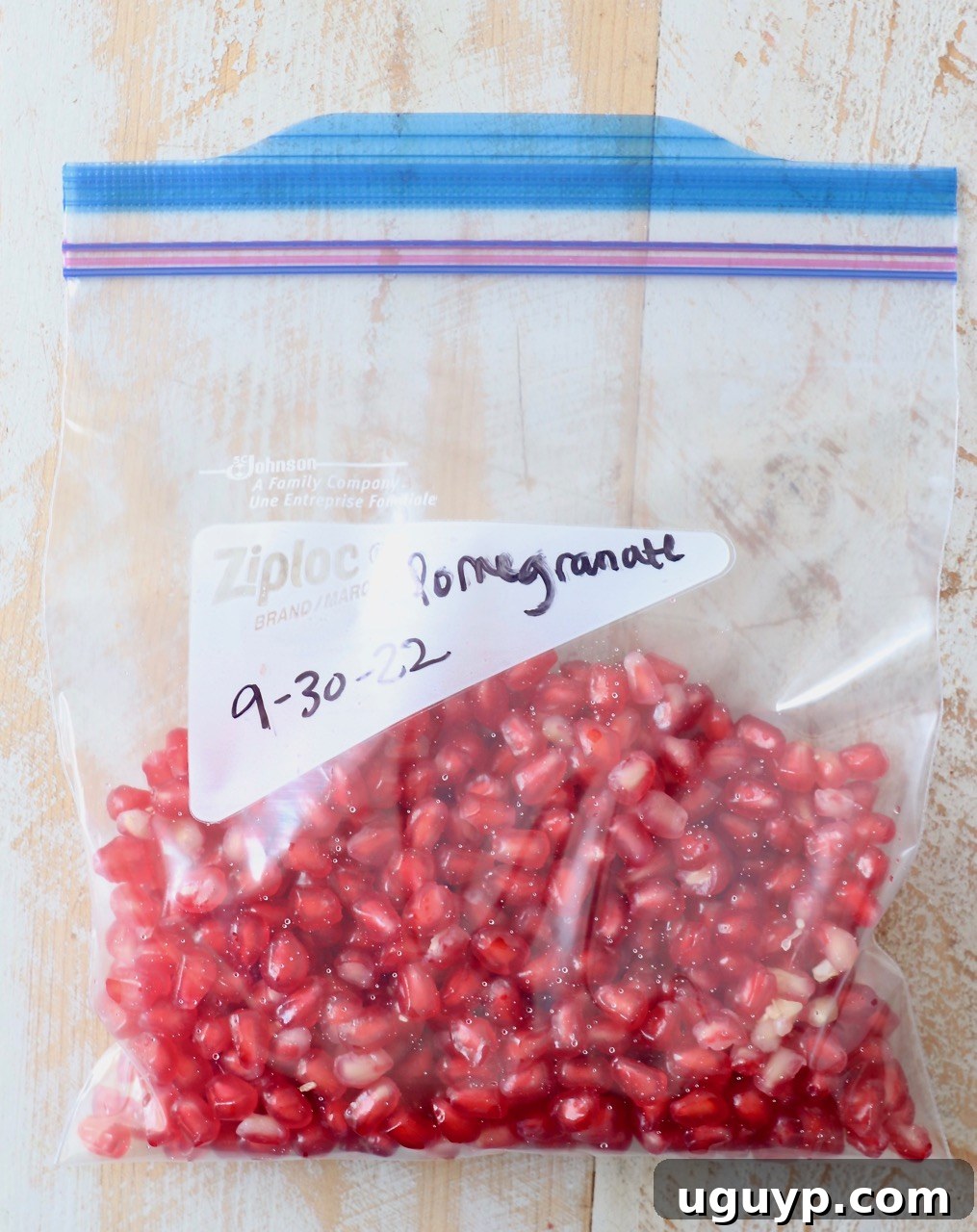
If you have a surplus of pomegranates or want to enjoy them beyond their season, freezing is an excellent option. To freeze arils without them clumping together, spread them out in a single layer on a parchment paper-lined plate or baking sheet. Place this in the freezer for about 1 hour, or until the arils are completely frozen solid. Once frozen, transfer the individual arils to a freezer-safe container or a zip-top freezer bag. Remove as much air as possible from the bag before sealing. Frozen pomegranate arils can be stored in the freezer for up to 3 months. When ready to use, simply thaw them in the refrigerator or add them directly to smoothies or dishes.
How to Make Pomegranate Juice: A Refreshing Homemade Treat
There’s nothing quite like the taste of fresh, homemade pomegranate juice. Once you’ve separated those luscious arils from the membrane, you’re just a few steps away from a fabulous, nutrient-rich beverage.
-
Blend the Arils:
Place your fresh pomegranate arils into a blender or a food processor. Start blending or pulsing quickly. The goal is to break apart the arils and release their juice, not to pulverize the tiny inner seeds or the white pith that might remain. Be careful not to over-blend, as excessive processing can cause the bitter flavor from the inner seed or any remaining pith to seep into your juice, affecting its taste.
-
Strain the Juice:
Once the arils are adequately crushed and have released their vibrant juice, place a fine-mesh strainer over a clean bowl or pitcher. Pour the blended aril mixture into the strainer. Use a spatula or the back of a spoon to gently press down on the aril pulp in the strainer, extracting every last drop of the delicious juice. Discard the remaining pulp.
-
Taste and Sweeten (Optional):
Taste your freshly made pomegranate juice! It’s wonderfully tangy and sweet on its own. However, if you prefer a sweeter drink, you can stir in a small amount of sugar, honey, maple syrup, or your preferred natural sweetener until it reaches your desired sweetness level. Serve chilled over ice for a truly refreshing experience.
The Remarkable Health Benefits of Pomegranates
Beyond their captivating appearance and delightful taste, pomegranates are nutritional powerhouses, earning their status as a superfood. They are rich in various compounds that contribute to overall well-being:
- Potent Antioxidants: Pomegranates are loaded with antioxidants, particularly polyphenols like punicalagins, which give the fruit its vibrant red color. These compounds help combat oxidative stress and protect cells from damage caused by free radicals, potentially reducing the risk of chronic diseases.
- Anti-inflammatory Properties: The high concentration of antioxidants also contributes to the pomegranate’s anti-inflammatory effects. Regular consumption may help reduce inflammation throughout the body, benefiting conditions such as arthritis and heart disease.
- Rich in Vitamins and Minerals: Pomegranates are a good source of Vitamin C, which is crucial for immune function and skin health, and Vitamin K, essential for blood clotting and bone health. They also provide folate, potassium, and dietary fiber.
- Heart Health: Studies suggest that pomegranate juice can support cardiovascular health by improving blood flow, reducing blood pressure, and preventing the oxidation of LDL (bad) cholesterol.
- Digestive Health: The dietary fiber found in pomegranates aids in digestion, promotes regularity, and supports a healthy gut microbiome.
- Potential Anti-Cancer Properties: Preliminary research indicates that compounds in pomegranates may have anti-cancer effects, inhibiting the growth of certain cancer cells, though more human studies are needed.
Incorporating pomegranates into your diet is a delicious way to boost your nutritional intake and support a healthy lifestyle.
Ways to Use Pomegranate Arils: Culinary Inspirations
Once you have a bowl full of glistening pomegranate arils, the culinary possibilities are endless! Their unique sweet-tart flavor and striking color make them versatile for both sweet and savory dishes. Here are numerous delightful ways to incorporate these vibrant gems into your meals:
- Breakfast Boost:
- Sprinkle them over your morning oatmeal, cereal, or Overnight Oats for a burst of flavor and texture.
- Layer them into a tasty yogurt parfait, perhaps with granola and other fruits, like this Superfood Fruit Parfait.
- Add them to pancake or waffle batter for a festive breakfast treat.
- Blend them into your favorite fruit smoothie. They pair wonderfully with berries in a Berry Smoothie.
- Savory Enhancements:
- Salads: Pomegranate arils are a phenomenal addition to almost any salad, adding a juicy crunch and vibrant color. Try them simply with spinach, blue cheese, and pecans, or elevate a Roasted Sweet Potato Kale Salad or a Fuji Apple Chicken Salad.
- Cheese Boards & Appetizers: Serve them alongside various cheeses on a charcuterie board. They are excellent as a garnish on your favorite baked brie recipe or included inside an Apple Strudel with Brie.
- Grain Dishes: The flavors of pomegranate surprisingly complement hearty grains like wild rice. Incorporate them into a Wild Rice Pilaf with Apples & Cranberries or Chicken and Wild Rice Bowls.
- Squash Recipes: Pomegranate arils pair beautifully with the sweetness of various squashes. Try them in Balsamic Chicken & Butternut Squash Noodle Bowls, a Roasted Butternut Squash Spinach Kale Salad, or Butternut Squash Risotto. They also elevate Stuffed Acorn Squash with Cranberries & Brussels Sprouts or garnish an Acorn Squash Soup.
- Holiday Dishes: Use them in creative ways for holiday meals, such as Turkey Tostadas with Pomegranate Guacamole, a fantastic way to reinvent Thanksgiving leftovers.
- Desserts & Drinks:
- Dessert Toppings: Sprinkle them over ice cream, sorbet, yogurt, or fruit tarts for a pop of color and flavor.
- Cocktails & Mocktails: Muddle them into a refreshing Pomegranate Mint Margarita, add them to sparkling wine, or use them as a festive garnish for any drink.
Don’t be afraid to experiment! The unique taste and texture of pomegranate arils can bring a surprising and delightful twist to many of your favorite recipes.
Frequently Asked Questions About Pomegranates
Q: Are the small, crunchy inner seeds of the arils edible?
A: Yes, the entire aril, including the tiny crunchy inner seed, is edible. In fact, these inner seeds are a good source of fiber. Some people prefer to chew them thoroughly, while others swallow them whole. It’s entirely a matter of personal preference.
Q: How can I avoid getting pomegranate juice stains?
A: The water immersion method described in this guide is the most effective way to prevent stains, as any released juice is diluted and contained by the water. If juice does get on your clothes or countertop, try to clean it immediately. For clothing, cold water and soap are often effective. For countertops, a mixture of baking soda and water or a mild bleach solution can help, depending on the surface material.
Q: What if my pomegranate is dry and doesn’t yield much juice?
A: A dry pomegranate is usually an indication that it’s overripe or wasn’t fresh when purchased. This can also happen if it has been stored for too long or in incorrect conditions, causing the arils to dry out. Always try to select heavy, firm pomegranates when buying to ensure juiciness. Unfortunately, there’s no way to rehydrate a dry pomegranate once it’s been cut open.
Q: Can I eat the white pith or membranes inside the pomegranate?
A: While not toxic, the white pith and membranes are very bitter and fibrous, making them unpleasant to eat. It’s best to separate them from the arils, which is easily achieved with the water immersion method.
Q: What’s the best way to get all the arils out?
A: The water immersion method is generally considered the most effective for removing nearly all the arils with minimal fuss. Working slowly and gently separating the arils under water helps to ensure a clean yield.
More Kitchen Tutorials to Master
Looking to expand your culinary skills? Check out these other quick and easy how-to posts designed to simplify your cooking experience and elevate your dishes:
- How To Caramelize Onions: Unlock rich, sweet flavors for your savory dishes.
- How To Cook Bacon In The Oven: Achieve perfectly crispy bacon with minimal mess.
- 3 Ways – How To Cook Sweet Potatoes: Versatile methods for preparing this nutritious root vegetable.
- How To Cook Spaghetti Squash: A simple guide to preparing a healthy pasta alternative.
- How To Cook Acorn Squash: Easily prepare this delicious and hearty winter squash.

How To Cut a Pomegranate
Learn the easiest method to cut a pomegranate and remove its vibrant arils (seeds) with this step-by-step guide. Pomegranate arils are a beautiful, healthy, and delicious addition to countless recipes!
1 pomegranate (~1.5 cups arils)
5 mins
5 mins
Whitney Bond
Side Dish
American
Ingredients
- 1 large pomegranate
Instructions
- Use a sharp knife to cut a thin slice from the stem end (top crown) and the blossom end (bottom) of the pomegranate to create flat, stable surfaces.
- Feel for the natural ridges along the sides of the pomegranate and make shallow scores along these lines, cutting only through the outer skin, being careful not to cut into the arils or membranes. Aim for 4-6 scores.
- Use your thumbs or fingers to gently pull the scored segments of the pomegranate apart into 4-6 sections.
- Fill a large bowl with 2-3 inches of cold water. This will help prevent staining and make deseeding easier.
- Hold one section of the pomegranate over the bowl of water and gently pull the arils away from the white pith, letting both fall into the water. The arils will sink, and the pith will float.
- Repeat with all sections until all arils are removed. Use your hands or a spoon to skim off and discard all the floating white membrane pieces from the water’s surface.
- Pour the bowl of water and arils through a fine-mesh strainer to separate the arils from the water.
- Allow the pomegranate arils to dry on a clean kitchen towel or paper towels for a few minutes before serving or storing.
Notes
- To store in the refrigerator: Place deseeded arils in an airtight container for up to 10 days.
- To store in the freezer: Spread arils in a single layer on a parchment-lined baking sheet and freeze for 1 hour. Transfer to a freezer-safe bag or container and freeze for up to 3 months.
- One pomegranate typically yields about 1 to 1½ cups of arils.
Nutrition Facts
Serving Size: 1 pomegranate (approximately 1.5 cups arils)
- Calories: 234 kcal (12% Daily Value)
- Carbohydrates: 53g (18% Daily Value)
- Protein: 5g (10% Daily Value)
- Fat: 3g (5% Daily Value)
- Sodium: 8mg
- Potassium: 666mg (19% Daily Value)
- Fiber: 11g (44% Daily Value)
- Sugar: 39g (43% Daily Value)
- Vitamin C: 29mg (35% Daily Value)
- Calcium: 28mg (3% Daily Value)
- Iron: 1mg (6% Daily Value)