3 Quick & Easy Ways to Peel Garlic
- Ticket
- № 5274
- Served
- Read
- 13 min
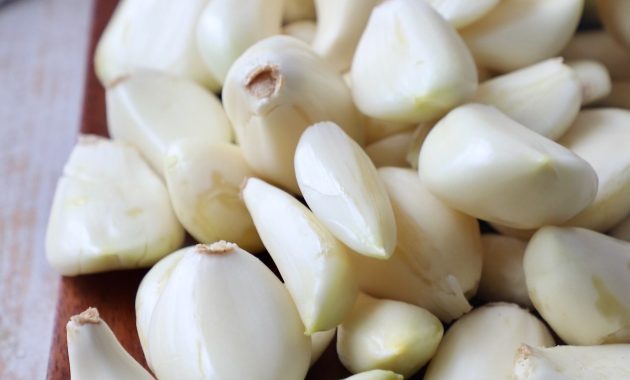
Mastering Garlic Peeling: Essential Hacks for Every Home Cook
Revolutionize your kitchen prep! Learn how to peel garlic using three surprisingly simple methods. Whether you need a single clove or an entire head, our quick and easy hacks will have you peeling like a pro in no time. From the popular jar shake to the chef’s preferred knife smash, and even an honest look at the microwave trick, we’ve got you covered. Say goodbye to sticky, frustrating garlic peeling and hello to effortless flavor!
Garlic is an indispensable ingredient in kitchens worldwide, forming the aromatic foundation for countless dishes. Its pungent, savory flavor elevates everything from simple weeknight dinners to elaborate gourmet meals. However, the one common hurdle many home cooks face is the tedious task of peeling garlic. Those thin, papery skins can be incredibly stubborn, making prep work feel like a chore.
But what if there was a way to make this process not only tolerable but even quick and enjoyable? Whether you’re dealing with just a few cloves for a quick stir-fry or an entire head for a hearty sauce, having efficient garlic peeling techniques in your arsenal is a game-changer. This comprehensive guide will walk you through three popular methods, revealing their secrets, advantages, and drawbacks, ensuring you can choose the best approach for any cooking scenario.
Once your garlic cloves are perfectly peeled, the culinary possibilities are endless! You can chop, mince, slice, or even squeeze them through a garlic press, ready to infuse your pasta, soups, roasts, appetizers, side dishes, and entrées with an unparalleled depth of fresh, vibrant flavor.
-

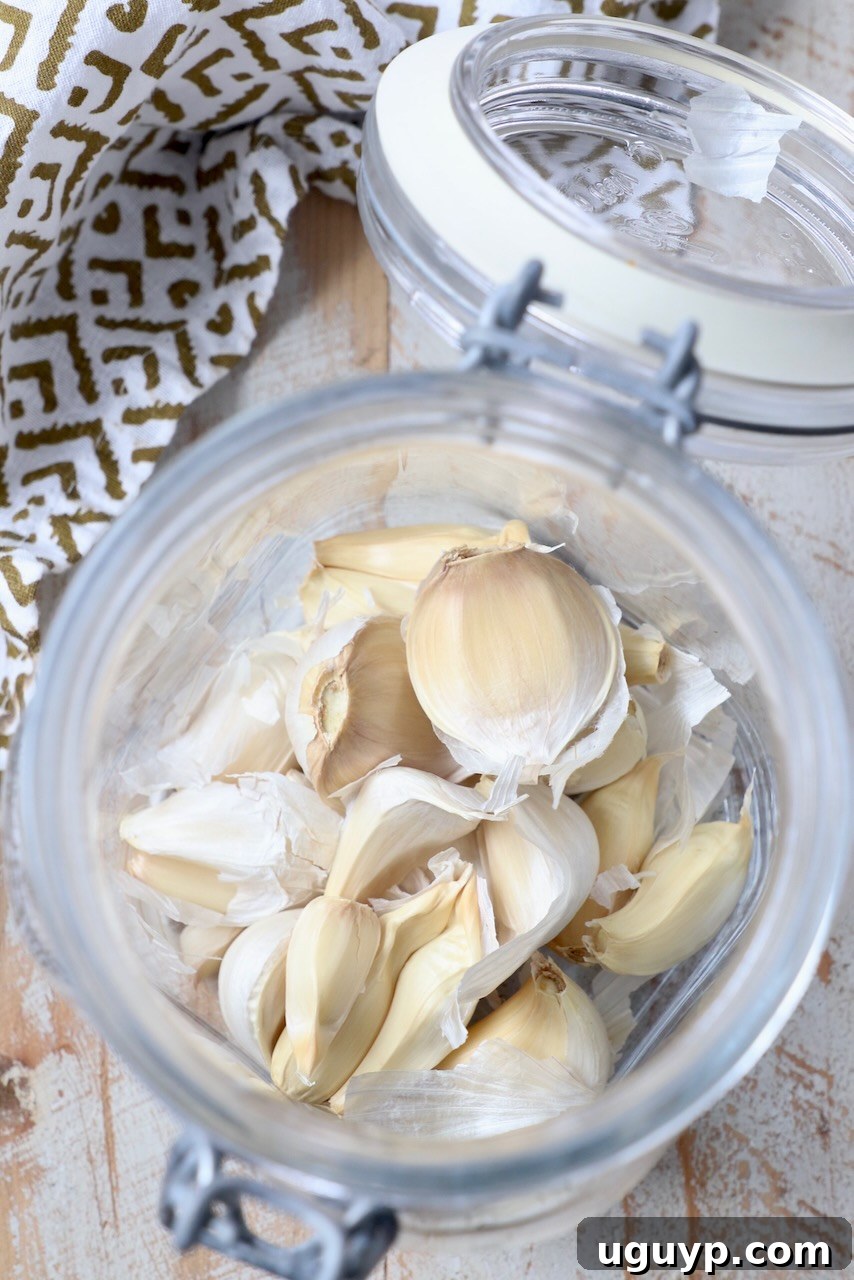
Before: Unpeeled garlic ready for the “Shake It Up” method. -
After: Some skins have detached, making the rest easier to remove.
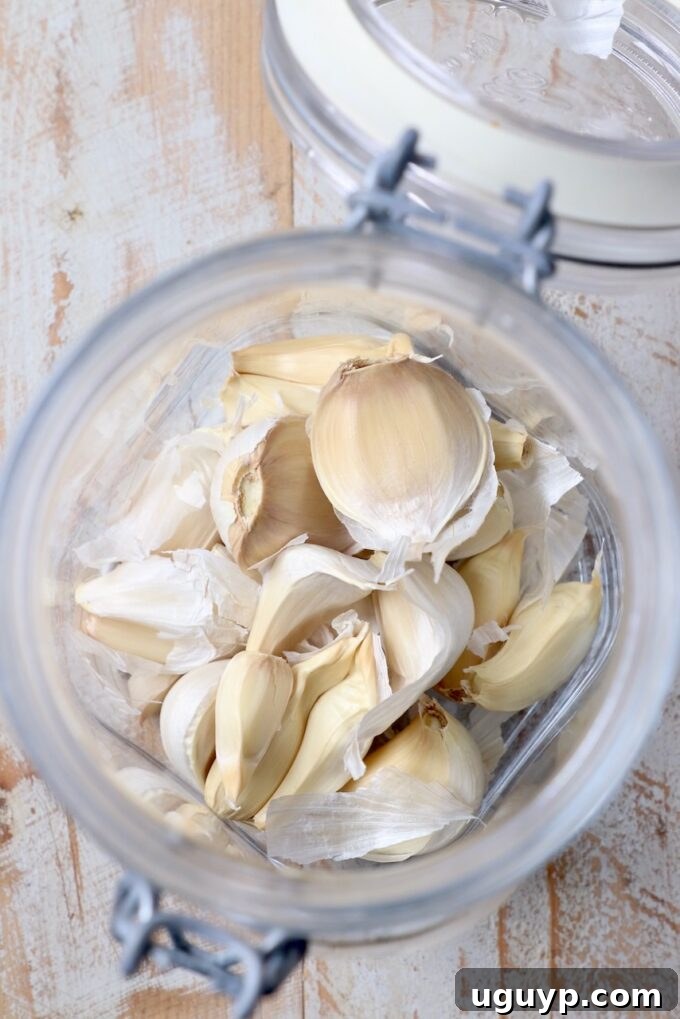
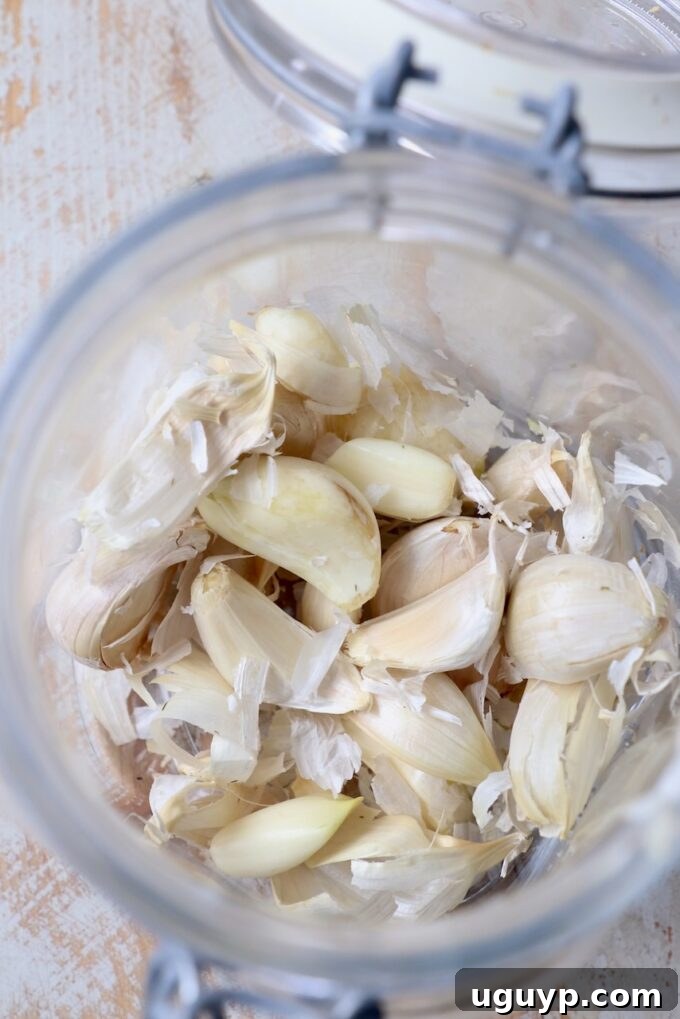
The “Shake It Up” Method: Fast Peeling for Big Batches
This method gained widespread popularity on social media platforms like TikTok for its promise of quick, hands-off garlic peeling. It’s particularly appealing when you need to peel a large quantity of garlic cloves without the fuss of individual peeling. While it’s often advertised as a magic bullet for perfectly peeled garlic in seconds, our experience shows it’s a fantastic starting point that significantly reduces manual effort.
How to Execute the “Shake It Up” Method:
- Break Apart the Bulb: Begin by separating all the individual garlic cloves from the main bulb. You can do this by firmly pressing down on the head with the heel of your hand or simply pulling the cloves apart.
- Gather Your Container: Place all the separated garlic cloves, along with their papery skins, into a sturdy mason jar or a large mixing bowl with a tight-fitting lid. The key is to have enough space for the cloves to move freely and generate friction.
- Shake Vigorously: Secure the lid tightly on your container and shake it with enthusiastic vigor for about 15-20 seconds. Imagine you’re shaking a cocktail or mixing ingredients for a vigorous vinaigrette! The friction created by the cloves rubbing against each other and the container’s sides helps loosen and detach the skins.
- Reveal and Finish: Remove the lid. You’ll likely find many skins have fallen off entirely, while others are significantly loosened. Pull out the mostly peeled garlic cloves and discard the loose papery skins. For any remaining stubborn skins, a quick tug or a gentle press with your thumb is usually all that’s needed.
Pros and Cons of the Shake Method:
- Pros: Excellent for peeling large quantities of garlic at once, saving significant time compared to individual peeling. It’s also relatively mess-free, as the skins are contained within the jar or bowl.
- Cons: As observed, it doesn’t always result in 100% perfectly peeled cloves for everyone. Some residual skins may remain, especially with very fresh garlic. This means a few additional minutes of hands-on peeling might still be required.
Pro Tips for Better Shake Method Success:
- Age Matters: Fresher garlic tends to have skins that adhere more tightly. Garlic that’s a week or two old, and thus slightly drier, will often yield better results with this method.
- Don’t Overfill: Ensure there’s ample space in your jar or bowl. Overfilling reduces the friction needed to loosen the skins effectively.
- Sturdy Container: A glass mason jar or a durable metal bowl is ideal, as they can withstand vigorous shaking without breaking or deforming.
In conclusion, while the “shake it up” method might not be a miraculous instant peeler, it serves as an excellent primary step for bulk garlic peeling, significantly reducing the initial effort and making the subsequent manual peeling much faster and easier.
-
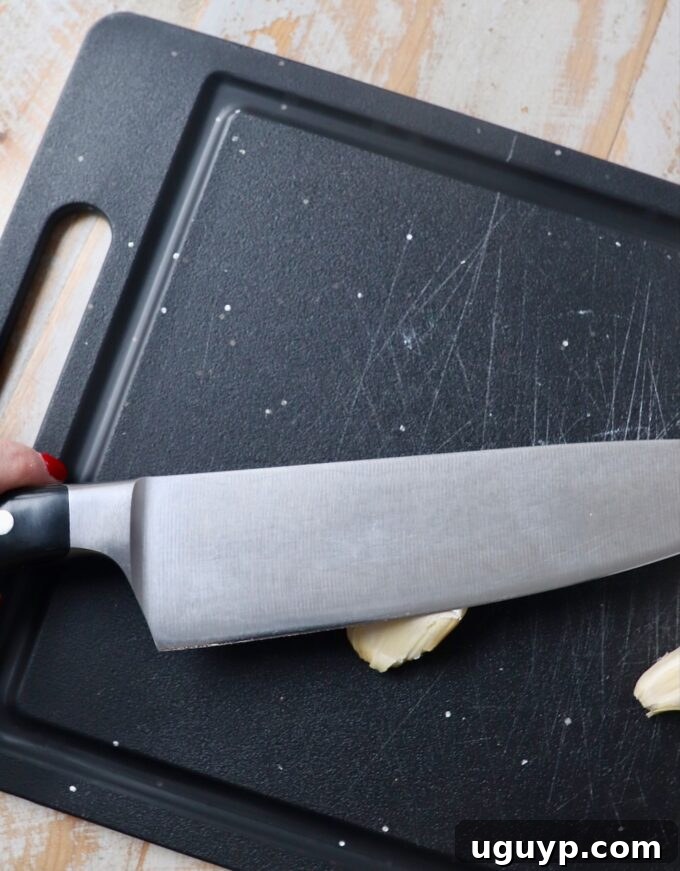
Applying pressure to a garlic clove with the flat side of a knife. -
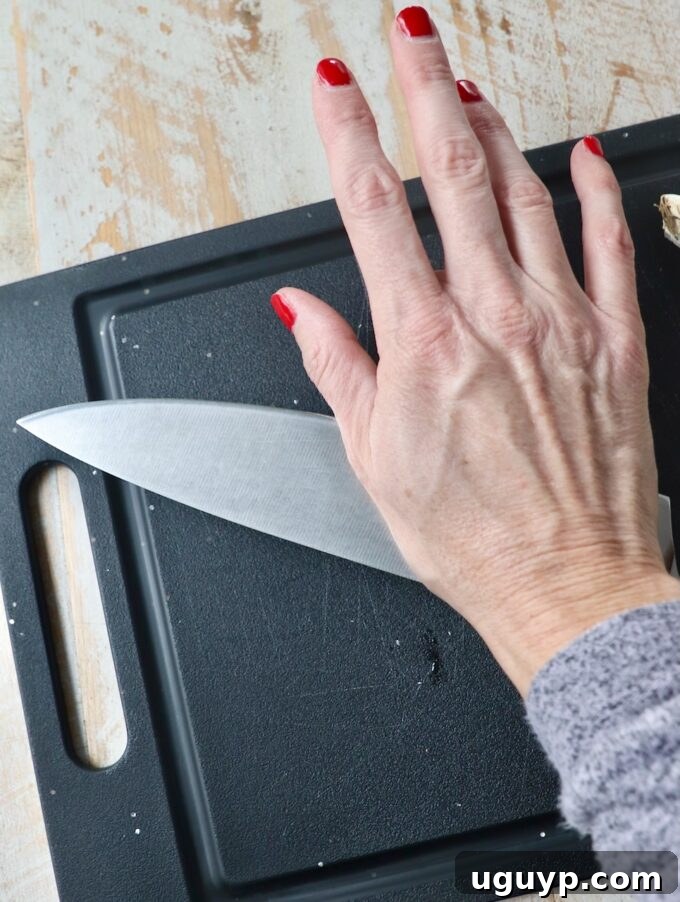
The classic chef’s technique for quick and efficient garlic peeling.
The Classic Knife Method: Precision and Control
This is arguably the most traditional and widely used method by professional chefs and experienced home cooks alike. It’s incredibly effective for peeling individual cloves quickly and offers a high degree of control, making it perfect when you only need a small amount of garlic or want to maintain the integrity of each clove.
How to Execute the Knife Method:
First, select a robust chef’s knife and a sturdy cutting board. Then, simply follow these steps for each clove:
- Separate the Clove: Gently break off the desired garlic clove from the main bulb.
- Position the Knife: Place the flat side of your chef’s knife directly on top of the garlic clove. Ensure the blade is facing away from your hand for safety.
- Apply Pressure: With the palm of your non-dominant hand, firmly (but not excessively) press down on the flat side of the knife. You’ll hear a slight “smash” or “crunch” as the clove is gently bruised. Be mindful of the sharp blade!
- Peel with Ease: Lift the knife. The papery skin should now be visibly loosened, if not completely detached. Simply pull away the cracked skin, and you’re left with a perfectly peeled garlic clove, ready for mincing, slicing, or crushing.
Pros and Cons of the Knife Method:
- Pros: Extremely fast for individual cloves. Offers precise control, allowing you to easily remove the root end if desired. It’s a satisfying technique that feels very professional once mastered. Minimal equipment is needed.
- Cons: Requires a bit of practice to get the pressure just right – too much force can over-smash and bruise the garlic too much, making it mushy. Involves using a sharp knife, so safety is paramount.
Pro Tips for Knife Method Perfection:
- Safety First: Always keep your fingers curled away from the blade when pressing down. Use the heel of your hand, not your fingers.
- Just Enough Force: The goal is to bruise the skin enough to crack it, not to flatten the entire clove. A firm tap is often all it takes.
- Remove the Root: After peeling, you can easily trim off the tough, woody root end of the clove with the tip of your knife.
The knife method is a fundamental skill for any aspiring chef. It’s quick, efficient, and, with a little practice, becomes second nature.
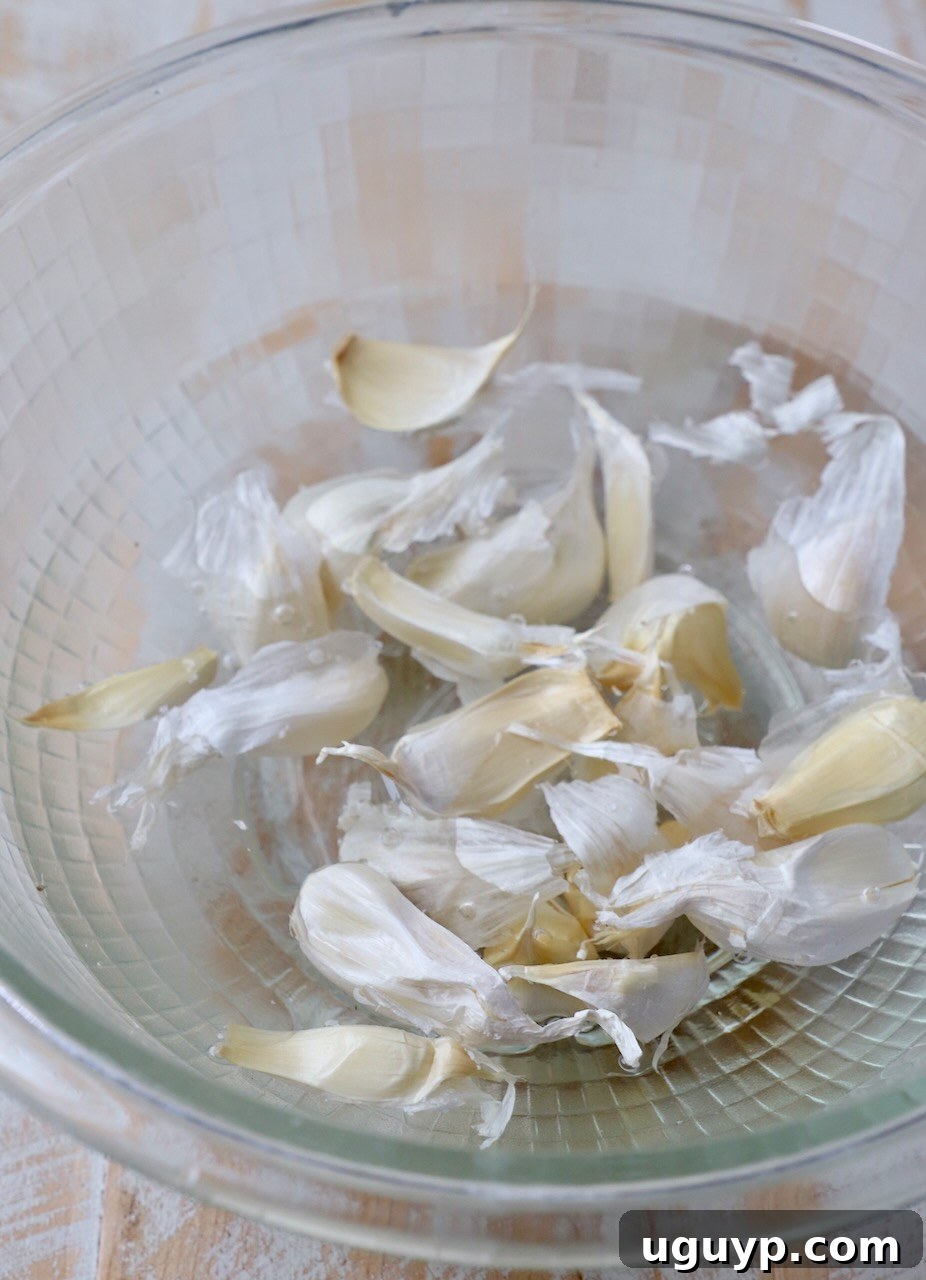
The Microwave Method: A Review of This Popular Hack
Often touted as another quick fix across the internet, the microwave method involves submerging unpeeled garlic cloves in water and microwaving them for a short period. The theory behind this hack is that the steam generated will loosen the papery skins, making them easier to remove.
How the Microwave Method is Supposed to Work:
- Separate and Soak: Break off the garlic cloves from the bulb and place them in a bowl. Cover them completely with water.
- Microwave: Place the bowl in the microwave and heat for approximately 60 seconds.
- Attempt to Peel: Carefully remove the hot bowl from the microwave and then try to peel the skins off the garlic cloves.
Our Experience and Recommendation:
Frankly, this method was the most disappointing and is one we unequivocally do not recommend. While the idea of steam loosening the skins sounds plausible, the practical application falls short. Here’s why:
- Wet and Slippery Skins: Instead of making the skins easier to remove, the water makes them incredibly wet and slippery. This makes it far more difficult to grip and peel them compared to dry skins.
- Hot Garlic: Handling hot garlic cloves can be uncomfortable and impractical, especially when trying to manipulate slippery skins.
- No Real Time Savings: In our trials, we found ourselves resorting to the knife method on most of the microwaved cloves anyway, just to get the soaked skins off. This completely negates any perceived time savings and adds an unnecessary step.
- Potential for Altered Texture/Flavor: While a minute might not drastically “cook” the garlic, prolonged exposure to heat can subtly change its raw, pungent flavor, which might not be desirable depending on your recipe.
In the end, this method proved to be inefficient, frustrating, and even messy. Stick to the knife smash or the shake method for much better results.
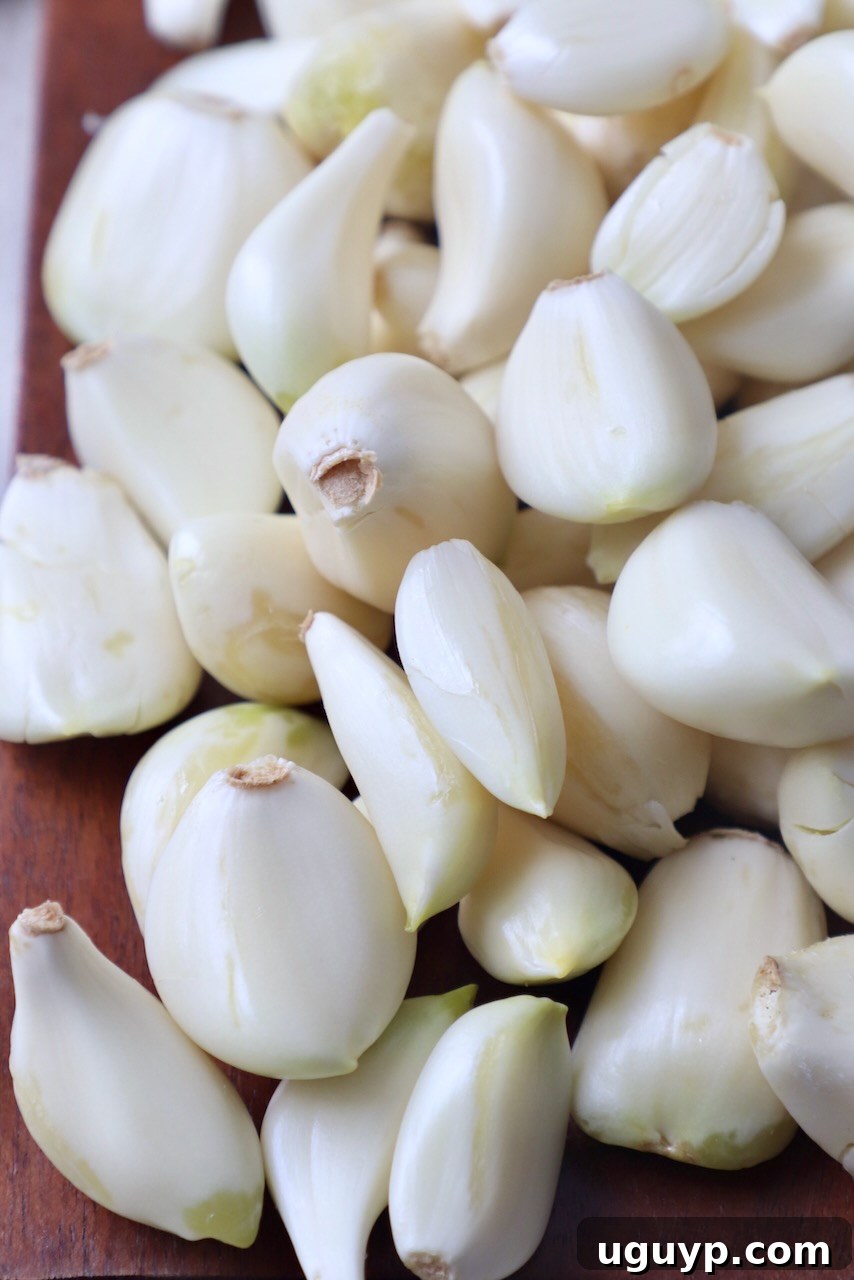
Why Fresh Garlic Matters: Flavor and Health Benefits
While pre-minced garlic in a jar offers convenience, nothing compares to the vibrant, pungent flavor of freshly peeled and prepared garlic. The aromatic compounds that give garlic its characteristic taste and smell are highly volatile. When garlic is processed and stored in jars, these compounds begin to degrade, resulting in a milder, less complex flavor profile. Fresh garlic delivers a sharper, more intense kick that truly brightens up a dish.
Beyond flavor, fresh garlic boasts impressive health benefits. It’s a rich source of vitamins C and B6, manganese, and selenium. It also contains allicin, a sulfur compound known for its powerful medicinal properties, including antioxidant and anti-inflammatory effects. Incorporating fresh garlic into your diet is a delicious way to boost both taste and wellness.
Garlic Facts and Pro Tips: Selection and Storage
Understanding garlic starts before you even begin peeling. Here are some essential facts and expert tips to ensure you’re always working with the best bulbs:
- Clove Count: Each average-sized head of garlic contains approximately 10-12 cloves, though this can vary from 6 large cloves to over 20 smaller ones, depending on the variety and size of the bulb.
- Average Weight: An average head of garlic typically weighs around 3 ounces (about 85 grams). Larger varieties can weigh up to 6 ounces, while smaller ones might be 2 ounces or less.
- Choosing the Best Garlic: When purchasing, always select garlic bulbs that are firm to the touch, with no soft spots, mold, or green sprouts. The papery skin should be intact, and the bulb should feel heavy for its size. A strong garlic aroma indicates freshness.
- Optimal Whole Bulb Storage: Store whole, unpeeled heads of garlic in a cool, dark place with good air circulation. A mesh bag, a wire basket, or an open container in your pantry is ideal. Avoid refrigeration for whole bulbs, as the cold can encourage sprouting and diminish flavor. Proper storage can keep whole garlic fresh for several weeks to a few months.
- Variety Matters: While most recipes don’t specify, there are two main types: softneck and hardneck. Softneck garlic (common in supermarkets) has a milder flavor and peels easier when older. Hardneck garlic often has a stronger flavor and produces a central stalk.
How to Store Peeled Garlic: Keep it Fresh Longer
Once you’ve peeled your garlic, its shelf life significantly decreases. However, with proper storage, you can keep those precious cloves fresh and ready to use for an extended period.
- Refrigerator Storage: Store peeled garlic cloves in an airtight container or a resealable zipper bag in the refrigerator. This method will keep them fresh for up to 7-10 days. Ensure the container is truly airtight to prevent the strong garlic odor from permeating other foods in your fridge.
- Freezer Storage: For longer-term storage, peeled garlic cloves can be frozen. Place them in a freezer-safe bag or an airtight container. They can be stored in the freezer for up to 6 months without significant loss of flavor. You can freeze them whole, roughly chopped, or even pureed for convenience. For minced garlic, consider freezing it in small portions (e.g., in ice cube trays with a little olive oil) so you can easily grab what you need.
- Important Note on Oil: While some people store peeled garlic in olive oil, be extremely cautious. Garlic in oil, especially at room temperature, creates an anaerobic environment where Clostridium botulinum (the bacteria that causes botulism) can thrive. If you choose to store garlic in oil, always keep it refrigerated and use it within a few days, or ensure the garlic is acidified before adding to oil. For safety, freezing is a much safer long-term option.
Ways to Use Garlic: Culinary Inspiration
Fresh garlic is a culinary superstar, lending its distinctive flavor to virtually every cuisine imaginable. Once you’ve mastered the art of peeling, you’ll find countless opportunities to incorporate this aromatic powerhouse into your cooking. Beyond just the recipes listed below, think broadly about its versatility:
- Flavor Base: Mince or chop garlic and sauté it at the beginning of nearly any savory dish – soups, stews, curries, stir-fries – to build a foundational layer of flavor.
- Marinades & Dressings: Grate or finely mince garlic into marinades for meats, poultry, or vegetables. It’s also a crucial ingredient in many homemade salad dressings and vinaigrettes.
- Roasted Vegetables: Toss whole or roughly chopped peeled garlic cloves with your favorite vegetables (like broccoli, potatoes, or Brussels sprouts) and olive oil before roasting for a deliciously caramelized treat. You can even make roasted garlic as a spread.
- Spreads & Dips: Blend raw or roasted garlic into hummus, aioli, or other creamy dips for an extra kick.
- Bread & Pasta: No pasta sauce is complete without garlic, and garlic bread is a timeless classic.
Here are some specific recipe ideas to get your inspiration flowing:
- Garlic Bread: The ultimate comfort food.
- Lemon Butter Garlic Shrimp Scampi: A quick and elegant weeknight meal.
- Garlic Green Beans: Simple yet flavorful side dish.
- Roasted Garlic Parmesan Broccolini: Elevate your greens.
- Garlic Herb Bacon Wrapped Brie: A show-stopping appetizer.
- Smashed Potatoes: Crispy and garlicky perfection.
- Chili Lime Garlic Grilled Shrimp Marinade: For zesty grilled seafood.
- Garlic Tahini Sauce: A versatile sauce for falafel, salads, and more.
More Cooking Resources: Sharpen Your Kitchen Skills
Ready to further enhance your culinary prowess? Explore these additional quick and easy how-to guides and kitchen tutorials to expand your repertoire and streamline your meal preparation.
- How To Cut A Pomegranate: Master this tricky fruit with ease.
- How To Make Air Fryer Baked Potatoes: Crispy on the outside, fluffy on the inside.
- 3 Ways – How To Cook Sweet Potatoes: Versatile methods for a healthy favorite.
- How To Cook Spaghetti Squash: A low-carb pasta alternative.
- How To Shred Brussels Sprouts: Unlock new textures for this often-misunderstood vegetable.
How To Peel Garlic

Learn how to peel garlic using three effective methods: the classic knife smash, the popular “shake it up” jar method, and a review of the microwave technique. These hacks will save you time and effort in the kitchen!
Rating: 5 stars (1 rating)
Servings: 20 cloves garlic
Prep Time: 3 mins
Total Time: 3 mins
Author: Whitney Bond
Course: Side Dish
Cuisine: American, Italian
Ingredients
- 1 head garlic
Instructions
Knife Method
- Use your hands to break the cloves of garlic from the root of the garlic bulb.
- Place the flat side of a chef’s knife on top of the garlic cloves and smash them by pressing on the top of the knife with the palm of your hand.
- The papery skins should peel right off of the cloves, leaving you with perfect garlic cloves for cooking.
“Shake It Up” Method
- Use your hands to break the cloves of garlic from the root of the garlic bulb.
- Place all of the garlic cloves, along with the papery skins, into a mason jar or a sturdy bowl with a lid.
- Place a lid on the jar or bowl and shake vigorously for 20 seconds.
- Remove the lid and pull out all of the garlic cloves. Peel off any remaining stubborn skins, then discard the rest of the papery skins from the jar or bowl.
Microwave Method
- While this was our least successful method for peeling garlic cloves, if you’d like to give it a try, use your hands to break the cloves of garlic from the root of the garlic bulb.
- Place the unpeeled cloves of garlic in a large bowl and cover with water.
- Place in the microwave for 60 seconds.
- Remove from the microwave and attempt to peel the papery skins from the garlic cloves (be cautious of hot water and slippery skins).
Notes
- Each head of garlic contains approximately 10-12 cloves of garlic.
- An average head of garlic weighs approximately 3 ounces. While larger heads of garlic can weigh double that, at around 6 ounces, smaller heads might be 2 ounces or less.
- A whole head of garlic is best stored in a dark, cool place in an open container. Store yours in a wire basket in the pantry before peeling the cloves of garlic.
- Store peeled garlic cloves in a zipper bag or airtight container in the refrigerator for up to 10 days.
- Peeled garlic cloves can also be stored in a freezer-safe bag or container in the freezer for up to 6 months.
Nutrition Facts
Carbohydrates 0.5 g
Protein 0.1 g
Fat 0.01 g
Sodium 0.2 mg
Potassium 6 mg
Fiber 0.03 g
Sugar 0.01 g
Vitamin A 0.1 mg
Vitamin C 0.4 mg
Calcium 3 mg
Iron 0.02 mg
Did you make this recipe? Tag @WhitneyBond on Instagram and hashtag it #WBRecipes!