Refreshing Tzatziki Dip
- Ticket
- № 6112
- Served
- Read
- 12 min
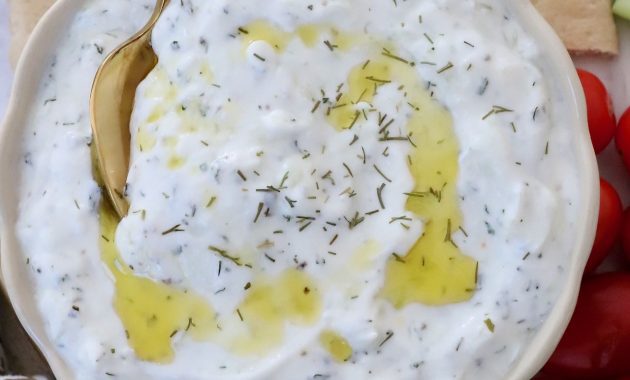
Prepare to elevate your culinary experience with this unbelievably simple, 5-ingredient Tzatziki Sauce recipe. In just 10 minutes, you can create an authentic Greek cucumber yogurt sauce that’s bursting with fresh, vibrant flavors. Whether you’re looking for a delightful dip to pair with warm pita bread and crisp vegetables, or a zesty topping to drizzle over savory chicken gyros, tender lamb burgers, or crispy falafel, this homemade tzatziki is your ticket to a truly flavorful meal. It’s more than just a sauce; it’s a taste of the Mediterranean, bringing a refreshing zest to countless dishes.
Why This Recipe is the Best Homemade Tzatziki
I first embarked on my tzatziki journey in 2019, crafting this sauce to perfectly complement my flavorful Greek meatballs. Since then, it has become an indispensable staple in my kitchen, serving as a versatile dip and a fantastic drizzle for dozens of different recipes. Over the years, through countless experiments and a memorable trip to Greece, I’ve refined and perfected this recipe, uncovering a few crucial secrets that elevate it to what I proudly call the best tzatziki sauce ever! You know it’s truly exceptional when even your Greek friends, who take their tzatziki very seriously, give it their enthusiastic seal of approval.
Here’s what makes this recipe stand out, guaranteeing an authentic and irresistibly delicious tzatziki every time:
- The Secret Seasoning Blend: My 2023 trip to Greece was a revelation, inspiring me with the rich, aromatic herbs and bold flavors prevalent in every dish. Upon my return, I was determined to recreate those unforgettable tastes, leading me to develop a unique homemade Greek seasoning blend. This custom mix, featuring a symphony of traditional Greek herbs and spices, is the heart of this tzatziki, infusing it with an unparalleled authentic flavor that transports you straight to the sun-drenched Greek islands.
- The Perfect Cucumber Ratio and Preparation: Years of testing have taught me that the cucumber is not just an add-in, but a critical component for texture. I’ve mastered the ideal ratio of grated cucumber to Greek yogurt, ensuring a sauce that is perfectly creamy, never watery, and boasts the ultimate consistency for both dipping and drizzling. The key lies in thoroughly draining the cucumber, a step often overlooked but vital for preventing a runny tzatziki.
- The Right Greek Yogurt: Finding an authentic-tasting Greek yogurt in the United States after experiencing the real deal in Greece was a mission. After extensively taste-testing several national brands, I discovered specific options that come remarkably close to the rich, tangy, and thick sheep’s milk yogurt traditionally used in Greece. I’ll share my top recommendations, enabling you to craft an authentic tzatziki at home that captures the true essence of the Mediterranean.
Each of these elements contributes to a tzatziki sauce that is not only easy to make but also delivers an exceptional, authentic Greek flavor and texture.
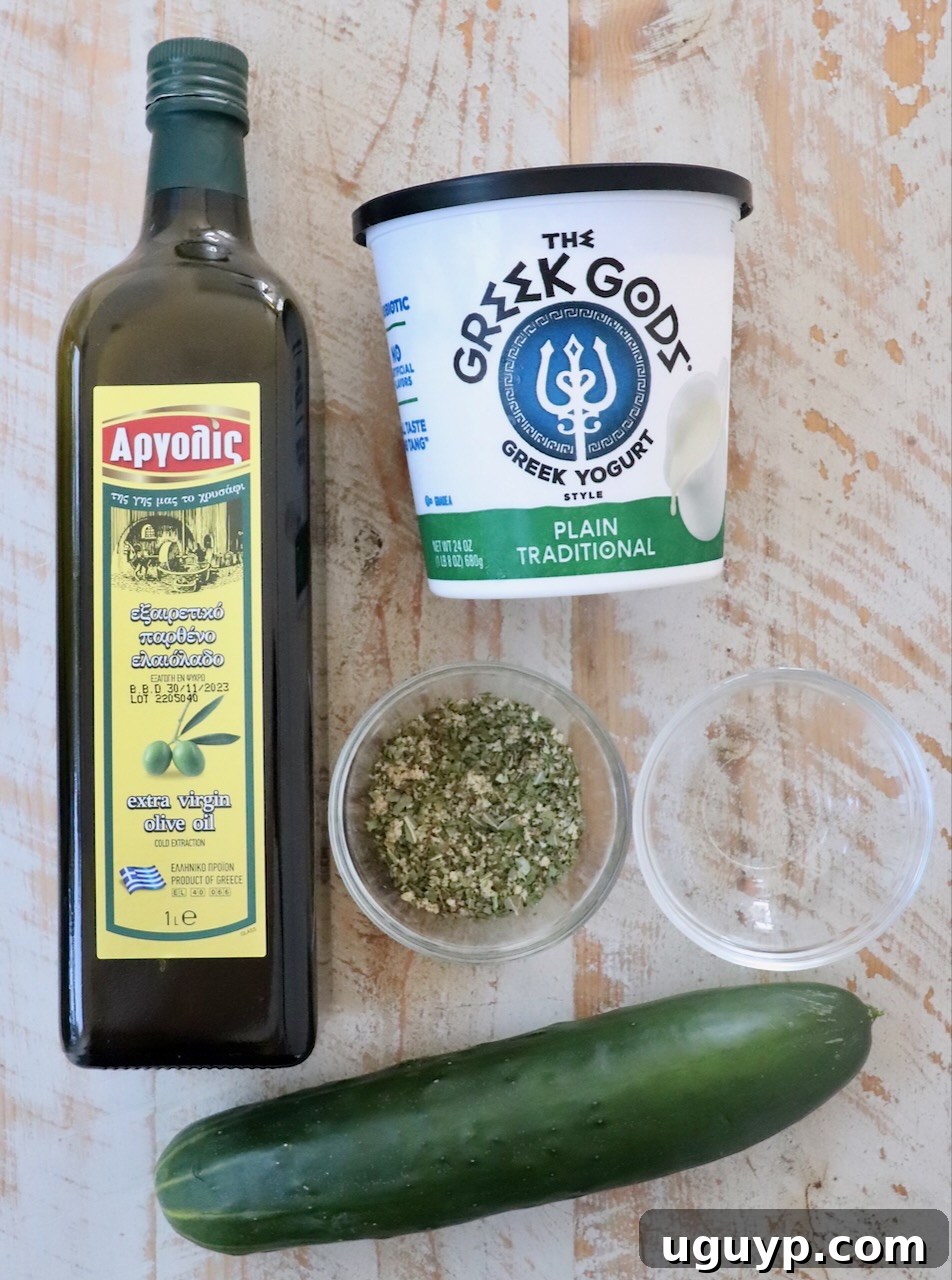
Essential Ingredients for Authentic Tzatziki
Crafting the perfect tzatziki begins with selecting the right ingredients. Each component plays a vital role in achieving that characteristic creamy texture and vibrant flavor. Below, I’ll detail the best ingredients for this tzatziki sauce recipe, explaining their function and offering excellent substitution options where applicable. For the precise ingredient measurements, please refer to the comprehensive recipe card located at the bottom of this post.
- Cucumber: For superior results, I highly recommend using an English cucumber. Its thin skin means less peeling and effort, and its seedless nature ensures a smooth, uninterrupted texture in your tzatziki sauce without any unwanted bitterness. You will need approximately ¾ cup of grated cucumber, which typically comes from one large English cucumber, weighing about ½ pound. If English cucumbers are unavailable, regular slicing cucumbers can be used, but be sure to peel them thoroughly and scoop out the watery seed core before grating. Proper draining of the grated cucumber is absolutely critical to prevent a runny sauce.
- Greek Yogurt: The foundation of any great tzatziki! Always opt for plain Greek Yogurt, free from any added flavors or sweeteners. For the richest flavor and creamiest consistency, a high-quality, whole milk Greek yogurt is paramount. While traditional tzatziki in Greece is often made with sheep’s milk yogurt, which can be challenging to find in many parts of the US, I’ve thoroughly tested this recipe with readily available cow’s milk Greek yogurts. My top recommendations, based on taste and texture, are Greek Gods (as pictured above) and Chobani. These brands consistently deliver a superior taste and a luxuriously thick texture compared to other options I’ve tried. Look for varieties with live and active cultures for an added health boost and authentic tang.
- Olive Oil: A staple of Greek cuisine, good quality olive oil is essential. It contributes a subtle fruity note and a silky mouthfeel to the sauce, enhancing its overall richness. An extra virgin olive oil is preferred for its superior flavor and health benefits.
- White Vinegar (or Fresh Lemon Juice): This ingredient introduces a crucial hint of acidity, brightening the flavors and balancing the richness of the yogurt. A teaspoon of either white vinegar or freshly squeezed lemon juice will do the trick. I’ve successfully prepared this sauce with both options over the years, and they both yield fantastic results. Lemon juice offers a brighter, citrusy tang, while white vinegar provides a clean, sharp acidity. Choose whichever best suits your preference or what you have on hand.
- Greek Seasoning: This is where the magic happens for that authentic Greek flavor! Click the provided link for my homemade spice blend, which features a harmonious combination of traditional Greek herbs and spices. Preparing this blend ahead of time means you can store it in your pantry for up to 6 months, ensuring you always have it ready for a fresh batch of tzatziki or any other Greek-inspired dish. If you prefer to use fresh herbs instead of the dried seasoning mix, you can combine fresh grated garlic with salt, finely chopped fresh dill, and fresh mint for an equally delightful and aromatic result. The fresh herb option offers a slightly different, more immediate burst of green flavor.
Step-by-Step Instructions to Make Your Best Tzatziki
Making homemade tzatziki is surprisingly straightforward, and with these detailed instructions and accompanying step-by-step photos, you’ll achieve a perfect sauce every time. For the full, detailed recipe instructions and precise measurements, please scroll down to the recipe card at the very bottom of this post.
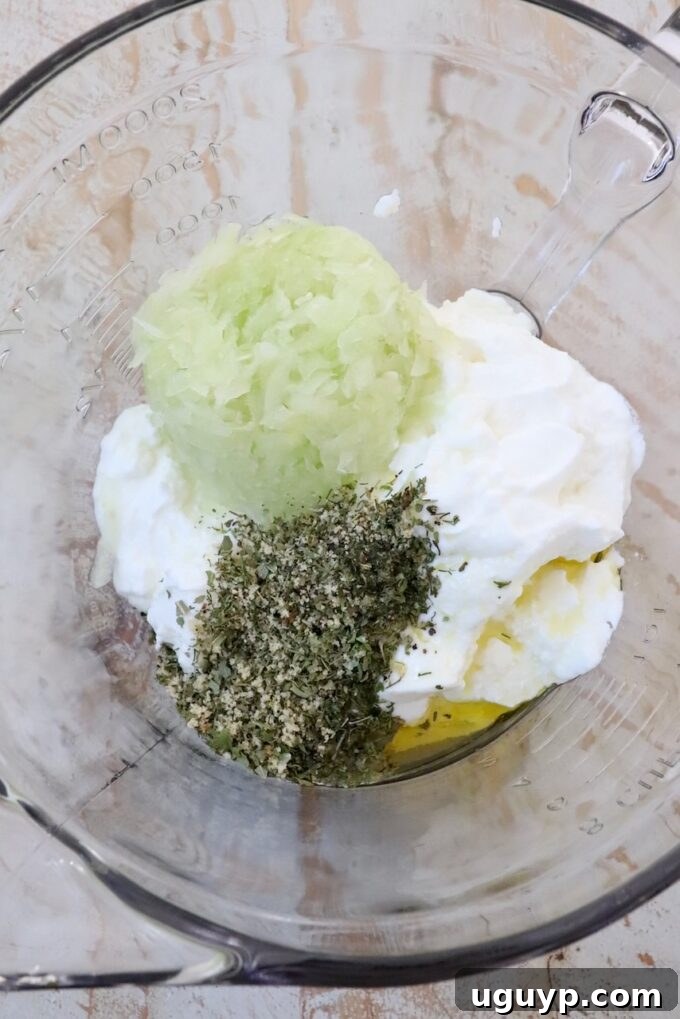
- Prepare and Grate the Cucumber: Begin by using a vegetable peeler to carefully peel the English cucumber. Next, employ a box grater (using the large holes) to grate the cucumber. The most crucial step for a thick, creamy tzatziki is to remove excess moisture from the cucumber. Place the grated cucumber in the center of a thick, clean kitchen towel, or use three layers of sturdy paper towels. Gather the edges of the towel and twist firmly over a sink, wringing out as much liquid as possible. You will be surprised by how much water comes out! This step is paramount; if you skip it or don’t drain thoroughly, your tzatziki sauce will likely turn out runny. Once drained, measure out ¾ cup of the compacted grated cucumber and transfer it to a medium-sized mixing bowl.
- Combine All Ingredients: To the bowl containing the drained grated cucumber, add the plain Greek yogurt, olive oil, white vinegar (or fresh lemon juice), and your prepared Greek seasoning.
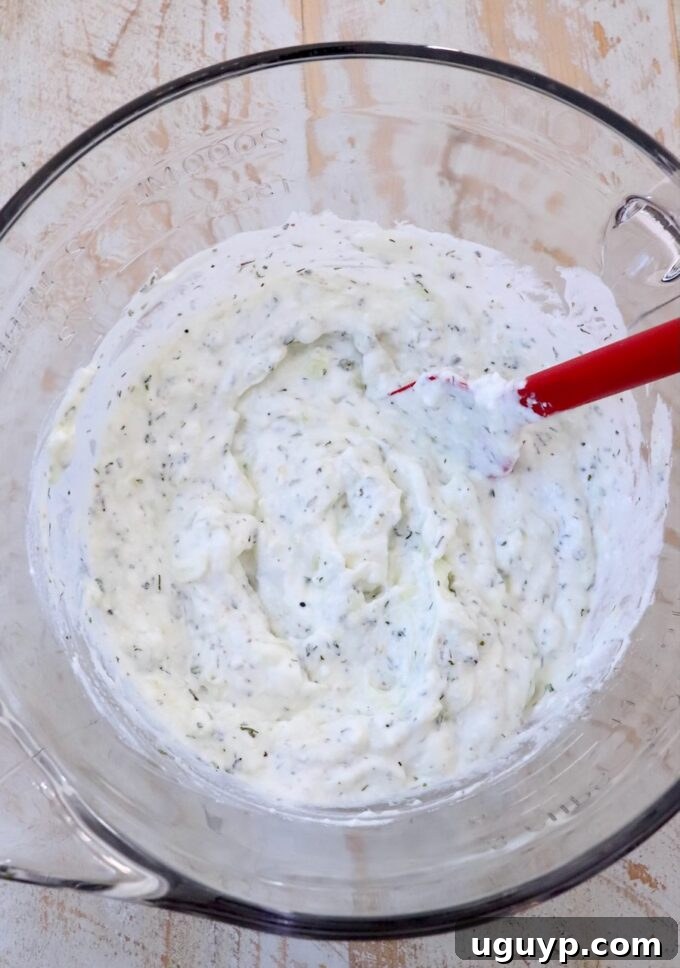
- Mix and Chill for Optimal Flavor: Using a spoon or spatula, gently but thoroughly stir all the ingredients together until they are well combined and the sauce has a uniform, creamy consistency. Once mixed, cover the bowl and place it in the refrigerator to chill for at least 30 minutes before serving. This crucial chilling period allows the flavors to fully meld together, deepening the taste and ensuring a truly refreshing experience.
Your freshly prepared homemade tzatziki sauce can be stored in an airtight container in the refrigerator for up to 6 days. It’s best enjoyed within the first few days for peak freshness and flavor.
Tips for the Perfect Tzatziki Every Time
While the recipe is simple, a few expert tips can ensure your tzatziki is consistently outstanding:
- Don’t Rush the Drain: This cannot be stressed enough! Excess moisture from the cucumber is the number one culprit for runny tzatziki. Squeeze, squeeze, and squeeze again until you think no more liquid can possibly come out.
- Quality Ingredients Matter: Since there are so few ingredients, the quality of each really shines through. Use a good quality, full-fat Greek yogurt and a decent extra virgin olive oil.
- Let it Chill: While you can eat it immediately, the flavors truly develop and meld after at least 30 minutes in the refrigerator. Overnight chilling is even better for maximum flavor depth.
- Taste and Adjust: Before serving, always give your tzatziki a quick taste. You might want to add a pinch more salt, a squeeze of lemon, or a dash more seasoning to suit your preference.
Variations to Customize Your Tzatziki
Once you’ve mastered the classic recipe, feel free to experiment with these delicious variations:
- Garlic Lover’s Tzatziki: If you adore garlic, feel free to increase the amount in the fresh herb substitution, or add a finely minced fresh clove directly to the sauce for a bolder kick.
- Herbacious Twist: While dill and mint are traditional, a sprinkle of fresh parsley or chives can add another layer of fresh flavor.
- Spicy Kick: For those who enjoy a little heat, stir in a pinch of red pepper flakes or a tiny dash of cayenne pepper.
- Creamier Consistency: If you prefer an even thicker, richer dip, you can use less grated cucumber or choose an even denser Greek yogurt.
- Vegan Tzatziki: Substitute the dairy Greek yogurt with a high-quality, plain, unsweetened plant-based yogurt (such as coconut or almond-based Greek-style yogurt) for a delicious vegan alternative. Ensure it has a thick consistency.

Creative Ways to Enjoy Your Homemade Tzatziki
The versatility of this homemade tzatziki recipe is truly remarkable, making it a fantastic addition to almost any meal. It’s equally delicious served as a refreshing sauce to complement a main course, or as a vibrant, flavorful dip for a side dish or appetizer.
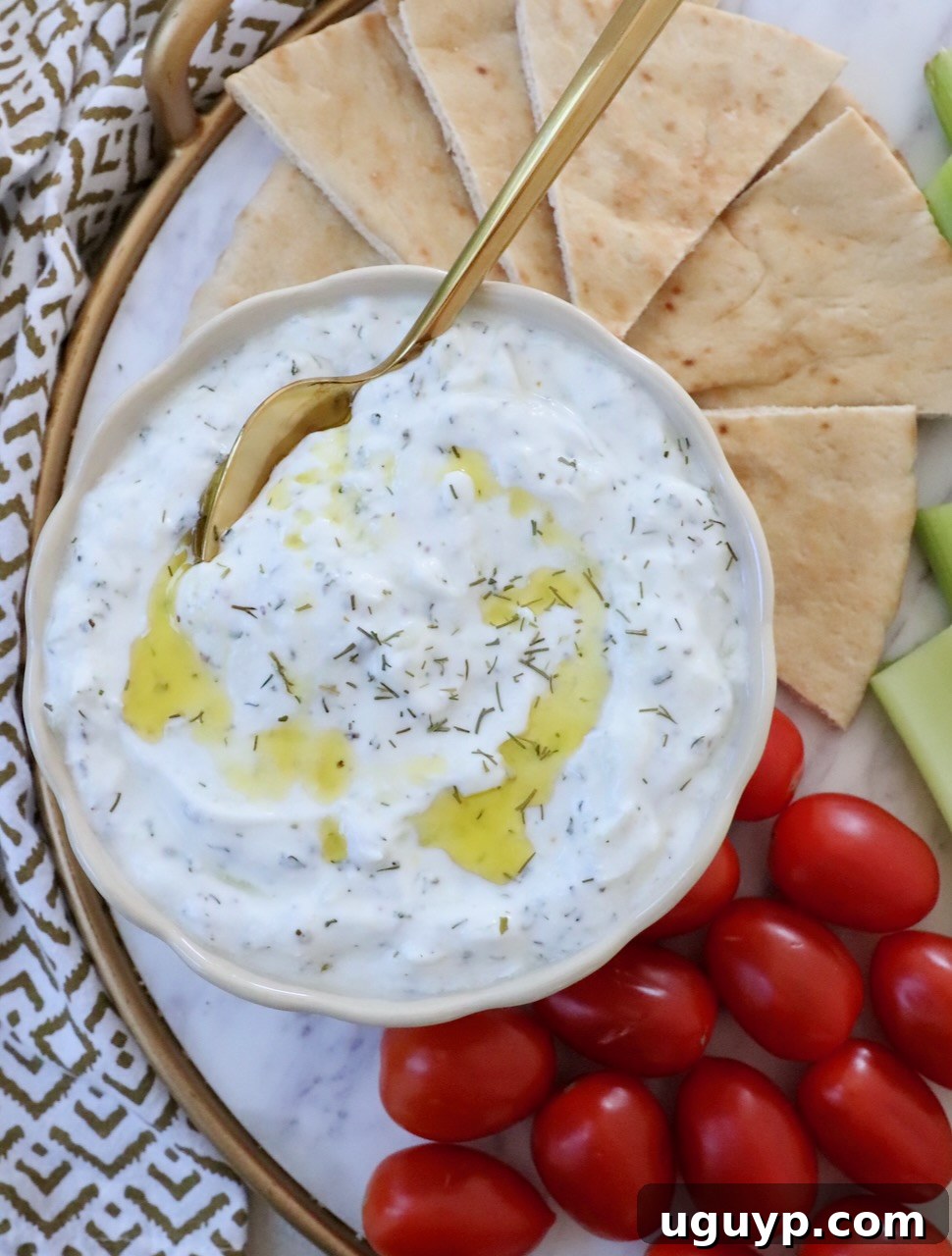
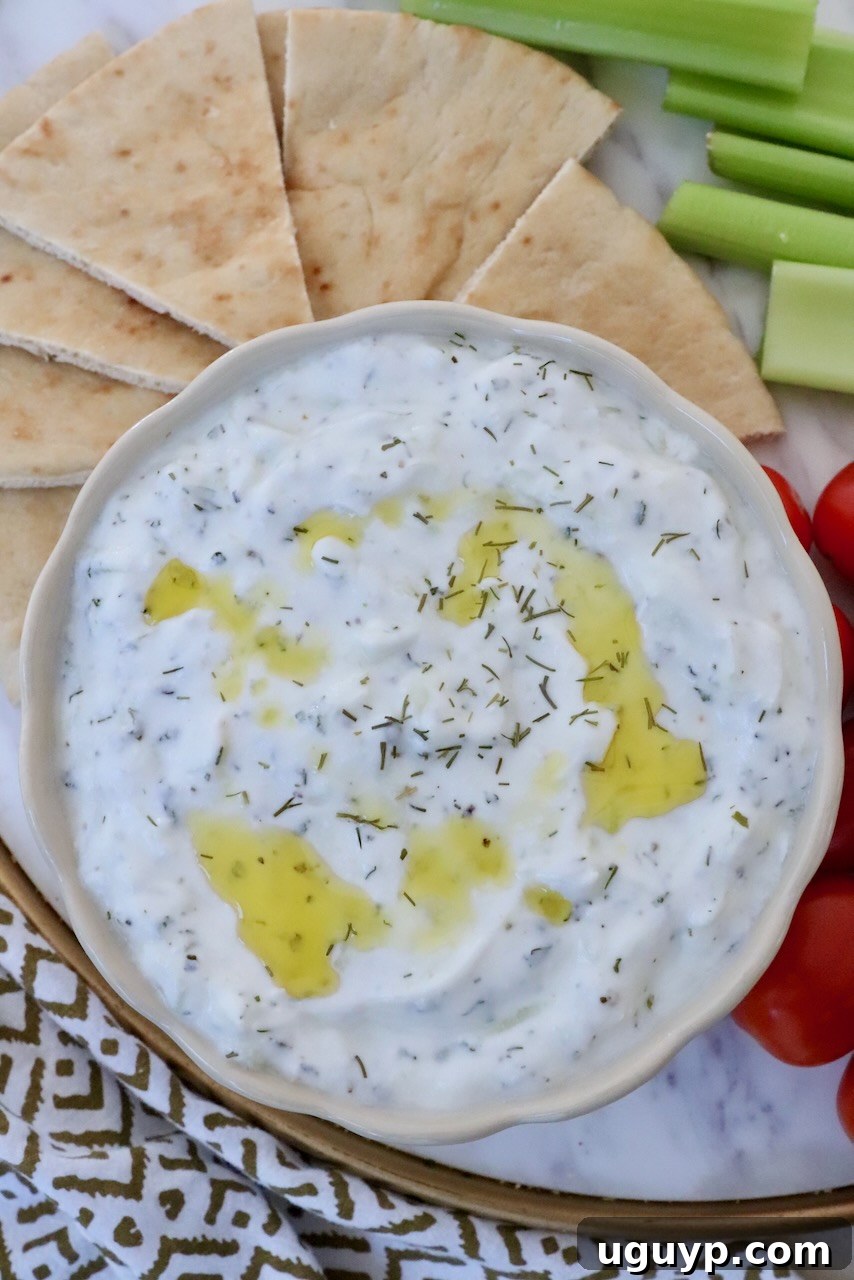
When serving it as an appetizer or party dip, I highly recommend offering a selection of accompaniments. Crisp pita chips, warm slices of soft pita bread, or an assortment of fresh, vibrant vegetables are perfect for dipping. Fresh veggies like sweet cherry tomatoes, crunchy bell peppers (red, yellow, or orange), crisp broccoli florets, tender celery sticks, and vibrant carrot sticks all pair beautifully with the cool, creamy tzatziki sauce, making for a healthy and satisfying snack.
When incorporating it as a sauce with a meal, its creamy texture and tangy flavor make it an excellent spread in sandwiches or wraps, adding a burst of Mediterranean freshness. It also pairs absolutely perfectly with any of these delicious main dishes, transforming them into a memorable Greek-inspired feast:
- Greek Meatballs (as deliciously pictured above, nestled in pita)
- Ground Turkey Gyros, for a lighter take on a classic
- Chicken Gyros, a perennial favorite
- Grilled Marinated Greek Chicken, for a smoky, herb-infused meal
- Greek Turkey Stuffed Zucchini, a wholesome and hearty option
- Air Fryer Salmon, for a quick and healthy weeknight dinner
- Greek Salad with Orzo, an amazing side or light meal
- Falafel, for a fantastic vegetarian pairing
- Lamb Burgers, elevated with a dollop of cool tzatziki
The possibilities are truly endless, limited only by your imagination!
Health Benefits of This Delightful Dip
Beyond its incredible taste, homemade tzatziki is packed with health benefits, thanks to its wholesome ingredients:
- Greek Yogurt: A protein powerhouse, Greek yogurt supports muscle health and keeps you feeling full. It’s also rich in probiotics, which are beneficial for gut health and digestion.
- Cucumber: High in water content, cucumbers are incredibly hydrating. They also provide essential vitamins and minerals, including Vitamin K, B vitamins, copper, potassium, and manganese.
- Olive Oil: Extra virgin olive oil is known for its heart-healthy monounsaturated fats and powerful antioxidants, which can help reduce inflammation.
- Herbs & Spices: The Greek seasoning blend, whether homemade or fresh, brings not just flavor but also a host of antioxidants and anti-inflammatory properties from ingredients like dill, mint, garlic, and oregano.
Enjoying tzatziki is a delicious way to incorporate these nutritious ingredients into your diet.
Frequently Asked Questions About Tzatziki Sauce
Here are some common questions about making and enjoying tzatziki:
- What exactly is tzatziki sauce? Tzatziki is a classic Greek sauce, dip, or spread made from strained yogurt (typically sheep’s or goat’s milk in Greece, or cow’s milk Greek yogurt elsewhere), grated cucumber, garlic, olive oil, and fresh herbs (often dill or mint), and a touch of vinegar or lemon juice. It’s known for its refreshing, tangy, and creamy flavor profile.
- What kind of yogurt should I use for tzatziki? For the best results, always use plain, full-fat Greek yogurt. The thicker consistency of Greek yogurt is crucial for achieving the right texture, and full-fat offers the richest flavor. Avoid flavored yogurts or those with added sugar.
- How long does homemade tzatziki last? When stored in an airtight container in the refrigerator, homemade tzatziki typically lasts for up to 5-6 days. Always check for any signs of spoilage, such as an off smell or mold, before consuming.
- Can I use regular cucumbers instead of English cucumbers? Yes, you can, but you’ll need to prepare them slightly differently. Regular cucumbers have thicker skins and more seeds, so be sure to peel them entirely and scoop out the watery seed core before grating. Thoroughly draining the grated cucumber is even more critical with regular varieties to prevent a watery sauce.
- Can I freeze tzatziki sauce? Freezing tzatziki is generally not recommended. The high water content in cucumber and yogurt means that when thawed, the sauce tends to separate and become watery, losing its creamy texture and fresh appeal. It’s best enjoyed fresh.
- Is tzatziki sauce healthy? Yes, homemade tzatziki can be quite healthy! It’s rich in protein from Greek yogurt, hydrating from cucumber, and contains beneficial fats from olive oil. The fresh herbs also add antioxidants. It’s a great lower-calorie alternative to many creamy dips and sauces.
Discover More Authentic Greek Flavors
If you’ve fallen in love with the vibrant flavors of this tzatziki, and are hungry for more authentic Greek recipes, look no further! These delicious dishes are inspired by my culinary adventures in Greece, bringing the sun-kissed tastes of the Mediterranean right to your kitchen.

Print
Pin
Rate this Recipe
Tzatziki Sauce
Ingredients
- 1 large English cucumber, about ½ pound in weight
- 2 cups plain whole milk greek yogurt
- 1 tablespoon olive oil
- 1 teaspoon white vinegar, or fresh lemon juice
- 2 tablespoons Greek seasoning, click link for the recipe *see notes below
Instructions
-
Peel and grate the cucumber, then place the grated cucumber in the middle of a thick, or doubled-up, paper towel. Wring the cucumber dry in the paper towel over the sink. This step is crucial for a thick tzatziki.
-
Measure out ¾ cup of the grated, well-drained cucumber and add it to a bowl with the Greek yogurt, olive oil, white vinegar (or lemon juice), and Greek seasoning.
-
Stir until fully combined, ensuring all ingredients are well incorporated. For best flavor development, place the sauce in the refrigerator to chill for at least 30 minutes before serving. Store any leftover prepared sauce in an airtight container in the fridge for up to 6 days.
Notes
- If you prefer to use fresh herbs instead of the Greek seasoning blend, you can combine a flavorful mixture of 5 cloves of fresh grated garlic, ½ teaspoon of salt, 2 tablespoons of freshly chopped dill, and 2 tablespoons of freshly chopped mint. This fresh combination offers a vibrant, aromatic alternative.